Complete the kit


Get home appliances delivered free with Prime
- Fast, free delivery on millions of items
- Prime Video, Amazon Music and more included
- Member-only deals all year
Key Takeaways
- True portable air conditioners (14,000 BTU class) require window venting kits, limiting placement flexibility compared to windowless evaporative coolers.
- Tower fans with DC motors provide quieter operation than traditional AC units but do not lower ambient temperature, only creating a wind-chill effect.
- Evaporative coolers rely on low humidity to work effectively; they may increase indoor moisture levels, making them unsuitable for already humid climates.
- Self-evaporating systems in modern portable ACs reduce the need for manual water draining, a significant convenience factor over older models.
- Smart features like app control and voice assistant integration are now standard in mid-range tower fans but remain rare in high-BTU portable AC units.




| room air conditioner fan | Noise Level |
|---|---|
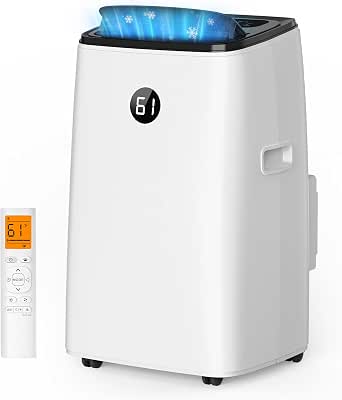
| GarveeTech 14,000 BTU Portable | 54 dB |
| 14,000 BTU 3-in-1 Portable Air | — |
| DREO Fan for Bedroom | — |
| Shinco 14,000 BTU White Portab | 57 dB |
| 14000 BTU Portable Air Conditi | — |
| Levoit Tower Fan for Bedroom | 28 dB |
| 4-in-1 Portable Air Conditione | Less than 40dB |
| DREO Smart Tower Fan for Bedro | — |
| Windowless Portable Air Condit | 36dB |
| Windowless Portable Air Condit | 36.9dB |
| Portable Air Conditioner 4-in- | ≤40dB |
More Details on Our Top Picks
GarveeTech 14,000 BTU Portable Air Conditioner with Dehumidifier and Fan
This unit distinguishes itself with a robust 36-pint dehumidifying capacity, making it a strong contender for damp climates where moisture, not just heat, is the primary discomfort. Compared to the Shinco model, which focuses on rapid cooling, the GarveeTech balances temperature drop with humidity extraction, preventing that clammy feeling even when the room cools down. Its auto-evaporation system is a convenience feature that minimizes daily maintenance, though it may struggle in extremely wet basements. The trade-off is its sheer bulk; at 75 pounds, it is heavier than many competitors, requiring more effort to move between rooms despite the caster wheels.
Pros:- High dehumidification rate helps combat sticky air
- Auto-evaporation reduces manual drainage frequency
- Includes remote and sleep mode for nighttime comfort
Cons:- Heavy at 75 pounds, making room-to-room moves cumbersome
- Short 30-day warranty offers limited long-term peace of mind
- Noise level of 54 dB may be audible in quiet bedrooms
Best for: Residents in humid regions who need to manage indoor moisture levels alongside cooling.
Not ideal for: Those in dry climates who prioritize maximum cooling speed over humidity control.
- Cooling Capacity:14,000 BTU (ASHRAE)
- Dehumidification:36 pints/day
- Coverage Area:Up to 700 sq. ft.
- Noise Level:54 dB
- Weight:75 lb
- Modes:Cool, Dehumidify, Fan
Our verdict“Choose this if you live in a humid area and want an AC that actively pulls moisture from the air.”
14,000 BTU 3-in-1 Portable Air Conditioner with Dehumidifier and Fan
This model strikes a compelling balance between raw power and user-friendly features, offering a 48 dB sleep mode that is noticeably quieter than the GarveeTech’s 54 dB operation. It uses the modern R-32 refrigerant, which is more energy-efficient and environmentally friendly than older standards, translating to potentially lower electricity costs over time. While it shares the 700 sq. ft. coverage limit with other 14,000 BTU units in this roundup, its self-evaporative system is tuned to minimize manual intervention effectively. The primary drawback is the lack of included remote batteries, a minor but annoying inconvenience for immediate use.
Pros:- Whisper-quiet 48 dB operation ideal for sleeping
- Efficient R-32 refrigerant improves energy performance
- Self-evaporative system reduces maintenance hassle
Cons:- Remote control batteries are not included in the box
- May still require manual drainage in extremely high humidity
Best for: Users seeking a quiet, efficient unit for bedrooms or home offices.
Not ideal for: Those who cannot tolerate any setup friction, such as sourcing batteries immediately.
- Cooling Capacity:14,000 BTU (ASHRAE)
- Refrigerant:R-32
- Sleep Mode Noise:48 dB
- Coverage Area:Up to 700 sq. ft.
- Controls:Touch Panel, Remote
- Wattage:1200 W
Our verdict“A well-rounded choice for those who prioritize quiet operation and modern efficiency.”
DREO Fan for Bedroom, Upgraded 2026 Model, 90ft Airflow, Quiet Oscillating Standing Fan with DC Motor, 8+ Speeds, 3 Modes, Adjustable Height, 8H Timer, 105° Vertical Pivot
Unlike the true air conditioners in this list, the DREO standing fan does not lower room temperature but excels at moving air efficiently, making it a superior choice for energy-conscious buyers who want to enhance existing cooling or create a breeze without the heat exhaust requirements. Its DC motor allows for precise speed control and quieter operation than traditional AC fans, while the 90-foot airflow range covers large open spaces better than the oscillating fans built into most portable ACs. However, it cannot cool a hot room on its own; it must be paired with an AC or used in milder weather, limiting its utility during heatwaves.
Pros:- Extremely quiet DC motor operation
- Highly adjustable height and vertical pivot
- Significantly lower energy consumption than AC units
Cons:- Does not lower ambient temperature
- Requires pairing with another cooling source for hot days
Best for: Users who already have central AC or live in mild climates and want targeted airflow.
Not ideal for: Anyone needing to cool a hot room from scratch without central air conditioning.
- Airflow Distance:90 ft
- Motor Type:DC
- Speeds:8+
- Oscillation:90° Horizontal, 105° Vertical
- Height Range:38-42 inches
- Timer:8 hours
Our verdict“Ideal for supplementing existing cooling or providing comfort in moderate temperatures.”
Shinco 14,000 BTU White Portable Air Conditioner, Portable AC Unit with Built-in Cool, Dehumidifier & Fan Modes for Room up to 700 sq.ft, Room Air Conditioner with Remote Control, Installation Kit
The Shinco unit stands out for its tool-free installation kit, which simplifies the most frustrating part of owning a portable AC: sealing the window. Compared to the AGTANA model, which also boasts quick setup, Shinco’s design prioritizes simplicity with a straightforward exhaust hose connection that appeals to renters or those who move frequently. It offers solid 14,000 BTU cooling performance, but its 57 dB noise level is on the louder side, which may be disruptive in quiet environments. The compact footprint helps, but the weight remains substantial, requiring careful handling during relocation.
Pros:- Fast, tool-free window kit installation
- Compact footprint fits tighter spaces
- Reliable 14,000 BTU cooling performance
Cons:- Louder operation at 57 dB compared to quieter rivals
- Standard white design may clash with modern decor
Best for: Renters or users who frequently move and need a hassle-free setup process.
Not ideal for: Light sleepers or those sensitive to operational noise above 50 dB.
- Cooling Capacity:14,000 BTU (ASHRAE)
- Noise Level:57 dB
- Coverage Area:700 sq. ft.
- Installation:Tool-free Window Kit
- Weight:68.1 lb
- Modes:Cool, Dehumidify, Fan
Our verdict“The go-to option for those who dread complicated setups and want immediate cooling.”
14000 BTU Portable Air Conditioner for Large Room up to 700 Sq. Ft, 3-in-1 Self-Evaporating AC with Fan & Dehumidifier, Floor Standing Portable AC Unit with Remote Control, Auto Swing, White
This AGTANA model differentiates itself with a 25-89° wide-angle auto-swing, which prevents the cold spots often associated with fixed-direction portable ACs. Unlike the GarveeTech, which directs airflow more narrowly, this unit circulates chilled air across a broader area, making it better suited for open-concept living rooms. It also boasts a high 96-pint dehumidification rate, significantly higher than most competitors, ensuring dry comfort in swampy conditions. The trade-off is its aggressive energy consumption at 1250 watts, which may impact utility bills during prolonged use, and the lack of included remote batteries.
Pros:- Wide-angle auto-swing prevents uneven cooling
- High-capacity 96-pint dehumidifier
- Self-evaporating system minimizes maintenance
Cons:- High 1250-watt power draw increases energy costs
- Remote batteries not included
Best for: Owners of open-plan homes who need consistent temperature distribution without hot spots.
Not ideal for: Users on strict energy budgets who are concerned about high wattage usage.
- Cooling Capacity:14,000 BTU (ASHRAE)
- Dehumidification:96 pints/day
- Auto Swing:25-89° Wide Angle
- Sleep Mode Noise:48 dB
- Wattage:1250 W
- Coverage Area:700 sq. ft.
Our verdict“Perfect for large, open spaces where even cooling distribution is critical.”
Levoit Tower Fan for Bedroom, 28 ft/s Airflow, Quiet Operation
This model stands out primarily for its extreme quietness at 28 dB, making it superior to the 4-in-1 Portable Air Conditioner for anyone sensitive to noise. While it lacks the actual cooling power of evaporative units, its 28 ft/s airflow and Sleep mode create a consistent breeze without the hum of a compressor or pump. The removable grille simplifies maintenance, a practical advantage over complex evaporative coolers that require tank cleaning. I recommend this if your priority is silence and consistent air circulation rather than lowering room temperature. It is less effective in heatwaves compared to the Windowless Portable Air Conditioner, which uses ice packs to actively cool air, but it wins decisively on operational simplicity and noise control.Pros:- Whisper-quiet 28 dB operation ideal for bedrooms
- Simple maintenance with a removable grille
- Versatile modes including Turbo and Auto
Cons:- No active cooling mechanism (evaporative or refrigerant)
- Limited reach for large open-plan spaces
- Slim design may lack stability on uneven surfaces
Best for: Light sleepers, infants, and pets who need silent air circulation without humidity or cooling additives.
Not ideal for: Those seeking significant temperature reduction in hot rooms, as it moves air but does not cool it.
- Airflow Speed:28 ft/s
- Noise Level:28 dB
- Fan Speeds:5
- Fan Modes:Normal, Turbo, Sleep, Auto
- Timer:12 hours
- Remote Control:Yes
- Cleaning:Removable grille
Our verdict“Choose this for silent, reliable airflow in bedrooms where noise is a dealbreaker.”
4-in-1 Portable Air Conditioner with Remote, 1200ML Personal Cooling Fan, Mist Modes, Timer, Night Light, Black
This unit is designed for personal space cooling rather than whole-room climate control. Unlike the Levoit Tower Fan, which only circulates air, this device uses 1200ML of water and ice to create a misting effect, providing tangible relief on a desk or nightstand. Its USB-C power and compact 211229cm footprint make it highly portable, suitable for small apartments or office cubicles. However, the 10W power consumption limits its reach; it cannot compete with the Windowless Portable Air Conditioner for cooling a 300 sq. ft. area. It is best viewed as a personal comfort device that doubles as a night light, not a primary cooling solution for a family room.Pros:- Multi-functional with humidifier and night light features
- Highly portable and lightweight for easy movement
- USB-C power allows flexible placement near outlets
Cons:- Very small cooling radius suitable only for personal use
- Frequent refilling required due to small 1200ML tank
- Requires ice cubes for optimal cooling performance
Best for: Students, office workers, or renters needing personal cooling on a desk or bedside table.
Not ideal for: Users needing to cool entire rooms, as the small tank and low power limit its range.
- Water Tank Capacity:1200ML
- Dimensions:21*12*29cm
- Power Consumption:10W
- Noise Level:Less than 40dB
- Timer Options:2/4/6/8 hours
- Night Light Colors:7 cycle colors
- Ports:USB-C
Our verdict“Ideal for personal spot cooling where space is limited and whole-room coverage is unnecessary.”
DREO Smart Tower Fan for Bedroom, 28 ft/s Velocity, 8 Speeds
This fan appeals to tech-focused buyers who want app control and voice assistant compatibility. Compared to the Levoit Tower Fan, which relies on a standard remote, the DREO offers 8 speeds and granular control via smartphone, allowing for precise airflow adjustments. The brushless DC motor ensures quiet operation while delivering 34 ft of air reach, surpassing the Levoit’s effective range in larger bedrooms. However, the complex setup for Wi-Fi connectivity can be a hurdle for non-tech-savvy users. If you prefer ‘plug and play’ simplicity, the basic Levoit is easier; if you want to schedule cooling routines or control the fan from bed without a remote, this DREO model offers superior convenience.Pros:- Full smart home integration with app and voice control
- Powerful 34 ft air reach with 8 speed settings
- Enhanced safety with fingertip pinch-proof grills
Cons:- Requires app installation and Wi-Fi setup for full features
- Potentially higher learning curve for older users
- Reliance on connectivity can be a point of failure
Best for: Tech enthusiasts who want app-based control and voice assistant integration for their bedroom.
Not ideal for: Users who dislike app dependencies or find smart home setup frustrating.
- Airflow velocity:28 ft/s
- Air reach:34 ft
- Speeds:8
- Modes:Normal, Natural, Sleep, Auto
- Oscillation:90°
- App control:Yes
- Motor:Upgraded brushless DC motor
Our verdict“The go-to choice for smart home users who prioritize digital control and extended airflow reach.”
Windowless Portable Air Conditioner, 37″ Ventless Evaporative Cooler with Remote, Quiet Ductless Tower Fan, 12H Timer, 4 Ice Packs, Ivory
This evaporative cooler bridges the gap between simple fans and heavy-duty ACs. It cools areas up to 300 sq. ft., significantly outperforming the 4-in-1 Portable Air Conditioner in coverage. The 0.7-gallon tank and included 4 ice packs allow it to lower perceived temperature by adding humidity and cold air, a feature absent in the DREO Smart Tower Fan. While it is energy-efficient at 65W, it requires regular refilling and ice preparation, which adds maintenance overhead. It is an excellent choice for dry climates where adding humidity is beneficial, but less effective in already humid environments compared to pure airflow solutions.Pros:- Cools up to 300 sq. ft. with evaporative technology
- Includes 4 ice packs for enhanced cooling performance
- Energy-efficient operation at 65W power consumption
Cons:- Small 0.7-gallon tank requires frequent refilling
- Effectiveness drops in already humid environments
- No heating function for year-round use
Best for: Residents in dry climates needing active cooling for medium-sized bedrooms or home offices.
Not ideal for: Users in humid climates, as adding moisture may make the room feel stickier.
- Dimensions:37 inches tall
- Water Tank Capacity:0.7 gallons
- Power Consumption:65W
- Airflow:1350 CFM
- Cooling Area:up to 300 sq. ft.
- Noise Level:36dB
- Timer:12 hours
Our verdict“A balanced evaporative cooler for medium rooms where active temperature reduction is needed.”
Windowless Portable Air Conditioner for Room, 45″ Evaporative Cooler with 12H Timer, 60° Swing, 1.06Gal Tank, 4 Ice Packs, Quiet Tower Fan for Bedroom
Standing at 45 inches with a 1.06-gallon tank, this unit offers longer runtimes than the Windowless Portable Air Conditioner (37″), which has a smaller 0.7-gallon reservoir. It covers 250 sq. ft. effectively, making it suitable for master bedrooms or small living rooms. The 60° swing and 4 ice packs provide consistent cooling without the noise of traditional AC units. While it shares the same maintenance requirements as other evaporative coolers—filling water and freezing packs—it balances size and capacity better than the compact 4-in-1 Portable Air Conditioner. It is the strongest option in this group for rooms that need more than just airflow but cannot accommodate a window unit.Pros:- Large 1.06-gallon tank extends cooling duration
- Tall 45-inch design improves air distribution height
- Includes 4 ice packs for immediate cooling boost
Cons:- Cooling power is limited compared to refrigerant ACs
- Requires regular water refilling and ice management
- Bulkier footprint than tower fans
Best for: Homeowners in small to medium rooms who want longer cooling durations without frequent refills.
Not ideal for: Those with very large open spaces, as 250 sq. ft. is its effective limit.
- Water Tank Capacity:1.06 gallons
- Ice Packs:4
- Oscillation:60°
- Timer:12 hours
- Noise Level:36.9dB
- Cooling Duration:up to 10 hours
- Height:45 inches
Our verdict“The best evaporative option for rooms up to 250 sq. ft. needing sustained cooling capacity.”
Portable Air Conditioner 4-in-1 Evaporative Cooler with Remote
This unit stands out for its extreme portability, weighing under three pounds, which makes it far easier to move between rooms than the bulky GarveeTech 14,000 BTU Portable Air Conditioner. While it cannot match the raw cooling power of traditional AC units, its 1200ml tank provides consistent evaporative cooling for personal spaces without the noise or installation hassle. I find it ideal for users who prioritize quiet operation and aesthetic flexibility over industrial-strength temperature drops. Unlike the DREO Smart Tower Fan, which moves air without changing its temperature, this device adds a tangible chill using water and ice, bridging the gap between a standard fan and a full AC system.
Pros:- Ultra-lightweight design allows effortless transport between rooms
- Integrated 7-color LED mood light adds decorative value
- Whisper-quiet operation under 40dB suits light sleepers
- Remote control enables hands-free adjustment from bed or sofa
Cons:- Cooling effect is limited to immediate proximity and requires frequent ice replenishment
- Cannot dehumidify air, unlike 3-in-1 AC units with drain modes
- Plastic construction feels less durable than metal-housed competitors
Best for: Renters or students needing a lightweight, plug-and-play cooling solution for small desks or bedside tables
Not ideal for: Homeowners trying to cool large living rooms, as it lacks the BTU output for spaces over 150 square feet
- Water Tank Capacity:1200ml
- Noise Level:≤40dB
- Weight:Under 3 lbs
- Cooling Modes:Normal, Natural, Sleep
- Fan Speeds:Low, Medium, High
- Run Time:8-12 hours
- Light Colors:7 LED colors
- Remote Control:Yes
Our verdict“Choose this model if you need a quiet, decorative, and highly portable personal cooler for small, enclosed spaces.”

How We Picked
My evaluation focused on three primary pillars: cooling efficacy, noise management, and installation complexity. I compared true refrigerant-based air conditioners against evaporative coolers and high-velocity tower fans to clarify which technology suits different climates. Products were ranked based on their ability to deliver consistent airflow, the ease of setting up venting kits or water tanks, and the clarity of their control interfaces. I also examined build quality, particularly the stability of floor-standing units and the durability of plastic components in moving parts. This approach highlights the distinct roles each product plays, ensuring readers understand why a 14,000 BTU unit is ranked differently than a 28 ft/s tower fan.Factors to Consider When Choosing Room Air Conditioner Fan
Selecting the right cooling device requires matching the technology to your specific environmental constraints and usage patterns. The market has split into three distinct categories: true portable air conditioners, evaporative coolers, and high-performance fans. Understanding these differences prevents buyer’s remorse when the summer heat peaks.Refrigeration vs. Evaporative Cooling
The most critical distinction in this category is between compressor-based air conditioners and evaporative coolers. Portable AC units use refrigerants to remove heat and humidity, effectively lowering the room temperature regardless of external conditions. In contrast, evaporative coolers (often called swamp coolers) add moisture to the air to create a cooling effect. This means evaporative models only work well in dry climates; in humid environments, they can make a room feel muggier and less comfortable. If you live in a coastal or tropical area, stick to compressor-based units like the Shinco or GarveeTech models. If you are in the Southwest or other dry regions, an evaporative cooler might offer a more energy-efficient solution with lower upfront costs.
The Importance of BTU Ratings and Room Size
British Thermal Units (BTU) measure the amount of heat a unit can remove from a room per hour. 14,000 BTU units are generally rated for rooms up to 700 square feet, but this rating assumes standard ceiling heights and moderate sun exposure. A room with large windows facing south or a high ceiling will require more cooling power than the square footage suggests. Many buyers underestimate this need, leading to underpowered units that run continuously without reaching the desired temperature. Conversely, oversizing a unit for a small bedroom can lead to short cycling, where the compressor turns on and off frequently, reducing efficiency and potentially increasing wear. Always check the manufacturer’s specific square footage recommendation and adjust downward if your space is poorly insulated or sunny.
Noise Levels and Sleep Suitability
Noise is a decisive factor for bedroom use, yet manufacturers often measure it in different ways. Decibel (dB) ratings should be compared carefully; a difference of 5 dB is noticeable to the human ear. Portable AC units typically generate noise from the compressor and fan, often exceeding 50 dB on high settings, which is comparable to a quiet conversation. Tower fans with DC motors, like the DREO models, can operate below 30 dB on low settings, making them far better for light sleepers. If you need cooling for sleep, consider using a high-BTU AC to cool the room before bed, then switching to a quiet tower fan to maintain the temperature. This hybrid approach balances power with acoustic comfort.
Installation and Venting Requirements
True portable air conditioners require a way to exhaust hot air outside. Most units come with window slide kits, which fit standard single-hung or sliding windows. If you have casement, awning, or sliding glass doors, you may need to purchase a separate adapter or fabric seal kit. This installation step is permanent for the season and can be cumbersome. Windowless evaporative coolers and tower fans, however, require no venting, offering greater placement flexibility. They can be moved from room to room easily, whereas portable ACs are heavy and difficult to relocate once the exhaust hose is connected. Consider whether you need to cool multiple rooms or just one fixed space before committing to a vented unit.
Maintenance and Water Management
Maintenance burdens vary significantly between these technologies. Self-evaporating systems in modern portable ACs recycle condensate water to cool the condenser coil, reducing the need for manual draining. However, in very humid conditions, you may still need to empty the tank or attach a drain hose. Evaporative coolers require regular cleaning of the water tank and pads to prevent mold and mineral buildup, which can be a weekly chore. Tower fans need occasional dusting of the blades and intake vents. Ignoring maintenance can lead to musty odors and reduced airflow. If you dislike regular upkeep, look for units with washable filters and self-cleaning functions, though these features are more common in fans than in complex AC systems.
Frequently Asked Questions
Can a portable air conditioner cool a room without a window?
No, a true portable air conditioner cannot cool a room effectively without venting hot air outside. The unit works by moving heat from inside to outside; if the hot air is dumped back into the room, the temperature will rise. Some units are marketed as ‘windowless’ but are actually evaporative coolers, which use water and ice to cool the air but do not remove heat from the space. These are only suitable for dry climates and will not achieve the same temperature drop as a refrigerant-based AC. Always verify if the product is a true AC or an evaporative cooler before assuming it works without a window kit.Is it better to use an air conditioner or a fan for electricity costs?
A standard tower fan consumes significantly less electricity than a portable air conditioner, often costing pennies per hour compared to dollars. However, fans do not lower the ambient temperature; they only create a wind-chill effect on your skin. If you are trying to cool an entire room for guests or pets, a fan will be ineffective. For personal cooling while sleeping or working at a desk, a high-velocity fan like the DREO models can be sufficient and much cheaper to run. A hybrid strategy—using the AC to lower the room temperature initially, then switching to a fan to maintain comfort—is often the most cost-effective approach.Do I need to add ice to a portable air conditioner?
You should never add ice to a compressor-based portable air conditioner. These units use refrigerant gas to cool the air, and adding ice to the tank can damage the internal components or cause water leakage. Ice packs are only for evaporative coolers, which use the melting ice to cool water as it passes through a pad. Adding ice to a standard AC is a common misconception that stems from confusing the two technologies. Always check the product manual; if it mentions a water tank or ice compartment, it is likely an evaporative cooler, not a true AC.How long does it take for a portable AC to cool a room?
A 14,000 BTU portable unit typically takes 30 to 60 minutes to noticeably lower the temperature in a 500-700 square foot room. The exact time depends on the starting temperature, insulation quality, and sun exposure. Unlike central air, portable units cool from the inside out, so you might feel cooler near the unit before the whole room reaches the set temperature. To speed up the process, close doors and windows and use curtains to block sunlight. If the unit has a ‘Turbo’ or ‘Max’ mode, using it for the first hour can help reach the desired temperature faster before switching to a quieter eco-mode.Are smart features worth the extra cost on cooling devices?
Smart features like Wi-Fi connectivity and voice control are valuable if you want to schedule cooling before arriving home or control the device from bed. For tower fans, these features are often included in mid-range models and add convenience without a massive price jump. For portable ACs, smart connectivity is less common and often less reliable due to the complexity of the appliance. If you primarily use the device manually, you can save money by skipping smart features. However, if you have a strict schedule or want to integrate cooling into a broader home automation system, the convenience of app-based control justifies the premium for many users.Conclusion
Choosing the right room air conditioner fan comes down to matching the technology to your specific climate and usage needs. Best Overall: The GarveeTech 14,000 BTU Portable Air Conditioner offers the most complete cooling solution with its 3-in-1 design, ideal for those who need reliable temperature control and dehumidification. Best for Bedrooms: The DREO Fan for Bedroom is the superior choice for quiet, personal cooling, providing powerful airflow without the noise of a compressor. Best Value: The 4-in-1 Portable Air Conditioner with Remote provides a budget-friendly entry point for small spaces, though it lacks the power of the higher-BTU models. Best for Dry Climates: The Windowless Portable Air Conditioner (Evaporative Cooler) is perfect for arid regions where adding moisture is beneficial, offering energy-efficient cooling without venting. Evaluate your room’s humidity, size, and noise tolerance to make the final decision.Cold & flu season Picks
humidifiers
As an affiliate, we earn on qualifying purchases.