
TL;DR

Get home appliances delivered free with Prime
- Fast, free delivery on millions of items
- Prime Video, Amazon Music and more included
- Member-only deals all year
A Hunker report describes a YouTuber’s compact outdoor bar made by joining matching wood pallets and topping them with concrete pavers. The project can repurpose sound pallets, but its cost, load capacity and long-term weather performance are not documented.
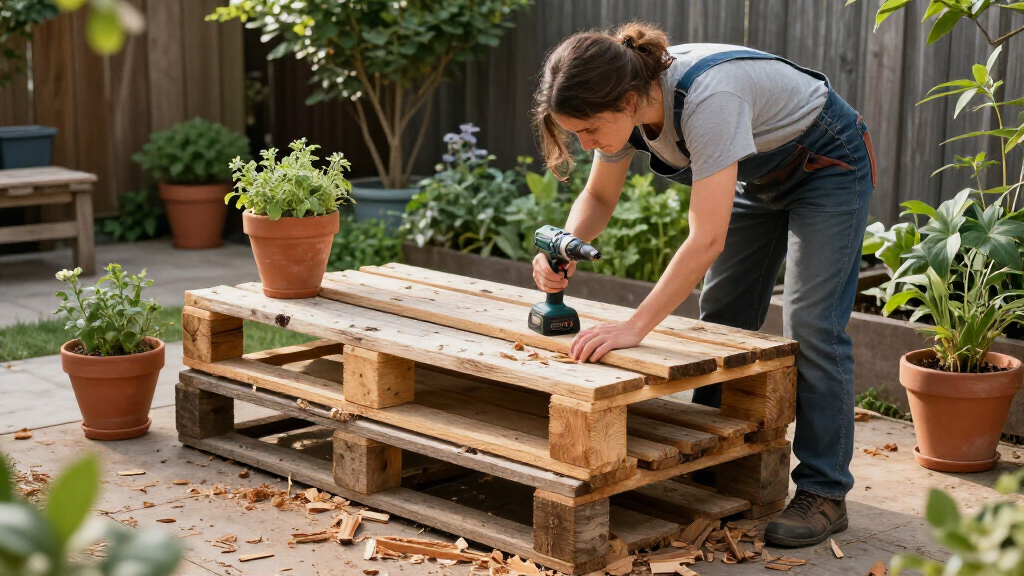
A YouTuber known as WetAndForget made a compact backyard bar by joining matching wood pallets and adding a countertop of concrete pavers, according to a report by Hunker. The build offers a way to reuse suitable reclaimed materials instead of buying a ready-made outdoor bar, though the report does not give a verified project cost or tested weight limit.
The described design uses at least two pallets of the same size, in good condition, with their backs placed together. Exterior wood screws hold the pallets together, while pavers are attached across the top with construction adhesive rated for both concrete and wood. The materials and method come from Hunker’s account of WetAndForget’s project; the report does not provide independent testing of the finished structure.
Hunker says builders should first check pallets for rot or contamination and sand rough edges. It describes applying exterior paint with primer, joining the pallets with screws that do not protrude through the wood, and setting the base on level ground. The pavers should be dry-fitted before adhesive is applied, and the adhesive should dry fully before heavy items are placed on the surface.
The bar can be extended with a second matching unit, but Hunker cautions that each section should support its own pavers rather than leaving countertop pieces over an unsupported gap. Suggested personal touches include a stenciled name, hooks, a bottle opener or outdoor LED lighting. These are optional additions, not requirements for the basic build.
A Reuse Project With Practical Limits
The project shows how reclaimed materials can serve a practical purpose in an outdoor entertaining space. A basic pallet structure may cost less than some store-bought bars, Hunker says, but it gives no itemized budget or price comparison. The actual expense will depend on whether the pallets and tools are already available, as well as the cost of pavers, screws, paint and suitable adhesive.
There is also a difference between a visually appealing DIY and a bar that can safely carry its intended load. Concrete pavers add considerable weight, and the source advises checking that the pallets and their connections can support it. The report does not specify a tested capacity, so readers should not treat the design as a certified structure or assume every pallet is suitable.
Products Worth Considering

eufy Security 4G LTE Cam S330 4K Solar Outdoor Camera with Pan and Tilt, AI Tracking, SIM Card and 32GB SD Card

Philips Hue Festavia Outdoor Globe String Lights, 8 Bulbs, 22 ft

eufy Security SoloCam S340 3K Dual-Lens Solar Security Camera
As an affiliate, we earn on qualifying purchases.
How the Pallet Bar Is Assembled
Hunker presents the project as an alternative to purchasing a ready-made outdoor bar, which it says can cost several hundred dollars at some big-box stores before décor or drinks are added. That comparison is general: the article does not identify specific products, provide current prices or calculate the DIY’s total cost.
The reported build is intended to be adaptable to a small patio or covered entertaining area, and its length can be increased by adding another unit. The materials listed include pallets, pavers, exterior screws, exterior paint with primer and compatible landscape construction adhesive. Tools include a drill, sander, cleaning cloth, paintbrush and clamps. The report frames the project as a furniture DIY; it does not describe a building-permit review or provide engineering guidance.
“The bar could cost less than purchasing a ready-made piece.”
— Hunker, reporting on the WetAndForget project
Cost and Load Capacity Are Unreported
The source does not state when WetAndForget built the bar, how much the specific project cost, or how long it has been in use. It also gives no measured load limit, structural assessment or evidence about how the assembly performs after prolonged exposure to rain, sun or changing temperatures. The article’s description of the project as budget-friendly is not backed by a detailed price breakdown.
It is also unclear how the pallets were sourced or whether they had any prior treatment. Hunker advises rejecting pallets with signs of contamination or rot, but does not identify a treatment standard or explain how readers can verify a pallet’s past use. Builders should assess the actual materials and conditions rather than assume that all reclaimed pallets are safe or structurally sound.
Check Materials Before Building
The report does not announce a follow-up or a formal testing process. For anyone considering the design, the next step is to inspect the pallets, confirm the base sits level and does not rock, and assess whether the structure and fasteners can carry the selected pavers. Use screws that do not leave exposed sharp points and follow the adhesive maker’s instructions, including its full curing time.
Before adding a longer countertop or placing heavy items on the bar, builders should verify that each section has adequate support. The final cost and durability will depend on material condition, local prices and exposure to weather; those details are not established by the report.
Key Questions
What materials does the reported pallet bar use?
The basic design calls for at least two matching pallets, concrete pavers, exterior wood screws, exterior paint with primer and construction adhesive compatible with concrete and wood.
Does the report give a total project cost?
No. Hunker says the DIY could cost less than a ready-made bar, but it does not provide a materials budget or itemized prices.
How should the paver countertop be attached?
The instructions describe dry-fitting the pavers, applying an adhesive rated for both concrete and wood, pressing each paver into place and waiting for the adhesive to dry fully before loading the surface.
How can the bar be made longer?
Hunker suggests placing a second matching pallet unit beside the first. Each section should support its own pavers; the report warns against leaving countertop pieces across an unsupported gap.
Is the design’s weight capacity known?
No tested capacity is provided. Because pavers add substantial weight, the source says to confirm that the pallets and their connections can support the load before adding the countertop.
Source: rss