TL;DR

Get home appliances delivered free — and shop member deals
- Fast, free delivery on millions of items
- Access to Prime Big Deal Days deals on October 6–7
- Prime Video, Amazon Music and more included
A Family Handyman report describes ways to use citric acid to remove mineral deposits, hard-water spots and some rust stains around the home. The advice includes appliance-specific cleaning steps and cautions against using the acidic cleaner on natural stone, finished wood and other sensitive surfaces.
Family Handyman has published guidance on using citric acid to address limescale, hard-water spots and other mineral buildup around the home, with cleaning professionals offering instructions for appliances and bathroom fixtures. The report also warns that the acidic cleaner can damage some materials, including marble, granite and finished wood, making surface checks important before use.
The report describes citric acid as an acid found naturally in citrus fruits and also manufactured for use in food and cleaning products. It is sold in powder or crystalline form, according to the article. Cleaning professionals cited by Family Handyman recommend it particularly for deposits left by hard water, while stressing that users should consult product and surface instructions and test a small, inconspicuous area first.
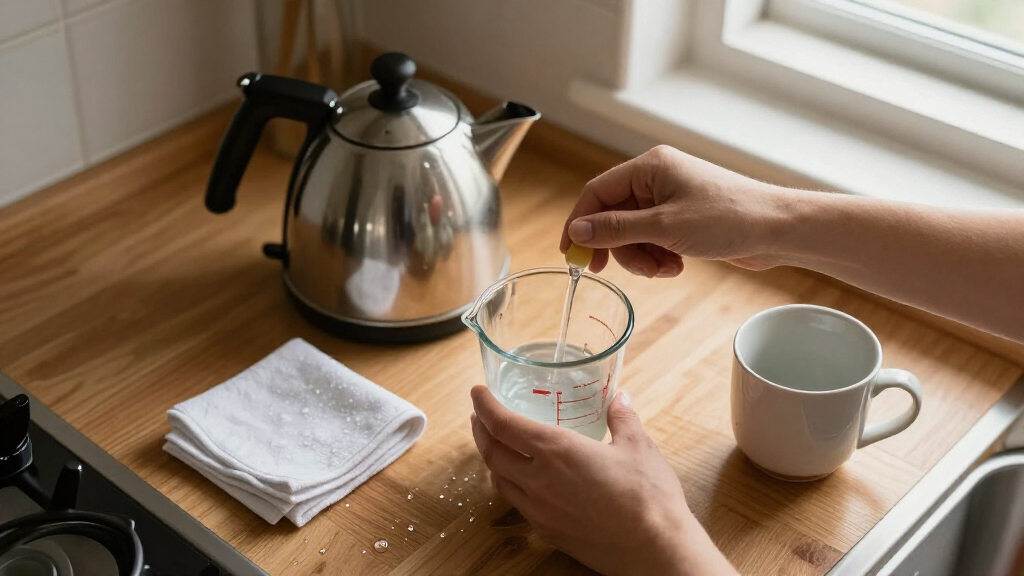
For a coffee maker, Seattle Green Cleaning Fairy owner Enrique Gonzalez recommends adding one to two tablespoons of citric acid to a full tank of water, running one brewing cycle, then running two cycles with plain water. For an electric kettle, the article advises adding the same amount to water, bringing it to a boil and letting it simmer for 15 to 20 minutes. Empty and rinse the kettle, then boil and discard clean water to rinse it.
For faucets, Sofia Martinez of Sparkly Maid Austin suggests mixing one to two teaspoons in one cup of warm water, applying it with a soft, damp cloth and leaving it for three to five minutes before wiping and drying. The report also gives diluted-solution methods for showerheads and glass shower doors, and suggests running a hot, empty dishwasher cycle with a small bowl containing a couple of tablespoons of citric acid on the upper rack. Its toilet-bowl method uses two to three tablespoons of powder, left for at least 30 minutes before brushing and flushing.
Where the Cleaning Advice Helps
The guidance offers readers a set of specific, low-cost methods for common cleaning problems caused by mineral deposits, including scale in kettles and coffee makers and spots on glass or faucets. These deposits can build up gradually, so appliance maintenance and periodic cleaning may help address visible residue before it becomes harder to remove.
The advice is not a blanket endorsement for applying citric acid to every surface. The article identifies it as corrosive and says that material compatibility matters. That distinction is relevant for households because a solution that is useful on hard-water stains may etch stone, affect a protective finish or damage a coated surface. Following the cautions can help prevent cleaning from causing a separate repair or replacement problem.
As an affiliate, we earn on qualifying purchases.
A Cleaner for Mineral Deposits
Citric acid’s principal use in the report is removing mineral buildup left by water. When water is heated in appliances such as kettles and coffee makers, minerals can accumulate as scale. Hard water can also leave marks on faucets, shower glass and other surfaces. The report’s methods generally use citric acid dissolved in warm water, followed by thorough rinsing and drying.
Family Handyman attributes its advice to Martinez, Gonzalez and Terry Klymkiv of Alpha Cleaning Company. Their recommendations differ by task: some call for a short application on a cloth, while appliance descaling involves a cycle or heating water. The article advises checking manufacturer instructions, particularly before applying the solution to metal-finish fixtures.
“Citric acid can descale an electric kettle, remove spots from glass and even shine up stainless-steel sinks.”
— Sofia Martinez, cleaning expert and owner of Sparkly Maid Austin, as quoted by Family Handyman
Surface Safety Depends on Material
The source does not provide independent testing, product-specific concentrations or guidance for every appliance brand and surface finish. It advises readers to test an inconspicuous area and check manufacturer instructions, especially for metal-finish fixtures. Its instructions should not be assumed to apply to all products or materials.
The article specifically says to avoid citric acid on marble and granite, which can be etched or discolored, and on finished wood, where it can affect wax or polish. It also warns against use on electronic screens with protective coatings. The supplied source text cuts off during its discussion of surfaces to avoid, so it does not establish a complete list of exclusions.
Check Labels Before Cleaning
Before trying one of the methods, readers should check the item’s care instructions and the citric acid product label, then test the solution on a small, hidden area. Follow the report’s rinsing steps for appliances and fixtures, and dry treated surfaces promptly where recommended to limit new water spots. Avoid using the acid on the materials the article identifies as vulnerable.
Family Handyman’s report does not announce a new product or a change in cleaning guidance; it presents household tips attributed to cleaning professionals. The next practical step for readers is to match the method to the specific cleaning task and surface, rather than treating citric acid as a universal cleaner.
Key Questions
What is citric acid used for around the home?
Family Handyman describes using it to address limescale, hard-water stains and mineral buildup in coffee makers, kettles, showerheads, dishwashers, toilets and on some glass and metal surfaces. It also gives a paste method for rust stains.
Can citric acid be used on marble or granite?
No. The report warns that citric acid can etch or discolor natural stone, including marble and granite, and says to avoid using it on those surfaces.
How do you descale a coffee maker with citric acid?
Gonzalez recommends adding one to two tablespoons to a full water tank, running one brewing cycle, then running two cycles with plain water. Check the coffee maker’s instructions before using this method.
Should citric acid be rinsed off after cleaning?
Yes. The report’s methods call for rinsing treated surfaces or appliances after use. For a kettle, it recommends rinsing and then boiling and discarding clean water; for showerheads, rinse and run hot water through the unit.
Source: rss
Fall Picks
fall essentials
As an affiliate, we earn on qualifying purchases.