
If you rely only on square footage to size your mini-split, you’ll likely run into problems like discomfort, high energy bills, or quick system wear. Proper sizing considers factors like insulation, climate, and your specific space’s heating and cooling needs. Oversized or undersized units cause cycling issues and inefficiency. To get it right, you need a detailed assessment. Keep going to discover how to size your mini-split properly and avoid these pitfalls.

Get home appliances delivered free — and shop member deals
- Fast, free delivery on millions of items
- Access to Prime Big Deal Days deals on October 6–7
- Prime Video, Amazon Music and more included
Key Takeaways
- Solely using square footage ignores factors like insulation, climate, and room layout, leading to improper sizing.
- Oversized or undersized units cause inefficiency, discomfort, and increased energy costs.
- Accurate sizing requires detailed load calculations beyond just room size.
- Professional assessment ensures the system matches specific heating and cooling needs.
- Correct sizing enhances system longevity, reduces maintenance, and improves indoor comfort.
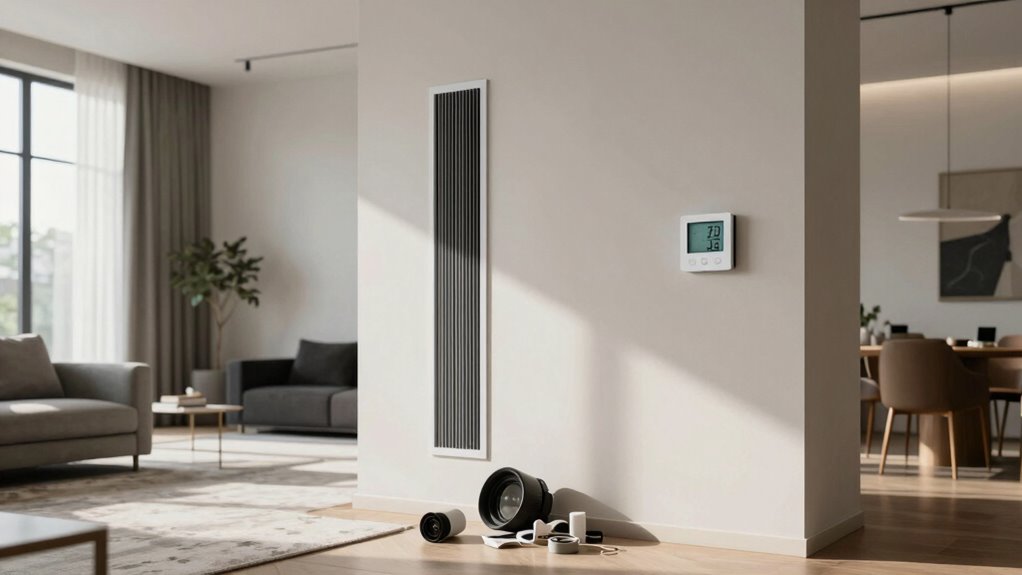
Choosing the right size for a mini-split system is essential to guarantee efficient heating and cooling, but many homeowners encounter sizing problems that can lead to discomfort and higher energy bills. The mistake often begins with assuming that square footage alone determines the correct size. While size is important, it’s only part of the equation. An undersized unit struggles to maintain a consistent temperature, forcing it to run constantly and increasing your energy consumption. On the other hand, an oversized system cycles on and off rapidly, leading to uneven temperatures and unnecessary wear. Both scenarios waste energy, reduce comfort, and can shorten the lifespan of your unit.
Energy efficiency is directly impacted by proper sizing. When your mini-split is too small, it works overtime trying to cool or heat your space, which wastes power and inflates your utility bills. An oversized system, meanwhile, wastes energy through frequent cycling and doesn’t manage humidity well, making your indoor environment less comfortable. To achieve optimal energy efficiency, you need a system that matches your space’s heating and cooling load—not just its square footage. This often requires detailed calculations or professional assessment, considering factors like insulation quality, window placement, ceiling height, and even the local climate. Skipping these steps can lead to a system that’s either too powerful or not powerful enough, both of which undermine energy efficiency. Additionally, understanding proper sizing techniques can help prevent these issues before installation. Properly matching your system to your home’s specific conditions ensures better performance and longevity.
Installation challenges also increase when sizing isn’t accurate. An improperly sized mini-split can complicate installation, especially if a system is too large or too small for the space. For example, an oversized unit may require additional modifications to handle rapid cycling, which can extend installation time and cost. Conversely, a too-small unit might need to be paired with additional units to cover the entire space, complicating the setup process and increasing the potential for mismatched systems that don’t work well together. These challenges not only affect installation but also impact long-term performance and maintenance. When sizing is done correctly, it can also reduce installation costs and streamline the setup process. Proper sizing also ensures that the system operates within optimal parameters, reducing the likelihood of frequent repairs and increasing its overall reliability. Correct sizing upfront minimizes these issues, ensuring a smoother installation process and a system that performs reliably for years to come.
In the end, proper mini-split sizing isn’t just about plugging in numbers or guessing based on room size. It’s a careful balance that considers many factors to maximize energy efficiency and simplify installation challenges. Taking the time to evaluate all relevant variables, including insulation quality, ensures you select a system perfectly tailored to your needs. When you invest the time to get it right, you’ll enjoy consistent comfort, lower energy bills, and a more reliable system that’s built to last.
As an affiliate, we earn on qualifying purchases.
Frequently Asked Questions
How Do Climate Zones Affect Mini-Split Sizing?
Climate zones greatly influence mini-split sizing because temperature considerations vary, affecting heat load calculations. In colder zones, you might need a more powerful unit to handle extreme cold, while in milder climates, smaller units suffice. You’ll face installation challenges if the system isn’t properly matched to your climate, leading to inefficiency or discomfort. As a result, understanding your climate zone helps guarantee you select the right size and avoid future issues.
Can Multiple Units Be Combined for Larger Spaces?
Yes, you can combine multiple mini-split units for larger spaces, especially if they’re ductless compatible. This setup allows you to target specific zones, improving energy efficiency and comfort. By choosing units that work together seamlessly, you guarantee better climate control across your entire area. Keep in mind, proper installation and zoning are key to maximizing energy savings and maintaining system performance.
What Impact Does Insulation Quality Have on Sizing?
Insulation quality considerably impacts mini-split sizing because better insulation enhances insulation effectiveness, reducing heat transfer and maintaining consistent temperatures. When your insulation is effective, your space needs less cooling or heating capacity, making your system more energy-efficient. Poor insulation causes temperature fluctuations, requiring a larger or more powerful mini-split unit. So, evaluating insulation quality helps you select the right size, ensuring ideal energy efficiency and comfort in your space.
How Often Should Mini-Split Systems Be Serviced?
Your mini-split system needs regular maintenance to stay at peak performance, much like a finely tuned instrument. You should schedule service at least once a year, ideally before peak seasons, to guarantee energy efficiency and prevent costly repairs. Proper servicing keeps installation costs down by avoiding major issues. During maintenance, technicians check filters, coils, and refrigerant levels, helping your system run smoothly and saving you money in the long run.
Are There Specific Brands Better Suited for Certain Sizes?
Yes, some brands are better suited for specific sizes because of brand compatibility and warranty coverage. For smaller spaces, brands like Mitsubishi and Daikin excel, offering reliable performance and solid warranties. For larger areas, LG and Fujitsu provide powerful units that suit bigger needs. Always check warranty coverage and make sure the brand you choose matches your space size, preventing costly issues down the line and guaranteeing ideal comfort.
Conclusion
If you ignore proper mini-split sizing, get ready for the biggest indoor temperature rollercoaster of your life—like trying to tame a wild beast with a tiny, ineffective whip. Oversize units will make your home feel like a freezer, while undersized ones turn your space into a sauna. Don’t let your comfort turn into a comedy show; take the time to size your system right. Otherwise, you’ll be stuck in a never-ending battle of climate chaos!
NFL season / tailgating Picks
team gear
As an affiliate, we earn on qualifying purchases.