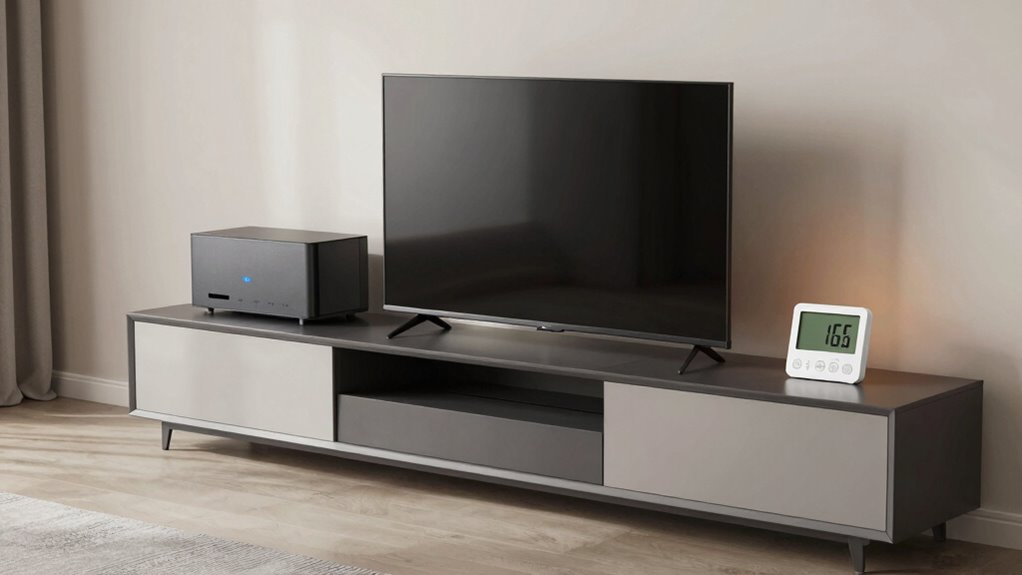

Even in setups with efficient appliances, phantom loads can sneak in through devices that stay partially active, like chargers, smart TVs, or computers in standby mode. These devices draw small amounts of power continuously, which adds up over time and increases your energy bills. Despite having energy-efficient labels, some appliances still consume power when turned off or in standby. Want to discover practical ways to cut these hidden drains and save more energy? Keep exploring for solutions.
Key Takeaways
- Efficient appliances may still have standby features that draw power, contributing to phantom loads despite overall energy efficiency.
- Manufacturers often include low-power standby modes that can accumulate significant energy use over time.
- Design choices like remote control readiness and quick-start functions inherently create continuous power draw.
- Energy labels like ENERGY STAR do not guarantee zero standby power, only overall efficiency during active use.
- Phantom loads can bypass efficiency measures, sneaking into setups through connected accessories and smart device features.
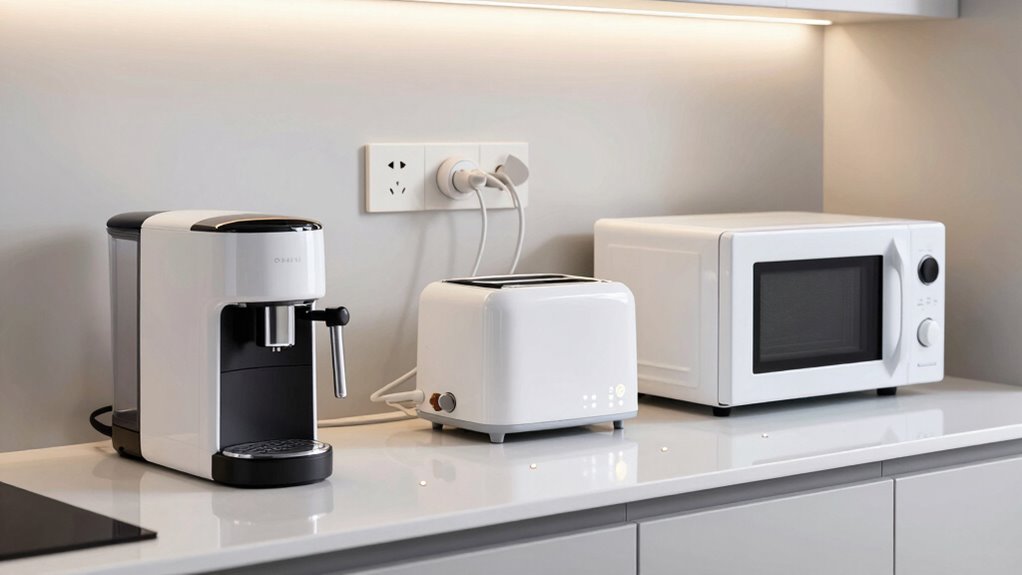
Have you ever wondered why your energy bills remain high even after switching to efficient appliances? You might assume that upgrading to ENERGY STAR-rated devices means you’re cutting down on power consumption, but there’s more to the story. Many people fall for energy saving myths that suggest once a device is labeled efficient, it uses minimal energy at all times. The truth is, hidden power drains—also known as phantom loads—can still silently sap your electricity, undermining your efforts to save.
Phantom loads are the small amounts of electricity that appliances draw even when they’re turned off or in standby mode. These sneaky power drains often go unnoticed because their consumption is minimal, but multiply that by all the devices in your home, and the total can be surprisingly significant. You may think your smart TV or charger isn’t costing you much, but these devices often continue pulling power 24/7. Many people believe that modern, efficient appliances have eliminated these issues, yet that’s a misconception rooted in energy saving myths. Some assume that if a device is labeled “energy-efficient,” it doesn’t contribute to phantom loads. The reality is, no appliance is entirely free of hidden power drains.
Phantom loads from devices in standby can silently boost your energy bills despite efficiency labels.
You can find these power vampires lurking in chargers, entertainment systems, computers, and even kitchen gadgets. They’re often designed to stay ready for quick startup or remote control activation, which means they stay partially active even when you’re not actively using them. This constant energy draw adds up over time, inflating your utility bills without you realizing it. To combat this, you need to be proactive—unplug devices when they’re not in use, or invest in smart power strips that cut power automatically. These simple steps can significantly reduce the amount of energy wasted and give you a clearer view of your actual consumption. Additionally, understanding energy management techniques can help you identify and eliminate these hidden drains more effectively. Recognizing the importance of appliance design and how it influences phantom loads can also lead to smarter purchasing decisions in the future. Furthermore, opting for devices with low standby power can make a notable difference in your overall energy savings.
Understanding that phantom loads exist is a vital first step toward more accurate energy management. It’s easy to fall for the myth that efficient appliances eliminate all unnecessary power consumption, but the truth is, they still contribute to hidden power drains if not properly managed. Recognizing these sneaky power drains allows you to implement practical solutions and truly maximize the benefits of your energy-efficient upgrades. By staying vigilant and unplugging devices or using smart strips, you can stop phantom loads from stealthily undermining your savings, ensuring that your efforts to reduce energy use really pay off. Efficient appliances may be marketed as energy-saving, but their design still doesn’t prevent phantom loads from occurring.
Frequently Asked Questions
How Can I Identify Phantom Loads in My Household Appliances?
You can identify phantom loads by checking your appliances’ power consumption in standby modes. Use a power meter to measure how much electricity they draw when turned off or idle. Look for devices with small but continuous power use, especially those with indicator lights, clocks, or remote controls. Unplug or switch off appliances when not in use to eliminate unnecessary standby power consumption and save on energy costs.
Do All Modern Appliances Contribute to Phantom Loads?
About 10% of a household’s energy use can come from phantom loads. Not all modern appliances contribute equally; some are designed with better power management, reducing unnecessary consumption. Appliance design plays an important role, but many still draw power even when turned off. To cut power consumption, look for energy-efficient models and unplug devices when not in use. This simple step can substantially lower your energy bills and environmental impact.
Are There Specific Brands Known for Minimal Phantom Loads?
Some brands focus on minimal phantom loads, making energy monitoring easier for you. Look for appliances with advanced power management features, like LG or Samsung, which prioritize energy efficiency. These brands often design products to reduce standby power, helping you save on energy costs. When shopping, check for labels or specs related to low standby consumption and guarantee the appliances support good power management to keep phantom loads minimal.
Can Smart Plugs Effectively Eliminate Phantom Loads?
Smart plugs can help reduce phantom loads, but don’t believe the myth that they eliminate all energy waste. While they’re effective for turning off devices completely, some phantom loads persist due to internal components. Use smart plugs as part of your energy savings tips, but also unplug devices not in use. Combining smart plugs with habits like powering down electronics guarantees you maximize savings and avoid false expectations.
How Much Energy Do Phantom Loads Typically Waste Annually?
Ever wonder how much energy phantom loads waste yearly? They typically drain about 100 to 200 kWh annually, which can add up over time. Many fall for power consumption myths that these loads are negligible, but in reality, they can substantially impact energy bills. Incorporate energy-saving tips like unplugging unused devices or using smart plugs to reduce this hidden energy drain. Don’t let phantom loads quietly inflate your electricity costs!
Conclusion
Even in your pursuit of efficiency, phantom loads quietly remind you that no system is ever truly empty. They symbolize the unseen energy we waste, lurking in the shadows of our modern comforts. By paying attention to these ghostly drains, you take control, illuminating the path toward true sustainability. Remember, the tiniest sparks can ignite change—so let your awareness be the light that dispels the darkness of hidden energy loss.