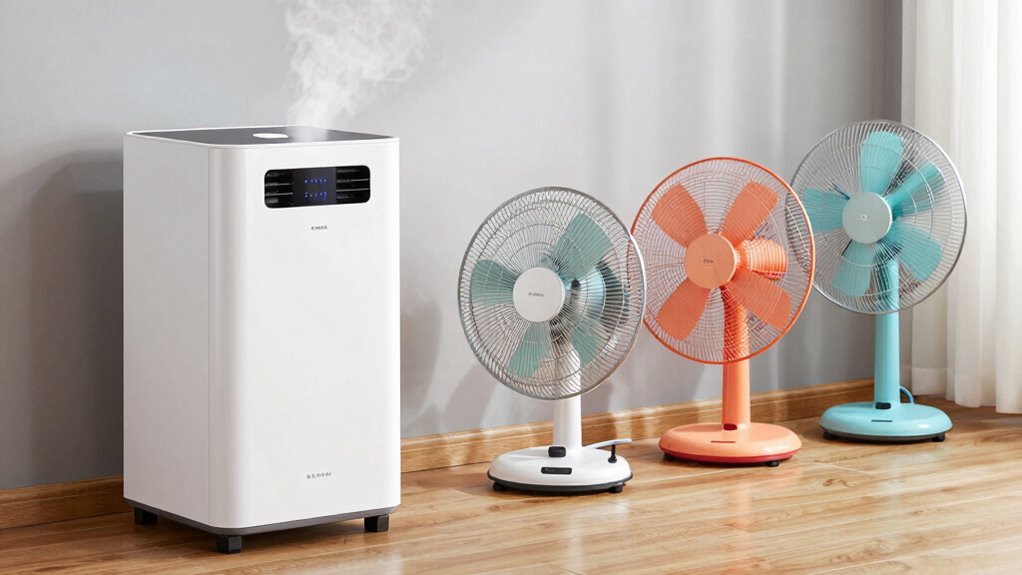
Compared to fans, portable air conditioners cost more per hour because they use more electricity due to their active cooling systems with compressors and refrigerants. Fans are cheaper to run, especially for short-term use, since they only circulate air. If you’re looking to save on ongoing costs, fans are more economical. However, if you need stronger cooling for larger spaces, a portable AC could be worth the higher expense. Keep exploring to see which option suits your needs best.
Key Takeaways
- Portable ACs consume significantly more electricity per hour than fans due to active cooling components.
- Fans have lower energy costs but provide less temperature reduction compared to portable ACs.
- The higher power draw of portable ACs results in increased operational costs over time.
- Fans are more economical for short-term or moderate cooling needs, lowering the cost-per-hour.
- Long-term cost savings depend on energy efficiency, usage duration, and cooling requirements.
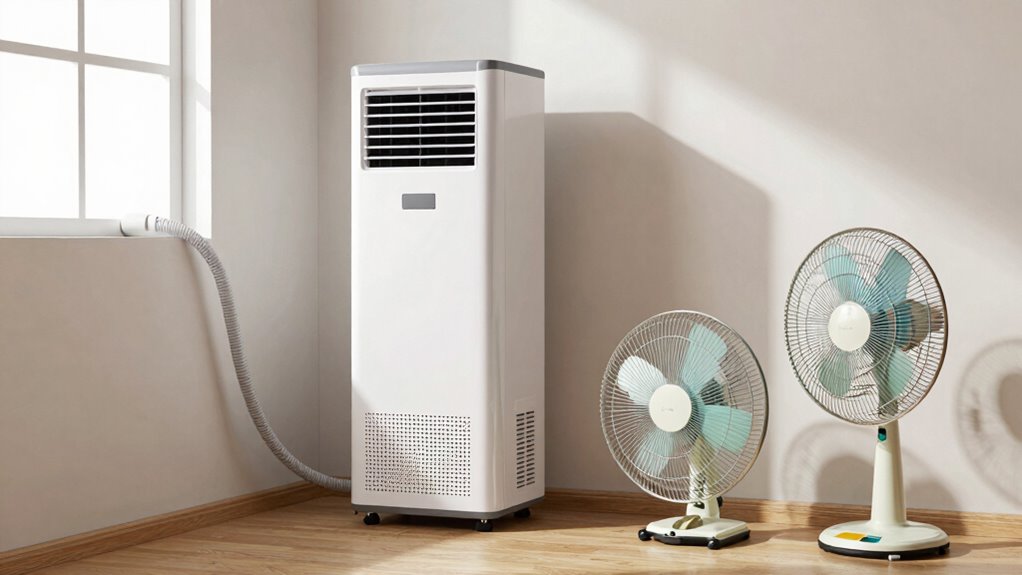
When choosing a cooling solution for your space, it’s important to understand the differences between portable air conditioners and fans. Both options can help you beat the heat, but they differ markedly in how they use energy and how much noise they produce. If you’re concerned about ongoing costs, understanding the energy efficiency of each device is essential. Portable air conditioners typically consume more power than fans because they actively cool the air, often using compressors and refrigerants. Fans, on the other hand, simply circulate air, which generally requires less electricity and results in a lower cost-per-hour. This means that, in terms of energy efficiency, fans tend to be more economical for short or moderate use. However, if your goal is to lower the temperature markedly, a portable AC might be more effective despite its higher running costs, which can add up over time. Additionally, energy efficiency plays a key role in determining the overall cost-per-hour and long-term savings. Noise levels are another important factor to consider. Fans are usually quieter because they have fewer moving parts and don’t involve compressors. A typical fan hums softly, making it suitable for bedrooms, offices, or other quiet environments. Portable air conditioners, however, can generate noticeable noise due to their compressors and fans working together to cool the air. This noise level can be disruptive, especially if you need to use the unit overnight or during work hours. Some models are quieter than others, so if noise is a concern, you’ll want to look for units specifically designed with noise reduction in mind. Keep in mind that a quieter device might also be more expensive, but it could be worth the investment if peace and quiet are priorities.
When comparing the overall cost-per-hour, fans usually come out ahead in terms of ongoing expenses because they use less electricity and don’t require additional maintenance like refrigerant refills or filter replacements. Portable AC units, while more costly to operate, provide a higher cooling capacity, which can justify their price if you need to cool larger spaces or if fans aren’t sufficient. Ultimately, your choice depends on balancing your budget, noise tolerance, and cooling needs. If you’re looking for a budget-friendly, quiet option for small spaces, a fan might be your best bet. But if you need to cool a larger area and don’t mind higher energy bills and noise, a portable AC could be worth the extra cost per hour.

VCK 42dB Ultra-Quiet 8000 BTU Portable AC Unit – 4-in-1 Air Conditioner with Dehumidifier Mode & Turbo Fan, Cools 350 Sq.Ft Spaces, Smart LED Display, Sleep Function, Includes Window Mount Kit White
🌙 48dB Library-Quiet Operation:Night mode reduces noise below whisper levels (measured 48dB). Auto temp adjustment + display off…
As an affiliate, we earn on qualifying purchases.
As an affiliate, we earn on qualifying purchases.
Frequently Asked Questions
How Do Maintenance Costs Compare Between Portable ACS and Fans?
You’ll find that fans generally require lower maintenance costs because they’re more durable and simpler to clean. Portable ACs, however, demand more upkeep, like regular filter changes and occasional repairs, which can add up over time. For better cost efficiency, fans are usually cheaper to maintain, but portable ACs might be worth it if you need stronger cooling. Consider durability and ongoing expenses when choosing.
Which Option Is More Environmentally Friendly Over Time?
Imagine a breeze cooling you gently, versus a portable AC whirring loudly. Over time, fans tend to be more environmentally friendly because they use less energy, reducing greenhouse gases. If powered by renewable energy, fans notably cut your carbon footprint, while portable ACs consume more electricity, increasing emissions. So, for a greener future, opt for fans, especially when harnessing renewable energy sources.
Are There Differences in Noise Levels During Operation?
You’ll notice that fans generally produce lower noise levels compared to portable AC units, making them quieter during operation. Portable ACs tend to generate more sound, which can contribute to noise pollution, especially in quiet environments. If minimizing sound is your priority, fans are a better choice. However, if you need more effective cooling despite the noise, a portable AC might be worth the additional sound levels.
How Does Energy Consumption Vary With Room Size?
Your energy consumption varies with room size, impacting both portable ACs and fans. For ideal energy efficiency and cooling coverage, choose a device suited to your room’s dimensions. Portable ACs generally use more energy in larger spaces due to higher cooling demands, while fans are more energy-efficient but less effective in bigger rooms. Match your device to your room size to maximize efficiency and keep costs manageable.
What Safety Considerations Should I Be Aware Of?
Safety should be your top priority. Always prioritize proper placement considerations to prevent overheating or electrical hazards. Guarantee electrical safety by avoiding overloading outlets and inspecting cords regularly for damage. Keep portable AC units and fans away from water sources and flammable materials. Properly vent your device to prevent carbon monoxide buildup. Maintain clear space around units, and never block vents, ensuring safe, secure, and stress-free cooling comfort.

DREO Tower Fan for Bedroom, 2026 Upgraded DC Motor, 28ft/s High Velocity, 20dB Ultra Quiet Standing Fan, 8 Speeds 4 Modes, 90° Oscillating Bladeless Fan for Indoors, Floor Fans with Remote, Black
𝐌𝐨𝐫𝐞 𝐏𝐨𝐰𝐞𝐫𝐟𝐮𝐥 𝐰𝐢𝐭𝐡 𝐮𝐩𝐠𝐫𝐚𝐝𝐞𝐝 𝐃𝐂 𝐦𝐨𝐭𝐨𝐫: Thanks to DREO's upgraded brushless DC motor combined with TurboWind technology, the…
As an affiliate, we earn on qualifying purchases.
As an affiliate, we earn on qualifying purchases.
Conclusion
Choosing between a portable AC and fans is like selecting a guiding star or a flickering candle. The AC offers steady, reliable comfort, symbolizing clarity and cool calm in your space. Fans, on the other hand, are like fleeting sparks—cost-effective but less consistent. Think of your comfort as a journey through darkness; a portable AC shines as your steadfast lighthouse, illuminating your room with cool assurance, while fans offer brief flashes that may leave you craving more.

Portable Air Conditioner, 3-in-1 8500 BTU AC Unit with Fan & Dehumidifier – Quiet Cooling for Bedroom, Home Office up to 450 sq.ft, Includes Complete Window Mount Kit
8500 BTU Powerful Cooling – Cools Up to 450 sq.ft in 8–15 Minutes: This portable air conditioner delivers…
As an affiliate, we earn on qualifying purchases.
As an affiliate, we earn on qualifying purchases.
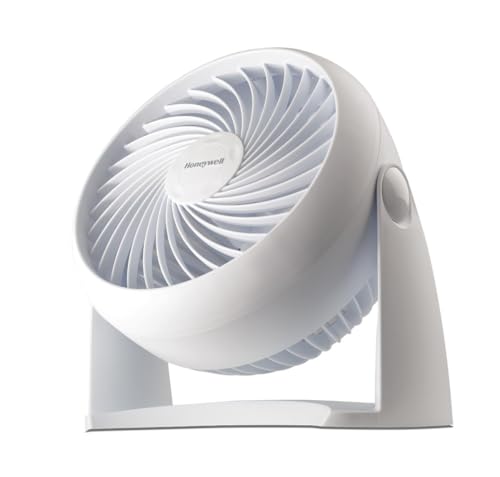
Honeywell TurboForce Air Circulator, Small Tabletop Fan, Quiet Personal Fan for Home or Office, 3 Speeds, 90 Degree Pivoting Head, White, HT-904
Small floor or tabletop fan: Honeywell TurboForce Air Circulator Fan is a cooling fan that is 25% quieter…
As an affiliate, we earn on qualifying purchases.
As an affiliate, we earn on qualifying purchases.