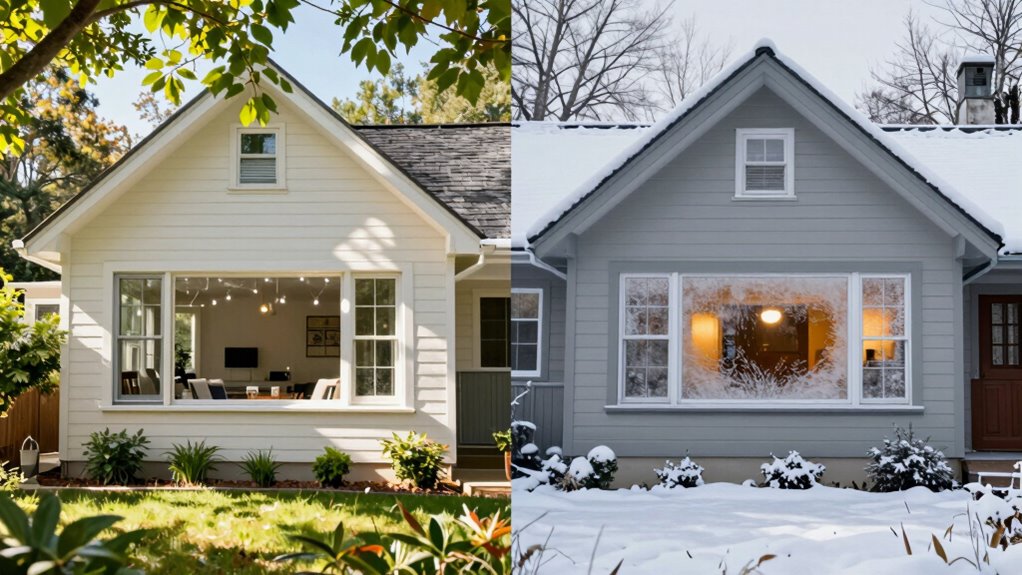

To save energy year-round, you need to adjust your home’s orientation and window placement based on seasonal sun angles. In summer, strategic shading like overhangs and deciduous trees can block intense, high-angle sunlight, reducing cooling costs. In winter, facing windows south allows deeper sunlight to heat your home naturally. Recognizing this seasonal switch helps you optimize energy efficiency and stay comfortable. Keep exploring to discover how small adjustments make a big difference.

Get home appliances delivered free with Prime
- Fast, free delivery on millions of items
- Prime Video, Amazon Music and more included
- Member-only deals all year
Key Takeaways
- South-facing windows maximize winter solar gain, reducing heating needs, but may cause overheating in summer without shading.
- Proper overhangs and deciduous trees block summer heat while allowing winter sunlight, optimizing seasonal energy savings.
- Home orientation should consider seasonal sun paths to improve natural heating in winter and cooling in summer.
- Adjusting window sizes and shading based on season enhances energy efficiency and reduces reliance on artificial climate control.
- Recognizing seasonal sun angle shifts is crucial for implementing effective energy-saving strategies that many overlook.
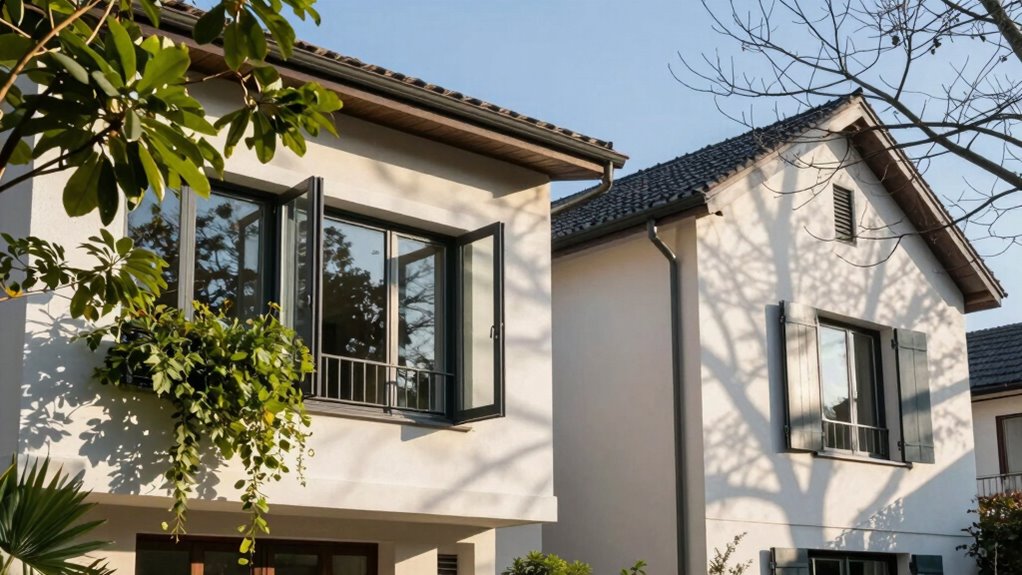
Have you ever wondered how the changing seasons influence the way we navigate our surroundings? It’s more than just the weather; it’s about how your home’s design can maximize comfort and save energy throughout the year. One of the most effective ways to do this is by paying attention to solar orientation and window placement. During summer, the sun rises high and shines intensely, while in winter, it sits lower in the sky. By understanding these patterns, you can optimize your home’s design to naturally regulate temperature and reduce reliance on cooling or heating systems.
Your home’s solar orientation—meaning the way it’s positioned relative to the sun—plays a pivotal role in energy efficiency. If your house faces directly south (in the northern hemisphere), you can take advantage of the sun’s path. In winter, the lower sun angle allows sunlight to penetrate deep into your living spaces through strategically placed windows, providing passive solar heating that warms your home naturally. Conversely, in summer, the high sun angle means that properly designed window placement—like overhangs or shading devices—can block excessive heat, preventing your home from overheating. This simple orientation and window design can markedly cut down on energy costs and make your home more comfortable year-round.
Proper south-facing windows and shading optimize natural heating and cooling year-round.
When planning your window placement, think about how they’re positioned in relation to the sun’s seasonal movement. Large, south-facing windows in winter let in maximum sunlight, warming your interior without extra energy. In summer, those same windows can be shaded with overhangs, awnings, or deciduous trees that lose their leaves seasonally, letting sunlight in during colder months but blocking it when the heat is unwelcome. Proper window placement also means avoiding large windows facing east or west, where the early morning or late afternoon sun can cause unwanted heat gain or loss. By aligning your windows with the sun’s seasonal path, you can harness solar energy in winter and block it in summer, reducing your dependence on artificial heating and cooling.
This approach isn’t complicated, but it requires thoughtful planning. Taking into account solar orientation and window placement allows you to harness natural light and heat, making your home more energy-efficient and comfortable throughout all seasons. European cloud servers leverage these principles of sustainable design, emphasizing how thoughtful infrastructure planning can contribute to energy savings and environmental impact reduction. It’s an often-overlooked switch that can lead to considerable savings. When you design or retrofit your home with these principles in mind, you’re effectively turning your house into an energy-smart space that adapts to the changing seasons. It’s a simple change that offers long-term benefits, helping you save money while reducing your environmental impact.
solar shading overhangs for windows
As an affiliate, we earn on qualifying purchases.
As an affiliate, we earn on qualifying purchases.
Frequently Asked Questions
How Does Seasonal Direction Affect Heating and Cooling Costs?
Seasonal direction impacts your heating and cooling costs by influencing how your home gains or loses heat. When your home faces the sun during winter, good thermal insulation helps retain warmth, reducing heating bills. Conversely, in summer, proper ventilation strategies like cross-ventilation keep things cool without over-relying on AC. Adjusting window orientations and sealing leaks can maximize energy savings year-round, no matter the season.
Can Window Placement Optimize Energy Savings Year-Round?
Yes, window placement can optimize your energy savings year-round. By choosing the right window orientation, you control sunlight exposure, which helps naturally heat or cool your space. South-facing windows in winter let in warmth, while east- and west-facing windows reduce overheating in summer. Proper window placement minimizes reliance on heating and cooling systems, saving you energy and money. Adjust blinds and curtains accordingly to maximize these benefits throughout the seasons.
Does Roof Color Influence the Effectiveness of Seasonal Direction?
Yes, roof color influences how seasonal direction affects energy savings. Lighter roof colors with high solar reflectance bounce sunlight, keeping your home cooler in summer and reducing AC use. Darker roofs absorb more heat, which can be beneficial in winter but increases cooling costs in summer. Choosing a roof color based on your seasonal needs maximizes energy efficiency year-round, leveraging solar reflectance to optimize comfort and savings.
Are There Specific Architectural Designs That Maximize Seasonal Energy Efficiency?
You can maximize seasonal energy efficiency by choosing architectural designs that incorporate landscape integration and window shading. For instance, plant trees strategically to provide natural shade during summer and allow sunlight in winter. Installing adjustable window shading helps control heat gain and loss, reducing energy use year-round. These features work together to optimize your home’s thermal performance, making it more comfortable and energy-efficient regardless of the season.
How Do Local Climate Variations Impact Seasonal Directional Strategies?
Your local climate variations considerably influence seasonal directional strategies. You should consider solar shading to block harsh summer sun or maximize winter sunlight, depending on the season. Wind patterns also impact your design; for example, positioning windows to minimize wind chill in winter or enhance natural ventilation in summer. By adapting these strategies to your climate, you can optimize energy efficiency year-round, reducing reliance on heating and cooling systems.
Conclusion
So, whether you’re summer or winter, thinking about your home’s direction is like steering a ship through changing tides. Switch your mindset with the seasons, and you’ll catch the breeze of energy savings more often than not. Don’t overlook this simple switch — it’s the secret key to effortlessly trimming your bills. Just as a compass guides a traveler, your home’s orientation can point you toward smarter, year-round savings.
Fall yard work Picks
leaf blowers
As an affiliate, we earn on qualifying purchases.