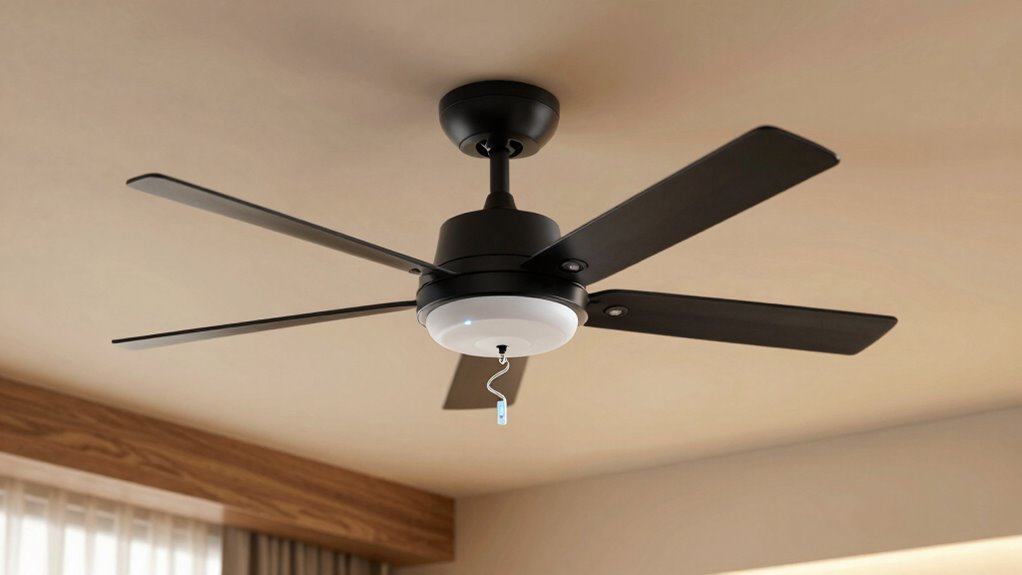
To make your fan think for itself with temperature-based automation, you’ll need smart sensors that monitor room temperature and connect to a control system. Program the system to turn the fan on when temperatures rise above a certain point and off when they drop. This setup helps you save energy, maintain comfort, and reduce manual adjustments. Keep exploring to discover how to set up these sensors and customize your automation for ideal results.

Get home appliances delivered free with Prime
- Fast, free delivery on millions of items
- Prime Video, Amazon Music and more included
- Member-only deals all year
Key Takeaways
- Install smart sensors to monitor ambient temperature and connect them to your automation system.
- Program the system to turn the fan on/off based on specific temperature thresholds.
- Use automation platforms like IFTTT or SmartThings to create dynamic, rule-based control for your fan.
- Integrate smart thermostats and other devices for coordinated climate management and smarter responses.
- Regularly adjust temperature thresholds and settings to optimize comfort and energy efficiency.
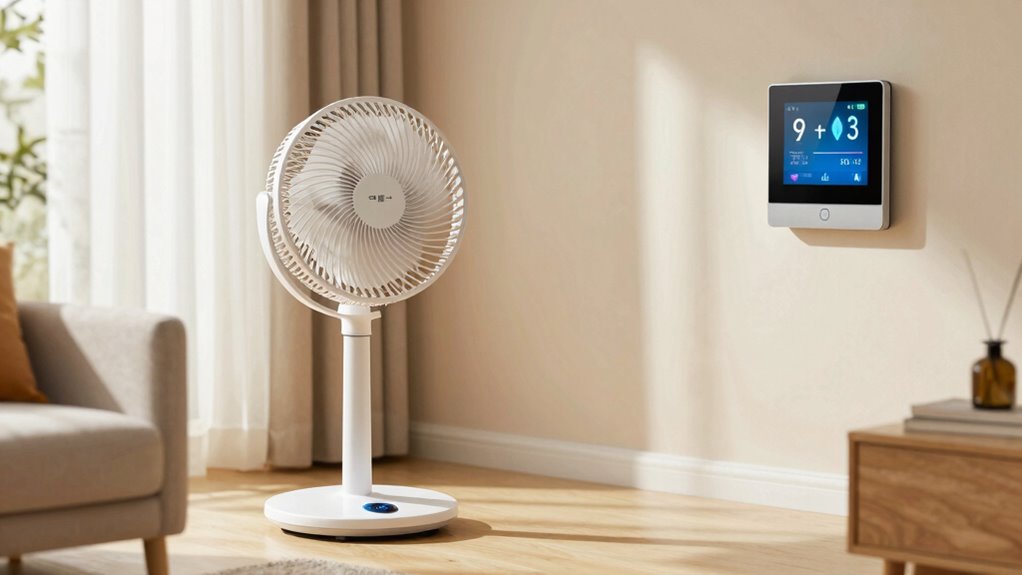
Temperature-based fan automation helps you optimize comfort and energy efficiency by controlling your fan’s operation based on room temperature. This smart system ensures your fan runs only when needed, preventing unnecessary energy use and maintaining a comfortable environment. To achieve this, integrating smart sensors is key. These sensors continuously monitor the ambient temperature and send real-time data to your automation system, enabling your fan to respond dynamically. With smart sensor integration, you don’t have to manually turn the fan on or off; instead, the system adjusts itself based on the temperature thresholds you set. This automation reduces your energy consumption because the fan operates only when it’s truly necessary, helping you implement effective energy efficiency strategies.
By linking your fan to smart sensors, you gain precise control over its operation. For example, you can program the system to activate the fan when the room temperature exceeds a specific point, say 75°F, and turn it off once it drops below that level. This targeted approach prevents constant fan running, which wastes electricity and wears out the device prematurely. Additionally, many smart systems allow you to customize temperature ranges for different times of day or activities, giving you tailored comfort and efficiency. This means your fan responds intelligently to changes in room temperature, rather than operating on a fixed schedule or manual input. Incorporating smart home device integration can further enhance your climate control capabilities, allowing your fan to work seamlessly with other devices.
Energy efficiency strategies like this not only lower your utility bills but also contribute to a more sustainable lifestyle. When your fan only runs when necessary, you reduce energy waste and lessen your carbon footprint. Moreover, smart sensor integration often pairs with other smart home devices, enabling you to create detailed climate control systems. For instance, your fan can coordinate with a smart thermostat to optimize cooling or heating, further enhancing efficiency. You can also set alerts or automate routines that adjust based on occupancy, ensuring the fan doesn’t run when no one is in the room.
Products Worth Considering

Sonos Era 100 Wireless Smart Speaker, Black

Levoit Core 600S-P Smart Air Purifier for Large Rooms

LG C2 Series 65-Inch OLED evo 4K Smart TV (OLED65C2PUA, 2022)
As an affiliate, we earn on qualifying purchases.
Frequently Asked Questions
Can Temperature-Based Fan Automation Save Energy Costs Long-Term?
Yes, temperature-based fan automation can save you money in the long run. By adjusting fan operation based on actual needs, you reduce unnecessary energy consumption, leading to significant energy savings. This approach enhances cost efficiency by lowering your utility bills and extending your fan’s lifespan. You’ll enjoy a more sustainable setup that automatically optimizes performance, so you don’t have to manually control your fan constantly.
What Are the Best Sensors for Accurate Temperature Readings?
You want sensors with high accuracy and quick response times to guarantee your fan reacts precisely. Look for thermistors or digital temperature sensors like the DS18B20, which offer reliable sensor accuracy and fast response times. Coincidentally, these sensors detect temperature changes swiftly, helping your fan adapt instantly. By choosing sensors with the best accuracy and response time, you maximize efficiency and maintain comfort effortlessly.
How Does Fan Automation Impact Indoor Air Quality?
Fan automation improves indoor air quality by actively adjusting ventilation control based on real-time data. It uses air quality monitoring to detect pollutants, humidity, and CO2 levels, ensuring fresh air circulates when needed. This prevents stale air buildup and reduces airborne contaminants, creating a healthier environment. By automatically managing airflow, your system maintains ideal air quality without manual intervention, enhancing comfort and safety in your indoor space.
Is Custom Programming Necessary for Different Climate Zones?
Like a knight with a quill, you might wonder if custom programming is needed for different climate zones. In most cases, you’ll want to tailor your automation to each zone’s unique needs, which can increase programming complexity. For ideal performance, customize settings based on climate zone specifics. This ensures your fan adapts properly, boosting energy efficiency and comfort without turning your setup into a medieval scroll of confusion.
Can This System Integrate With Existing Smart Home Devices?
Yes, this system can integrate with your existing smart home devices. You can control it using voice control features and customize settings to suit your preferences. It seamlessly connects with popular smart home platforms, allowing you to automate fan operation based on temperature or other sensors. This integration enhances user customization, making it easier to manage your climate comfortably without manual adjustments.
Conclusion
Imagine your fan as a smart friend who knows just when to cool you down. With temperature-based automation, you’re giving your fan a brain of its own—like a thermostat that learns your habits. Just last summer, I set mine to turn on at a cozy 75°F, and it kept my room perfectly comfortable without me lifting a finger. Now, you can enjoy that effortless comfort too, making your space smarter and more efficient every day.