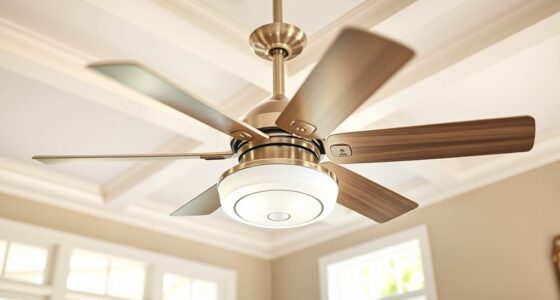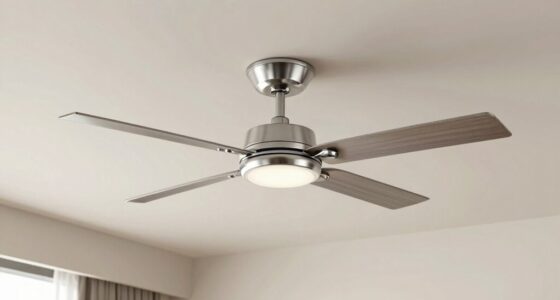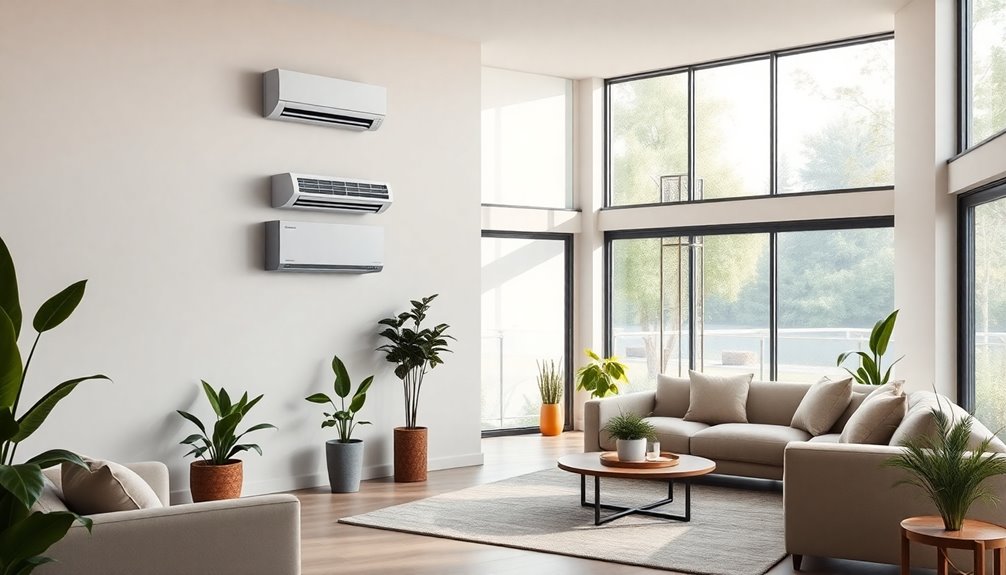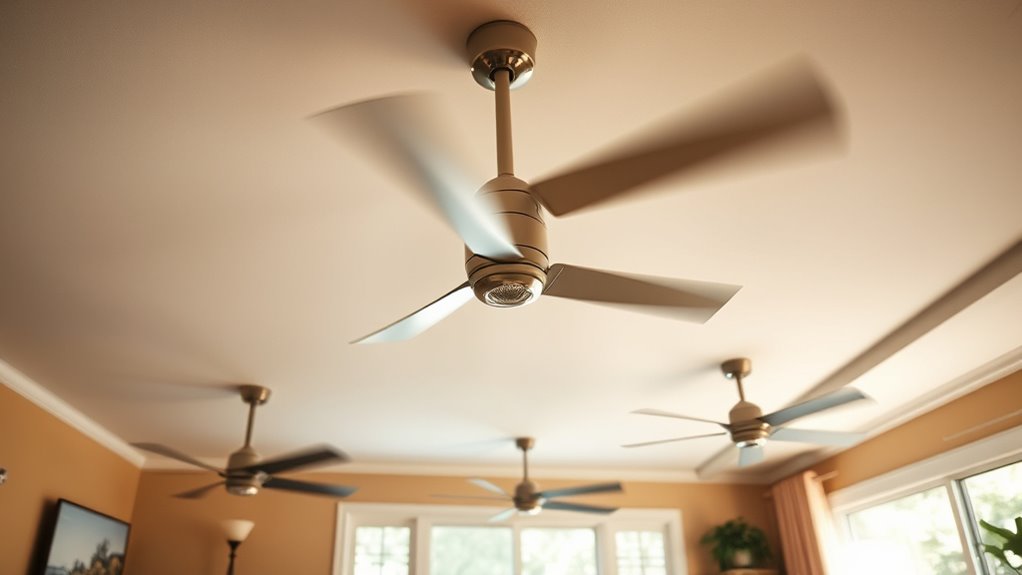
Using ceiling fans enhances air circulation, which helps maintain consistent indoor temperatures and reduces the workload on your HVAC system. By distributing warm or cool air evenly, fans can lower energy consumption, lessen frequent HVAC cycling, and decrease system wear. Proper placement and operation—such as reversing fan direction seasonally—maximize benefits. Regular maintenance ensures ideal airflow. Implementing these strategies can prolong HVAC lifespan and improve efficiency; exploring further can reveal more ways to enhance your system.
Key Takeaways
- Ceiling fans improve air circulation, reducing the workload on HVAC systems and preventing overuse.
- Properly positioned fans distribute conditioned air evenly, minimizing temperature stratification and system strain.
- Using fans to create a wind-chill effect allows higher thermostat settings, decreasing HVAC compressor cycles.
- Regular fan maintenance ensures optimal airflow, reducing mechanical stress on HVAC components.
- Reversing fan direction seasonally enhances efficiency, helping HVAC systems operate less frequently and extend their lifespan.
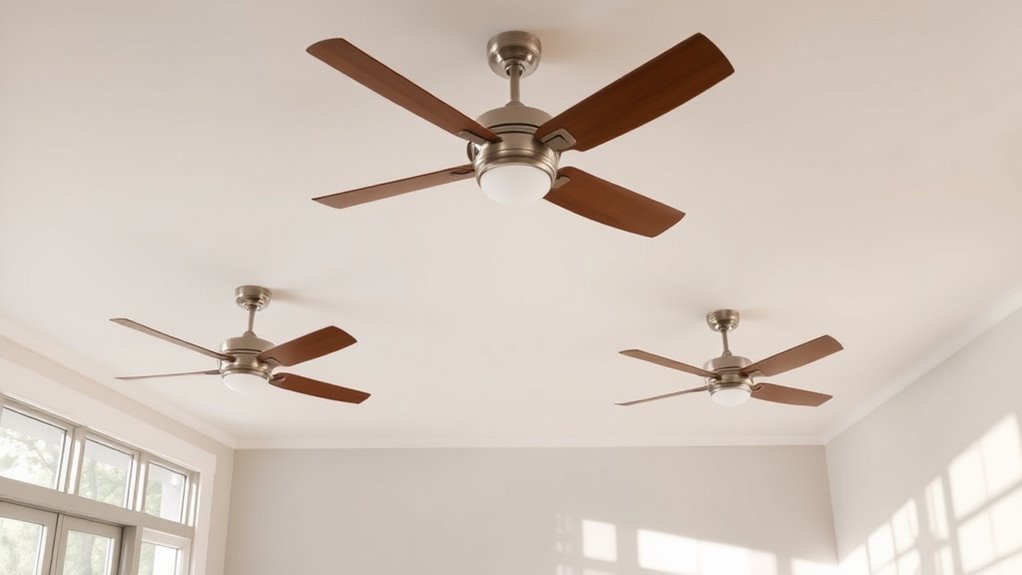
Ceiling fans can considerably reduce the workload on your HVAC system by improving air circulation and temperature distribution. When you operate a ceiling fan, it creates a gentle airflow that enhances the movement of conditioned air throughout your space. This circulation minimizes temperature stratification, making certain that warm air near the ceiling is consistently blended with cooler air near the floor. As a result, your HVAC system doesn’t need to cycle as frequently to maintain a set temperature, leading to energy savings and decreased wear on components such as compressors, fans, and filters.
Ceiling fans improve air circulation, reduce HVAC workload, and save energy by preventing temperature stratification.
The efficiency gains from ceiling fan use are primarily due to their ability to augment the heating or cooling process without directly increasing energy consumption. In cooling mode, ceiling fans generate a wind-chill effect on occupants, making the environment feel cooler even when the thermostat remains unchanged. This perceived temperature reduction allows you to set the thermostat higher, which reduces the compressor’s operational time. Conversely, during heating, ceiling fans help distribute warm air that tends to rise and linger near the ceiling, pushing it downward and promoting even warmth distribution. This prevents the heating system from overworking to compensate for uneven heat distribution, thereby extending its operational lifespan.
Properly integrating ceiling fans with your HVAC system involves strategic placement and operation. Ceiling fans should be mounted at a height that maximizes airflow and should rotate counterclockwise during summer to produce a downward breeze, while in winter, reversing the rotation to clockwise helps circulate warm air trapped near the ceiling without creating a strong draft. Additionally, the size and airflow capacity of the fans should match the room dimensions to optimize circulation without causing excessive draft or noise. Correctly timed operation — running fans only when needed — guarantees that energy savings translate into reduced mechanical stress on your HVAC equipment.
Keeping your ceiling fans well-maintained is vital for consistent performance. Regularly cleaning blades prevents dust buildup, which can impair airflow and cause imbalance, leading to motor strain. Checking the fan’s mounting and motor for vibrations or unusual noises can preempt mechanical failures that might otherwise cause your HVAC system to work harder due to poorly circulated air. Using dimmable or speed-controlled fans allows you to fine-tune airflow according to occupancy and external conditions, further reducing unnecessary strain on your HVAC units. Additionally, understanding dog breeds and their behaviors can help tailor your home’s climate control needs to suit your specific environment and reduce unnecessary energy expenditure.
ceiling fans with reversible blades
As an affiliate, we earn on qualifying purchases.
As an affiliate, we earn on qualifying purchases.
Frequently Asked Questions
Can Ceiling Fans Reduce Energy Bills Year-Round?
Yes, ceiling fans can reduce your energy bills year-round by improving HVAC efficiency. During summer, fans create a cooling breeze, allowing you to raise your thermostat setting without sacrificing comfort. In winter, reversing fan direction pushes warm air downward, reducing heating needs. This dual functionality decreases reliance on HVAC systems, lowering energy consumption and bills. Properly used, ceiling fans optimize climate control, providing cost savings across seasons.
How Do Ceiling Fans Impact HVAC System Maintenance?
Ceiling fans reduce the workload on your HVAC system by improving air circulation, which maintains consistent temperatures and enhances comfort. This decreased demand lowers the frequency of HVAC system cycling and reduces strain on components like filters, compressors, and coils. As a result, you experience less wear and tear, decreasing maintenance needs and prolonging system lifespan. Properly maintained ceiling fans contribute to more efficient HVAC operation and less costly repairs over time.
Are Ceiling Fans Effective in Large Open Spaces?
Ceiling fans can be effective in large open spaces when appropriately sized and positioned. They promote air circulation, reducing stratification and maintaining a consistent temperature across the area. However, their effectiveness depends on ceiling height, fan capacity, and airflow design. Properly calibrated, ceiling fans complement HVAC systems by enhancing comfort and potentially lowering energy consumption, but they shouldn’t replace a well-designed HVAC system for large, open environments.
What Safety Considerations Are There When Using Ceiling Fans?
When using ceiling fans, make certain you install them securely to prevent accidents. Regularly check the fan blades for damage and balance to avoid wobbling, which could cause falling hazards. Keep pull chains or switches out of reach of children, and turn off fans when not in use to prevent electrical issues. Avoid installing fans in areas with high humidity or near water sources to reduce corrosion and electrical risks.
Can Ceiling Fans Cause Noise Issues With HVAC Systems?
Ceiling fans can cause noise issues when improperly installed or if they loosen over time, with about 10% of users reporting operational noise. You might notice humming, rattling, or buzzing sounds that interfere with HVAC system performance. To minimize this, make certain fans are securely mounted, balanced, and use quality components. Proper maintenance and installation help prevent noise problems, maintaining a quiet environment and ideal HVAC efficiency.
Conclusion
By leveraging ceiling fans alongside your HVAC system, you enhance efficiency, reduce strain, and extend equipment lifespan. This strategic synergy saves you money, minimizes maintenance, and maximizes comfort. Consistent use of ceiling fans creates a cool, cost-effective climate, curbing unnecessary HVAC workload. Implementing this intelligent integration ensures your system operates at its best, offering ongoing comfort and longevity. Embrace this practical partnership to preserve your HVAC’s performance, protect your investment, and promote prolonged, precise climate control.