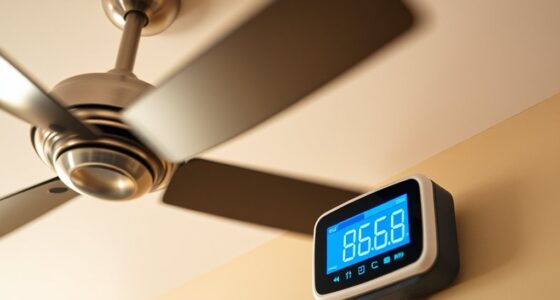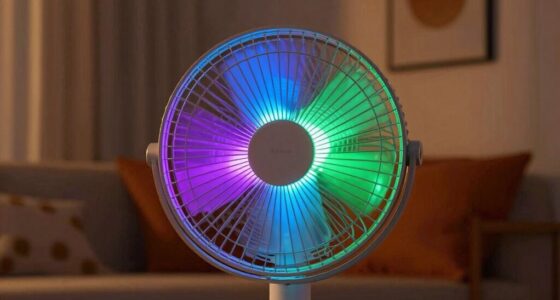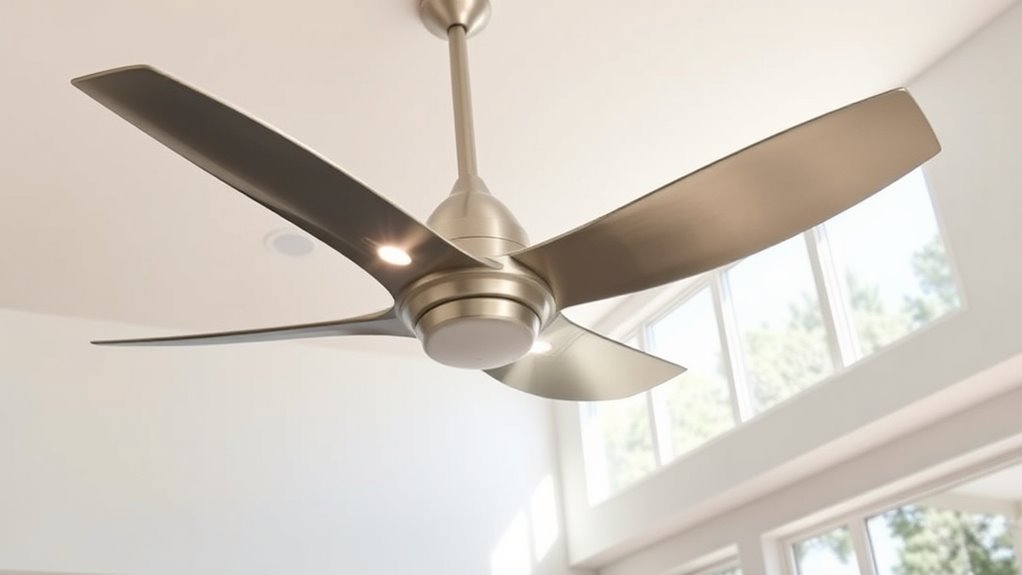
In 2025, energy-efficient ceiling fan designs will focus on advanced brushless DC motors and aerodynamically optimized blades made from lightweight, durable materials to maximize airflow and reduce energy use. Smart automation, including occupancy sensors and IoT connectivity, will optimize operation while integrated LED lighting enhances efficiency. Sleek, minimalist aesthetics will combine form with function, emphasizing compact designs. Exploring these innovations will reveal how technology and design converge to create highly sustainable, cost-effective ceiling fans.
Key Takeaways
- Integration of advanced brushless and electronically commutated motors enhances efficiency and reduces energy consumption.
- Aerodynamic blade designs with lightweight, durable materials optimize airflow and extend fan lifespan.
- IoT connectivity and smart sensors enable automated operation and precise energy management.
- Minimalist designs with integrated LED lighting combine aesthetics with reduced electrical load.
- Overall trends focus on combining motor innovations, aerodynamic improvements, and smart features for maximum efficiency.
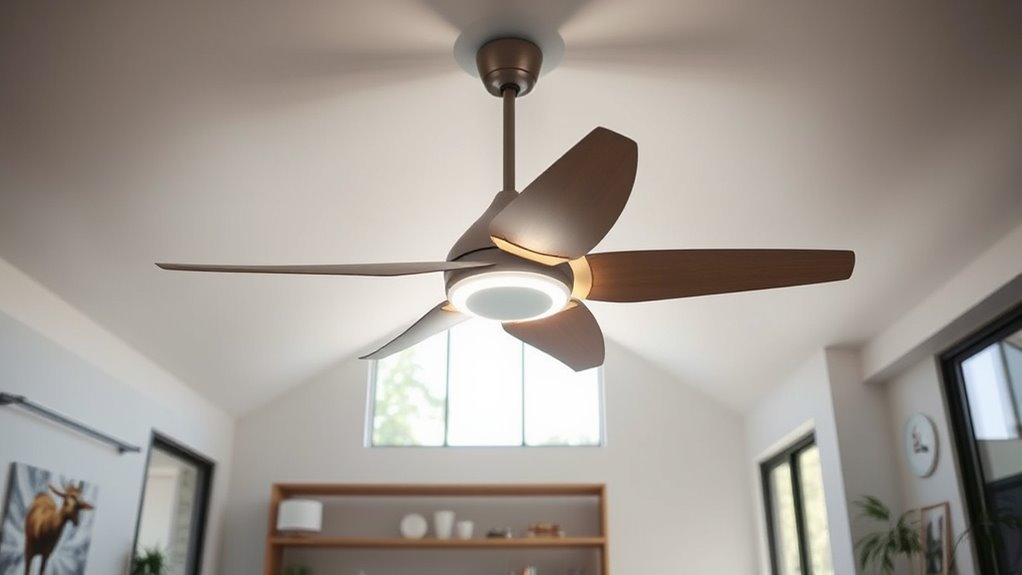
As the demand for sustainable living grows, ceiling fan designs are increasingly prioritizing energy efficiency for 2025. You’ll notice that modern models incorporate advanced motor technology, such as brushless DC motors (BLDC), which considerably reduce energy consumption compared to traditional universal motors. These motors operate at higher efficiencies and deliver consistent performance while consuming less power, making them ideal for energy-conscious consumers. By integrating electronically commutated motors (ECMs), designers enhance airflow with minimal electrical input, enabling you to achieve ideal cooling with lower energy costs. Additionally, variable speed controls and intelligent automation are becoming standard features, allowing you to fine-tune fan operation based on room occupancy or ambient temperature, further reducing unnecessary energy use.
Design innovations also focus on aerodynamics to maximize airflow while minimizing energy expenditure. Blade profiles are becoming more streamlined and aerodynamically optimized, reducing drag and enabling the fan to circulate air more effectively at lower speeds. This development allows you to operate the fan efficiently without sacrificing performance. Moreover, the adoption of lightweight, durable materials like composite plastics and reinforced aluminum reduces the overall weight of the fan assembly, decreasing the load on the motor and allowing for more efficient operation. This shift not only enhances energy savings but also extends the lifespan of the fixture, providing long-term cost benefits.
Streamlined blades and lightweight materials boost efficiency and extend ceiling fan lifespan.
Smart integration is another key trend influencing energy-efficient designs. You will see more ceiling fans equipped with IoT connectivity, enabling remote control and automation via smartphone apps or home automation systems. These features allow you to program operational schedules, adjust fan speeds remotely, or integrate the fan into energy management systems, ensuring that the fan operates only when needed. Sensors that detect occupancy or ambient temperature can automatically activate or deactivate the fan, preventing wasteful energy use. This level of automation ensures that your energy consumption aligns with actual room conditions, maximizing efficiency and reducing operational costs.
Finally, aesthetic considerations are aligned with functional improvements to promote energy efficiency. Compact, minimalist designs with integrated LED lighting are common, reducing the need for separate fixtures and minimizing overall electrical consumption. These integrated systems often feature low-profile blades and sleek motors that blend seamlessly into modern interiors, encouraging you to adopt energy-efficient solutions without compromising style. Overall, the convergence of advanced motor technology, aerodynamic design, smart automation, and aesthetic integration defines the trajectory of ceiling fan development for 2025, making energy efficiency an inherent aspect of contemporary design. Additionally, innovations in electric motor technology are playing a crucial role in achieving these efficiency goals.

ZMISHIBO 52 Inch Ceiling Fan with Light, App&Remote Control, Flush Mount Low Profile, Dimmable 20W LED Light, Quiet Reversible Motor for Bedroom, Living Room, Apartment, Black
Perfect Size for Rooms: This 52-inch ceiling fan is ideal for cooling and illuminating spacious areas like living…
As an affiliate, we earn on qualifying purchases.
As an affiliate, we earn on qualifying purchases.
Frequently Asked Questions
How Do Smart Controls Improve Ceiling Fan Energy Efficiency?
Smart controls enhance ceiling fan energy efficiency by enabling precise scheduling, adjusting speeds based on room occupancy, and integrating with smart thermostats. You can automate fan operation to run only when needed, reducing unnecessary energy consumption. Additionally, remote access allows you to fine-tune settings from anywhere, ensuring ideal airflow and temperature regulation. These features collectively minimize energy waste, lower utility bills, and improve overall climate comfort in your space.
What Materials Are Best for Sustainable Ceiling Fan Blades?
You should choose sustainable ceiling fan blades made from bamboo, recycled wood, or biodegradable composites, as these materials minimize environmental impact. Bamboo offers rapid renewability and high strength-to-weight ratio, while recycled wood reduces waste and deforestation. Biodegradable composites, derived from natural fibers like hemp or jute, provide durability with low ecological footprints. These materials guarantee your ceiling fan remains energy-efficient, durable, and eco-friendly over its lifespan.
How Does Blade Design Affect Airflow and Energy Savings?
You’ll find that blade design substantially impacts airflow and energy savings, with aerodynamically optimized blades increasing efficiency by up to 20%. A well-designed blade angle and curvature reduces drag, allowing the fan to circulate air more effectively with less power. Precise blade pitch and shape ensure consistent airflow, minimizing motor load, and lowering energy consumption, ultimately enhancing both performance and sustainability in modern ceiling fan designs.
Are There Specific Certifications Indicating Energy-Efficient Ceiling Fans?
Yes, you should look for ENERGY STAR certification, which indicates the ceiling fan meets strict energy efficiency standards set by the EPA. This certification guarantees the fan uses less energy while providing maximum airflow. Additionally, some models carry the DOE’s Energy Saver label, verifying compliance with federal efficiency guidelines. Choosing fans with these certifications guarantees you get a product designed to reduce energy consumption and lower utility bills effectively.
What Maintenance Practices Enhance a Fan’s Energy Performance?
To maximize your ceiling fan’s energy efficiency, regularly clean the blades and motor housing to prevent dust buildup that hampers airflow. Tighten loose screws and check the pull chain or remote controls for proper operation. Lubricate motor bearings as recommended by the manufacturer to reduce friction. Consistent maintenance minimizes resistance, promotes smooth spinning, and preserves ideal airflow, ensuring your fan operates at peak performance while conserving energy.
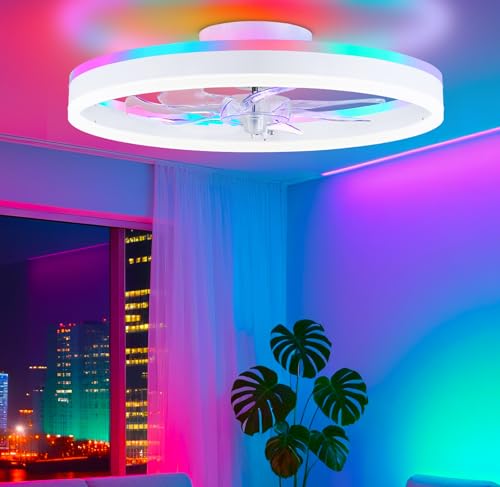
STERREN RGB Ceiling Fans with Lights, 20'' Smart LED Ceiling Fan with Remote/APP Control, Modern Low Profile Bladeless Chandelier Fan, Dimmable White Fandelier for Bedroom, Living Room, Kitchen
All-in-One Cooling & Illumination Ceiling Fan: Experience powerful, ultra-quiet airflow and perfectly 3 color temperature +RGB LED lighting…
As an affiliate, we earn on qualifying purchases.
As an affiliate, we earn on qualifying purchases.
Conclusion
As you explore these emerging trends, it’s clear that innovative materials and smart technology will redefine efficiency standards. But what’s next? Will future designs push energy savings even further, or introduce groundbreaking features we haven’t imagined yet? The evolution of ceiling fan technology is accelerating, and staying ahead means anticipating these shifts. Prepare to witness a new era of eco-friendly, intelligent cooling solutions—where the next breakthrough could reshape your expectations entirely.

Ohniyou Ceiling Fans with Lights, 52'' Low Profile Ceiling Fan with Light and Remote/APP Control, Modern Flush Mount Ceiling Fan for Indoor Bedroom Living Room, Dimmable, Qiuet DC Motor, Black
Smart Ceiling Fans with APP & Remote Control: This modern ceiling fan with lights has all functions controllable…
As an affiliate, we earn on qualifying purchases.
As an affiliate, we earn on qualifying purchases.

NUOBESTY 1 Pack Ceiling Fan Blades Replacement for 52 Inch, Plastic Ceiling Fan Blade Set for Outdoor And Indoor, Weatherproof Wood Grain Paddles for Home, Patio, Bedroom – Black
WEATHERPROOF & MOISTURE-RESISTANT: Unlike standard MDF blades that warp or droop, our plastic ceiling fan blades are weatherproof,…
As an affiliate, we earn on qualifying purchases.
As an affiliate, we earn on qualifying purchases.