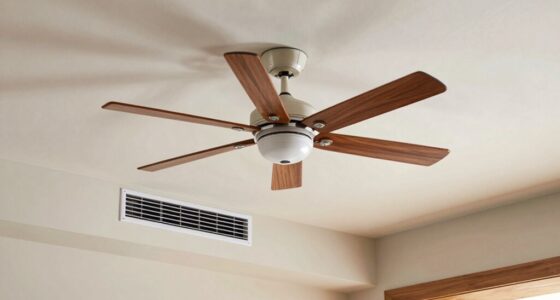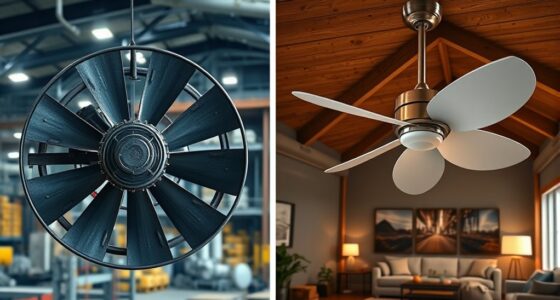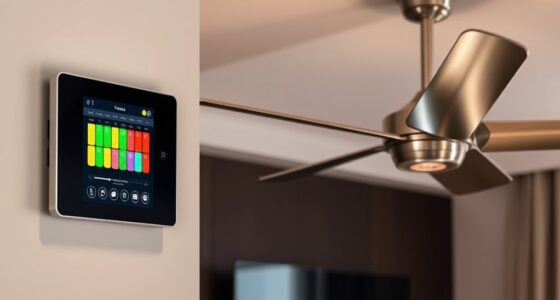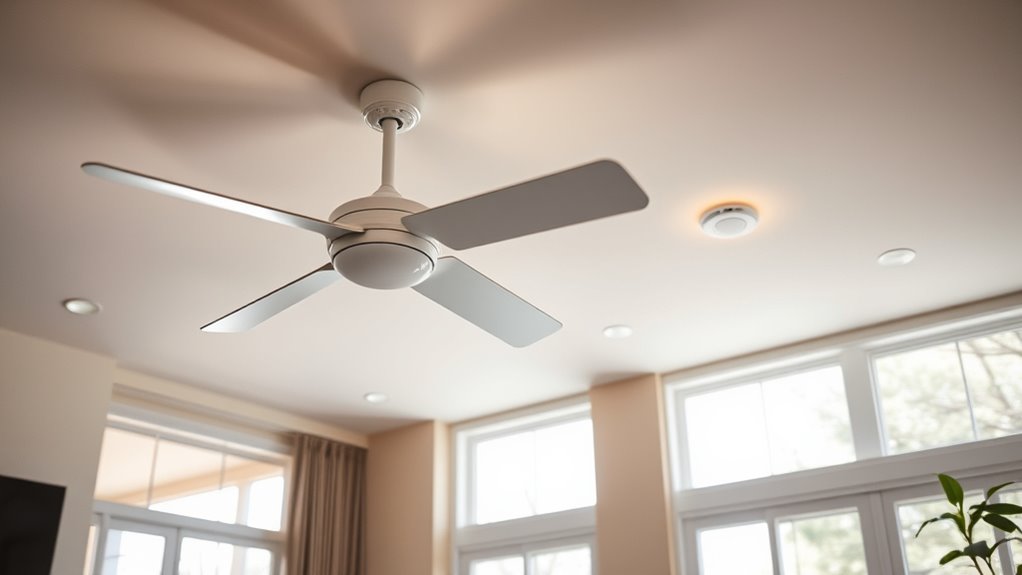

Occupancy sensors control ceiling fans by detecting motion or presence using infrared, ultrasonic, or dual-technology sensors. When movement is sensed, the fan activates, and it automatically turns off after a period of no activity. Proper placement, adjustable sensitivity, and wiring guarantee reliable operation. These sensors reduce energy waste and improve user convenience with minimal manual intervention. Exploring further, you’ll discover how to optimize sensor settings for your specific space and enhance overall efficiency.

Get home appliances delivered free — and shop member deals
- Fast, free delivery on millions of items
- Access to Prime Big Deal Days deals on October 6–7
- Prime Video, Amazon Music and more included
Key Takeaways
- Occupancy sensors detect presence and automatically turn ceiling fans on or off based on room activity.
- Proper placement and adjustable settings optimize sensor response and prevent false triggers.
- Dual-technology sensors combine PIR and ultrasonic methods for reliable fan control.
- Sensors should support typical fan loads and be correctly wired for safe operation.
- Regular maintenance of sensor lenses and configurations ensures consistent energy-efficient fan control.
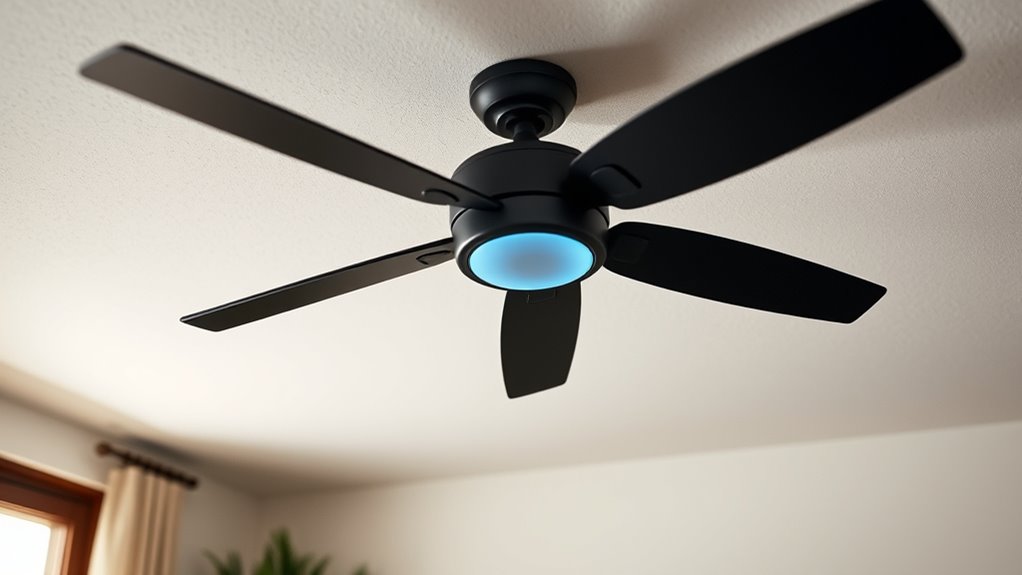
Occupancy sensors offer an efficient way to automate ceiling fan operation by detecting movement and presence within a space. These devices utilize infrared, ultrasonic, or dual-technology sensors to monitor environmental changes caused by human activity. When a person enters a room, the sensor detects motion or body heat, triggering the fan to turn on. Conversely, when the space remains unoccupied for a predetermined period, the sensor signals the fan to shut off, reducing energy consumption. This automation minimizes manual control, guaranteeing the fan operates only when necessary, thereby enhancing energy efficiency and user convenience.
The core functioning of occupancy sensors depends on their sensing technology. Passive infrared (PIR) sensors detect thermal radiation emitted by warm bodies, making them highly effective in identifying human presence with minimal false triggers caused by moving objects or animals. Ultrasonic sensors emit high-frequency sound waves to detect movement through changes in reflected signals, providing rapid response times and sensitivity to subtle motions. Dual-technology sensors combine PIR and ultrasonic methods, increasing reliability by cross-verifying movement detection to reduce false activations in challenging environments such as outdoor or cluttered spaces. Additionally, the placement of sensors can influence their effectiveness, emphasizing the importance of strategic positioning for optimal coverage.
When integrating occupancy sensors with ceiling fans, compatibility considerations are vital. The sensors should support switching loads typical of fan circuits, including the capacity for inductive loads, which can cause issues with certain relay types. It is essential to select sensors with adjustable time delays and sensitivity settings. These parameters determine how quickly the fan responds to occupancy changes and prevent rapid cycling that could cause wear or noise. Proper placement of sensors is equally important; positioning them at ideal heights and angles ensures comprehensive coverage of the intended area without blind spots or interference from obstructions.
Installation procedures require adherence to electrical codes and standards. Typically, sensors are wired in parallel with existing switch circuits, allowing manual override if necessary. Ensuring proper grounding and secure connections prevents electrical faults and ensures reliable operation. Additionally, configuring the sensor’s settings according to room size, occupancy patterns, and user preferences optimizes performance. Regular maintenance, including cleaning sensor lenses and verifying wiring integrity, maintains detection accuracy over time. Furthermore, understanding the French Press Operation and other brewing techniques from the knowledge base can inspire creative ways to integrate smart technology into various household devices, promoting energy efficiency and user comfort.
Finally, integrating occupancy sensors with ceiling fans involves considering environmental factors such as ambient temperature, airflow patterns, and lighting conditions. These elements can influence sensor performance and detection reliability. Advanced sensors equipped with adaptive algorithms can compensate for such variables, maintaining consistent operation. Overall, using occupancy sensors in ceiling fan control systems delivers precise automation that reduces energy waste, enhances comfort, and simplifies user interaction, making them a valuable component in modern energy management strategies.
occupancy sensor for ceiling fans
As an affiliate, we earn on qualifying purchases.
As an affiliate, we earn on qualifying purchases.
Frequently Asked Questions
Can Occupancy Sensors Be Used With All Ceiling Fan Types?
Yes, occupancy sensors can be used with most ceiling fan types, but compatibility depends on the fan’s wiring and control system. You need to verify the sensor’s switch or receiver matches your fan’s wiring configuration. For fans with remote controls or smart controls, you might require specialized sensors or integration modules. Always verify the sensor’s specifications and consult the fan manufacturer’s guidelines to ensure proper operation and safety.
How Do Occupancy Sensors Impact Energy Savings Over Time?
Occupancy sensors act like vigilant guardians, quietly monitoring activity to optimize energy use. Over time, they substantially cut energy expenses by automatically turning off fans when spaces are unoccupied, preventing waste. This continuous, precise regulation ensures your ceiling fans run only when needed, leading to consistent savings. As a result, your energy bills decrease, environmental impact lessens, and your space remains efficiently comfortable around the clock.
Are Occupancy Sensors Compatible With Smart Home Systems?
Yes, occupancy sensors are compatible with many smart home systems. They often integrate via protocols like Zigbee, Z-Wave, or Wi-Fi, enabling seamless communication with hubs or controllers. You can automate lighting and fan control, set schedules, or use voice commands through smart assistants. Confirm the sensor’s protocol matches your existing system for smooth integration, and verify compatibility before installation to optimize energy efficiency and system performance.
What Is the Typical Installation Process for Occupancy Sensors?
Imagine installing a new app on your phone—easy steps, right? The typical process involves turning off power, removing the fixture cover, wiring the sensor to existing lines following the manufacturer’s diagram, securing it in place, then restoring power. Test the sensor’s response by walking into the room. Confirm compatibility with your ceiling fan and switch, and configure settings per instructions. Proper installation guarantees reliable sensor performance and energy efficiency.
Do Occupancy Sensors Require Regular Maintenance or Calibration?
Occupancy sensors generally require minimal maintenance, but you should inspect them periodically to guarantee proper operation. Calibration is usually needed after installation or if the sensor’s performance seems inconsistent, such as false triggers or missed detections. Regular cleaning of sensor lenses prevents dust buildup, which can impair functionality. Follow manufacturer guidelines for calibration procedures and maintenance schedules to ensure ideal performance and energy efficiency in controlling ceiling fans.
Conclusion
Implementing occupancy sensors to control ceiling fans is like tuning a fine instrument—enhancing efficiency and comfort simultaneously. By accurately detecting presence, these sensors optimize fan operation, reducing energy waste without sacrificing convenience. This integration simplifies system management and minimizes manual adjustments, ensuring consistent climate control. As a result, your space becomes a well-orchestrated environment where technology seamlessly harmonizes with daily life, transforming passive airflow into an intelligent, responsive system that adapts effortlessly to occupancy patterns.
Fall yard work Picks
leaf blowers
As an affiliate, we earn on qualifying purchases.