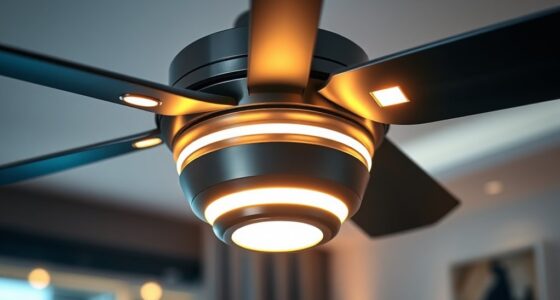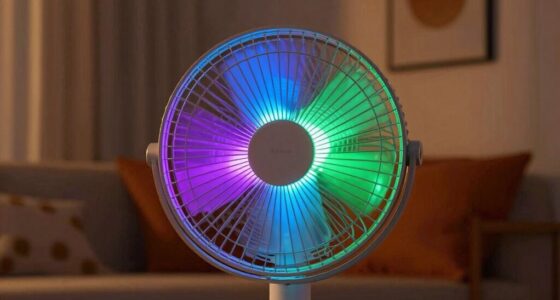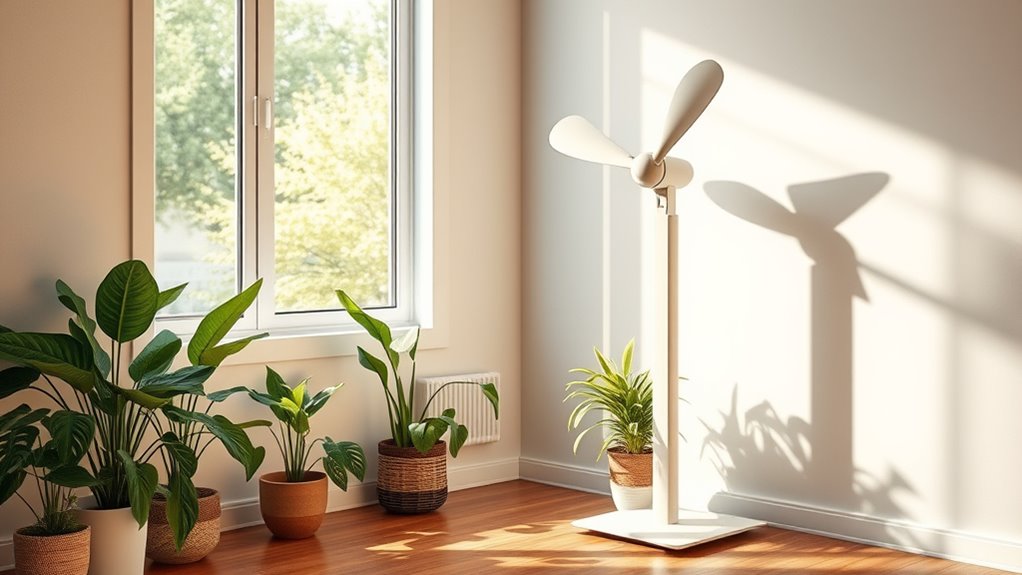

By choosing energy-efficient fans, you can markedly lower your carbon footprint and promote sustainability. These fans use advanced motor technologies like brushless DC motors and smart controls, which reduce energy consumption and operational waste. Proper maintenance and strategic placement further enhance efficiency, making lighter demands on renewable energy sources like solar panels. Consistent use of eco-friendly fans demonstrates your commitment to reducing greenhouse gases, supporting global climate goals. Exploring this further reveals how small adjustments can make a meaningful environmental impact.
Key Takeaways
- Replacing traditional fans with energy-efficient models reduces electricity consumption and lowers greenhouse gas emissions.
- Smart controls like timers and occupancy sensors ensure fans operate only when needed, saving energy.
- Using fans compatible with renewable energy sources decreases reliance on fossil fuels for power.
- Regular maintenance and proper placement optimize fan efficiency, further reducing carbon footprint.
- Supporting energy-efficient fans encourages the adoption of sustainable technologies and reduces overall energy demand.

Reducing your carbon footprint is crucial for mitigating climate change and promoting sustainability. One effective way to achieve this is by switching to energy-efficient fans, which considerably cut energy consumption compared to traditional models. Conventional fans often operate at fixed speeds using standard motors, drawing excess electricity even when full power isn’t needed. In contrast, energy-efficient fans incorporate advanced motor technologies, such as brushless DC motors or electronically commutated motors (ECMs), which maximize power use based on real-time demand. This precise regulation reduces overall energy consumption, leading to lower greenhouse gas emissions associated with electricity generation.
By choosing fans with high efficiency ratings, you guarantee that every watt of electricity consumed results in maximum airflow with minimal waste. These fans typically feature aerodynamic blade designs that reduce turbulence and noise, enhancing performance while decreasing the energy required to circulate air effectively. The integration of smart controls further amplifies their eco-friendly benefits. Programmable timers, occupancy sensors, and remote controls allow you to operate fans only when necessary, preventing unnecessary energy use during idle periods. This targeted operation prevents energy wastage and minimizes your household’s carbon footprint.
High-efficiency fans with smart controls optimize airflow and reduce energy waste, lowering your household’s carbon footprint effectively.
Another important aspect is the compatibility of energy-efficient fans with renewable energy sources. Installing such fans in homes powered by solar panels or wind turbines harnesses cleaner energy, boosting your sustainability efforts. Since these fans consume less energy, they reduce the load on your renewable systems, making it easier to meet your electricity needs entirely through sustainable means. Additionally, using energy-efficient fans extends their lifespan due to lower operational stresses, reducing manufacturing and disposal-related environmental impacts.
Proper placement and fan speed control also play crucial roles in maximizing efficiency. Regular cleaning of blades and ensuring unobstructed airflow prevents performance degradation, maintaining ideal energy use over time. Positioning fans strategically in spaces with high airflow demand ensures you don’t overuse them, further conserving energy. When combined with proper insulation and ventilation strategies, energy-efficient fans contribute to a holistic approach to reducing your home’s overall energy demand and carbon footprint.
Implementing these technological improvements aligns with broader sustainability goals. By opting for energy-efficient fans, you directly reduce electricity consumption, decrease fossil fuel dependence, and lower your greenhouse gas emissions. This choice represents a practical, scalable step toward a more sustainable lifestyle, demonstrating that even small adjustments in everyday appliances can have a meaningful impact on global climate initiatives. With ongoing advancements in motor technology and smart controls, adopting energy-efficient fans remains a essential, accessible measure for environmentally conscious individuals committed to reducing their overall carbon footprint.
Frequently Asked Questions
How Do Energy-Efficient Fans Compare in Cost to Traditional Fans?
Energy-efficient fans typically cost more upfront than traditional fans, but they save you money over time through lower energy consumption. You’ll notice reduced electricity bills and decreased environmental impact, making them a cost-effective choice in the long run. While the initial investment might be higher, the energy savings and eco-friendly benefits outweigh the costs, helping you reduce your carbon footprint while enjoying efficient cooling.
Can Energy-Efficient Fans Be Used Outdoors Effectively?
They can be used outdoors effectively, but choose models designed for outdoor use. Like the saying goes, “The proof of the pudding is in the eating,” so make sure your fan has weather-resistant features like rust-proof materials and sealed motors. These eco-conscious fans optimize airflow and energy efficiency, reducing environmental impact. Proper placement and maintenance extend their lifespan, making them a sustainable choice for outdoor comfort without compromising performance.
What Maintenance Is Required for Energy-Efficient Fans?
You should regularly clean your energy-efficient fan’s blades and vents to remove dust and debris, ensuring ideal airflow and energy performance. Inspect the motor and wiring for wear or damage, replacing parts as needed to prevent inefficiencies. Lubricate moving parts if applicable, following manufacturer guidelines. Keep the fan’s control settings calibrated for energy savings. Proper maintenance minimizes energy use, prolongs lifespan, and supports eco-conscious operation.
Are There Specific Brands Known for Eco-Friendly Fans?
Yes, brands like Dyson, Vornado, and Ecohouzng are known for eco-friendly fans. Dyson’s bladeless fans reduce noise and improve efficiency, while Vornado emphasizes airflow technology that minimizes energy use. Ecohouzng offers energy-efficient, low-impact fans made from sustainable materials. When choosing, look for ENERGY STAR certification to guarantee your fan meets strict energy-saving standards, helping you lower your carbon footprint while maintaining effective cooling.
How Long Is the Typical Lifespan of an Energy-Efficient Fan?
An energy-efficient fan typically lasts between 10 to 15 years with proper maintenance. You should regularly clean the blades and motor to guarantee peak performance and prevent wear. Using high-quality, eco-friendly materials can extend its lifespan. Opting for models with durable components and energy-saving features not only reduces waste but also minimizes your environmental impact over time. Proper care ensures your fan remains efficient and eco-conscious throughout its lifespan.
Conclusion
By choosing energy-efficient fans, you harness the breeze of change, turning your space into a sustainable sanctuary. Each watt saved is a drop in the vast ocean of global effort, fueling a future where eco-conscious choices ripple outward. As the blades spin with purpose, you become a crucial force in reducing carbon emissions. Embrace these green innovations—your actions are the steady pulse driving the planet toward cleaner, cooler horizons.