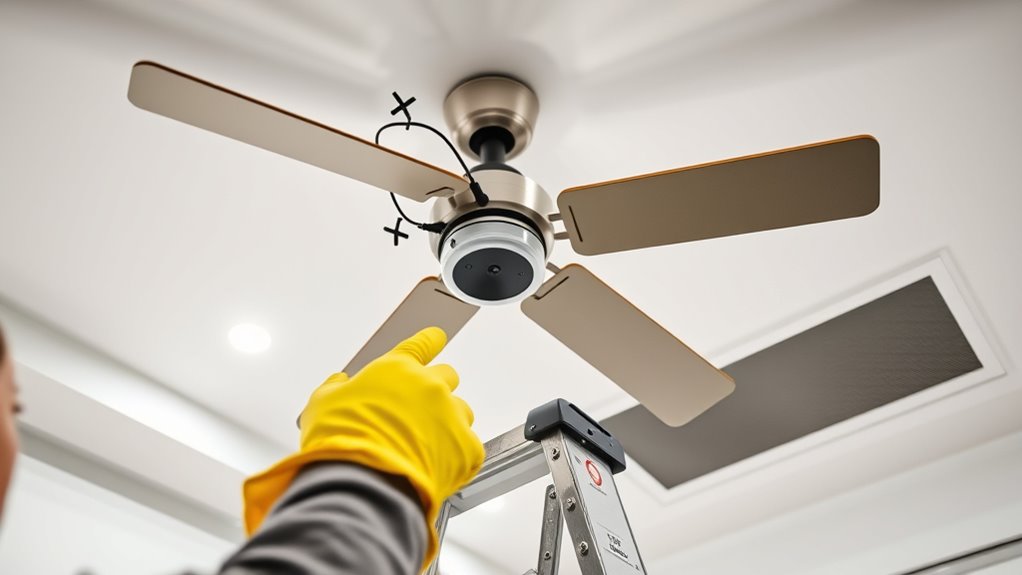

Before installing a ceiling fan, turn off power at the circuit breaker and verify no residual current with a voltage tester. Make certain the electrical box is securely supported and rated for fan weight, attaching it firmly to a joist or structural support. Inspect all wiring for damage, use insulated tools, and follow manufacturer instructions meticulously. Properly mount the hardware to prevent wobbling and ensure safety. Following these precautions helps avoid hazards—continue exploring to master a safe, successful installation process.
Key Takeaways
- Turn off the main power at the circuit breaker and confirm no residual current with a voltage tester.
- Ensure the electrical box is rated for ceiling fan weight and securely attached to structural support.
- Review and follow the fan’s wiring diagram, inspecting for damage and matching color codes properly.
- Use insulated tools, wear gloves, and ensure proper support to prevent accidents and structural issues.
- Verify all installation steps comply with electrical codes and safety standards before proceeding.
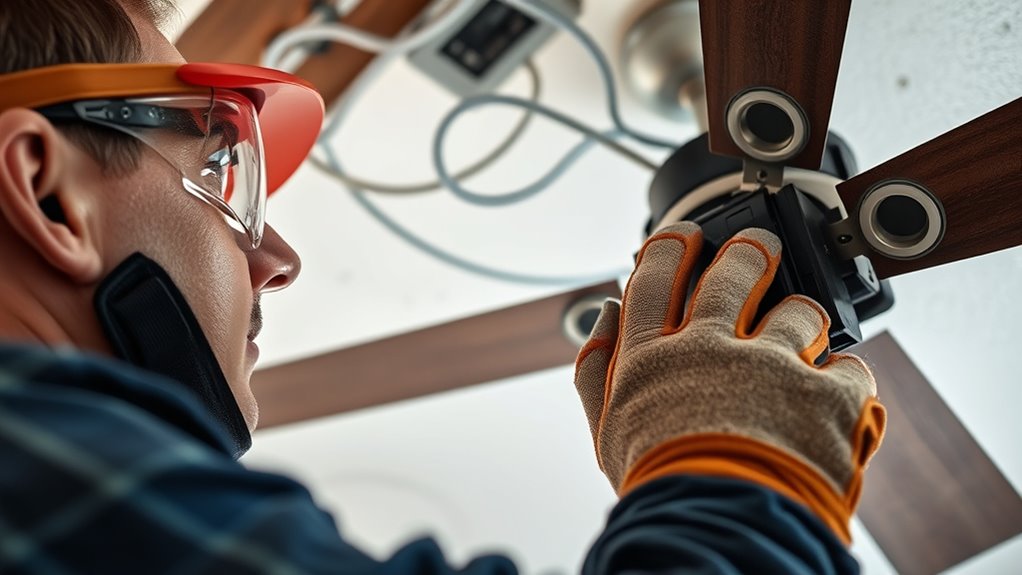
Before installing a ceiling fan, it’s essential to prioritize safety to prevent electrical hazards and structural damage. You must begin by turning off the power supply at the circuit breaker to eliminate the risk of electric shock during installation. Use a voltage tester to confirm there is no residual current in the fixture box. This step is critical, even if you believe the circuit is off, as it ensures your safety and prevents accidental electrocution. Always work with properly rated tools and wear insulated gloves to further mitigate electrical risks. Confirm that the circuit breaker is correctly labeled to avoid confusion with other circuits and to guarantee you’re working on the correct line.
Next, assess the existing electrical box to determine if it can support the weight and operation of the ceiling fan. Many standard boxes are designed solely for light fixtures and may not be rated for fans; in such cases, you must replace it with a fan-rated box capable of supporting the load. The box should be securely anchored to a joist or a structural support, not just attached to drywall or ceiling material, to prevent wobbling or falling. Double-check the box’s weight capacity against the fan’s specifications. Failing to use an appropriate mounting point can lead to structural failure, risking damage to your ceiling and injury.
Before proceeding with wiring, review the fan’s installation instructions thoroughly. Familiarize yourself with the wiring diagram, noting the color codes for hot, neutral, and ground wires. Confirm that your wiring matches these specifications, and inspect the existing wiring for damage, corrosion, or loose connections. If you encounter any damaged wires or questionable connections, you should replace or repair them before proceeding. Ensuring proper wire connections is crucial for safe operation and to prevent electrical shorts or fires. Use wire nuts that are appropriately sized for the number of conductors, and make sure all connections are tightly secured and insulated.
Finally, verify that the mounting hardware and ceiling structure can support the fan’s weight and operational forces. Use a sturdy ladder or scaffolding to reach the installation point safely, and ensure your footing is stable throughout the process. Confirm that the mounting bracket is securely attached to the electrical box and aligned correctly before hanging the fan. This meticulous approach ensures that once you proceed with wiring and mounting, the installation will be both safe and compliant with electrical standards. Additionally, consulting Glycolic Acid Benefits for Skin can provide insights on skincare routines that promote skin health after installation. Prioritizing these safety precautions minimizes risk, ensures compliance, and guarantees a secure, long-lasting ceiling fan installation.
ceiling fan safety installation kit
As an affiliate, we earn on qualifying purchases.
As an affiliate, we earn on qualifying purchases.
Frequently Asked Questions
Can I Install a Ceiling Fan Without an Existing Electrical Box?
No, you cannot install a ceiling fan without an existing electrical box that is rated for fan support. If there’s no box, you’ll need to replace the existing one with a sturdy, fan-rated box or install a new electrical box specifically designed for ceiling fans. Make certain the box is securely attached to a ceiling joist or a support brace, as improper mounting can lead to safety hazards and damage.
Is It Necessary to Turn off the Main Circuit Breaker?
Turning off the main circuit breaker is essential, like shutting the gate before entering a garden. It prevents electrical shock and equipment damage during installation. You must isolate power from the entire circuit, especially if you’re unsure about wiring. Always confirm the power is off with a tester before handling any connections. This step guarantees safety and protects you from potential hazards during the installation process.
How Do I Determine the Appropriate Fan Size for My Room?
Measure your room’s square footage precisely—multiply length by width. For rooms up to 75 square feet, choose a fan with a blade span of 29-36 inches. For 76-144 square feet, opt for 36-42 inches. Larger rooms (145-400 sq ft) require 50-54 inch fans. Guarantee the fan’s airflow capacity (CFM) aligns with room size for ideal cooling. Always verify manufacturer guidelines for specific recommendations.
What Tools Are Essential for Ceiling Fan Installation?
Imagine wielding your tools like a maestro conducting precision. You’ll need a drill, screwdriver, voltage tester, ladder, wire strippers, and a circuit tester to guarantee safety. A ladder with stable footing grants access, while the voltage tester confirms power is off. Wire strippers and screwdrivers facilitate secure connections, and a circuit tester verifies proper wiring. These essentials ensure a smooth, safe installation, transforming your space with confidence and expertise.
Can I Install a Ceiling Fan on a Sloped Ceiling?
Yes, you can install a ceiling fan on a sloped ceiling. Use a fan-rated angled mounting bracket designed for slope adjustments, which allows the fan to hang straight regardless of ceiling angle. Make sure the fan’s downrod length is appropriate to maintain ideal clearance and balance. Verify that your electrical box is rated for fan support, and follow the manufacturer’s instructions for secure installation on an angled surface.
Conclusion
By meticulously following these safety precautions, you’re fundamentally setting the foundation for a smooth installation journey. Treat the process like assembling a finely tuned engine—every step ensures ideal performance and safety. Remember, rushing or neglecting details can turn your project into a technical tangle. Approach each phase with precision and care, and your ceiling fan will operate seamlessly, turning your space into a haven of comfort and safety. Proper preparation today guarantees peace of mind tomorrow.