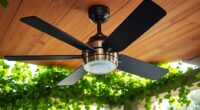
By integrating smart ceiling fans with air purifiers and humidifiers through centralized control platforms, you can automate indoor climate management effectively. Sensors monitor pollutants, VOCs, humidity, and temperature to trigger device responses such as adjusting fan speed, activating purifiers, or engaging humidifiers. This coordination ensures ideal air quality and comfort, reduces manual adjustments, and improves energy efficiency. To maximize your indoor environment further, explore how these systems can dynamically adapt to changing outdoor conditions and occupancy patterns.
Open a free Amazon Business account
Business pricing, bulk buying and tax-exempt orders.
As an affiliate, we earn on qualifying purchases.
Key Takeaways
- Integrate devices through centralized control platforms for seamless automation and coordinated operation.
- Use sensors to monitor air quality and environmental parameters, triggering device responses in real-time.
- Automate ceiling fan speed adjustments to promote air circulation without drafts, enhancing purifier and humidifier efficiency.
- Program routines that adapt device activity based on occupancy, seasonal changes, and indoor air conditions.
- Ensure compatible devices support APIs or protocols like Z-Wave, Zigbee, or Wi-Fi for effective system integration.
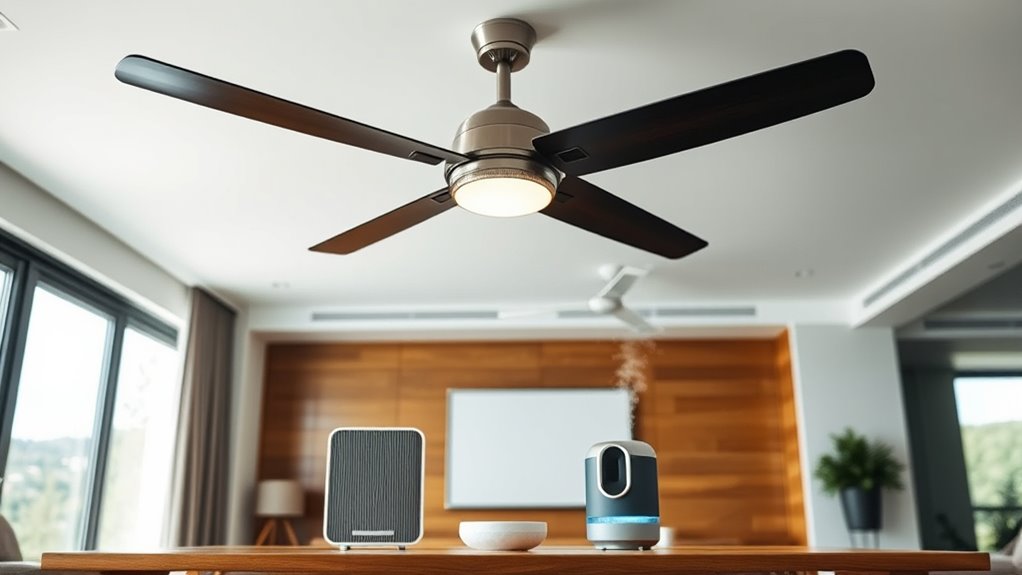
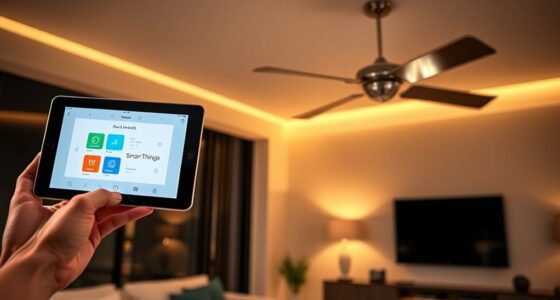
Integrating smart ceiling fans with air purifiers and humidifiers offers an advanced approach to maintaining ideal indoor air quality and comfort. This integration leverages centralized control systems, enabling you to automate and enhance environmental conditions with precision. By connecting these devices through a smart home platform, you can coordinate their operations based on real-time sensor data, ensuring ideal airflow, filtration, and humidity levels simultaneously. This setup minimizes manual adjustments, reducing energy consumption and enhancing overall indoor air management.
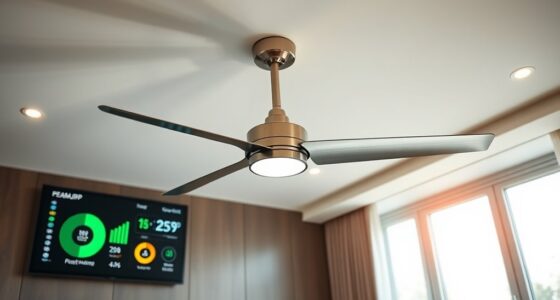
From a technical perspective, the synergy between smart ceiling fans, air purifiers, and humidifiers hinges on sophisticated sensor arrays that monitor parameters such as particulate matter (PM2.5, PM10), volatile organic compounds (VOCs), humidity, and temperature. When integrated into a unified control system, these sensors trigger appropriate device responses. For example, if air quality sensors detect elevated particulate levels, the air purifier activates at an ideal speed while the ceiling fan adjusts its airflow to promote better air circulation without creating drafts. Conversely, if humidity drops below a preset threshold, the humidifier engages, and the ceiling fan’s speed may be modulated to facilitate even distribution of moisture. Additionally, headphone connectivity can be integrated for seamless audio notifications or alerts from the system, enhancing user awareness and control.
This system’s core strength lies in its capacity for dynamic, real-time adjustments. Automated routines can be programmed to respond to environmental changes, maintaining comfort and health standards. For instance, during allergy seasons, the air purifier can operate continuously at higher settings, while the ceiling fan circulates air to prevent stagnation. Humidifier operation can be synchronized to prevent dryness that exacerbates respiratory issues. Such coordinated control ensures that indoor air remains within desired parameters, improving occupant health and comfort while enhancing energy efficiency.
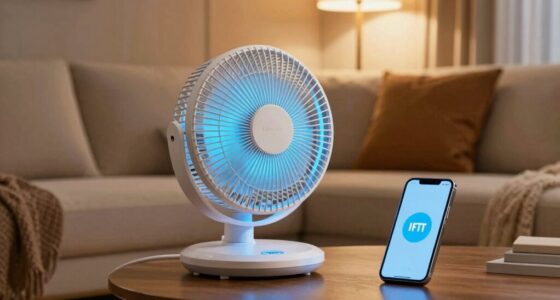
Implementation requires compatible smart devices equipped with API interfaces or integration protocols such as Z-Wave, Zigbee, or Wi-Fi. These enable communication between devices and the central control hub, often managed through a smartphone app or voice assistant. Proper calibration of sensor thresholds and device response parameters is critical to prevent over- or under-performance. For example, setting appropriate humidity ranges prevents mold growth or excessive dryness, while airflow settings should be adjusted to avoid discomfort from drafts.
In essence, this integrated approach transforms traditional HVAC components into a cohesive, intelligent system. It allows you to precisely tailor indoor air quality and comfort levels, responding adaptively to changes in occupancy, outdoor conditions, and air quality metrics. The result is a more health-conscious, energy-efficient environment that requires minimal manual oversight, leveraging technology to create a consistently ideal indoor climate.
smart ceiling fan with air purifier
As an affiliate, we earn on qualifying purchases.
As an affiliate, we earn on qualifying purchases.
Frequently Asked Questions
Can Smart Ceiling Fans Be Integrated With Existing Air Purifiers and Humidifiers?
Yes, smart ceiling fans can be integrated with existing air purifiers and humidifiers through compatible smart home ecosystems like Alexa or Google Home. You can set up automation routines that synchronize operation based on air quality or humidity levels. However, integration depends on device compatibility and communication protocols such as Wi-Fi, Zigbee, or Z-Wave. Make certain your devices support these protocols for seamless, automated control and monitoring.
What Safety Features Should I Consider When Combining These Devices?
You should prioritize safety features like automatic shutoff if overheating occurs, child-proof controls, and secure wiring with proper grounding to prevent electrical hazards. Make certain device compatibility with surge protectors to guard against power surges. Incorporate sensors that automatically adjust operation based on air quality or humidity levels, and verify that all devices have certifications like UL or ETL. These measures protect you from potential fire, electrical shock, or malfunction risks.
How Does Smart Technology Improve Overall Indoor Air Quality Management?
Smart technology enhances indoor air quality management by providing real-time monitoring and automated adjustments. You can set sensors to detect pollutants, humidity levels, and airflow, enabling the system to optimize fan speed, purifier operation, and humidifier output instantly. This precise control maintains ideal air conditions, reduces allergen buildup, and improves overall health. Additionally, smart integration allows remote management via apps, ensuring consistent air quality even when you’re away.
Are There Specific Brands That Offer Seamless Integration of These Devices?
The early bird catches the worm, so choosing brands that prioritize compatibility is key. Brands like Dyson, Hunter, and LG offer smart ceiling fans with integrated air purifiers and humidifiers, enabling seamless control via apps or voice commands. These systems often feature centralized dashboards, real-time air quality monitoring, and automation options. Guarantee the devices support common smart home platforms like Alexa, Google Assistant, or Apple HomeKit for ideal integration.
What Maintenance Is Required for Combined Smart Ceiling Fan, Purifier, and Humidifier Systems?
You need to regularly clean the filters and vents of your combined system to maintain peak performance. Check and replace air purifier filters every 3 to 6 months, and humidifier filters monthly or as recommended. Inspect fan blades and humidifier tanks for dust buildup weekly, cleaning with a damp cloth. Update firmware periodically for software improvements, and guarantee sensors are free of dust to keep control systems accurate.
Conclusion
By integrating smart ceiling fans with air purifiers and humidifiers, you maximize indoor air quality efficiently. Automated controls and real-time monitoring allow for precise adjustments, enhancing comfort and health. Remember, “A stitch in time saves nine”—regularly maintaining these systems prevents costly repairs and guarantees ideal performance. Embrace these technological advancements for a healthier, more comfortable environment, and enjoy the benefits of a smart, responsive indoor climate management system.
Fall Picks
fall essentials
As an affiliate, we earn on qualifying purchases.