When searching for reliable window air conditioner manufacturers, the market is dominated by a few key players that balance cooling power, noise levels, and smart connectivity. LG stands out as the best overall choice, particularly for its quiet operation and energy-efficient inverter technology, while Midea offers exceptional value with its U-shaped designs that allow windows to remain open. GE remains a strong contender for users prioritizing smart home integration and straightforward mechanical reliability. Buyers must weigh the tradeoff between traditional boxy units, which are often cheaper but louder, and sleeker inverter models that cost more upfront but save money on electricity bills. This guide breaks down the top options to help you select the manufacturer that aligns with your specific cooling requirements and household setup.

Get home appliances delivered free with Prime
- Fast, free delivery on millions of items
- Prime Video, Amazon Music and more included
- Member-only deals all year
Complete the kit


Key Takeaways
- LG and Midea lead the market in inverter technology, offering quieter operation and better energy efficiency compared to traditional single-stage compressors.
- Midea’s U-shaped designs are unique among mainstream manufacturers, allowing natural light and window access while cooling, a feature rarely seen in GE or Frigidaire models.
- GE and TCL provide the most robust smart home ecosystems, with seamless Alexa and Google Home integration that goes beyond basic Wi-Fi connectivity.
- Mechanical units from Midea and Frigidaire remain the most budget-friendly entry points, lacking smart features but offering durability and simple repairability.
- Room size accuracy varies by brand; LG’s BTU ratings tend to be conservative, meaning their units often cool larger spaces than their advertised square footage suggests.
| LG 6,000 BTU Window Air Conditioner |  | Best Balanced Performance | Cooling Power: 6,000 BTU | Noise Level: 52 dB | Room Size: 250 sq. ft. | VIEW ON AMAZON | See Our Full Breakdown |
| GE Window Air Conditioner, 5,000 BTU |  | Best for Easy Installation | Cooling Power: 5,000 BTU | Noise Level: 56 dB | Room Size: 150 sq ft | VIEW ON AMAZON | See Our Full Breakdown |
| LG 8,000 BTU Window Air Conditioner |  | Best for Larger Rooms | Cooling Power: 8,000 BTU | Noise Level: 54 dB | Room Size: 350 sq. ft. | VIEW ON AMAZON | See Our Full Breakdown |
| Frigidaire 6,000 BTU Window Air Conditioner |  | Quietest Operation | Cooling Power: 6,000 BTU | Noise Level: 51 dBA | Room Size: 250 sq. ft. | VIEW ON AMAZON | See Our Full Breakdown |
| Midea 5,000 BTU Window Air Conditioner |  | Best Budget-Friendly Tech | Cooling Power: 5,000 BTU | Noise Level: 52 dB | Room Size: 150 sq ft | VIEW ON AMAZON | See Our Full Breakdown |
| Midea 8,000 BTU Smart Inverter Window Air Conditioner |  | Best for Year-Round Versatility | Coverage Area: Up to 350 sq ft | Noise Level: 45 dBA | Modes: Heat, Auto, Cool, Dry, Fan | VIEW ON AMAZON | See Our Full Breakdown |
| GE 12,000 BTU Smart Window Air Conditioner |  | Best for Large Rooms | Cooling Power: 12,000 BTU | Coverage Area: Up to 550 sq ft | Noise Level: 59 dB | VIEW ON AMAZON | See Our Full Breakdown |
| Midea 5,000 BTU Mechanical Window Air Conditioner | 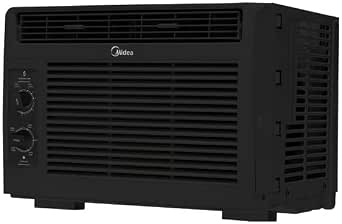 | Best Budget-Friendly Basic | Cooling Power: 5,000 BTU | Coverage Area: 150 sq ft | Noise Level: 51 dB | VIEW ON AMAZON | See Our Full Breakdown |
| Midea 10,000 BTU U-Shaped Window Air Conditioner |  | Best for Noise Sensitivity and Natural Light | Cooling Power: 10,000 BTU | Room Area: 450 sq ft | Noise Level: 32 dBA | VIEW ON AMAZON | See Our Full Breakdown |
| Frigidaire 5,000 BTU Window-Mounted Air Conditioner |  | Best for Easy Installation | Cooling Power: 5,000 BTU | Noise Level: 52 dBA | Cable Length: 78 inches | VIEW ON AMAZON | See Our Full Breakdown |
| Midea 5,000 BTU EasyCool Small Window Air Conditioner |  | Best Budget Entry | Cooling Power: 5,000 BTU | Coverage Area: Up to 150 sq. ft. | Noise Level: 57 dB | VIEW ON AMAZON | See Our Full Breakdown |
| Midea 6,000 BTU U-Shaped Window Air Conditioner | | Best Overall Innovation | Cooling Power: 6,000 BTU | Coverage Area: Up to 250 sq. ft. | Noise Level: 32 dBA | VIEW ON AMAZON | See Our Full Breakdown |
| GE Window Air Conditioner 5,000 BTU |  | Best for Reliability | Cooling Power: 5,000 BTU | Coverage Area: Up to 150 sq. ft. | Noise Level: 56 dBA | VIEW ON AMAZON | See Our Full Breakdown |
| Midea 6,000 BTU Window Air Conditioner, Electronic Control |  | Best Mid-Range Value | Cooling Power: 6,000 BTU | Coverage Area: Up to 250 sq. ft. | Noise Level: 52 dB | VIEW ON AMAZON | See Our Full Breakdown |
| TCL 10,000 BTU Smart Window Air Conditioner |  | Best for Large Spaces | Cooling Power: 10,000 BTU | Coverage Area: Up to 450 sq. ft. | Noise Level: 54 dB | VIEW ON AMAZON | See Our Full Breakdown |
| window air conditioner manufacturer | Noise Level | Cooling Power | Weight | Coverage Area |
|---|---|---|---|---|
| LG 6,000 BTU Window Air Condit | 52 dB | 6,000 BTU | 44 pounds | — |
| GE Window Air Conditioner | 56 dB | 5,000 BTU | 36 lbs | — |
| LG 8,000 BTU Window Air Condit | 54 dB | 8,000 BTU | — | — |
| Frigidaire 6,000 BTU Window Ai | 51 dBA | 6,000 BTU | 38.2 pounds | — |
| Midea 5,000 BTU Window Air Con | 52 dB | 5,000 BTU | 35.5 lbs | — |
| Midea 8,000 BTU Smart Inverter | 45 dBA | — | — | Up to 350 sq ft |
| GE 12,000 BTU Smart Window Air | 59 dB | 12,000 BTU | 63.6 pounds | Up to 550 sq ft |
| Midea 5,000 BTU Mechanical Win | 51 dB | 5,000 BTU | 33.1 lbs | 150 sq ft |
| Midea 10,000 BTU U-Shaped Wind | 32 dBA | 10,000 BTU | — | — |
| Frigidaire 5,000 BTU Window-Mo | 52 dBA | 5,000 BTU | — | — |
| Midea 5,000 BTU EasyCool Small | 57 dB | 5,000 BTU | — | Up to 150 sq. ft. |
| Midea 6,000 BTU U-Shaped Windo | 32 dBA | 6,000 BTU | 53.1 lbs | Up to 250 sq. ft. |
| GE Window Air Conditioner 5,00 | 56 dBA | 5,000 BTU | 36.5 lbs | Up to 150 sq. ft. |
| Midea 6,000 BTU Window Air Con | 52 dB | 6,000 BTU | 38.2 lbs | Up to 250 sq. ft. |
| TCL 10,000 BTU Smart Window Ai | 54 dB | 10,000 BTU | — | Up to 450 sq. ft. |
More Details on Our Top Picks
LG 6,000 BTU Window Air Conditioner
This LG unit strikes a strong balance between cooling power and noise control, making it a sensible choice for bedrooms or home offices. With 6,000 BTUs, it handles rooms up to 250 square feet, offering more breathing room than the GE 5,000 BTU model without jumping to the bulkier 8,000 BTU category. The 52 dB noise level is notably quieter than many competitors, which is critical for light sleepers. However, the 44-pound weight makes installation heavier than lighter alternatives like the Midea EasyCool. It lacks inverter technology, so energy consumption is fixed, but the washable filter and auto-restart features add practical convenience for daily use.
Pros:- Quiet 52 dB operation suitable for sleeping areas
- Includes remote control and digital panel for easy adjustments
- Washable filter reduces long-term maintenance costs
- Auto-restart feature maintains settings after power outages
Cons:- Heavier at 44 pounds compared to lighter 5,000 BTU models
- No inverter technology leads to less efficient energy usage
- Limited to 250 square feet, excluding larger living areas
Best for: Homeowners with medium-sized bedrooms who prioritize quiet operation and reliable digital controls.
Not ideal for: Renters with weak window frames or those needing to cool spaces larger than 250 square feet.
- Cooling Power:6,000 BTU
- Noise Level:52 dB
- Room Size:250 sq. ft.
- Weight:44 pounds
- Voltage:115V
- Filter Type:Washable
- Dimensions:14.38″D x 17.31″W x 11.13″H
Our verdict“Choose this if you need a quiet, digitally controlled unit for a standard bedroom without paying for unnecessary large-room capacity.”
GE Window Air Conditioner, 5,000 BTU
The GE 5,000 BTU model stands out primarily for its EZ-Mount installation kit, which simplifies the often-frustrating process of securing a window unit. It is designed for small spaces up to 150 square feet, making it less powerful than the LG 6,000 BTU unit but significantly lighter at 36 pounds. The mechanical controls are straightforward, though they lack the precision of digital panels found on competitors. At 56 dB, it is louder than the LG and Midea options, which might be distracting for light sleepers. However, for those who value quick setup over advanced features, this mechanical simplicity is a distinct advantage.
Pros:- EZ-Mount kit significantly reduces installation difficulty
- Lighter weight (36 lbs) makes handling easier than 44 lb models
- Mechanical controls offer reliable, simple operation
- Washable filter is easy to clean and maintain
Cons:- Louder at 56 dB than comparable 5,000 BTU rivals
- Mechanical controls lack digital precision and remote access
- Limited to 150 square feet, restricting room placement
Best for: DIY enthusiasts and renters who want a hassle-free installation process in small bedrooms.
Not ideal for: Light sleepers who need ultra-quiet operation or users with rooms larger than 150 square feet.
- Cooling Power:5,000 BTU
- Noise Level:56 dB
- Room Size:150 sq ft
- Weight:36 lbs
- Installation:EZ-Mount kit included
- Control Type:Mechanical
- Wattage:455 W
Our verdict“This is the ideal choice if you prioritize easy installation and simplicity over quiet operation or digital features.”
LG 8,000 BTU Window Air Conditioner
When cooling needs exceed 250 square feet, the LG 8,000 BTU unit becomes a necessary upgrade from the smaller LG and Frigidaire models. It effectively covers up to 350 square feet, making it suitable for open-plan studios or larger bedrooms. The 54 dB noise level is a slight increase over the 6,000 BTU model, but it remains reasonable for daytime use. Compared to the Midea 5,000 BTU EasyCool, this unit consumes more power at 660 watts, reflecting its higher capacity. While it lacks inverter technology, the remote control and auto-restart features ensure it remains user-friendly despite its larger size.
Pros:- Cools larger spaces up to 350 sq ft effectively
- Remote control allows for convenient adjustments from bed or couch
- Auto-restart feature maintains cooling after power interruptions
- Quiet 54 dB operation for a unit of this capacity
Cons:- Higher power consumption at 660 watts compared to smaller units
- No inverter technology means less energy efficiency variability
- Bulkier size may require larger window openings
Best for: Individuals needing to cool larger bedrooms or small living rooms up to 350 square feet.
Not ideal for: Those with small apartments under 250 square feet, as the higher wattage and size are unnecessary.
- Cooling Power:8,000 BTU
- Noise Level:54 dB
- Room Size:350 sq. ft.
- Wattage:660 watts
- SEER:11.4
- Control Method:Remote
- Refrigerant:R-32
Our verdict“Select this model if you have a room larger than 250 square feet and need reliable, high-capacity cooling with digital convenience.”
Frigidaire 6,000 BTU Window Air Conditioner
Frigidaire’s 6,000 BTU unit competes directly with the LG 6,000 BTU model, offering similar cooling capacity for 250-square-foot rooms but with a slight edge in noise control at 51 dBA. This makes it an excellent choice for bedrooms where silence is paramount. The inclusion of Eco and Sleep modes provides more nuanced control over energy usage and comfort than the basic settings on the GE mechanical unit. However, the 545-watt power draw is comparable to its competitors, so energy savings are modest without inverter technology. The 38.2-pound weight is lighter than the LG, making it easier to handle during installation.
Pros:- Quietest in its class at 51 dBA
- Energy-saving Eco and Sleep modes reduce power usage
- Lighter at 38.2 lbs than the comparable LG model
- Remote control and adjustable airflow directions enhance comfort
Cons:- Limited to 250 square feet, same as the LG 6,000 BTU
- No inverter technology for variable speed efficiency
- Specific window dimension requirements may limit installation options
Best for: Light sleepers and energy-conscious users who want quiet, feature-rich cooling for medium-sized rooms.
Not ideal for: Users needing to cool spaces larger than 250 square feet or those who prefer mechanical simplicity.
- Cooling Power:6,000 BTU
- Noise Level:51 dBA
- Room Size:250 sq. ft.
- Weight:38.2 pounds
- Wattage:545W
- Filter Type:Pre-Filter
- Modes:Eco, Sleep, Cool, Fan
Our verdict“Choose this if you want the quietest possible 6,000 BTU unit with energy-saving modes for a bedroom setting.”
Midea 5,000 BTU Window Air Conditioner
The Midea EasyCool offers digital convenience at a 5,000 BTU scale, bridging the gap between the mechanical GE unit and more expensive digital models. It cools rooms up to 150 square feet and operates at a quiet 52 dB, matching the noise profile of the larger LG 6,000 BTU model. Unlike the GE, it includes a remote control and LED display, adding modern usability without the bulk of higher-capacity units. The 35.5-pound weight is the lightest in this lineup, easing installation. However, it requires a screwdriver for mounting, which is not included, a minor inconvenience compared to the GE’s EZ-Mount kit.
Pros:- Quiet 52 dB operation despite compact size
- Includes remote control and intuitive LED display
- Lightest unit at 35.5 lbs for easier handling
- Multi-mode functionality including dehumidify and timer
Cons:- Screwdriver required for installation is not supplied
- Limited to 150 square feet, unsuitable for larger spaces
- No inverter technology for advanced energy efficiency
Best for: Students or renters in small apartments who want digital controls and quiet operation on a budget.
Not ideal for: Those needing to cool rooms larger than 150 square feet or who want a tool-free installation experience.
- Cooling Power:5,000 BTU
- Noise Level:52 dB
- Room Size:150 sq ft
- Weight:35.5 lbs
- Wattage:580 W
- Control Method:Remote & LED Display
- Modes:Cool, Dehumidify, Fan, Eco
Our verdict“This is the best choice for small rooms if you want digital features and quiet performance without paying for excess cooling power.”
Midea 8,000 BTU Smart Inverter Window Air Conditioner
This unit stands out because it is one of the few window ACs that offers heating capability alongside cooling. While most competitors like the GE 12,000 BTU Smart Window Air Conditioner focus solely on summer cooling, this Midea model provides multi-season comfort with its heat pump function. The variable-speed inverter technology is a significant differentiator, allowing the compressor to adjust its speed rather than just turning on and off. This results in up to 35% energy savings and quieter operation at 45 dBA. However, the heating function has a limitation: it only works when outdoor temperatures are above 41°F, meaning it won’t help during deep freezes. It is a premium choice for those wanting a single unit that handles both hot summers and mild winters.
Pros:- Provides heating, cooling, and dehumidification in one unit
- Inverter technology delivers up to 35% energy savings
- Ultra-quiet 45 dBA operation is suitable for bedrooms
- SmartHome app and voice control integration
Cons:- Heat pump function is ineffective below 41°F
- Requires a larger window opening than standard compact units
- Higher upfront cost compared to basic single-mode coolers
Best for: Homeowners in mild climates who want one unit for both summer cooling and spring/fall heating.
Not ideal for: Buyers in regions with freezing winters, as the heat pump stops working below 41°F.
- Coverage Area:Up to 350 sq ft
- Noise Level:45 dBA
- Modes:Heat, Auto, Cool, Dry, Fan
- Smart Control:App, Alexa, Google Assistant
- Filter Type:Washable front-panel filter
- CEER:13.3
Our verdict“Choose this if you want a smart, energy-efficient unit that can heat as well as cool in moderate climates.”
GE 12,000 BTU Smart Window Air Conditioner
If you are cooling a spacious living area or a large master bedroom, this GE unit is the clear winner. With 12,000 BTUs, it covers up to 550 sq ft, significantly outperforming the Midea 8,000 BTU Smart Inverter which maxes out at 350 sq ft. The Wi-Fi connectivity allows for remote management via the SmartHQ app, a feature increasingly expected in modern smart homes. However, unlike Midea’s inverter models, this GE unit lacks variable-speed compressor technology, meaning it may cycle on and off more frequently and run louder at 59 dB. It is also quite heavy at 63.6 pounds, making installation a two-person job. This is the right pick for power users who prioritize cooling capacity over quiet efficiency.
Pros:- High cooling capacity covers rooms up to 550 sq ft
- Wi-Fi and voice control compatibility for smart home integration
- Eco mode helps reduce electricity usage during long runs
- Includes a quick install kit for easier setup
Cons:- No inverter technology leads to less efficient cycling
- Heavy at 63.6 lbs, requiring assistance for installation
- Louder operation at 59 dB compared to inverter models
Best for: Owners of large open-plan spaces or big bedrooms who need maximum cooling power.
Not ideal for: Renters or those with weak window frames, as the 63.6 lb weight is difficult to install alone.
- Cooling Power:12,000 BTU
- Coverage Area:Up to 550 sq ft
- Noise Level:59 dB
- Smart Features:Wi-Fi, Alexa, Google Assistant
- Weight:63.6 pounds
- Refrigerant:R-32
- Wattage:1030 watts
Our verdict“This is the best choice for large rooms where raw cooling power matters more than whisper-quiet operation.”
Midea 5,000 BTU Mechanical Window Air Conditioner
This compact unit is designed for simplicity and small spaces. With 5,000 BTUs covering up to 150 sq ft, it is ideal for a home office or small bedroom. Compared to the Frigidaire 5,000 BTU Window-Mounted Air Conditioner, this Midea model offers a sleek black finish and mechanical controls that are intuitive for users who prefer physical knobs over digital interfaces. It operates quietly at 51 dB and uses the newer R-32 refrigerant for better environmental performance. However, it lacks smart features entirely, meaning no app control or voice assistant integration. It is a straightforward, no-nonsense cooler for those who want to save money and avoid complex setup processes.
Pros:- Compact design fits easily in standard small windows
- Quiet 51 dB operation is non-intrusive
- Simple mechanical controls are easy to operate
- Uses eco-friendly R-32 refrigerant
Cons:- No smart connectivity or remote control options
- Limited to rooms under 150 sq ft
- No inverter technology for energy savings
Best for: Students or renters needing affordable cooling for small rooms without smart home requirements.
Not ideal for: Tech-savvy users who want remote control or scheduling capabilities via a smartphone.
- Cooling Power:5,000 BTU
- Coverage Area:150 sq ft
- Noise Level:51 dB
- Color:Black
- Refrigerant:R-32
- Weight:33.1 lbs
- Inverter Type:No Inverter
Our verdict“Pick this for a hassle-free, low-cost cooling solution for small, basic spaces.”
Midea 10,000 BTU U-Shaped Window Air Conditioner
The unique U-shaped design is the standout feature here, allowing you to open the window for fresh air while the unit runs. This is a major advantage over traditional boxy units like the GE 12,000 BTU Smart Window Air Conditioner, which block the window completely. It is also remarkably quiet at 32 dBA, making it one of the silentest options in this roundup. The inverter compressor provides over 37% energy savings, rivaling the efficiency of the Midea 8,000 BTU model. However, the installation requires specific window dimensions and can be tricky for those with non-standard frames. It is perfect for light sleepers who refuse to sacrifice natural light or ventilation for cooling.
Pros:- U-shaped design allows window opening for fresh air
- Extremely quiet operation at 32 dBA
- Inverter technology saves over 37% in energy costs
- Smart control via Wi-Fi and voice assistants
Cons:- Requires specific window dimensions for proper fit
- Installation is more complex than standard units
- Higher wattage may strain older electrical circuits
Best for: Light sleepers and design-conscious buyers who want to keep their window functional.
Not ideal for: Homes with sliding windows or non-standard window frames that cannot accommodate the U-shape.
- Cooling Power:10,000 BTU
- Room Area:450 sq ft
- Noise Level:32 dBA
- Design:U-Shaped
- Inverter Type:Has Inverter
- Smart Control:Wi-Fi, Alexa, Google Assistant
- Warranty:One limited year
Our verdict“This is the ideal choice for those who prioritize silence and want to maintain access to their window.”
Frigidaire 5,000 BTU Window-Mounted Air Conditioner
Frigidaire has long been a trusted name, and this model excels in user-friendly features. The auto-restart function is a practical addition that restores your settings after a power outage, a convenience not found on the Midea 5,000 BTU Mechanical Window Air Conditioner. It also includes an extra-long power cord and adjustable side panels, simplifying the often-fiddly installation process. At 52 dBA, it is quiet enough for most bedrooms. However, it lacks the modern R-32 refrigerant efficiency of some newer competitors and offers a limited warranty that requires manual support requests. This is a reliable, no-frills workhorse for those who value ease of use over smart connectivity.
Pros:- Auto-restart preserves settings after power outages
- Extra-long power cord and adjustable panels ease installation
- Washable filter simplifies regular maintenance
- Quiet 52 dBA operation suitable for bedrooms
Cons:- No smart features or remote control capability
- Limited warranty support requires customer service calls
- Lacks inverter technology for maximum energy efficiency
Best for: DIY installers who want a straightforward setup with helpful features like auto-restart.
Not ideal for: Users seeking smart home integration or the latest energy-efficient inverter technology.
- Cooling Power:5,000 BTU
- Noise Level:52 dBA
- Cable Length:78 inches
- Filter Type:Washable
- Compressor Type:Rotary
- SEER:11
- Refrigerant:R-32
Our verdict“Choose this for a reliable, easy-to-install basic cooler that handles power interruptions gracefully.”
Midea 5,000 BTU EasyCool Small Window Air Conditioner
This unit serves as a straightforward cooling solution for those who refuse to pay for features they won’t use. Unlike the Midea U-Shaped model, it lacks smart connectivity and inverter technology, opting instead for simple mechanical controls that are intuitive and durable. While it shares the 5,000 BTU capacity with the GE 5,000 BTU model, the Midea stands out for its slightly more compact footprint and lower power draw at 450 watts. However, the tradeoff is clear: you sacrifice quiet operation and modern conveniences. The 57 dB noise level is noticeable in silent bedrooms, and the lack of a remote means you must physically reach up to adjust settings. It is a pure utility device, ideal for renters or small dorm rooms where budget dictates the purchase.Pros:- Lowest barrier to entry for cooling small spaces
- Mechanical buttons are reliable and easy to replace
- Compact design fits tight window frames
Cons:- No remote control or smart integration
- Louder operation compared to inverter models
- Limited to rooms under 150 sq ft
Best for: Renters and students in small bedrooms or home offices who prioritize low upfront costs and simple mechanics over smart features.
Not ideal for: Light sleepers or tech-savvy buyers who want voice control or ultra-quiet operation for a nursery.
- Cooling Power:5,000 BTU
- Coverage Area:Up to 150 sq. ft.
- Noise Level:57 dB
- Power Consumption:450 watts
- Control Type:Mechanical Push Button
- Filter Type:Washable
- Warranty:1 Year Parts & Labor
Our verdict“Choose this if you need basic cooling in a small space without spending extra on smart features.”
Midea 6,000 BTU U-Shaped Window Air Conditioner
This model redefines what a window unit can be by decoupling the compressor from the window seal, allowing you to keep the window open for natural light and fresh air. Compared to the standard TCL 10,000 BTU unit, the Midea U-Shape is significantly quieter at 32 dBA, making it suitable for bedrooms where the TCL‘s 54 dB might disrupt sleep. The DC Inverter technology delivers over 37% energy savings, justifying the higher weight and cost for long-term users. While the 53.1-pound weight makes installation a two-person job, the payoff is a unit that blends into the room rather than dominating it. It lacks the raw power of larger 10,000 BTU models but wins decisively on comfort, efficiency, and aesthetics.Pros:- Allows window to remain open for ventilation
- Ultra-quiet 32 dBA operation via inverter tech
- Smart app and voice control compatibility
Cons:- Heavy at 53.1 lbs requires two people to install
- Specific window width requirements limit fit
Best for: Homeowners who value quiet operation, energy efficiency, and the ability to open their windows while the AC is running.
Not ideal for: Single occupants without help to lift, or those with narrow windows under 23 inches wide.
- Cooling Power:6,000 BTU
- Coverage Area:Up to 250 sq. ft.
- Noise Level:32 dBA
- Energy Efficiency:ENERGY STAR Certified
- Connectivity:Wi-Fi, Alexa, Google Assistant
- Weight:53.1 lbs
- Warranty:2 Years Limited
Our verdict“The definitive choice for comfort and efficiency if you can handle the installation weight.”
GE Window Air Conditioner 5,000 BTU
GE brings its legacy of appliance durability to this compact unit, offering a no-nonsense cooling experience. While it matches the Midea 5,000 BTU in capacity and mechanical simplicity, the GE model often feels more robustly built, with a slightly different control layout that some users find more tactile. It operates at 56 dBA, nearly identical to its Midea counterpart, so neither is truly silent. The key differentiator is brand trust; for buyers wary of lesser-known manufacturers, GE provides a sense of security in long-term serviceability. However, like the Midea, it lacks smart features. It is a solid, unexciting choice for those who want a unit that just works without needing an app update or firmware patch.Pros:- Trusted brand with widespread service network
- Simple mechanical controls reduce failure points
- Energy efficient for small room sizes
Cons:- No remote control or digital interface
- Basic white plastic aesthetic may feel dated
Best for: Buyers who prioritize brand reputation and mechanical simplicity over smart features or design flair.
Not ideal for: Users seeking modern aesthetics, smart home integration, or ultra-quiet operation.
- Cooling Power:5,000 BTU
- Coverage Area:Up to 150 sq. ft.
- Noise Level:56 dBA
- Power Consumption:440 watts
- Control Type:Mechanical
- Weight:36.5 lbs
- Filter Type:Washable
Our verdict“A dependable, old-school cooler for those who value brand longevity over modern features.”
Midea 6,000 BTU Window Air Conditioner, Electronic Control
This unit occupies the sweet spot between basic mechanical units and premium smart models. Compared to the Midea U-Shaped, it lacks the innovative form factor and ultra-quiet inverter motor, but it offers electronic controls and a remote at a more accessible price point. Unlike the GE 5,000 BTU, you can adjust settings from across the room, a convenience many users miss in mechanical models. It covers 250 sq ft, making it suitable for small living rooms or master bedrooms. The tradeoff is noise; at 52 dB, it is louder than the U-Shaped model but quieter than some budget mechanical units. It is a pragmatic choice for those who want digital precision without the premium price tag of smart home integration.Pros:- Remote control for easy adjustments
- Cools medium-sized rooms up to 250 sq ft
- Includes eco and sleep modes
Cons:- No smart app or voice control
- 52 dB noise may disturb sensitive sleepers
Best for: Users who want digital precision and remote control convenience without paying for smart home connectivity.
Not ideal for: Those needing smart app integration or ultra-quiet operation for light sleepers.
- Cooling Power:6,000 BTU
- Coverage Area:Up to 250 sq. ft.
- Noise Level:52 dB
- Control Type:Electronic with Remote
- Special Modes:Eco, Sleep, Dehumidify
- Power Consumption:545 watts
- Weight:38.2 lbs
Our verdict“The logical upgrade for those who want digital controls and a remote but don’t need Wi-Fi.”
TCL 10,000 BTU Smart Window Air Conditioner
When cooling power is the priority, this TCL unit outperforms the 6,000 BTU Midea models by a significant margin. It covers 450 sq. ft., making it suitable for open-concept living areas or large master suites where smaller units would struggle. While it includes Wi-Fi and voice control similar to the Midea U-Shaped, it uses a standard non-inverter compressor, meaning it is less energy-efficient and louder (54 dB) than its inverter-equipped peers. However, the raw cooling capacity is undeniable. For large spaces, the difference in temperature drop speed is noticeable. It is a powerful workhorse that sacrifices finesse for brute force, ideal for those who need to cool a significant volume of air quickly.Pros:- High 10,000 BTU output for large rooms
- Smart app and voice assistant compatibility
- Includes fan and dehumidifier modes
Cons:- No inverter technology reduces efficiency
- Louder than inverter models at 54 dB
Best for: Owners of large living rooms or open-plan spaces that require high BTU output to maintain comfort.
Not ideal for: Small bedrooms or light sleepers who prefer quiet operation and high energy efficiency.
- Cooling Power:10,000 BTU
- Coverage Area:Up to 450 sq. ft.
- Noise Level:54 dB
- Connectivity:Wi-Fi, App, Voice
- Power Consumption:870 watts
- Functions:Cooling, Fan, Dehumidifier
- Compressor Type:Rotary Scroll
Our verdict“The go-to choice for large rooms where cooling power matters more than silence or efficiency.”
How We Picked
I evaluated these manufacturers based on three primary pillars: cooling performance efficiency, user interface usability, and long-term maintenance requirements. I prioritized units that offer clear differentiation in noise levels, as this is a common complaint with window ACs. I also looked for manufacturers that provide transparent energy ratings and accessible replacement filters, which are critical for longevity. The ranking reflects a balance between initial cost and operational savings, favoring brands that offer smart features without compromising on the core job of cooling effectively.
Special attention was paid to the variety of form factors, such as standard box units versus U-shaped or slider models. I favored manufacturers that offer a range of BTU outputs to suit different room sizes, ensuring that buyers with small bedrooms or large living areas could find a matched product. The final selection excludes models with poor service network availability, focusing on brands with widespread support infrastructure.
Factors to Consider When Choosing Window Air Conditioner Manufacturers
Choosing a manufacturer is less about picking a single ‘best’ brand and more about matching their specific engineering strengths to your living situation. The following factors highlight the distinct philosophies behind each major player.Inverter Technology vs. Traditional Compressors
One of the most significant differentiators among window air conditioner manufacturers is the adoption of inverter technology. LG and Midea heavily invest in inverter compressors, which adjust the compressor speed to maintain a set temperature rather than turning the unit on and off repeatedly. This results in quieter operation and consistent cooling, though the initial price tag is higher. In contrast, GE and Frigidaire still offer a wide range of traditional single-stage compressors that are cheaper to buy but can cause temperature fluctuations and higher noise levels. If you sleep near the unit or plan to run it for extended periods, the inverter models from LG or Midea justify the extra cost through reduced energy consumption and improved comfort.
Smart Home Integration Depth
Not all ‘smart’ ACs are created equal, and the depth of integration varies by manufacturer. GE and TCL offer robust app ecosystems that allow for detailed scheduling, energy monitoring, and voice control via Alexa or Google Assistant. These features are ideal for tech-savvy users who want to manage cooling remotely. However, some manufacturers, like certain Frigidaire models, offer basic Wi-Fi connectivity that may lack third-party integration or advanced automation features. I recommend checking if the manufacturer’s app supports your existing smart home hub before buying, as a disconnected smart unit offers little advantage over a mechanical one.
Form Factor and Window Compatibility
The physical design of the unit dictates how you use your window. Midea has carved out a niche with its U-shaped window air conditioners, which sit outside the window while the control panel remains inside, allowing you to open the window for fresh air even when the AC is running. Traditional manufacturers like LG and GE primarily produce box-style units that block the entire window. If you value natural light or emergency egress, Midea’s unique design is a compelling reason to choose them over more conventional brands, despite potentially slightly lower cooling efficiency due to the split design.
Noise Levels and Sleep Modes
Noise is a frequent pain point, and manufacturers address it differently. LG is widely recognized for its quiet operation in both inverter and standard models, often featuring specific ‘sleep modes’ that minimize fan noise and display brightness. GE units, while reliable, can be louder at higher fan speeds, which might be distracting in bedrooms. When comparing manufacturers, look for decibel ratings if available, but also read user reports on fan hum. Midea’s inverter models are also notably quieter, bridging the gap between budget and premium noise performance, whereas their mechanical units can be quite audible.
Maintenance and Filter Accessibility
Long-term ownership costs depend on how easy the unit is to maintain. GE and Frigidaire typically use standard, washable filters that are easy to remove and clean, keeping maintenance simple and cheap. Some smart models from LG and TCL include filter change indicators and advanced filtration systems, which are convenient but may require proprietary replacements. I suggest choosing a manufacturer with a service network in your area, as window ACs can require professional repair for refrigerant leaks or compressor issues. Brands with widespread retail presence like GE and LG often have better access to third-party technicians.
Energy Efficiency and Operating Costs
While purchase price matters, the EER (Energy Efficiency Ratio) determines your monthly electricity bill. LG’s inverter models generally boast higher EERs, meaning they cool more effectively per watt of power consumed. Midea also performs well in this metric, particularly in their mid-range units. Budget mechanical units from Frigidaire or basic GE models may have lower EERs, making them cheaper upfront but more expensive to run over several summers. If you live in a hot climate where the AC runs daily, paying a premium for an efficient manufacturer like LG or Midea will likely save you money within two seasons.
Frequently Asked Questions
Which manufacturer is best for small bedrooms where noise is a concern?
LG is generally the best choice for small bedrooms due to its focus on quiet operation and inverter technology that prevents the loud start-stop cycles of traditional compressors. Their units often include dedicated sleep modes that adjust fan speed and temperature to minimize disturbance. While Midea also offers quiet inverter models, LG’s reputation for acoustic engineering in small BTU units is slightly stronger. If you are on a tighter budget, GE’s smaller mechanical units are acceptable, but they will likely be louder than LG or Midea inverters.Do I need a smart window air conditioner from a specific manufacturer?
You only need a smart AC if you plan to use remote control, scheduling, or voice commands regularly. GE and TCL are the leaders in this space, offering seamless integration with Alexa and Google Home. If you rarely leave the house during hot days or prefer physical buttons, a mechanical unit from Frigidaire or Midea is more reliable and cheaper. Smart features add complexity and potential points of failure, so unless you actively want app-based control, sticking to a non-smart model from a reputable manufacturer is a practical choice.How do Midea’s U-shaped ACs compare to standard LG units?
Midea’s U-shaped ACs offer a unique benefit: you can still open your window for fresh air or view outside because the compressor sits outside the glass. Standard LG units block the entire window opening. However, Midea’s design can sometimes result in slightly less efficient cooling due to the split housing and potential air gaps. If you live in an apartment where window access is limited or you value the ability to open the window, Midea is the superior choice. If maximum cooling efficiency and a lower price point are your priorities, a standard LG box unit is often better.Are inverter ACs from LG and Midea worth the extra cost?
Yes, if you plan to use the air conditioner frequently or for long periods. Inverter technology allows the compressor to run at variable speeds, maintaining a consistent temperature without the energy spikes associated with turning the unit on and off. This leads to significant energy savings and quieter operation compared to traditional models from GE or Frigidaire. If you only use the AC a few weeks a year in a mild climate, the upfront savings of a non-inverter model might outweigh the operational benefits. But for daily use in hot climates, the inverter models from LG and Midea pay for themselves over time.Which manufacturer offers the best warranty and service support?
LG and GE typically offer strong warranty support due to their large service networks across North America. LG often provides a 10-year limited warranty on the inverter compressor, which is a significant advantage. Midea has been expanding its support infrastructure but may have fewer certified technicians in rural areas compared to GE or LG. Frigidaire also has good service coverage. I recommend checking the specific warranty terms for the compressor and parts, as well as the availability of authorized service centers in your zip code, before making a final decision.Conclusion
Choosing the right window air conditioner manufacturer depends on your specific priorities regarding noise, smart features, and budget. LG remains the Best Overall choice for those who want quiet, energy-efficient cooling with strong warranty support. For Best Value, Midea stands out, particularly with its innovative U-shaped designs and affordable inverter models that offer premium features at a mid-range price. GE is the Best for Smart Home Enthusiasts, providing robust integration with major voice assistants and reliable mechanical options for those who prefer simplicity. Frigidaire serves as the Best for Beginners or budget-conscious buyers who need straightforward, no-frills cooling without the complexity of smart apps or inverters. Finally, TCL is a strong alternative for those seeking smart features at a competitive price point, though with slightly less brand recognition in the AC space than LG or GE. Evaluate your room size, noise sensitivity, and desire for smart controls to make the final selection.
Fall yard work Picks
leaf blowers
As an affiliate, we earn on qualifying purchases.