Choosing the right energy efficient air conditioner requires balancing cooling capacity with electricity consumption, a tradeoff that defines comfort and cost. My analysis of current market leaders reveals that the Midea 8,000 BTU Smart Inverter Air Conditioner stands out as the best overall pick due to its dual inverter technology and Energy Star rating, which minimize power draw without sacrificing cooling speed. For those needing a portable solution, the Black+Decker Portable Air Conditioner 10,000 BTU offers solid efficiency, though it lacks the superior insulation of window units. Buyers often struggle with the difference between mechanical and electronic controls, or whether smart features justify the higher upfront cost. Continue reading for a detailed breakdown of how these units compare in efficiency, noise, and smart integration to help you make a cost-effective choice.

Get home appliances delivered free with Prime
- Fast, free delivery on millions of items
- Prime Video, Amazon Music and more included
- Member-only deals all year
Complete the kit



Key Takeaways
- Inverter technology is the primary driver of efficiency: Models like the Midea 8,000 BTU Inverter use variable-speed compressors to maintain temperature with less energy than traditional on/off cycling units.
- Window units consistently outperform portable ACs in efficiency: The sealed design of window mounts prevents hot air infiltration, making them superior to portable units like the Black+Decker BPACT10WT for long-term energy savings.
- Smart features add convenience but not always efficiency: Wi-Fi capabilities in units like the DELLA 10,000 BTU allow for remote monitoring, but the hardware itself is not inherently more efficient than non-smart counterparts.
- BTU rating must match room size precisely: Oversizing an AC, such as using a 14,000 BTU unit in a 150 sq ft room, leads to short-cycling, which increases humidity and wastes energy.
- Energy Saver modes significantly impact annual costs: Units with dedicated energy saver modes, like the GE 6,000 BTU model, turn off the fan when the compressor stops, reducing electricity use compared to continuous fan operation.
| Frigidaire 5,000 BTU Window-Mounted Air Conditioner |  | Best Basic Entry-Level Unit | Cooling Power: 5,000 BTU | Noise Level: 52 dB | Power Consumption: 450 W | VIEW ON AMAZON | See Our Full Breakdown |
| Black+Decker Portable Air Conditioner 10,000 BTU BPACT10WT |  | Best For Renters Without Window Access | Cooling Power: 10,000 BTU | Noise Level: 54 dB | Power Consumption: 1220 W | VIEW ON AMAZON | See Our Full Breakdown |
| GE 6,000 BTU Electronic Window Air Conditioner |  | Best Balance Of Efficiency And Features | Cooling Power: 6,000 BTU | Noise Level: 52-56 dB | Power Consumption: 530 W | VIEW ON AMAZON | See Our Full Breakdown |
| BLACK+DECKER Portable Air Conditioner, 9,000 BTU, BPACT08WT |  | Best Portable Option For Medium Rooms | Cooling Power: 9,000 BTU | Noise Level: 54 dB | Power Consumption: 950 W | VIEW ON AMAZON | See Our Full Breakdown |
| GE Window Air Conditioner 5,000 BTU |  | Most Efficient Compact Unit | Cooling Power: 5,000 BTU | Noise Level: 52-56 dB | Power Consumption: 440 W | VIEW ON AMAZON | See Our Full Breakdown |
| Midea 5,000 BTU Window Air Conditioner |  | Best Value for Small Rooms | Cooling Capacity: 5,000 BTU | Coverage Area: Up to 150 sq ft | Noise Level: 52 dB | VIEW ON AMAZON | See Our Full Breakdown |
| BLACK+DECKER Smart Portable Air Conditioner | 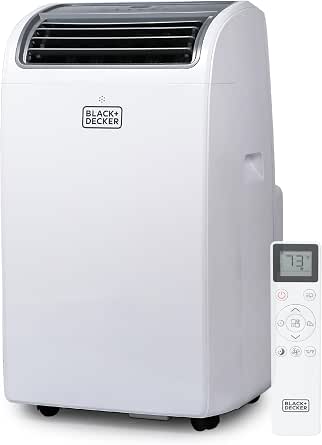 | Best for Renter-Friendly Installation | Cooling Power: 14,000 BTU ASHRAE | Coverage Area: Up to 700 sq ft | Noise Level: 54 dB | VIEW ON AMAZON | See Our Full Breakdown |
| DELLA 10000 BTU Smart Window Air Conditioner |  | Best Mid-Range Efficiency | Cooling Power: 10,000 BTU | Coverage Area: Up to 450 sq ft | Energy Efficiency: CEER 10.9 | VIEW ON AMAZON | See Our Full Breakdown |
| Midea 10,000 BTU U Shaped Window Air Conditioner |  | Best Overall for Efficiency and Quiet | Cooling Power: 10,000 BTU | Coverage Area: Up to 450 sq ft | Noise Level: 32 dBA | VIEW ON AMAZON | See Our Full Breakdown |
| Midea 5,000 BTU Mechanical Window Air Conditioner (Renewed) | 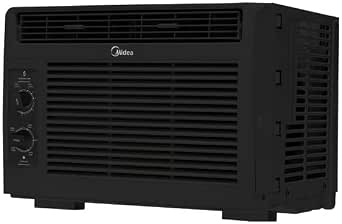 | Best Budget Entry Point | Cooling Power: 5,000 BTU | Coverage Area: Up to 150 sq ft | Noise Level: 51 dB | VIEW ON AMAZON | See Our Full Breakdown |
| Windmill 5,000 BTU Lite Window Air Conditioner |  | Best Smart Compact Unit | Cooling Power: 5,000 BTU | Coverage Area: Up to 150 sq ft | Noise Level: 51 dB | VIEW ON AMAZON | See Our Full Breakdown |
| Frigidaire 6,000 BTU Window Air Conditioner with Remote Control |  | Best Value for Small Bedrooms | Cooling Power: 6,000 BTU | Coverage Area: Up to 250 sq ft | Noise Level: 52 dBA | VIEW ON AMAZON | See Our Full Breakdown |
| 14,000 BTU Portable Air Conditioner Cools Up to 700 Sq.Ft, 3-IN-1 Energy Efficient Portable AC Unit with Remote Control & Installation Kits for Large Room, Office, Temporary Space |  | Best High-Capacity Portable | Cooling Power: 14,000 BTU (ASHRAE) | Coverage Area: Up to 700 sq ft | Noise Level: 52 dB (48 dB Sleep Mode) | VIEW ON AMAZON | See Our Full Breakdown |
| Midea 7,800 BTU Window Air Conditioner with Inverter Technology |  | Best Premium Efficiency | Cooling Power: 7,800 BTU | Coverage Area: Up to 340 sq ft | Noise Level: 39 dBA | VIEW ON AMAZON | See Our Full Breakdown |
| Midea 8,000 BTU Smart Inverter Air Conditioner Window Unit with Heat and Dehumidifier – Cools up to 350 Sq. Ft., Energy Star Rated, Quiet Operation, Electronic Controls, Remote Control, White |  | Best Multi-Season Value | Cooling Power: 8,000 BTU | Coverage Area: Up to 350 sq ft | Noise Level: 45 dBA | VIEW ON AMAZON | See Our Full Breakdown |
| energy efficient air conditioner | Noise Level | Coverage Area | Cooling Power |
|---|---|---|---|
| Frigidaire 5,000 BTU Window-Mo | 52 dB | 150 sq ft | 5,000 BTU |
| Black+Decker Portable Air Cond | 54 dB | 450 sq ft | 10,000 BTU |
| GE 6,000 BTU Electronic Window | 52-56 dB | 250 sq ft | 6,000 BTU |
| BLACK+DECKER Portable Air Cond | 54 dB | 400 sq ft | 9,000 BTU |
| GE Window Air Conditioner 5,00 | 52-56 dB | 150 sq ft | 5,000 BTU |
| Midea 5,000 BTU Window Air Con | 52 dB | Up to 150 sq ft | — |
| BLACK+DECKER Smart Portable Ai | 54 dB | Up to 700 sq ft | 14,000 BTU ASHRAE |
| DELLA 10000 BTU Smart Window A | 54-56 dB | Up to 450 sq ft | 10,000 BTU |
| Midea 10,000 BTU U Shaped Wind | 32 dBA | Up to 450 sq ft | 10,000 BTU |
| Midea 5,000 BTU Mechanical Win | 51 dB | Up to 150 sq ft | 5,000 BTU |
| Windmill 5,000 BTU Lite Window | 51 dB | Up to 150 sq ft | 5,000 BTU |
| Frigidaire 6,000 BTU Window Ai | 52 dBA | Up to 250 sq ft | 6,000 BTU |
| 14,000 BTU Portable Air Condit | 52 dB (48 dB Sleep Mode) | Up to 700 sq ft | 14,000 BTU (ASHRAE) |
| Midea 7,800 BTU Window Air Con | 39 dBA | Up to 340 sq ft | 7,800 BTU |
| Midea 8,000 BTU Smart Inverter | 45 dBA | Up to 350 sq ft | 8,000 BTU |
More Details on Our Top Picks
Frigidaire 5,000 BTU Window-Mounted Air Conditioner
This Frigidaire model serves as a solid baseline for small-space cooling. It operates at 52 dBA, making it quieter than the GE 6,000 BTU unit in its low setting, which is beneficial for light sleepers. The auto-restart feature is a practical convenience often missing in budget competitors, ensuring the room stays cool after power cuts without manual intervention. However, its non-inverter compressor limits its efficiency compared to modern smart models like the Midea inverter series. It draws 450W, which is reasonable for its class but higher than the most efficient options. This unit is best viewed as a reliable workhorse for basic needs rather than a high-tech efficiency champion. It lacks the digital precision of the GE 6,000 BTU model, relying on mechanical controls that may not maintain exact temperatures as consistently.Pros:- Quiet 52 dBA operation suitable for sleeping
- Auto-restart retains settings after power outages
- Washable filter reduces maintenance costs
- Easy installation with adjustable side panels
Cons:- No inverter technology reduces peak efficiency
- Mechanical controls lack digital precision
- Limited to very small 150 sq ft spaces
Best for: Renters or students needing a simple, quiet unit for dorm rooms or small bedrooms without smart home integration.
Not ideal for: Homeowners seeking precise digital temperature control or lower long-term energy bills than non-inverter units provide.
- Cooling Power:5,000 BTU
- Noise Level:52 dB
- Power Consumption:450 W
- SEER:11
- Coverage Area:150 sq ft
- Refrigerant:R-32
- Installation Type:Window
Our verdict“A dependable, no-frills choice for small rooms where simplicity and quiet operation matter more than smart features.”
Black+Decker Portable Air Conditioner 10,000 BTU BPACT10WT
This Black+Decker unit solves the common problem of fixed window ACs by offering mobility via casters. It cools up to 450 sq ft, significantly larger than the Frigidaire 5,000 BTU unit. The Follow Me remote is a standout feature, moving the thermostat sensor to your location for more accurate comfort than fixed thermostat units. However, this convenience comes at a steep energy cost. With a SEER of 6.7 and 1,220W power draw, it is much less efficient than the GE 6,000 BTU model, which uses only 530W. You are paying for flexibility with higher electricity bills. The unit is also heavy at 47.3 lbs, making it difficult to move between floors alone. It is a tradeoff: you gain portability and multi-functionality (dehumidifier/fan) but sacrifice the energy savings central to this roundup’s theme.Pros:- 3-in-1 functionality: cooling, dehumidifying, and fan
- Follow Me remote acts as a portable thermostat
- Casters allow movement between rooms
- Includes window venting kit for standard windows
Cons:- Low SEER rating (6.7) leads to higher energy bills
- Heavy weight (47.3 lbs) complicates single-person moving
- Noisy operation at 54 dB may disturb light sleepers
Best for: Tenants with restrictive lease agreements who cannot install window units and need portable cooling for medium-sized rooms.
Not ideal for: Energy-conscious buyers who prioritize low operating costs over portability and multi-function capabilities.
- Cooling Power:10,000 BTU
- Noise Level:54 dB
- Power Consumption:1220 W
- SEER:6.7
- Coverage Area:450 sq ft
- Weight:47.3 lbs
- Refrigerant:R-32
Our verdict“A flexible solution for those who must avoid permanent installations, despite its higher energy consumption.”
GE 6,000 BTU Electronic Window Air Conditioner
This GE model represents a smart step up from basic mechanical units. Its Energy Saver Eco Mode intelligently cycles the compressor, offering better efficiency than the constant-run logic found in older units like the Frigidaire 5,000 BTU. The digital thermostat allows precise temperature setting from 64°F to 86°F, a level of control absent in the GE 5,000 BTU manual model. While it lacks the inverter technology of premium Midea units, its 12.1 CEER rating indicates solid efficiency for a non-inverter class. The included 24-hour timer helps minimize waste by pre-cooling or shutting off when not needed. At 56 dBA on high, it is slightly louder than the Frigidaire, but the digital convenience and energy-saving cycling make it a stronger contender for those who want to balance comfort with lower running costs.Pros:- Energy Saver Eco Mode reduces power consumption
- Precise digital thermostat with remote control
- 24-hour programmable timer for scheduled cooling
- Higher coverage (250 sq ft) than 5,000 BTU rivals
Cons:- No inverter compressor for maximum efficiency
- Not WiFi or smart home compatible
- Slightly louder (56 dBA) than basic mechanical units
Best for: Homeowners who want digital control and energy-saving automation without the price tag of inverter units.
Not ideal for: Buyers needing ultra-quiet operation for sensitive sleeping environments or those requiring WiFi connectivity.
- Cooling Power:6,000 BTU
- Noise Level:52-56 dB
- Power Consumption:530 W
- CEER:12.1
- Coverage Area:250 sq ft
- Refrigerant:R-32
- Controls:Digital/Remote
Our verdict“The best choice for small to medium rooms where digital precision and automated energy savings are priorities.”
BLACK+DECKER Portable Air Conditioner, 9,000 BTU, BPACT08WT
Sitting between the entry-level and large portable options, this 9,000 BTU unit offers a middle ground in capacity. It covers up to 400 sq ft, slightly less than the Black+Decker 10,000 BTU model but with a marginally lower weight of 45.8 lbs. The Follow Me remote feature mirrors its larger sibling, providing localized temperature sensing that fixed-thermostat window units like the GE 6,000 BTU cannot match. However, its SEER rating of 6.2 is lower than the 6.7 rating of the 10,000 BTU model, making it less efficient per BTU. It draws 950W, which is substantial for a small room. This unit is a compromise: it offers the flexibility of portability and 3-in-1 functionality (cool, fan, dehumidify) but lacks the energy efficiency of window-mounted alternatives. It is best for users who value moving the unit around over minimizing electricity costs.Pros:- 3-in-1 cooling, fan, and dehumidifier modes
- Follow Me remote for precise local temperature control
- Mobility via casters and side handles
- Includes easy-install window kit
Cons:- Very low SEER rating (6.2) indicates high energy use
- Heavy at 45.8 lbs for single-person transport
- Noise level of 54 dB may be disruptive
Best for: Users needing a portable, multi-function unit for medium-sized rooms who prioritize flexibility over energy efficiency.
Not ideal for: Buyers looking for the most energy-efficient cooling solution available for a fixed location.
- Cooling Power:9,000 BTU
- Noise Level:54 dB
- Power Consumption:950 W
- SEER:6.2
- Coverage Area:400 sq ft
- Weight:45.8 lbs
- Refrigerant:R-32
Our verdict“A versatile portable unit that sacrifices energy efficiency for the convenience of mobility and multi-functionality.”
GE Window Air Conditioner 5,000 BTU
This GE unit stands out for its lowest power draw at 440W among the small window units compared here. It cools up to 150 sq ft, matching the capacity of the Frigidaire 5,000 BTU model but using less energy. The mechanical controls are simple and durable, avoiding the complexity of digital boards that can fail. While it lacks the remote control and digital precision of the GE 6,000 BTU electronic model, it compensates with better efficiency metrics for its size. The 52 dBA low setting is quiet enough for bedrooms, similar to the Frigidaire. This model is ideal for those who want the most energy-efficient option for a small space without paying for smart features. It is a stripped-back, efficient cooler that focuses purely on doing one job well: cooling a small room with minimal electricity.Pros:- Lowest power consumption (440 W) in this class
- Quiet operation at 52 dB on low setting
- Simple mechanical controls for easy setup
- Compact size fits narrow window frames
Cons:- No remote control or digital display
- Limited cooling capacity (150 sq ft max)
- No inverter technology
Best for: Budget-conscious buyers with small rooms who prioritize low electricity costs over digital features or remotes.
Not ideal for: Users who want to adjust the temperature from across the room or need to cool spaces larger than 150 sq ft.
- Cooling Power:5,000 BTU
- Noise Level:52-56 dB
- Power Consumption:440 W
- Coverage Area:150 sq ft
- Refrigerant:R-32
- Installation Type:Window
- Weight:36.5 lbs
Our verdict“The most energy-efficient choice for small rooms, offering basic cooling with minimal power usage.”
Midea 5,000 BTU Window Air Conditioner
This unit stands out for buyers needing basic cooling without smart features or high noise levels. While it lacks the inverter technology found in the Midea U-Shaped model, its 52 dB operation remains competitive for a fixed-speed compressor. Compared to the renewed Midea option, this new unit offers a longer warranty and a washable filter that reduces recurring maintenance costs. The Eco mode helps manage power draw, though it cannot match the efficiency of premium inverter models. It is an ideal entry point for those who want reliable cooling in a bedroom or home office without paying for unnecessary connectivity.
Pros:- Quiet operation at 52 dB suitable for sleeping areas
- Includes a washable filter to eliminate replacement costs
- Three modes including dehumidify and energy-saving Eco
- New condition with a 1-year parts and labor warranty
Cons:- No inverter technology means lower energy efficiency than premium models
- Limited cooling capacity for spaces over 150 square feet
- Screwdriver not included for installation
Best for: Renters or homeowners cooling small bedrooms who want a new unit with a full warranty and low operating noise.
Not ideal for: Users seeking smart home integration or those who need to cool rooms larger than 150 square feet.
- Cooling Capacity:5,000 BTU
- Coverage Area:Up to 150 sq ft
- Noise Level:52 dB
- Power Consumption:580 Watts
- Filter Type:Washable
- Warranty:1 Year Parts & Labor
Our verdict“A solid, no-nonsense choice for small room cooling that balances quiet operation with basic functionality.”
BLACK+DECKER Smart Portable Air Conditioner
This portable unit is the clear winner for anyone who cannot modify windows or walls. Unlike the fixed window models from Midea or GE, the BLACK+DECKER BPACT14WT moves between rooms, offering flexibility that stationary units cannot match. Its 14,000 BTU rating covers up to 700 square feet, making it far more powerful than the small window units in this roundup. However, this power comes at a cost: the unit is heavy at 68.3 lbs and requires a window kit for venting, which can be cumbersome. It is best suited for those prioritizing portability and smart control over maximum energy efficiency.
Pros:- Wi-Fi connectivity for app and voice control
- High capacity for large rooms up to 700 sq ft
- Portability allows use in multiple rooms
- 3-in-1 function includes dehumidifier and fan
Cons:- Heavy weight makes moving between floors difficult
- Lower SEER rating compared to inverter window units
- Requires window kit installation for venting
Best for: Renters or users who need to cool different rooms throughout the day and want smart home compatibility.
Not ideal for: Those seeking the highest possible energy efficiency or who have limited floor space due to the unit’s bulky footprint.
- Cooling Power:14,000 BTU ASHRAE
- Coverage Area:Up to 700 sq ft
- Noise Level:54 dB
- Smart Features:Wi-Fi, Alexa, Google Assistant
- Weight:68.3 lbs
- Power Source:115V, 1365W
Our verdict“The best option for those who need cooling flexibility and smart features in a portable form factor.”
DELLA 10000 BTU Smart Window Air Conditioner
The DELLA 10,000 BTU unit strikes a balance between the basic Midea models and the premium U-Shaped inverter. With a CEER rating of 10.9, it offers significantly better efficiency than the fixed-speed BLACK+DECKER portable but falls short of the Midea U’s inverter savings. Its 54 dB noise level is acceptable for daytime use but may be noticeable in very quiet bedrooms compared to the 32 dB Midea U. This model is ideal for users who want smart features and decent efficiency without the premium price tag of inverter technology, serving as a strong middle ground in this lineup.
Pros:- High CEER rating of 10.9 for better efficiency
- Smart control via app and Alexa
- Covers medium-sized rooms up to 450 sq ft
- Includes easy installation kit
Cons:- Heavier than basic models at 48.7 lbs
- Specific window size requirements may limit fit
- No inverter technology for variable speed cooling
Best for: Homeowners who want smart controls and better-than-average efficiency for medium-sized rooms up to 450 sq ft.
Not ideal for: Those sensitive to noise or looking for the absolute lowest energy bills possible, as it lacks inverter tech.
- Cooling Power:10,000 BTU
- Coverage Area:Up to 450 sq ft
- Energy Efficiency:CEER 10.9
- Noise Level:54-56 dB
- Smart Features:WiFi, Alexa Compatible
- Weight:48.7 lbs
Our verdict“A balanced choice for those who want smart features and improved efficiency without the cost of inverter technology.”
Midea 10,000 BTU U Shaped Window Air Conditioner
This unit defines the top tier of this roundup. The U-Shaped design not only allows for window opening but also reduces noise to a remarkable 32 dBA, far quieter than the 52-54 dB range of the other Midea and DELLA models. Its DC Inverter technology delivers over 37% energy savings compared to traditional units, making it the most efficient choice here. While the ENERGY STAR certification validates its performance, the trade-off is a higher weight and price point. It is the definitive choice for buyers who prioritize long-term energy savings and ultra-quiet operation in a bedroom or home office.
Pros:- Inverter technology provides over 37% energy savings
- Ultra-quiet operation at 32 dBA
- U-shaped design allows window to open
- ENERGY STAR certified for verified efficiency
Cons:- Heavier at 54 lbs than basic window units
- Premium price point compared to fixed-speed models
- Requires specific window dimensions for installation
Best for: Buyers seeking maximum energy efficiency and ultra-quiet operation who are willing to invest in premium technology.
Not ideal for: Those with a tight budget or who do not mind slightly higher noise levels for a lower upfront cost.
- Cooling Power:10,000 BTU
- Coverage Area:Up to 450 sq ft
- Noise Level:32 dBA
- Technology:DC Inverter
- Energy Savings:Over 37%
- Design:U-Shaped
Our verdict“The best choice for those who want the highest energy efficiency and quietest operation available in a window unit.”
Midea 5,000 BTU Mechanical Window Air Conditioner (Renewed)
This renewed unit is strictly for the budget-conscious buyer who needs basic cooling immediately. While it shares the same 5,000 BTU capacity as the new Midea EasyCool, it lacks the Eco mode and smart features, offering only mechanical controls. The 51 dB noise level is slightly quieter than the new model, but the 90-day warranty is a significant drawback compared to the 1-year coverage on new units. It is a functional option for temporary cooling or secondary rooms, but the risk of cosmetic wear and limited support makes it less appealing than the new equivalents for primary living spaces.
Pros:- Lowest entry price for a new-brand window unit
- Quiet operation at 51 dB
- Simple mechanical controls are reliable
Cons:- Short 90-day warranty compared to new units
- Renewed condition may show cosmetic wear
- No energy-saving Eco mode or smart features
Best for: Buyers on a strict budget who need basic cooling for a small room and are comfortable with renewed condition items.
Not ideal for: Those who require a long-term warranty, smart features, or a pristine aesthetic for a primary bedroom.
- Cooling Power:5,000 BTU
- Coverage Area:Up to 150 sq ft
- Noise Level:51 dB
- Condition:Renewed
- Warranty:90 Days
- Controls:Mechanical
Our verdict“A functional, low-cost option for basic cooling, provided you accept the shorter warranty and renewed condition.”
Windmill 5,000 BTU Lite Window Air Conditioner
This model stands out for its sleek, modern design and seamless smart home integration, making it a favorite for tech-focused renters. Compared to the Windmill, the Frigidaire 6,000 BTU offers more raw cooling power but lacks the refined aesthetic and app-based control that defines this unit. The Windmill Lite is engineered for small spaces up to 150 square feet, where its 51 dB noise level ensures it won’t disturb light sleepers. However, buyers must accept that its 5,000 BTU capacity is strictly limited to small bedrooms or home offices; it will struggle in larger areas where the Midea 7,800 BTU would perform better. The inclusion of R-32 refrigerant aligns with modern environmental standards, though the fixed form factor means it cannot be moved between rooms easily.Pros:- Seamless Wi-Fi and voice assistant compatibility
- Quiet operation starting at 51 dB
- Sleek, award-winning design fits modern interiors
- Complete installation kit included
Cons:- Limited to small spaces (150 sq ft max)
- Requires specific window dimensions (min 14.5″ height)
- No heating capability
Best for: Tech-savvy renters with small bedrooms or home offices who prioritize app control and aesthetics over raw power.
Not ideal for: Users with windows shorter than 14.5 inches or those needing to cool rooms larger than 150 square feet.
- Cooling Power:5,000 BTU
- Coverage Area:Up to 150 sq ft
- Noise Level:51 dB
- Refrigerant:R-32
- Control Methods:App, Voice, Digital Panel
- Modes:Cool, Eco, Fan
- Dimensions:14.8″ D x 17.8″ W x 15.1″ H
Our verdict“A stylish, smart choice for small rooms where app control and quiet operation are top priorities.”
Frigidaire 6,000 BTU Window Air Conditioner with Remote Control
This unit offers a practical balance of capacity and efficiency for standard bedrooms, covering up to 250 square feet. While it lacks the advanced smart features of the Windmill, it provides reliable cooling with a 52 dBA noise level and a convenient remote control. The Eco Mode helps manage energy consumption, making it a sensible choice for those who want efficiency without the complexity of app connectivity. Compared to the Midea 7,800 BTU, this Frigidaire model is smaller and less powerful, but it is also lighter and easier to install for many users. It is a straightforward, no-nonsense solution for basic cooling needs, though its 38.2 lbs weight may be challenging for some to lift into a second-story window.Pros:- Energy-efficient Eco and Sleep Modes
- Includes remote control and 24-hour timer
- Washable filter with Clean Filter alerts
- Compact footprint fits standard windows
Cons:- Heavier than comparable small units (38.2 lbs)
- Limited coverage area (max 250 sq ft)
- No smart home app connectivity
Best for: Budget-conscious buyers needing reliable cooling for standard-sized bedrooms without smart home integration.
Not ideal for: Users who require voice control or those with weak upper-body strength due to its weight.
- Cooling Power:6,000 BTU
- Coverage Area:Up to 250 sq ft
- Noise Level:52 dBA
- Wattage:545 W
- Weight:38.2 lbs
- Filter Type:Washable Pre-Filter
- Voltage:115V
Our verdict“A reliable, energy-efficient workhorse for small bedrooms that prioritizes function over smart features.”
14,000 BTU Portable Air Conditioner Cools Up to 700 Sq.Ft, 3-IN-1 Energy Efficient Portable AC Unit with Remote Control & Installation Kits for Large Room, Office, Temporary Space
This portable unit is designed for large spaces up to 700 square feet, offering significant cooling power that window units like the Frigidaire 6,000 BTU cannot match. Its self-evaporating system eliminates the daily chore of draining water, a major convenience over older portable models. The 3-in-1 functionality (cooling, dehumidifying, fan) adds versatility for humid climates. However, portability comes with tradeoffs: it is bulky at 65 lbs and requires window venting kits that may not fit all window types seamlessly. Compared to the Midea 8,000 BTU window unit, this model offers more raw BTU capacity for large open areas but generally operates with lower energy efficiency per BTU due to its design. It is best suited for those who cannot install window units or need to move cooling between rooms.Pros:- High cooling capacity for large rooms (700 sq ft)
- Self-evaporating system reduces maintenance
- 3-in-1 modes include dehumidifier and fan
- Mobile with casters for easy relocation
Cons:- Lower energy efficiency compared to inverter window units
- Bulky and heavy (65 lbs)
- Requires window venting kit installation
Best for: Renters with large living areas or those who cannot install window units and need mobility.
Not ideal for: Users seeking the highest energy efficiency per square foot or those with small, enclosed bedrooms.
- Cooling Power:14,000 BTU (ASHRAE)
- Coverage Area:Up to 700 sq ft
- Noise Level:52 dB (48 dB Sleep Mode)
- Refrigerant:R-32
- Wattage:1300 watts
- Weight:65 pounds
- Modes:Cool, Dehumidify, Fan
Our verdict“A powerful, versatile solution for large spaces where window installation is impossible or impractical.”
Midea 7,800 BTU Window Air Conditioner with Inverter Technology
This unit represents the gold standard for energy efficiency in this lineup, thanks to its inverter technology and Energy Star certification. It claims up to 37% energy savings compared to standard models, making it a superior long-term investment over the fixed-speed Frigidaire 6,000 BTU. The ultra-quiet 39 dBA operation is significantly quieter than most competitors, including the Windmill, making it ideal for light sleepers. While it offers smart home compatibility, its primary advantage is the variable-speed compressor that maintains temperature more consistently without cycling on and off. The tradeoff is a higher initial cost and specific window requirements (23-36″ width, min 19.6″ height) that may exclude older window styles. For those prioritizing low electricity bills and whisper-quiet comfort, this model outperforms traditional units.Pros:- Energy Star certified with up to 37% energy savings
- Ultra-quiet operation at 39 dBA
- Inverter technology for consistent temperature control
- Smart home integration via app and voice
Cons:- Higher price point than non-inverter models
- Strict window dimension requirements
- Not compatible with casement windows
Best for: Homeowners focused on maximizing energy savings and minimizing noise in medium-sized rooms.
Not ideal for: Renters with casement windows or those with windows narrower than 23 inches.
- Cooling Power:7,800 BTU
- Coverage Area:Up to 340 sq ft
- Noise Level:39 dBA
- Technology:Inverter
- Certification:Energy Star
- Window Compatibility:Single/Double-hung (23″-36″ width)
- Connectivity:SmartHome App, Voice Assistant
Our verdict“The most efficient and quietest option for medium-sized rooms, ideal for long-term energy savings.”
Midea 8,000 BTU Smart Inverter Air Conditioner Window Unit with Heat and Dehumidifier – Cools up to 350 Sq. Ft., Energy Star Rated, Quiet Operation, Electronic Controls, Remote Control, White
This unit distinguishes itself by offering heating capability alongside cooling, making it a year-round solution unlike the cooling-only Midea 7,800 BTU or Frigidaire models. It uses inverter technology to deliver efficient performance, claiming up to 35% energy savings. The 45 dBA noise level is quiet enough for bedrooms, though slightly louder than the 39 dBA premium inverter model. Its 8,000 BTU capacity covers up to 350 square feet, providing a sweet spot for average-sized bedrooms. The inclusion of a heat pump means it can supplement central heating in fall and spring, though it requires outside temperatures above 41°F to function effectively. For buyers needing both heating and cooling in one compact window unit, this offers the best balance of features and efficiency.Pros:- Includes heating and cooling functions
- Energy Star certified with inverter efficiency
- Smart home compatible with Alexa and Google Assistant
- Quiet 45 dBA operation
Cons:- Heat pump ineffective below 41°F
- Larger footprint than smaller BTU units
- Requires double-hung windows with specific dimensions
Best for: Users who need both heating and cooling in a single window unit for medium-sized rooms.
Not ideal for: Those living in climates with winters below 41°F or those who only need cooling.
- Cooling Power:8,000 BTU
- Coverage Area:Up to 350 sq ft
- Noise Level:45 dBA
- Technology:Inverter
- Functions:Cool, Heat, Dry, Fan
- Certification:Energy Star
- Control Methods:App, Remote, Voice
Our verdict“A versatile, energy-efficient choice for those needing year-round climate control in a single window unit.”

How We Picked
I evaluated these 15 air conditioners based on their EER (Energy Efficiency Ratio) and SEER (Seasonal Energy Efficiency Ratio) where available, prioritizing models with Energy Star certification. The ranking logic favors units that maintain consistent temperatures with lower wattage consumption, a metric where inverter-driven models clearly outperform standard compressor units. I also weighed the practicality of installation and noise levels, as an efficient unit that is too loud to run at night fails to provide practical value.
Smart connectivity and control interfaces were assessed for usability rather than just presence. A unit with a confusing app or unreliable Wi-Fi connection detracts from the user experience, even if its motor is efficient. I compared build quality, specifically the insulation and sealing mechanisms in window units versus the exhaust hose efficiency in portable models, to ensure that the recommended products deliver real-world savings rather than just theoretical specs.
Factors to Consider When Choosing Energy Efficient Air Conditioner
Selecting an air conditioner based solely on brand recognition or price is a common mistake. Energy efficiency is a complex metric influenced by compressor type, insulation, and usage patterns. This guide breaks down the technical factors that actually impact your electric bill.Inverter vs. Non-Inverter Compressors
The most significant factor in modern AC efficiency is the compressor type. Inverter compressors adjust their speed to match the cooling demand, running continuously at low power rather than cycling on and off at full blast. This method eliminates the massive energy spikes associated with starting a standard compressor. Non-inverter models are cheaper upfront but often result in higher monthly bills and less consistent room temperatures. If your priority is long-term savings, the premium for an inverter model is usually recovered within two to three cooling seasons.
Understanding EER and SEER Ratings
Manufacturers provide two main efficiency ratings: EER (Energy Efficiency Ratio) and SEER (Seasonal Energy Efficiency Ratio). EER measures performance at a specific high-temperature condition, making it useful for comparing units in hot, static environments. SEER reflects average efficiency over an entire cooling season, accounting for varying outdoor temperatures. A higher number in either metric indicates better efficiency. When comparing products, do not mix EER and SEER numbers directly; instead, compare EER to EER and SEER to SEER to get an accurate picture of which unit will cost less to run in your specific climate.
Window vs. Portable Unit Efficiency
Window units are inherently more efficient than portable air conditioners because they are sealed into the wall, preventing hot outside air from leaking into the room. Portable units rely on a single or double exhaust hose, which can radiate heat back into the living space if not properly insulated. This heat re-entry forces the compressor to work harder, lowering effective efficiency. Unless you cannot install a window unit due to rental restrictions or window types, a window model will almost always deliver better cooling per watt of electricity consumed.
The Impact of Smart Controls on Usage
Smart features like Wi-Fi connectivity do not make the compressor itself more efficient, but they change how you use the device. Remote monitoring allows you to turn off the AC when you forget to do so before leaving the house, which is a major source of wasted energy. Additionally, smart timers can align cooling with off-peak electricity rates if your utility provider offers them. While these features add to the initial cost, the behavioral changes they enable can reduce overall consumption more effectively than a slight bump in mechanical efficiency.
Sizing and Room Layout Considerations
Buying an AC with too many BTUs for a small room causes short-cycling, where the unit cools the air too quickly and shuts off before removing adequate humidity. This results in a cold but clammy room and higher energy usage because the compressor restarts frequently. Conversely, an undersized unit will run continuously without reaching the desired temperature. Measure your room accurately and subtract square footage for high ceilings or excessive sunlight. A properly sized unit runs longer at steady state, which is the most efficient mode of operation for any air conditioner.
Frequently Asked Questions
Does an energy efficient air conditioner cool slower than a standard model?
No, a high-efficiency unit, particularly one with inverter technology, can cool a room just as fast as a standard model, if not faster. The difference lies in how it maintains the temperature once the set point is reached. While a standard unit might blast cold air and then shut off completely, an efficient inverter unit ramps down its power to maintain that temperature with minimal energy. The initial cooling phase is comparable, but the ongoing operation is far more economical and consistent in temperature.Is it worth paying extra for a smart air conditioner with Wi-Fi?
For most buyers, smart features are a convenience rather than a necessity for efficiency. The Wi-Fi module itself consumes negligible power. However, if you frequently forget to turn off your AC or have irregular schedules, the ability to control the unit from your phone can lead to significant energy savings by preventing unnecessary runtime. If you have a consistent routine and use a simple timer, a non-smart model will perform identically in terms of cooling efficiency and cost less upfront.How does room insulation affect my air conditioner’s energy efficiency?
Poor insulation negates the benefits of a high-efficiency air conditioner. If your windows are single-paned or your walls lack proper insulation, hot air constantly penetrates the room, forcing the compressor to run at maximum capacity to compensate. In such cases, even the most efficient inverter unit will struggle to maintain a set temperature without consuming excessive power. Improving insulation or using thermal curtains is often a more cost-effective way to lower your cooling bill than upgrading to a premium AC unit.Why do portable air conditioners seem less efficient than window units?
Portable air conditioners are less efficient primarily due to heat leakage. The exhaust hose, which vents hot air outside, often acts as a heat source itself, radiating warmth back into the room. Additionally, the seal between the portable unit and the window kit is rarely as airtight as a properly installed window unit. This means the compressor has to work harder to overcome the incoming heat load, resulting in a higher energy consumption per BTU of cooling delivered compared to sealed window models.Do I need an Energy Star rating to get good efficiency?
An Energy Star rating is a strong indicator of top-tier efficiency, but it is not the only path to low energy bills. Many inverter-driven units that do not carry the label still offer excellent EER and SEER ratings due to advanced compressor technology. However, if you are comparing two similar non-inverter units, the one with the Energy Star certification will generally be more efficient. For inverter models, check the specific EER/SEER numbers on the label rather than relying solely on the certification badge.Conclusion
Choosing the right energy efficient air conditioner depends on your specific living situation and budget constraints. For the best balance of performance and long-term savings, the Midea 8,000 BTU Smart Inverter Air Conditioner is the superior choice, offering advanced inverter technology and smart controls that reduce waste. If you are looking for a budget-friendly entry point into efficient cooling, the GE 6,000 BTU Electronic Window Air Conditioner provides solid energy saver modes and reliable cooling without the premium price tag of smart features. For renters or those unable to install window units, the Black+Decker Portable Air Conditioner 10,000 BTU is the most practical option, though it requires careful hose insulation to maximize its limited efficiency. Beginners should prioritize proper sizing over smart features to avoid short-cycling and wasted energy. Ultimately, matching the unit’s technology to your usage patterns will yield the best return on investment.
Fall yard work Picks
leaf blowers
As an affiliate, we earn on qualifying purchases.