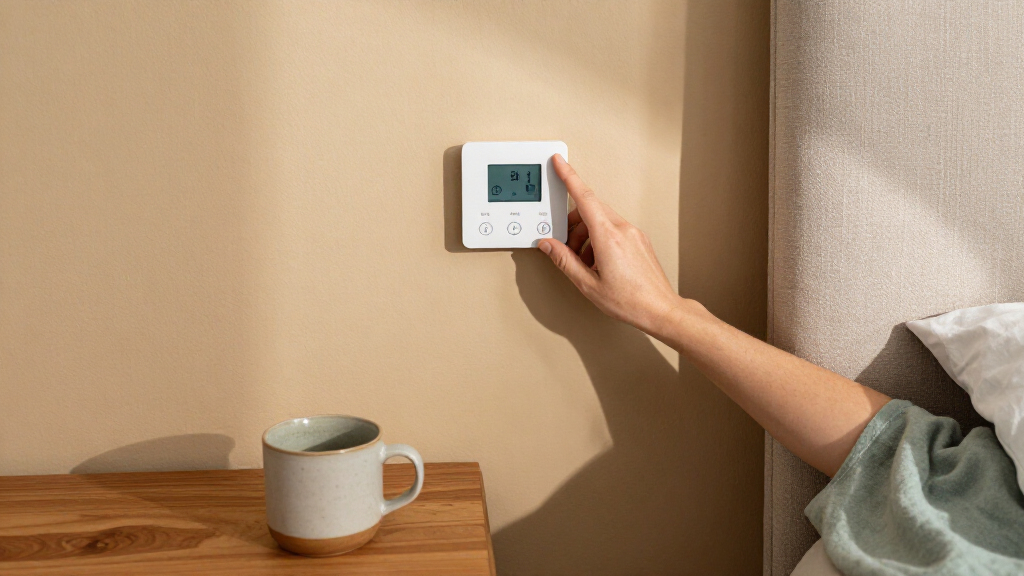

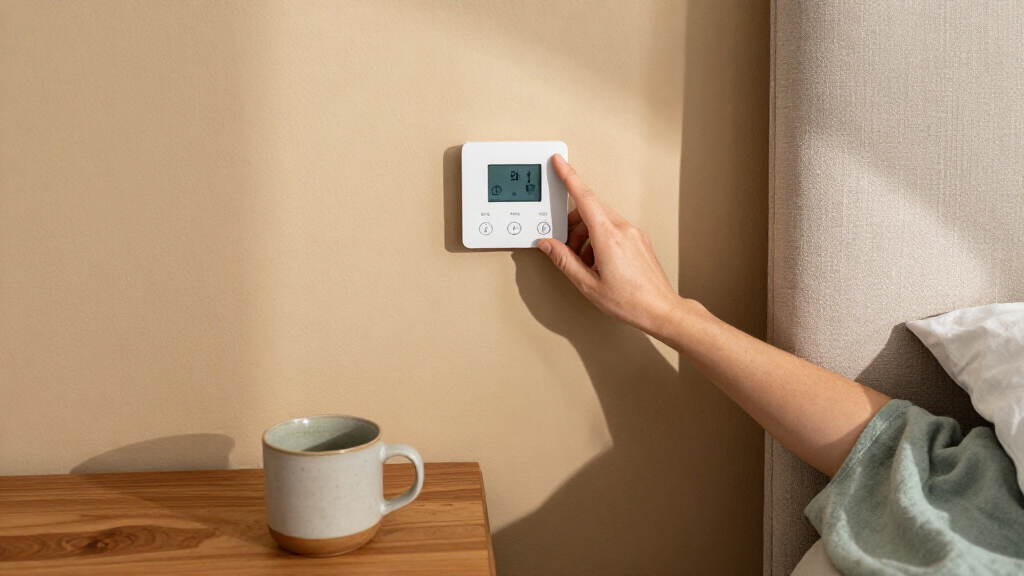
Smart thermostats with room sensors can help address hot and cold spots by using temperatures from rooms beyond the thermostat’s location. My best overall pick is the ecobee Smart Thermostat Premium, which pairs a room sensor with broad smart-home features; the Google Nest Learning Thermostat (4th Gen) stands out for buyers who want a learning-focused system, while the Sensi Touch 2 is a simpler alternative for people who prioritize straightforward control. The main tradeoffs are sensor coverage, HVAC compatibility, setup demands, and how much automation you want. Some bundles include multiple sensors, while others suit buyers who need only one remote room reading. Read on for the full comparison and guidance on matching a thermostat to your home.

Get home appliances delivered free with Prime
- Fast, free delivery on millions of items
- Prime Video, Amazon Music and more included
- Member-only deals all year
Complete the kit


Key Takeaways
- ecobee Smart Thermostat Premium leads this group for buyers seeking room sensing alongside a broad set of connected features; its greater feature depth may be more than a straightforward heating-and-cooling setup needs.
- The Nest Learning models are the strongest fit for buyers drawn to adaptive scheduling, with bundles that differ in sensor count and generation; verify the exact sensor included rather than assuming all packages match.
- The lineup ranges from sensor-centered bundles to thermostats with built-in voice assistants, so room balancing and smart-home convenience are separate priorities—not every extra feature improves temperature coverage.
- Sensi Touch 2 offers a more restrained alternative to feature-heavy ecobee and Nest models, while compatibility checks remain necessary before choosing it or any other thermostat.
- Honeywell’s ElitePRO S1200 appears in two finishes, while several other entries are bundles or earlier-generation models; compare the exact model and included accessories, not just the product-family name.
| Google Nest Thermostat E Smart Thermostat with Temperature Sensor Bundle – White |  | Best for Simple Room-Specific Control | Color: White | Display: LCD | Connectivity: Wi-Fi | VIEW LATEST PRICE | See Our Full Breakdown |
| Sensi Touch 2 Smart Wi-Fi Thermostat, ST76 |  | Best for Multi-Room Sensor Expansion | Model: ST76 | Display: LCD touchscreen | Connectivity: Wi-Fi | VIEW LATEST PRICE | See Our Full Breakdown |
| Honeywell Home ElitePRO S1200 Smart Thermostat with Wireless Room Sensor |  | Best for Advanced HVAC and Indoor-Air Monitoring | Model: YTHX1200W5 | Display: 5-inch capacitive touchscreen, 800 × 400 resolution | Connectivity: Wi-Fi | VIEW LATEST PRICE | See Our Full Breakdown |
| ecobee3 Lite Smart Thermostat Bundle with SmartSensor and Door and Window Sensor |  | Best for Room Comfort and Entry Awareness | Included accessories: SmartSensor and one door and window sensor | SmartSensor range: Up to 60 ft through walls and floors | System compatibility: Compatible with 85% of systems | VIEW LATEST PRICE | See Our Full Breakdown |
| ecobee4 Smart Thermostat with Built-in Alexa and Room Sensor |  | Best for Hands-Free Smart-Home Control | Model: ecobee4 | Connectivity: Wi-Fi | Power: Hardwired, 24 V | VIEW LATEST PRICE | See Our Full Breakdown |
| Levoit Aura 400S Smart Wi-Fi Thermostat with C-Wire Adapter, White |  | Best for Multi-Room Sensor Coverage | Display: 4-inch IPS touchscreen with automatic brightness adjustment | Connectivity: 2.4 GHz Wi-Fi; Zigbee 3.0 for room sensors | Sensor support: Up to 16 Levoit sensors; sold separately | VIEW LATEST PRICE | See Our Full Breakdown |
| ecobee Smart Thermostat Premium with Wi-Fi, Siri and Alexa, and SmartSensor |  | Best Premium All-in-One | Connectivity: Wi-Fi | Included sensor: ecobee SmartSensor | Voice assistants: Siri and Alexa | VIEW LATEST PRICE | See Our Full Breakdown |
| Honeywell Home X8S Smart Wi-Fi Thermostat with Room Sensor, White |  | Best for Matter Smart Homes | Display: 5-inch touchscreen | Connectivity: Wi-Fi (2.4 or 5 GHz) and Matter | Room sensor range: Up to 200 feet | VIEW LATEST PRICE | See Our Full Breakdown |
| Google Nest Learning Thermostat 3rd Gen Bundle with 3 Temperature Sensors and Matte White Wall Plate |  | Best for Multiple Rooms Out of the Box | Thermostat model: Google Nest Learning Thermostat, 3rd Generation | Included sensors: Three Nest Temperature Sensors | Connectivity: Wi-Fi | VIEW LATEST PRICE | See Our Full Breakdown |
| Google Nest Learning Thermostat (4th Gen) with Nest Temperature Sensor (2nd Gen), Silver |  | Best for a Modern Nest Upgrade | Display: 3.5-inch touchscreen | Included sensor: Nest Temperature Sensor (2nd Gen) | Connectivity: Wi-Fi and Matter | VIEW LATEST PRICE | See Our Full Breakdown |
| Google Nest Learning Thermostat (3rd Generation) – Stainless Steel with 2 Sensors |  | Best for Schedule Learning | Brand: Nest | Model: Nest Learning Thermostat (3rd Generation) | Finish: Stainless steel | VIEW LATEST PRICE | See Our Full Breakdown |
| LUX TQX Matter Smart Thermostat with Room Sensor |  | Best for Smart Home Compatibility | Model: TQX-BL | Color and material: Black plastic | Dimensions: 1.1 × 3.5 × 3.5 inches | VIEW LATEST PRICE | See Our Full Breakdown |
| ecobee3 Smarter Wi-Fi Thermostat with Remote Sensor (2nd Generation) |  | Best for Targeted Room Comfort | Model: ecobee3; EB-STATe3-O2 | Connectivity: Wi-Fi | Compatible platforms: Amazon Alexa, Apple HomeKit, SmartThings, Vera | VIEW LATEST PRICE | See Our Full Breakdown |
| Honeywell Home YTHX1200B6/U ElitePro S1200 Smart Thermostat with Room Sensor, Black |  | Best for Large, Information-Rich Display | Model: YTHX1200B6/U | Display: 5-inch capacitive touchscreen, 800 × 400 | Connectivity: Dual-band Wi-Fi (2.4/5 GHz), Bluetooth BLE, RedLINK 3.0, Matter | VIEW LATEST PRICE | See Our Full Breakdown |
| smart thermostats with room sensor | Connectivity | Display | Model | Power |
|---|---|---|---|---|
| Google Nest Thermostat E Smart | Wi-Fi | LCD | — | — |
| Sensi Touch 2 Smart Wi-Fi Ther | Wi-Fi | LCD touchscreen | ST76 | C-wire required |
| Honeywell Home ElitePRO S1200 | Wi-Fi | 5-inch capacitive touchscreen, 800 × 400 resolution | YTHX1200W5 | 24 VAC; C-wire required |
| ecobee3 Lite Smart Thermostat | — | — | — | — |
| ecobee4 Smart Thermostat with | Wi-Fi | Digital | ecobee4 | Hardwired, 24 V |
| Levoit Aura 400S Smart Wi-Fi T | 2.4 GHz Wi-Fi; Zigbee 3.0 for room sensors | 4-inch IPS touchscreen with automatic brightness adjustment | — | AC 24 V, 60 Hz |
| ecobee Smart Thermostat Premiu | Wi-Fi | — | — | — |
| Honeywell Home X8S Smart Wi-Fi | Wi-Fi (2.4 or 5 GHz) and Matter | 5-inch touchscreen | — | — |
| Google Nest Learning Thermosta | Wi-Fi | LCD | — | — |
| Google Nest Learning Thermosta | Wi-Fi and Matter | 3.5-inch touchscreen | — | 24 volts; C-wire not required in most homes |
| Google Nest Learning Thermosta | Wi-Fi | — | Nest Learning Thermostat (3rd Generation) | — |
| LUX TQX Matter Smart Thermosta | Bluetooth, Matter, Wi-Fi, Zigbee | — | TQX-BL | 24 V AC; C-wire system power |
| ecobee3 Smarter Wi-Fi Thermost | Wi-Fi | 2-inch touchscreen | ecobee3; EB-STATe3-O2 | — |
| Honeywell Home YTHX1200B6/U El | Dual-band Wi-Fi (2.4/5 GHz), Bluetooth BLE, RedLINK 3.0, Matter | 5-inch capacitive touchscreen, 800 × 400 | YTHX1200B6/U | 24 VAC, 60 Hz; C-wire required |
More Details on Our Top Picks
Google Nest Thermostat E Smart Thermostat with Temperature Sensor Bundle – White
The Nest Thermostat E bundle is a straightforward choice for buyers who want a room sensor included without building a larger sensor network. Its included Nest Temperature Sensor lets the system prioritize a room that runs warmer or cooler than the thermostat location, while Home/Away Assist can switch to Eco Temperature when the home is empty. Compared with the Sensi Touch 2, which can pair with many sensors but sells them separately, this bundle gets room-based control started with fewer separate purchases. The tradeoff is a smaller sensor setup and more limited system compatibility than the Honeywell Home ElitePRO S1200, which also tracks humidity and motion at its sensor. I’d choose the Nest for simpler homes and skip it if your HVAC setup is unusual or you need several rooms represented.
Pros:- Includes a Nest Temperature Sensor for room-specific temperature readings.
- Home/Away Assist can switch the system to Eco Temperature when the home is empty.
- Works with Alexa, Google Assistant, and the Nest app.
- DIY installation includes the necessary tools and components.
Cons:- Remote control and notifications depend on working Wi-Fi and internet access.
- Compatibility is more limited than the Honeywell Home ElitePRO S1200’s broad system support.
- Energy savings vary with household habits and weather.
Best for: Buyers with a compatible residential heating system who want one included sensor to prioritize a bedroom or other problem room.
Not ideal for: Homes with complex or less-common HVAC equipment, or buyers who need temperature readings from many rooms.
- Color:White
- Display:LCD
- Connectivity:Wi-Fi
- Power source:Battery powered; one lithium-ion battery included
- Voltage:24 V
- Included sensor:Nest Temperature Sensor
- Compatible systems:Combi boilers, heat-only boilers, heat pumps, zoned systems, and district heating
- Controllers:Amazon Alexa, Google Assistant, and Nest app
Our verdict“Choose this bundle if you want a Nest thermostat with one sensor included and your HVAC system is compatible.”
Sensi Touch 2 Smart Wi-Fi Thermostat, ST76
The Sensi Touch 2 makes the most sense for buyers who want room sensing to scale beyond one or two spaces. It can pair with up to 15 Sensi Room Sensors, giving households more flexibility to address temperature differences across several rooms than the single-sensor Nest Thermostat E bundle. Those sensors are sold separately, though, so the larger setup takes extra planning and purchases. The touchscreen, app-guided installation, flexible schedules, and energy reports make routine control accessible, but installation requires a C-wire. Unlike the ecobee4, it does not include a room sensor in this product description, so it is a better fit for people who want to choose their sensor count rather than get a starter sensor in the box. Check wiring and sensor availability before choosing it.
Pros:- Supports up to 15 Sensi Room Sensors for broader room coverage.
- Touchscreen, app, and voice controls provide several ways to adjust settings.
- App-guided DIY installation and flexible scheduling.
- Provides energy usage reports and works with Alexa and Google Assistant.
Cons:- Requires a C-wire for installation.
- Room sensors are sold separately.
- Building a multi-room setup requires additional sensors beyond the thermostat.
Best for: Homeowners with a C-wire who want to add sensors gradually across multiple rooms and manage schedules through an app.
Not ideal for: Buyers without a C-wire or anyone seeking a ready-to-use room-sensor bundle without buying accessories separately.
- Model:ST76
- Display:LCD touchscreen
- Connectivity:Wi-Fi
- Power:C-wire required
- Voltage:24 V
- Room sensor support:Up to 15 Sensi Room Sensors, sold separately
- Compatible systems:Air conditioner, boiler, furnace, and heat pump
- Dimensions:5.6 × 3.25 × 0.77 in
- Compatible assistants:Amazon Alexa and Google Assistant
Our verdict“Pick the Sensi Touch 2 if you have a C-wire and want the option to expand room sensing across many rooms.”
Honeywell Home ElitePRO S1200 Smart Thermostat with Wireless Room Sensor
The Honeywell Home ElitePRO S1200 is the most feature-rich fit here for households that need more than room temperature readings. Its included RedLINK sensor measures temperature, humidity, and motion, while the thermostat monitors indoor humidity, VOCs, and estimated CO2 and can control up to two indoor air-quality devices. That makes it a stronger match for complex systems than the Nest Thermostat E, whose appeal is simpler setup and basic room prioritization. The S1200 also supports a wide range of residential and light commercial equipment, but the broader capabilities bring more installation demands: it is hardwired, requires a C-wire, and may be better suited to a knowledgeable installer than a quick DIY project. Its sensor adds useful room context, but buyers should weigh that against the product’s listed lack of a warranty.
Pros:- Included wireless sensor reports temperature, humidity, and motion.
- Supports a wide range of residential and light commercial HVAC configurations.
- Tracks indoor humidity, VOCs, and estimated CO2.
- Can control up to two indoor air-quality devices, such as a humidifier or ventilator.
Cons:- Requires hardwired installation and a C-wire.
- Doorbell video streaming needs a compatible First Alert or Ring doorbell sold separately.
- Product data lists no warranty.
Best for: Owners of complex heating and cooling systems who want a room sensor that tracks humidity and motion alongside temperature.
Not ideal for: Renters, DIY-first buyers seeking a simple installation, or shoppers who require a stated warranty.
- Model:YTHX1200W5
- Display:5-inch capacitive touchscreen, 800 × 400 resolution
- Connectivity:Wi-Fi
- Power:24 VAC; C-wire required
- Included sensor:Wireless RedLINK sensor with temperature, humidity, and motion sensing
- System support:Up to 4H/2C heat pump or 3H/3C conventional; also supports dual fuel, hydronic, fan coil, PTAC, and radiant floor systems
- Indoor-air monitoring:Humidity, VOCs, and estimated CO2
- Indoor-air device control:Up to 2 devices
- Warranty:None listed
Our verdict“Choose the ElitePRO S1200 if your system is complex and you want room sensing plus broader indoor-air controls, not a simple DIY thermostat.”
ecobee3 Lite Smart Thermostat Bundle with SmartSensor and Door and Window Sensor
This ecobee3 Lite bundle links room comfort with basic awareness of doors, windows, and occupancy. The included SmartSensor reports a room’s temperature and detects occupancy from up to 60 feet through walls and floors, while the separate door and window sensor can send entry and motion notifications. Compared with the Nest Thermostat E bundle, it adds entry sensing rather than focusing only on temperature control; compared with the Sensi Touch 2, its main appeal is that sensors are included rather than left for buyers to source separately. Its time-of-use features can shift heating or cooling toward less expensive periods, but HVAC pausing when a door or window is open requires a Smart Security subscription. Compatibility covers a stated 85% of systems, so checking your equipment matters before purchase.
Pros:- Includes both a SmartSensor and a door and window sensor.
- SmartSensor detects occupancy and reports room temperature from up to 60 feet through walls and floors.
- Time-of-use features can schedule preheating or precooling around lower-cost periods.
- ENERGY STAR certified.
Cons:- Compatibility is listed for 85% of systems, so some HVAC setups are excluded.
- Pausing heating or cooling when a monitored door or window is open requires a Smart Security subscription.
- The bundle’s entry-sensing features may be unnecessary for buyers focused only on room temperature.
Best for: Households that want an included room sensor plus door and window monitoring in one connected setup.
Not ideal for: Owners of less-common HVAC systems or buyers who expect open-window HVAC pauses without a subscription.
- Included accessories:SmartSensor and one door and window sensor
- SmartSensor range:Up to 60 ft through walls and floors
- System compatibility:Compatible with 85% of systems
- Certification:ENERGY STAR
- Room sensing:Temperature and occupancy detection
- Smart features:Indoor humidity detection, schedule assistant, and time-of-use preheating or precooling
- Open-door/window HVAC pause:Requires a Smart Security subscription
Our verdict“Choose this ecobee bundle if you want included room sensing and entry monitoring, and your HVAC system is compatible.”
ecobee4 Smart Thermostat with Built-in Alexa and Room Sensor
The ecobee4 is a good match for buyers who want room sensing and voice control centered in one thermostat. It includes a Room Sensor to help address hot and cold spots, and built-in Alexa means basic voice interaction does not depend on a separate Alexa device nearby. Its support for Apple HomeKit, Google Assistant, and SmartThings also gives it broader smart-home reach than the Nest Thermostat E, which is listed with Alexa and Google Assistant compatibility. Compared with the ecobee3 Lite bundle, the ecobee4’s defining difference is built-in Alexa; the Lite bundle instead adds a door and window sensor. The ecobee4 still requires a hardwired 24-volt system, and its physical buttons may feel less direct than the Sensi Touch 2 touchscreen. Wi-Fi outages also limit connected control and voice features.
Pros:- Includes a room sensor to help address temperature differences between rooms.
- Built-in Alexa supports hands-free control without a separate Alexa device.
- Works with Apple HomeKit, Google Assistant, and SmartThings.
- Supports complex HVAC systems, including heat pumps and humidifiers.
Cons:- Requires a compatible hardwired 24-volt system.
- Remote features and voice control rely on Wi-Fi.
- Physical button controls may be less intuitive than the Sensi Touch 2 touchscreen.
Best for: Smart-home households that want an included room sensor, built-in Alexa, and compatibility with several major platforms.
Not ideal for: Buyers without compatible 24-volt hardwiring, or those who prioritize a full touchscreen over physical buttons.
- Model:ecobee4
- Connectivity:Wi-Fi
- Power:Hardwired, 24 V
- Included component:Room Sensor
- Voice control:Built-in Amazon Alexa
- Smart-home compatibility:Apple HomeKit, Google Assistant, SmartThings, and IFTTT
- Mounting:Wall mount
- Dimensions:3.23 × 7.56 × 7.64 in
- Display:Digital
Our verdict“Choose the ecobee4 if built-in Alexa and broad smart-home compatibility matter more to you than a full touchscreen.”
Levoit Aura 400S Smart Wi-Fi Thermostat with C-Wire Adapter, White
The Aura 400S is the strongest fit here for households that want to build out room-by-room temperature coverage over time: it supports up to 16 Levoit sensors, more than the included sensor bundles from either Google Nest model in this lineup. That capacity can help address rooms that run noticeably warmer or cooler than the thermostat’s location. Its 4-inch touchscreen, flexible schedules, and Alexa and Google Assistant control keep day-to-day adjustments straightforward. The included C-wire adapter can help with some installations, though it does not make the thermostat suitable for every wiring setup. Unlike the ecobee Smart Thermostat Premium, it has no included room sensor or built-in air-quality monitor; sensors must be bought separately. Skip it if your system is high-voltage or heating-only without a C-wire.
Pros:- Supports up to 16 Levoit room sensors for broad room-by-room coverage
- Includes a C-wire adapter for compatible installation setups
- Works with Amazon Alexa and Google Assistant
- Touchscreen brightness adjusts automatically
Cons:- Room sensors are sold separately
- Incompatible with 120–240 V high-voltage systems
- Heating-only systems require a C-wire
Best for: Households with several unevenly heated rooms that want the option to add many Levoit sensors and use Alexa or Google Assistant.
Not ideal for: Owners of 120–240 V high-voltage systems or heating-only systems without a C-wire, and buyers who want a room sensor included.
- Display:4-inch IPS touchscreen with automatic brightness adjustment
- Connectivity:2.4 GHz Wi-Fi; Zigbee 3.0 for room sensors
- Sensor support:Up to 16 Levoit sensors; sold separately
- Power:AC 24 V, 60 Hz
- Temperature setting range:32–99°F
- System compatibility:Compatible heating and cooling systems, cooling-only systems, and heat pumps
- Included accessory:C-wire adapter
- Installation:DIY wall mounting; average setup takes about 30 minutes
Our verdict“Choose the Aura 400S if you want extensive optional sensor coverage and can confirm your HVAC wiring is compatible.”
ecobee Smart Thermostat Premium with Wi-Fi, Siri and Alexa, and SmartSensor
The ecobee Premium pairs an included SmartSensor with occupancy sensing, so it can respond to room use without asking you to buy a sensor before getting started. That makes it more ready out of the box than the Levoit Aura 400S, whose sensors are separate purchases, and it adds a built-in air-quality monitor with alerts and filter reminders. Its speaker supports Alexa and Siri, though Siri requires an Apple home hub. A Power Extender Kit helps with installation in homes lacking a C-wire, while the trim kit can cover marks left by an older thermostat. This is a broader home-comfort package than the simpler sensor-and-schedule approach of the Nest Learning Thermostat 4th Gen. The tradeoff is that some security-related features require a subscription or extra compatible hardware.
Pros:- Includes a SmartSensor for room-focused comfort and occupancy sensing
- Built-in air-quality monitor provides alerts and filter reminders
- Power Extender Kit and trim kit are included
- Built-in speaker supports Alexa and Siri voice control
Cons:- Siri requires an Apple home hub
- Smoke alarm sound detection requires an ecobee Smart Security subscription
- Visitor video and two-way talk require a compatible ecobee Smart Doorbell Camera
Best for: Homeowners who want an included occupancy-aware room sensor, air-quality alerts, and built-in voice control in one thermostat.
Not ideal for: Buyers seeking a simple room-temperature setup without speaker features, or those who want Siri without an Apple home hub.
- Connectivity:Wi-Fi
- Included sensor:ecobee SmartSensor
- Voice assistants:Siri and Alexa
- HVAC compatibility:Compatible with 95% of HVAC systems
- Air-quality monitoring:Built-in monitor with alerts and filter reminders
- Installation components:Power Extender Kit and trim kit
- Energy certification:ENERGY STAR certified
- Warranty:3 years
Our verdict“Pick the ecobee Premium if you want a sensor-equipped thermostat that also handles air-quality monitoring and voice features.”
Honeywell Home X8S Smart Wi-Fi Thermostat with Room Sensor, White
The Honeywell Home X8S gives buyers a room sensor in the box and a 5-inch customizable touchscreen, making it a good match for people who want visible controls alongside smart-home integration. Its support for Matter, Alexa, Google Assistant, and Apple Home gives it broader platform options than the voice-assistant setup listed for the ecobee Premium. The included wireless sensor can be placed up to 200 feet away, which helps when the problem room is beyond the thermostat’s immediate area. Humidity and ventilation controls add an indoor-air angle, but some features may need extra HVAC equipment or accessories. Unlike the Levoit Aura 400S, it does not list support for a large multi-sensor network. Check wiring and system type before buying: it needs a C-wire and cannot control high-voltage electric baseboard heat.
Pros:- Includes a wireless room sensor with a stated range of up to 200 feet
- Supports Matter, Alexa, Google Assistant, and Apple Home
- Large, customizable 5-inch touchscreen
- Provides humidity and ventilation controls
Cons:- Not compatible with 120–240 V electric baseboard heat
- Requires a C-wire, with an adapter voucher offered if needed
- Some indoor-air features may require additional HVAC equipment or accessories
Best for: Smart-home households that want an included wireless room sensor, a large touchscreen, and Matter compatibility across platforms.
Not ideal for: Homes with 120–240 V electric baseboard heat, systems without a C-wire, or buyers expecting every air-quality feature to work without added equipment.
- Display:5-inch touchscreen
- Connectivity:Wi-Fi (2.4 or 5 GHz) and Matter
- Room sensor range:Up to 200 feet
- System compatibility:Up to 3 heat/2 cool heat pump with electric backup, or 2 heat/2 cool conventional systems
- Compatible heating systems:Hot water heat and forced air (gas, oil, or electric)
- Wiring:C-wire required; adapter voucher included if needed
- Smart-home platforms:Amazon Alexa, Google Assistant, and Apple Home
- Energy certification:ENERGY STAR
Our verdict“Choose the X8S if platform flexibility and a large display matter more to you than supporting a large network of room sensors.”
Google Nest Learning Thermostat 3rd Gen Bundle with 3 Temperature Sensors and Matte White Wall Plate
This bundle is the room-coverage pick for buyers who want several sensing points immediately: it includes three Nest Temperature Sensors, rather than the single sensor supplied with the Nest Learning Thermostat 4th Gen. The thermostat learns a schedule over time, while the sensors let you direct comfort toward rooms that matter most. That makes the package better suited to a home with several hot or cold spots than the ecobee Premium bundle, which includes one SmartSensor. Wi-Fi and the Nest app provide remote control, and Home/Away Assist can adjust operation when the house is empty. The tradeoff is an older third-generation thermostat and a bundle wall plate made by elago, which may not suit every design preference. Full remote functionality depends on Wi-Fi, and system compatibility still needs checking.
Pros:- Includes three Nest Temperature Sensors for coverage in multiple rooms
- Learns temperature preferences and builds a schedule
- Home/Away Assist can adjust operation when the house is empty
- Compatible with 95% of heating and cooling systems
Cons:- Remote control and full functionality depend on Wi-Fi
- Included wall plate is third-party and may not match every preferred finish
- Uses the third-generation Nest Learning Thermostat rather than the newer fourth generation
Best for: Nest users who want to address temperature differences across several rooms using three sensors included in the bundle.
Not ideal for: Buyers who prefer the newer Nest generation, want to avoid third-party trim, or need full remote access without Wi-Fi.
- Thermostat model:Google Nest Learning Thermostat, 3rd Generation
- Included sensors:Three Nest Temperature Sensors
- Connectivity:Wi-Fi
- Control:Google Assistant and Nest
- Display:LCD
- Compatible systems:95% of heating and cooling systems
- Mounting:Wall mount
- Installation time:About 30 minutes
Our verdict“Choose this bundle if having three room sensors from the start matters more than getting the newest Nest thermostat generation.”
Google Nest Learning Thermostat (4th Gen) with Nest Temperature Sensor (2nd Gen), Silver
The fourth-generation Nest is the cleaner choice for buyers who want a current Nest experience and only need to address one other room. It pairs automatic scheduling with a second-generation temperature sensor, and supports Matter alongside app and voice control. Compared with the third-generation Nest bundle, it has a newer thermostat and a more current connectivity profile, but that bundle includes three sensors rather than one. The 3.5-inch touchscreen offers adjustable brightness and customizable clock or weather views, giving the wall control a more prominent role than the larger sensor network does here. Most homes do not need a C-wire, though compatibility is still limited to suitable 24V systems. Some features rely on Google Home and connected services, so this is less appealing if you want a platform-neutral setup.
Pros:- Includes a second-generation Nest Temperature Sensor
- Learns preferences and adapts its schedule
- Matter compatibility supports broader smart-home connections
- Most homes do not require a C-wire for installation
Cons:- Only one room sensor is included, unlike the three-sensor 3rd Gen bundle
- Requires a compatible 24V heating or cooling system
- Some features depend on Google Home and connected services
Best for: Google Home households upgrading to a newer Nest thermostat that need one additional sensor for a specific room.
Not ideal for: Buyers needing sensors for several rooms at once or homeowners with incompatible high-voltage or other non-24V systems.
- Display:3.5-inch touchscreen
- Included sensor:Nest Temperature Sensor (2nd Gen)
- Connectivity:Wi-Fi and Matter
- Power:24 volts; C-wire not required in most homes
- System compatibility:Most 24V gas, electric, oil, forced-air, heat-pump, and radiant systems
- Control methods:App, voice, and button
- Energy certification:ENERGY STAR
- Color:Polished silver
Our verdict“Pick the fourth-generation Nest if you want a newer Nest interface and one extra sensing point rather than multi-room sensor coverage.”
Google Nest Learning Thermostat (3rd Generation) – Stainless Steel with 2 Sensors
I’d choose this Nest when the main goal is letting the thermostat learn a household’s routine while using two included room sensors to address uneven temperatures. Compared with the ecobee3, which includes one remote sensor and emphasizes occupancy-aware adjustments, this package gives you another sensing point and puts schedule learning at the center. The stainless steel finish and LCD display also give it a more polished look than the ecobee3’s plastic body.
The tradeoff is that the supplied details specify 230-volt power, so I’d verify compatibility with the home’s system before buying; that requirement may rule it out in some regions. Full app control depends on Wi-Fi, and its battery-powered design may call for periodic attention. Choose it for a learned routine and broader room coverage, not for shoppers who need flexible wiring or dependable offline app access.
Pros:- Includes two remote temperature sensors for monitoring more than one room.
- Learns household schedules and adjusts temperatures automatically.
- Stainless steel finish and LCD display offer a polished, readable wall control.
- Energy Star certified.
Cons:- The listed 230-volt requirement may not match systems in some regions; check compatibility before purchase.
- Full app-based control relies on Wi-Fi.
- Battery-powered operation may require periodic maintenance.
Best for: Households with compatible wiring that want automatic schedule learning and two remote sensing points for rooms that run warmer or cooler than the thermostat location.
Not ideal for: Buyers whose heating and cooling system does not match the listed 230-volt requirement, or anyone who needs full app functionality without Wi-Fi.
- Brand:Nest
- Model:Nest Learning Thermostat (3rd Generation)
- Finish:Stainless steel
- Connectivity:Wi-Fi
- Power source:Battery powered; lithium-ion battery included
- Listed voltage:230 volts
- Display and controls:LCD; app and button control
- Included sensors:2 temperature sensors
- Certification:Energy Star
Our verdict“Pick this Nest if schedule learning and two included room sensors matter more than broad power compatibility or Wi-Fi-independent app control.”
LUX TQX Matter Smart Thermostat with Room Sensor
The LUX TQX is the most ecosystem-flexible choice in this group: it supports Matter over Wi-Fi alongside Apple Home, Google Home, Alexa, SmartThings, and Home Assistant. Its included wireless sensor tracks temperature, humidity, and occupancy, while a built-in mmWave sensor adds presence detection at the thermostat itself. Compared with the Google Nest Learning Thermostat (3rd Generation), which includes two remote sensors and focuses on learned schedules, the LUX offers broader listed platform support and richer sensing at each monitored point.
That breadth comes with practical limits. The thermostat needs 24 V AC and C-wire system power, and its room sensors need batteries. Support for up to five QSZ sensors gives buyers room to expand, but those extra sensing points are not included in the listed package. I’d favor this model for a multi-platform smart home, not for a system without the required wiring.
Pros:- Works with Matter and several major smart-home platforms.
- Included wireless sensor monitors temperature, humidity, and occupancy.
- Built-in mmWave sensing detects occupancy near the thermostat.
- Supports up to five QSZ room sensors.
Cons:- Requires 24 V AC system power and a C-wire.
- Room sensor batteries require replacement.
- The listed package includes one room sensor, so expanding coverage requires additional sensors.
Best for: Smart-home households using Matter or a mix of Apple Home, Google Home, Alexa, SmartThings, or Home Assistant that want temperature, humidity, and occupancy data.
Not ideal for: Homeowners without 24 V AC and C-wire system power, or buyers who want several room sensors included from the start.
- Model:TQX-BL
- Color and material:Black plastic
- Dimensions:1.1 × 3.5 × 3.5 inches
- Power:24 V AC; C-wire system power
- Connectivity:Bluetooth, Matter, Wi-Fi, Zigbee
- Controls:App, remote, touch, and voice
- Included components:Remote sensor, trim plate, Lux Power Bridge
- Room sensor support:Up to 5 QSZ room sensors
- Warranty:3 years
Our verdict“Choose the LUX TQX for broad smart-home integration and varied occupancy sensing, provided your system has the required power wiring.”
ecobee3 Smarter Wi-Fi Thermostat with Remote Sensor (2nd Generation)
The ecobee3 makes sense for buyers who want a straightforward way to prioritize a particular room: its included remote sensor tracks temperature and presence, helping the system respond to conditions beyond the thermostat wall. It also supports Alexa, Apple HomeKit, and SmartThings, and uses learning algorithms and weather data to adjust heating and cooling. Compared with the Google Nest Learning Thermostat (3rd Generation), this package includes one sensor rather than two, but its listed platform compatibility gives smart-home users a different route to integration.
The smaller 2-inch touchscreen keeps manual control available, though it offers less screen area than a larger wall display. Installation also calls for a neutral wire, which older homes may lack, and Alexa voice control requires a separate Alexa-enabled device. I’d pick it for focused comfort in one problem room; choose a multi-sensor bundle if you need to monitor several rooms immediately.
Pros:- Includes a remote sensor for temperature and presence monitoring in a specific room.
- Compatible with Alexa, Apple HomeKit, and SmartThings.
- Uses learning algorithms and weather data to adjust heating and cooling.
- Touchscreen supports direct control at the wall.
Cons:- Installation requires a neutral wire that may be absent in older homes.
- Only one remote sensor is included.
- Alexa voice control requires a separate Alexa-enabled device.
Best for: Homeowners with a compatible neutral wire who want to prioritize one frequently occupied or temperature-imbalanced room and use Alexa, Apple HomeKit, or SmartThings.
Not ideal for: Owners of older homes without the required neutral wire, or households that need several remote sensing locations in the included package.
- Model:ecobee3; EB-STATe3-O2
- Connectivity:Wi-Fi
- Compatible platforms:Amazon Alexa, Apple HomeKit, SmartThings, Vera
- Display:2-inch touchscreen
- Power source:AC/DC
- Listed voltage:110 volts
- Included sensor:1 remote sensor with 1 CR2 battery included
- Mounting:Wall mount
- Warranty:3-year limited warranty
Our verdict“Choose the ecobee3 to target comfort in one key room with familiar smart-home integrations, if your wiring supports installation.”
Honeywell Home YTHX1200B6/U ElitePro S1200 Smart Thermostat with Room Sensor, Black
This Honeywell Home pick is built for buyers who want more than room temperature balancing: it pairs a wireless RedLINK room sensor with onboard VOC and CO2 sensing, giving the wall unit an indoor-air-quality role too. Its 5-inch capacitive touchscreen is much larger than the ecobee3’s 2-inch screen, making settings and status easier to view at the thermostat. Matter support and compatibility with Alexa, Google Home, and Apple Home also give it broad smart-home reach.
The added features bring dependencies. Installation requires 24 VAC and a C-wire, while doorbell video streaming works only with separate compatible First Alert or Ring devices. The listing supplies no warranty information, which makes the support terms less clear than the LUX TQX’s stated three-year warranty. I’d choose this model for a visible, feature-rich control point, not for a simple sensor-first setup.
Pros:- Includes a wireless RedLINK room sensor for multi-room temperature balancing.
- Built-in VOC and CO2 sensing adds indoor-air-quality information.
- 5-inch capacitive touchscreen provides a larger control surface than the ecobee3.
- Supports Matter, Alexa, Google Home, and Apple Home.
Cons:- Requires 24 VAC power and a C-wire.
- Doorbell video streaming requires a separate compatible First Alert or Ring device.
- The supplied listing does not specify a warranty.
Best for: Homeowners with C-wire-compatible systems who want a large touchscreen, a wireless room sensor, and built-in VOC and CO2 monitoring.
Not ideal for: Buyers without a C-wire, those seeking a basic thermostat focused only on room balancing, or anyone who wants clear warranty terms in the listing.
- Model:YTHX1200B6/U
- Display:5-inch capacitive touchscreen, 800 × 400
- Connectivity:Dual-band Wi-Fi (2.4/5 GHz), Bluetooth BLE, RedLINK 3.0, Matter
- Power:24 VAC, 60 Hz; C-wire required
- Dimensions:5.24 × 3.54 × 0.96 inches
- Compatible platforms:Amazon Alexa, Google Home, Apple Home
- Sensors:Temperature, VOC, CO2
- Mounting:Hardwired, UWP wall plate
Our verdict“Pick this Honeywell if you want room sensing combined with a large display and air-quality monitoring, and your system has a C-wire.”
How We Picked
I ranked these smart thermostats with room sensors by how well their sensor setups could help a buyer address uneven temperatures, then weighed HVAC compatibility, control options, setup needs, smart-home integration, and the clarity of each product’s bundle. A thermostat with more connected features did not automatically outrank a simpler model: the features matter only if they suit the household and the rooms that need attention.
The order reflects the range of needs in this group. The ecobee Premium earns the lead for combining a room sensor with a broad feature set, while Nest Learning models serve buyers who value adaptive scheduling and sensor bundles. Simpler or more specialized options rank lower for buyers seeking an all-around pick, but may be a better match when straightforward controls, Matter connectivity, or a particular brand and bundle matter more. I also treat similar products as distinct only when generation, included sensors, or other listed differences affect the buying decision.
Factors to Consider When Choosing Smart Thermostats With Room Sensors
Before choosing a thermostat, I would start with the rooms that cause the most discomfort and work outward from there. A sensor bundle can look generous, but placement, HVAC compatibility, and your household’s schedule determine whether its features will be useful day to day.
Map the rooms you want the thermostat to prioritize
Write down which rooms run warmer or cooler and when they matter most, such as bedrooms at night or a home office during the day. A sensor only helps with rooms where you can place it and where the thermostat’s scheduling or comfort controls can use its reading. Do not assume a bundle with several sensors will cover every floor or problem area; walls, distance, and room layout can shape practical placement. Avoid positioning sensors near sunlight, vents, exterior doors, or appliances that skew readings. If one room is the main concern, a one-sensor setup may be enough, while a spread-out home may call for a bundle or additional compatible sensors. Match the sensor count to the areas you want to manage, rather than buying based on the largest number in a package.
Check HVAC compatibility before choosing a feature set
Thermostat compatibility depends on your heating and cooling equipment, wiring, and system configuration—not just the brand printed on the unit. Identify your system type and inspect the existing thermostat wiring before settling on a model. Some products may need a C-wire or a power adapter, and a bundle that lists an adapter does not remove the need to confirm your specific setup. Multi-stage, heat-pump, and other less common systems deserve extra scrutiny against the manufacturer’s compatibility guidance. A mismatch can limit functions or call for professional installation, which may change whether a feature-rich model makes sense. I would favor a confirmed fit over an appealing voice assistant or automation feature.
Decide how much sensor automation you actually want
Room sensors can provide readings or influence which room the thermostat prioritizes, but those are not the same experience. Look for clear details on scheduling, occupancy detection, comfort settings, and how sensor data affects heating or cooling calls. A household with consistent routines may prefer simple schedules and manual control; a home with changing occupancy may benefit more from automation. More automation can reduce routine adjustments, but it can also require app setup and time spent tuning preferences. Avoid assuming that a remote reading means the system independently controls each room like a zoned HVAC installation. If room-by-room temperature control is your goal, confirm what the thermostat can do with your equipment before buying.
Weigh smart-home extras against everyday usability
Voice assistants, app controls, and smart-home standards can make thermostat adjustments more convenient, but they do not directly add sensor coverage. Decide which services your household already uses and whether the thermostat’s controls work well for people who do not want to rely on a phone. A built-in assistant may be useful in a central living area, yet unnecessary in a home where voice control is already available through other devices. Matter support may appeal to buyers building across brands, but check that the specific functions and accessories you need are supported. Compare the daily control path—thermostat screen, app, voice, or automation—not only the feature list. A simpler interface can be the better fit if multiple household members need to adjust settings quickly.
Compare bundles by generation and included accessories
Products with similar names can differ in generation, finish, sensor count, and included accessories. Read the exact listing details and model identifier to confirm which remote sensors come in the box and whether other accessories, such as a door or window sensor, are part of the bundle. Do not assume a sensor from one product family works with every thermostat from that brand. Older-generation bundles may still meet a buyer’s needs, but weigh their listed capabilities and compatibility against newer alternatives rather than relying on the family name. A wall plate or adapter can simplify a particular installation without improving room sensing. When comparing bundles, separate what affects comfort from what merely changes installation convenience or appearance.
Pay for features that solve a real household problem
A higher-feature thermostat is easier to justify when its room sensing, controls, and smart-home tools address several needs at once. If your main aim is to get a more representative temperature reading in one bedroom, a simpler option may be a better match than an advanced model with voice features you will not use. Conversely, a larger household may value flexible schedules, remote access, and multiple sensors because comfort preferences differ by room and time of day. Factor in setup effort and the time needed to configure automations, not just the hardware. Common mistakes include paying for features that duplicate existing devices or choosing a bundle without checking system compatibility. My rule is to prioritize reliable fit and useful sensor placement before adding convenience features.
Frequently Asked Questions
Will a room sensor make every room in my home the same temperature?
No. A room sensor reports conditions in its location, and the thermostat may use that reading to guide heating or cooling priorities, but it does not automatically give each room independent temperature control. Your HVAC system, duct layout, insulation, and sensor placement still shape the result. A sensor can help the thermostat respond to a room that matters more at a particular time, but it cannot correct every airflow or zoning problem. If you need separate temperature control for different areas, check whether your HVAC equipment supports zoning.
How many room sensors should I buy?
Start with the rooms where temperature differences affect comfort most, rather than aiming to put a sensor everywhere. One sensor may be enough when a single bedroom or office is the main problem; a larger or multi-story home may benefit from readings in several occupied areas. More sensors can add placement and scheduling decisions, so they are most useful when the thermostat can use those readings in a way that matches your routine. Confirm whether the product bundle includes the number you need and whether extra sensors are compatible with that exact model. You can also begin with the most troublesome room and expand only if the system supports additional sensors.
Can I install one of these thermostats without a C-wire?
That depends on the thermostat, your wiring, and your HVAC system. Some models or bundles list a power adapter, while others may have different wiring requirements, so do not treat all smart thermostats as interchangeable. Check the manufacturer’s compatibility information using your system type and the wires at your existing thermostat. If your setup is unclear, take a photo of the wiring and ask the manufacturer or a qualified installer before ordering. Confirming this first can prevent a thermostat from arriving that requires extra parts or installation work.
Do Nest and ecobee room sensors work with every thermostat from those brands?
No. Sensor compatibility can vary by thermostat generation and product family, so a sensor that works with one model may not pair with another. This roundup includes multiple generations and bundles, making it especially important to check the exact model name and included sensor before purchase. Do not rely on a broad brand label or a product photo alone to confirm compatibility. If you plan to add sensors later, verify that the thermostat supports the specific sensor version you intend to buy. That check also helps clarify whether the package already contains enough sensors for your rooms.
Should I choose a thermostat with a built-in voice assistant if I mainly want room sensing?
Only if voice control is a feature your household will use; it does not, by itself, improve temperature readings or room coverage. For a room-sensing priority, focus first on sensor compatibility, the way readings influence schedules, and whether the bundle covers the rooms you care about. A built-in assistant can be convenient in a shared space, but may add little if you already control the home through another speaker or prefer the thermostat’s screen and app. Feature-rich models make more sense when their extras solve several needs at once. Otherwise, a simpler thermostat may be easier to set up and use.
Conclusion
For most buyers who want sensor-based room comfort plus a broad set of connected features, I would start with the ecobee Smart Thermostat Premium as the best overall. The ecobee3 Lite bundle is my best-value direction for shoppers who want a more focused ecobee setup with a SmartSensor, while the Premium is the best premium choice for buyers who will use its added capabilities. For adaptive scheduling, choose a Google Nest Learning Thermostat bundle after checking its generation and sensor count; the Sensi Touch 2 is a better beginner-oriented fit for shoppers seeking a more straightforward option. If Matter connectivity is your priority, investigate the LUX TQX; if you prefer a Honeywell option or want to compare finishes, review the two ElitePRO S1200 listings carefully. Before ordering any of them, confirm HVAC compatibility and the exact sensors included.
Black Friday Picks

Philips Hue Play Floor Lamp, RGBWWIC LED, 53 Inch, Black
As an affiliate, we earn on qualifying purchases.