Choosing between a Zigbee or Z-Wave fan switch depends on your home’s existing smart setup, security needs, and future plans. If you already have a Zigbee hub, sticking with Zigbee offers easier integration and larger mesh networks for flexible expansion. Z-Wave, with its more uniform security and straightforward installation, is ideal for those prioritizing reliability and simplicity. Exploring the details can help you find the best fit for your home’s smart needs.
Key Takeaways
- Zigbee offers easier integration with existing compatible hubs, ideal for larger, expandable smart home setups.
- Z-Wave provides a more uniform security standard, enhancing safety for sensitive home appliances like fan switches.
- Zigbee’s larger mesh network supports more devices, suitable for complex or growing smart home systems.
- Z-Wave tends to be simpler to install and more reliable for smaller, straightforward setups.
- Compatibility with existing smart devices and future expansion plans should guide the choice between Zigbee and Z-Wave.
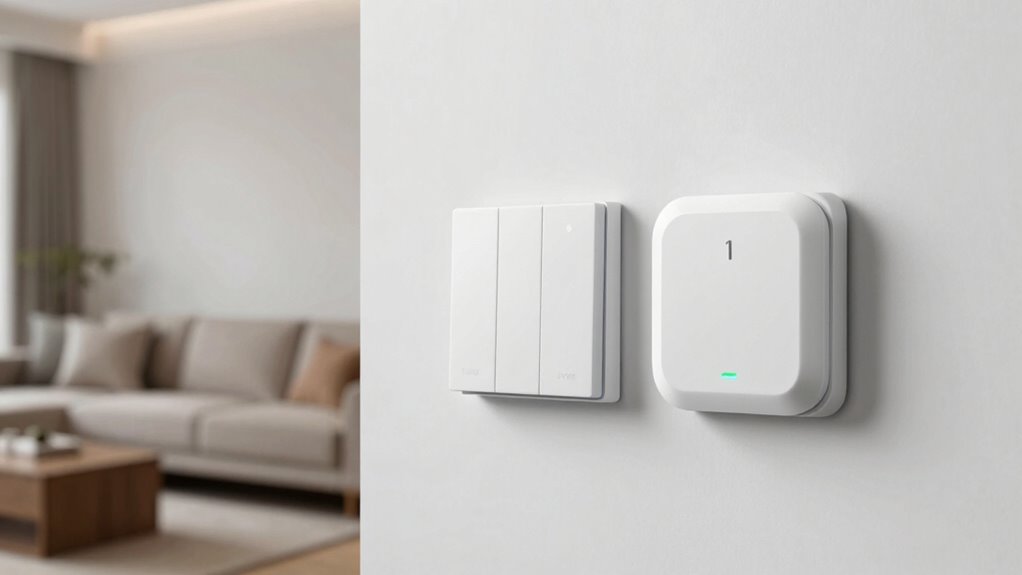
When choosing a smart fan switch, understanding the differences between Zigbee and Z-Wave can help you make an informed decision. One of the first things to consider is security concerns. Both protocols prioritize security, but they handle encryption differently. Zigbee uses AES-128 encryption, which is robust and widely trusted, but its security can vary depending on the manufacturer’s implementation. Z-Wave also uses AES-128 encryption, and many devices incorporate additional security layers, making Z-Wave generally regarded as slightly more secure out of the box. If your home has sensitive data or you’re particularly security-conscious, Z-Wave’s more uniform security standards might give you added peace of mind.
Z-Wave is often considered slightly more secure out of the box due to additional security layers.
Installation complexity is another key aspect. Zigbee devices tend to be easier to set up if you already have a compatible hub or smart home system, because Zigbee is designed for easy integration with many third-party products. However, if your home isn’t already equipped with a Zigbee hub, setting up a new device can involve additional steps. Z-Wave devices often require a compatible Z-Wave hub, but their installation tends to be straightforward, especially since Z-Wave devices are known for their plug-and-play nature. They’re designed to work seamlessly with minimal configuration, making them a good choice if you’re new to smart home technology.
Both protocols have their own mesh network advantages, which impact installation and reliability. Zigbee’s mesh network can support a large number of devices, so if you plan to expand your smart home system heavily, Zigbee might be more flexible. Z-Wave’s mesh network is reliable too but supports fewer devices simultaneously, which might be enough for smaller setups.
In terms of security concerns, it’s also worth noting that both protocols require regular firmware updates to address potential vulnerabilities. Ensuring your devices are kept up to date is essential regardless of which protocol you choose. As for installation, your familiarity with smart home setups and the existing infrastructure can influence which protocol feels less complex to you. Zigbee might be more appealing if you already have a Zigbee-compatible hub, whereas Z-Wave could be better if you prefer a simpler, more streamlined setup with fewer devices to manage.
Ultimately, your choice hinges on balancing security concerns and installation complexity with your existing devices and future plans for your smart home.

Kasa Smart Ceiling Fan Control & Dimmer Switch | Adjustable 4-Speed Fan & Brightness Control | Works w/Apple HomeKit, Alexa & Google Home | 2.4G Wi-Fi Only, Single Pole, Neutral Wire Required | KS240
【4 Fan Speeds】 Tailor your airflow to your exact preferences by choosing from four fan speeds for the…
As an affiliate, we earn on qualifying purchases.
As an affiliate, we earn on qualifying purchases.
Frequently Asked Questions
Can Zigbee or Z-Wave Switches Be Integrated With Voice Assistants?
Yes, both Zigbee and Z-Wave switches support voice assistant integration, making your smart home more convenient. You can control your switches with voice commands through compatible assistants like Alexa or Google Assistant. Just verify your switches are compatible with your chosen voice platform and that your hub supports device compatibility. This seamless integration simplifies managing your fan switches, giving you hands-free control and enhancing your smart home experience.
Which Protocol Offers Better Security for Smart Fan Switches?
You’ll find that Z-Wave offers better security for smart fan switches, thanks to its robust encryption standards like S0 and S2, which use AES-128 encryption. Only about 2% of reported smart home security vulnerabilities target Z-Wave, compared to higher risks for Zigbee. This makes Z-Wave less prone to security vulnerabilities, giving you peace of mind knowing your smart switches are protected against potential hacking attempts.
Are There Cost Differences Between Zigbee and Z-Wave Fan Switches?
You’ll find that the cost comparison between Zigbee and Z-Wave fan switches varies, with price differences influenced by brand, features, and compatibility. Generally, Zigbee switches tend to be slightly more affordable, but premium Z-Wave options can cost more due to their wider range of compatible devices. Consider your budget and smart home ecosystem, as these price differences might impact your overall setup costs and future upgrades.
How Do Installation Processes Differ Between Zigbee and Z-Wave Switches?
Think of installing these switches as a dance—you’re the lead guiding the steps. Zigbee switches often require a hub for wireless pairing, making installation more straightforward but slightly more complex. Z-wave switches usually connect directly to a compatible hub, simplifying the process. Overall, Z-wave tends to have a smoother installation, but both demand some electrical know-how. You’ll want to follow your specific switch’s instructions carefully for a flawless setup.
Which Switch Type Has Broader Compatibility With Existing Smart Home Systems?
You’ll find Z-Wave switches generally have broader compatibility with existing smart home systems because of their strong protocol interoperability and extensive device ecosystem compatibility. Z-Wave’s widespread adoption means it integrates smoothly with many hubs and platforms. While Zigbee offers excellent connectivity, Z-Wave’s compatibility advantages make it a better choice if you want seamless integration across various devices and smart home setups.
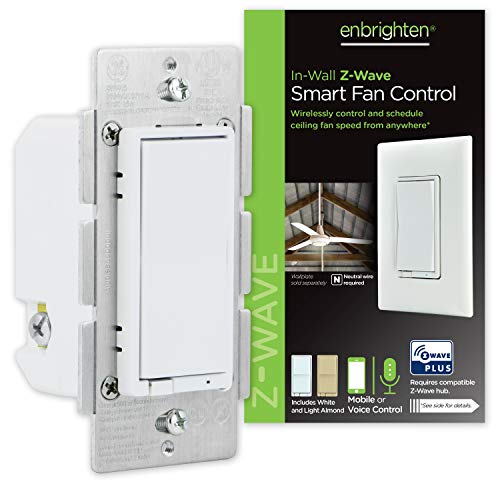
Enbrighten Z-Wave Plus Fan Control, Works with Alexa, Google Assistant, 3-Way Compatible, ZWave Hub Required, Repeater/Range Extender, Smart Ceiling Fan Control, Smart Switch, White & Almond, 14314
Switch upgrade – Easily replace any standard in-wall switch to remotely turn on or off and adjust speed…
As an affiliate, we earn on qualifying purchases.
As an affiliate, we earn on qualifying purchases.
Conclusion
So, whether you choose Zigbee or Z-Wave, your fan switch will become the superhero of your smart home, saving you from the chaos of manual control! Zigbee dazzles with lightning-fast speed, while Z-Wave offers rock-solid reliability. Whichever you pick, you’ll gain access to powers you never knew your home had—turning mundane fans into the command center of comfort and convenience. Get ready to be amazed every time you hit that switch!

Yoolax Zigbee Matter Smart Hub, Gateway Smart Hub Compatible with Alexa and Google Home Assistant, App Remote Control, Voice Control(for Zigbee Motor)
【Adapting Devices】 Wireless gateway compatible with various smart home devices, you can add and control 128 smart devices…
As an affiliate, we earn on qualifying purchases.
As an affiliate, we earn on qualifying purchases.

Leviton Decora Smart Switch Z-Wave 800 Series, ZW15S-1RW
Z-WAVE PLUS CERTIFIED – 800 Series provides the latest in reliability and performance including SmartStart enrollment, S2 Security,…
As an affiliate, we earn on qualifying purchases.
As an affiliate, we earn on qualifying purchases.