Split-phase power allows your backup system to handle a wider range of appliances by providing two separate 120V supplies out of phase, which together support both standard and high-demand devices like ovens or HVAC systems. This setup means your generator needs to match your home’s electrical configuration for safe and efficient operation. Proper planning and equipment guarantee your backup power can keep essential appliances running smoothly during outages. Keep exploring how this setup can maximize your home’s backup capabilities.
Key Takeaways
- Split-phase power allows backup systems to support both 120V and 240V circuits simultaneously.
- Properly matched generators ensure seamless power delivery to all household circuits.
- Balanced power output prevents voltage fluctuations, enabling more devices to run safely.
- Compatibility with split-phase systems determines whether the backup can supply high-demand appliances.
- Accurate load assessment and transfer switches optimize backup capacity and system reliability.
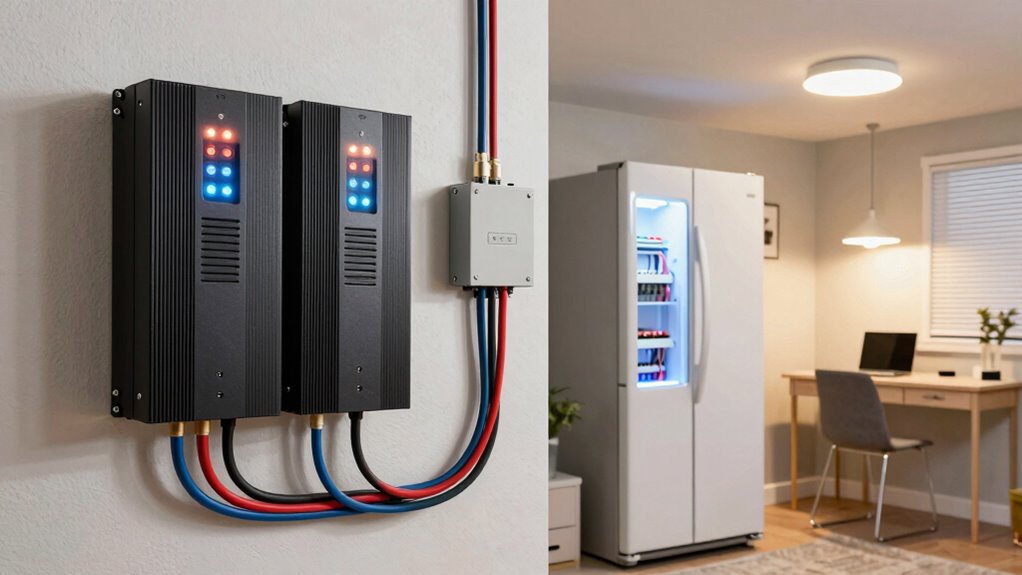
Split-phase power systems are a common method for delivering reliable electricity in residential settings, especially in North America. They provide a straightforward way to supply both standard household appliances and high-demand devices using a single transformer setup. When considering backup systems like generators, understanding how split-phase power impacts what your system can run is essential. It directly influences generator efficiency and the compatibility of circuits within your home.
Because split-phase systems deliver two 120-volt supplies that are 180 degrees out of phase, they give you a total of 240 volts for larger appliances. This setup allows your backup power source to handle both typical household loads and bigger appliances, like electric dryers or HVAC systems, with ease. However, not all generators are inherently compatible with split-phase systems. You need to choose a generator designed to produce dual outputs that match your home’s voltage and phase requirements. Otherwise, you risk circuit compatibility issues that could lead to inefficient power transfer or even damage to your appliances.
Split-phase systems deliver 240V for large appliances but require compatible generators to avoid damage and inefficiency.
Generator efficiency plays an essential role in determining how much you can run during an outage. A more efficient generator converts fuel into electricity with minimal waste, ensuring you get the most power for the least fuel consumption. When paired with a split-phase system, a generator’s ability to supply stable, balanced power across both phases enhances overall efficiency. Imbalanced power delivery can cause voltage fluctuations, which reduce the lifespan of your appliances and may trip circuit breakers. Selecting a generator that maintains consistent voltage and phase balance means you can run more devices simultaneously without risking overloads or damage. Proper synchronization of your generator with your home’s electrical system is crucial to avoid issues that can compromise safety and performance. Properly matching your generator’s output to your home’s split-phase system can also prevent potential phase imbalance that might otherwise cause electrical problems.
Your backup system’s capacity also hinges on circuit compatibility. In a split-phase setup, some circuits are wired for 120 volts, while others are for 240 volts. Your generator needs to support both voltages and be able to switch seamlessly between them. If it’s not compatible, you might only be able to power half your home’s circuits, limiting your backup capabilities. Proper transfer switches and wiring methods are essential to ensure your generator can handle the different circuit types safely and effectively. This compatibility ensures that during an outage, you can prioritize critical loads without overloading your system. Additionally, understanding the electrical load your home requires helps in selecting a generator with adequate capacity to meet your needs.
Furthermore, understanding the specifics of split-phase power can help you better plan your backup system to optimize performance and safety. In essence, split-phase power systems expand what your backup generator can support, but only if you choose a generator that’s compatible and efficient. Understanding the relationship between generator efficiency and circuit compatibility helps you optimize your backup power, ensuring your home stays functional during outages. It’s about selecting the right equipment to match your home’s unique electrical setup, so your backup system truly becomes a reliable refuge no matter what disruptions occur.
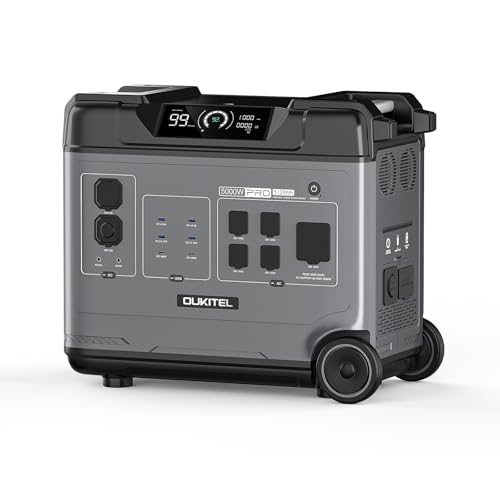
Oukitel BP5000 Pro MAX (5120Wh/5000W) Solar Generator with 120V/240V Split Phase Output, 9000W Peak Power Station for Home Backup, Portable Power Station for Emergencies, Camping,Off-Grid
【3200W Dual Input Fast Charging】Combining 3200W AC input with a 1000W solar panel, it achieves a full charge…
As an affiliate, we earn on qualifying purchases.
As an affiliate, we earn on qualifying purchases.
Frequently Asked Questions
Can Split-Phase Power Handle Large Industrial Backup Systems?
Split-phase power isn’t suitable for large industrial backup systems because it’s mainly designed for residential applications and smaller loads. It handles typical power distribution for homes but lacks the capacity needed for heavy industrial equipment. If you’re considering backup power for industrial use, you’ll need a three-phase system, which can handle larger loads efficiently and reliably, ensuring continuous operation without overloads or power issues.
How Does Split-Phase Power Affect Generator Sizing?
Split-phase power affects generator sizing by requiring you to take into account voltage stability and load balancing. You’ll need a generator capable of maintaining consistent voltage levels across both phases, especially during peak loads. Proper sizing ensures the generator handles simultaneous demands without voltage drops or instability. Balancing loads between phases optimizes efficiency and longevity, preventing overloading and ensuring reliable backup power during outages.
Are There Compatibility Issues With Existing Backup Systems?
You might face compatibility issues with existing backup systems because split-phase power requires specific wiring and components. It’s essential to verify power compatibility to guarantee your backup system integrates smoothly. Many systems aren’t designed for split-phase configurations, which could lead to operational failures or safety concerns. To avoid complications, consult a professional to assess your setup’s compatibility and adapt or upgrade your system as needed for seamless system integration.
What Safety Precautions Are Necessary With Split-Phase Backup Setups?
You should prioritize grounding safety by guaranteeing your backup system is properly grounded to prevent electrical shocks. Verify breaker compatibility to avoid overloads or system failures. Always use a dedicated, correctly rated breaker designed for split-phase setups. Regularly inspect wiring and connections for signs of wear or damage. Following these safety precautions minimizes risks, protects your equipment, and guarantees your backup system operates reliably and safely during power outages.
How Does Split-Phase Power Influence Cost and Installation Time?
Like assembling a puzzle with tricky pieces, split-phase power affects your backup system‘s cost and installation time. It usually costs more because of the extra components and wiring needed, increasing installation complexity. However, it can boost power efficiency by providing balanced loads. Expect longer setup times, especially if your existing electrical system isn’t compatible. You’ll need a professional to guarantee everything’s wired correctly and safely, adding to overall costs.

Nature's Generator Transfer Switch 6 Circuits 120V 30A Non-Automatic UL Power Transfer Kit(Indoor)
The complete transfer switch kit offer various mounting options, making integration into your setup quick and hassle-free.
As an affiliate, we earn on qualifying purchases.
As an affiliate, we earn on qualifying purchases.
Conclusion
So, next time your backup system valiantly tries to keep your lights on during a blackout, remember—thanks to split-phase power, you might just be staring at a fancy paperweight. While you dream of running your entire home, you’re probably limited to a few essentials that can’t handle the complexity of your electrical setup. Cheers to technological marvels that keep us hopeful, even when they leave us in the dark—literally.

WEN 4,750-Watt 120V/240V Dual Fuel Portable Generator with Wheel Kit and Electric Start (DF475T)
Switch between gasoline (4750 surge watts, 3800 running watt) and propane (4350 surge, 3500 running) with the simple…
As an affiliate, we earn on qualifying purchases.
As an affiliate, we earn on qualifying purchases.

12000W Hybrid Solar Inverter 48V DC to 110V/120V AC Pure Sine Wave, 240V Split Phase, 200A MPPT Controller, Supports Grid-Tie/Off-Grid, Battery & Solar Charging for Home, RV, Backup Power
𝟏𝟐𝟎𝟎𝟎𝐖 𝐇𝐲𝐛𝐫𝐢𝐝 𝐒𝐨𝐥𝐚𝐫 𝐈𝐧𝐯𝐞𝐫𝐭𝐞𝐫: Converts 48V DC to 120V single-phase / 240V split-phase AC, delivering 12,000W continuous power…
As an affiliate, we earn on qualifying purchases.
As an affiliate, we earn on qualifying purchases.