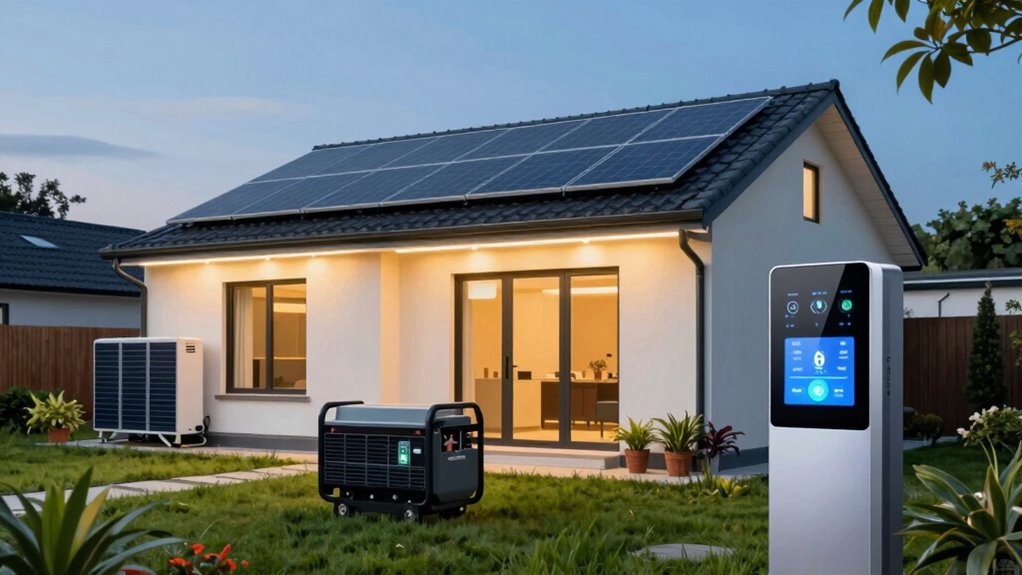

After electrification, your backup plans shift to focus on renewable energy sources like solar panels and wind turbines, combined with battery storage to maintain power during outages. You’ll need to size these systems carefully to meet your household demands and upgrade your energy management practices for efficiency. Smart grid technology becomes essential, allowing you to quickly detect outages and prioritize critical loads. Staying aware of technological advancements helps guarantee your energy resilience remains strong—keep exploring to learn more.
Key Takeaways
- Backup plans now emphasize integrating renewable energy sources like solar and wind with storage solutions.
- Increased reliance on electricity requires larger or more sophisticated backup systems for household stability.
- Smart grid technology enables real-time outage detection and optimized power rerouting for better resilience.
- Energy management practices are essential to maximize renewable use and extend backup capacity during outages.
- Backup strategies must adapt to ongoing technological advancements and evolving energy dynamics in electrified homes.

As households shift to full electrification, having a reliable backup plan becomes more essential than ever. Moving away from traditional fossil fuels means your home depends entirely on electricity, making power outages more than just an inconvenience—they can threaten comfort, safety, and even your daily routines. To stay prepared, you need to rethink your backup strategies, especially as the integration of renewable energy sources and smart grid technology transforms the way power is supplied and managed.
Renewable energy, such as solar panels or wind turbines, plays a significant role in modern home backup plans. Installing solar panels with battery storage allows you to generate and store electricity during sunny days, giving you a degree of independence from the grid. When the power goes out, these batteries can supply energy to essential appliances and systems, ensuring you stay comfortable and connected. The key is to size your renewable energy system properly, so it can meet your household’s energy demands during outages. This approach not only enhances resilience but also reduces reliance on fossil fuels and lowers your carbon footprint. Additionally, understanding energy management systems is crucial for maximizing the benefits of these innovations. Incorporating energy efficiency practices can further optimize your backup system, reducing overall energy needs and extending backup capacity. Moreover, selecting the right storage solutions ensures your system remains effective during extended outages. Understanding how renewable energy sources interact with your backup system can help you make more informed decisions about your energy setup.
Solar panels with battery storage provide independence, resilience, and eco-friendly backup power during outages.
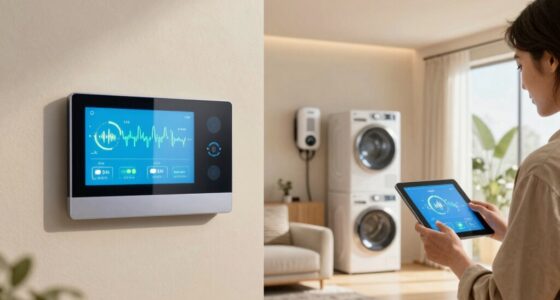
The smart grid is another game-changer in this new landscape. It’s a modernized electrical grid that uses digital communication technology to optimize power distribution and demand management. When integrated with your home’s backup system, a smart grid can detect outages quickly, reroute power efficiently, and even communicate with your energy storage solutions to prioritize critical loads. This dynamic interaction ensures you get the most reliable backup power possible. Additionally, smart grid technology can help you monitor your energy use in real-time, making it easier to plan for outages and manage your renewable energy resources more effectively. Incorporating smart grid integration can significantly improve your home’s energy resilience and efficiency. Staying informed about these grid advancements can help you adapt your backup plan to changing technological landscapes.
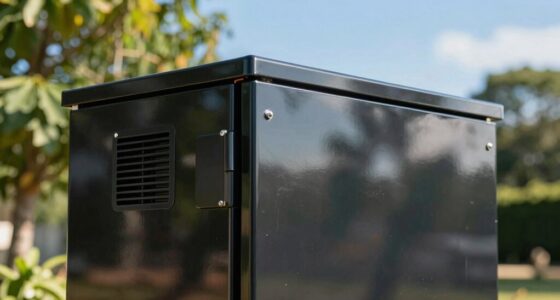
solar panel with battery storage
As an affiliate, we earn on qualifying purchases.
As an affiliate, we earn on qualifying purchases.
Frequently Asked Questions
How Do Backup Plans Impact Overall Household Energy Costs?
Backup plans can ensure your household energy costs are effectively managed by influencing your renewable integration and overall efficiency. When you implement a reliable backup system, you might reduce reliance on expensive grid power during outages, lowering costs. Conducting a thorough cost analysis helps you balance backup expenses with long-term savings. Proper planning ensures you maximize renewable energy use, minimize energy waste, and keep your household energy costs manageable even during power interruptions.
What Safety Measures Are Necessary With New Backup Systems?
You need to follow strict safety protocols when managing new backup systems, like batteries, to prevent accidents. Regular battery maintenance is vital, including checking for corrosion, proper ventilation, and secure connections. Always read manufacturer instructions and wear protective gear during installation or maintenance. Keep fire extinguishers nearby and make certain your system is compliant with local codes. These steps help keep your home safe while guaranteeing your backup system functions reliably.
How Do Backup Plans Adapt During Grid Outages?
During grid outages, you adapt your backup plan by regularly maintaining your generator to guarantee it runs smoothly when needed. You also monitor your battery lifespan closely, replacing batteries before they fail to keep your backup system reliable. Planning for extended outages might mean supplementing your generator with additional batteries or alternative power sources, so you stay protected without interruption. Staying proactive helps you maintain a resilient and efficient backup system.
Are There Government Incentives for Upgraded Backup Systems?
Yes, there are government incentives for backup system upgrades. You might qualify for tax credits, rebates, or grants when you upgrade your backup system, especially if you install renewable energy solutions like solar or energy storage. These incentives aim to encourage homeowners to enhance their backup plans, improve energy resilience, and reduce reliance on the grid. Check local and federal programs to see what specific benefits you can access for your upgrade.
How Long Can Backup Systems Sustain Essential Appliances?
You can usually keep essential appliances running for several hours to days with your backup system, depending on your energy storage capacity and backup scalability. Larger or more efficient energy storage options extend your backup duration, ensuring your critical devices stay operational even during prolonged outages. To maximize your backup potential, consider upgrading your system for better scalability, so it adapts to increased energy needs as your electrification demands grow.
Conclusion
As you embrace electrification, your backup plans can’t stay the same—they must evolve like a river carving new paths. Think of your home’s energy needs as a shifting tide, demanding flexibility and foresight. By updating your backup strategies, you’re not just preparing for outages—you’re safeguarding your future. Don’t let the storm catch you unprepared; instead, be the captain who charts a new course, turning potential chaos into calm.