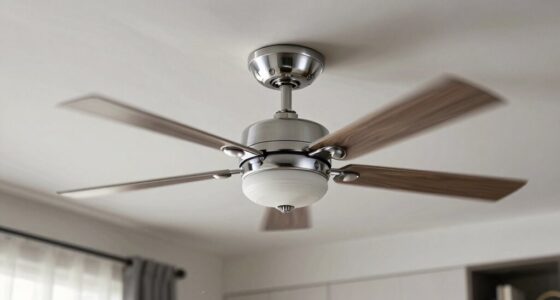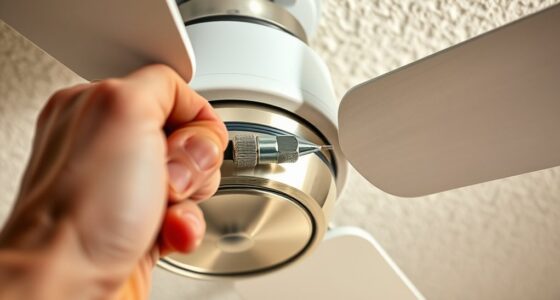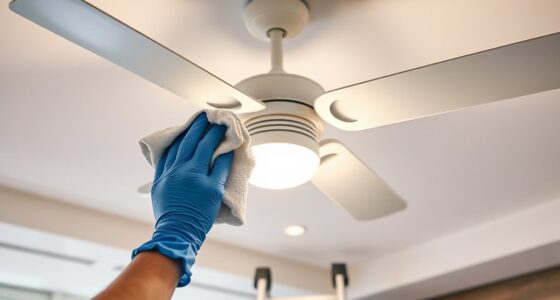
Your ceiling fan can gather a surprising amount of dust, dirt, and airborne allergens on its blades over time. When you turn it on, these particles are released into the air, affecting your indoor air quality and aggravating allergies. Regular cleaning with a microfiber cloth or dampened cloth helps remove buildup, improving efficiency and air safety. To discover quick and effective cleaning tips, explore how to keep your fan spotless and healthy.
Key Takeaways
- Ceiling fans accumulate dust, dirt, and allergens over time, which are released into the air when turned on.
- Regular cleaning with a microfiber cloth or damp cleaner removes surface dust and reduces allergen buildup.
- Turn off the fan and use a sturdy ladder to safely wipe all sides of the blades and surrounding fixtures.
- Cleaning every few months prevents excessive dirt accumulation and improves indoor air quality.
- Maintaining a clean fan enhances efficiency, reduces noise, and prolongs the lifespan of the appliance.
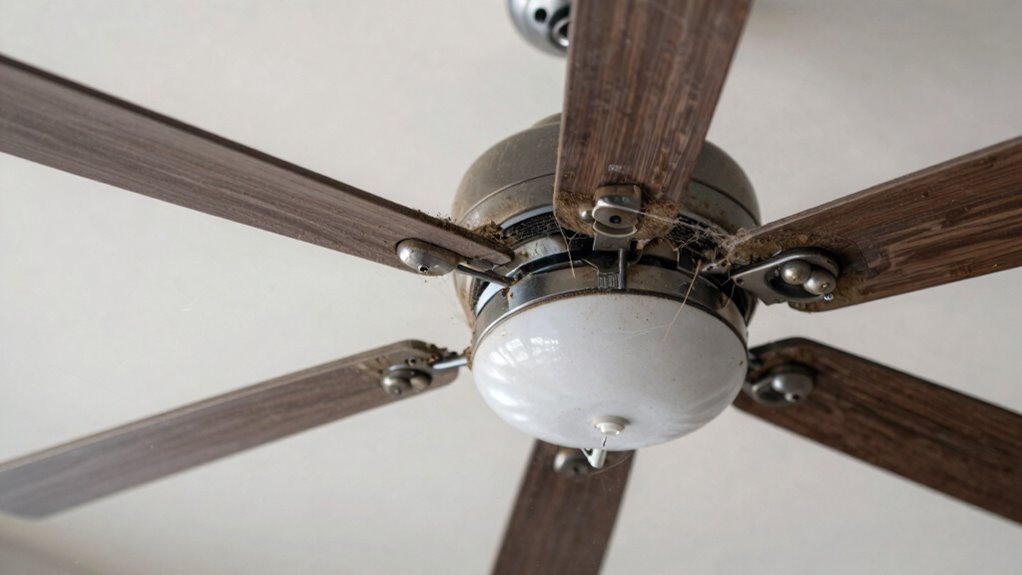
Have you ever considered just how dirty your ceiling fan really is? It might seem like a harmless fixture, but it can harbor a significant amount of dust, dirt, and debris that accumulates over time. One of the main concerns is airborne allergens, which cling to the fan blades and float into the air every time you turn on the fan. These allergens include pollen, pet dander, mold spores, and other tiny particles that can trigger allergies or respiratory issues. The more dust and allergens build up on the blades, the more they get stirred into the air, making your indoor environment less healthy and more polluted. Fan blade accumulation isn’t just an eyesore; it’s a health hazard that often goes unnoticed because we don’t see what’s lurking on those spinning blades. Regularly cleaning your ceiling fan can also prevent the buildup of airborne allergens, improving overall indoor air quality.
When you neglect cleaning your ceiling fan, you allow dust and debris to settle and stick to its surfaces. Over time, this accumulation becomes a breeding ground for airborne allergens that can be released with each rotation. Every time you switch on the fan, these allergens are kicked into the air, spreading dust throughout the room. If anyone in your household has allergies or asthma, this can be a real problem. Dirty blades also reduce the fan’s efficiency, causing it to work harder and use more energy, which increases your utility bills. Plus, the buildup can even cause the fan to wobble or make squeaky noises, further indicating it’s overdue for a quick clean.
Fortunately, cleaning your ceiling fan doesn’t have to be a formidable task. With just a few simple steps, you can drastically improve your indoor air quality and extend the life of your fan. Start by turning off the power to avoid any accidents. Use a sturdy step ladder or a safe platform to reach the blades easily. Grab a microfiber cloth or a duster, and gently wipe the blades to remove surface dust. For stubborn dirt, dampen the cloth slightly with a mix of water and a mild cleaner or a vinegar solution. Be sure to clean all sides of each blade thoroughly, as dust often settles on the underside. Don’t forget the motor housing and surrounding fixtures, which can also gather dust. Once you’ve wiped everything down, turn the fan on briefly to see if the blades are spinning smoothly and quietly. Regular cleaning, ideally every few months, will prevent fan blade accumulation and keep airborne allergens at bay.

DRQ Ceiling Fan Cleaner Duster, Reusable Microfiber Duster with Extension Pole, 13 to 48 Inch Fan Blade Cleaner, Removable Dusters for Cleaning Walls Bookshelves Door Window Top (Blue)
[Easy to Store] The ceiling fan cleaning tools has a hanging hole at the back that is easy…
As an affiliate, we earn on qualifying purchases.
As an affiliate, we earn on qualifying purchases.
Frequently Asked Questions
How Often Should I Clean My Ceiling Fan?
You should clean your ceiling fan at least once every two to four weeks to prevent dust buildup and maintain ideal performance. Regular fan blade maintenance helps keep dust from accumulating, which can affect air quality and efficiency. If you notice more dust or allergies, increase cleaning frequency. By staying consistent, you prevent dust buildup, improve air circulation, and extend your fan’s lifespan effortlessly.
Can I Clean My Ceiling Fan Without Turning It Off?
You shouldn’t clean your ceiling fan without turning it off, as it’s essential for fan blade maintenance and ceiling fan safety. Moving blades can cause injury or damage your cleaning tools. Always switch off and unplug the fan before wiping down blades or fixtures. This guarantees you avoid accidents and get a thorough, safe cleaning. Remember, proper maintenance keeps your fan running smoothly and safely.
What Cleaning Products Are Safest for Ceiling Fans?
Careful cleaning calls for safe solutions. You should opt for eco-friendly solutions like vinegar and water or mild dish soap mixed with water, avoiding harsh chemicals. These DIY cleaning tips are gentle on your fan and environment. Always turn off and unplug your fan before cleaning, and use a soft cloth or microfiber duster. This way, you keep your ceiling fan clean without risking damage or harm.
Should I Oil My Ceiling Fan Blades?
Yes, you should oil your ceiling fan blades as part of regular ceiling fan maintenance. Proper fan blade lubrication reduces noise and prevents wear on the motor. Use a lightweight oil designed for fan motor parts, applying it sparingly to the motor’s moving components. This simple step helps keep your fan running smoothly and extends its lifespan, ensuring efficient operation and quieter performance over time.
How Do I Remove Stubborn Grime From Ceiling Fan Blades?
To remove stubborn grime from ceiling fan blades, start by turning off the fan and using a ladder for safety. Mix a solution of mild dish soap and water, then dip a microfiber cloth into it. Wring out excess moisture and wipe down the blades thoroughly, focusing on areas with fan blade residue. For stubborn grime removal, use a gentle scrub brush or a mixture of vinegar and water for extra cleaning power.
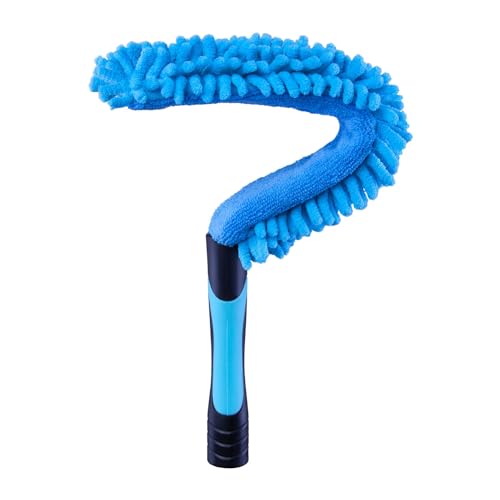
Hicavar 17" Microfiber Flexible Ceiling Fan Duster with Washable Chenille Dusting Cloth, Use by Hand or Attach to Extension Poles (1)
The 17" long flexible duster can be bent to any shape. (NOT include extension pole!)
As an affiliate, we earn on qualifying purchases.
As an affiliate, we earn on qualifying purchases.
Conclusion
Now that you know your ceiling fan is dirtier than you thought, it’s time to take action. Regular cleaning keeps your air fresh, your home healthier, and your fan running smoothly. Don’t wait until dust and grime build up—clean your fan today, prevent future messes, and enjoy a cleaner, fresher space. Remember, a quick wipe saves you time, a simple clean improves your air, and regular maintenance keeps everything running perfectly.
DRQ Ceiling Fan Cleaner Duster, Reusable Microfiber Duster with Extension Pole, 13 to 48 Inch Fan Blade Cleaner, Removable Dusters for Cleaning Walls Bookshelves Door Window Top (Blue)
[Easy to Store] The ceiling fan cleaning tools has a hanging hole at the back that is easy…
As an affiliate, we earn on qualifying purchases.
As an affiliate, we earn on qualifying purchases.

Storystore Ceiling Fan Cleaner Duster – Adjustable Duster with Extension Pole,Dusters for Cleaning Fan Blade, Walls and Cobweb (Blue)
【Ceiling Fan Cleaner Duster Kit】This kit comes with 2 different interchangeable cleaning heads and a 4 – section…
As an affiliate, we earn on qualifying purchases.
As an affiliate, we earn on qualifying purchases.