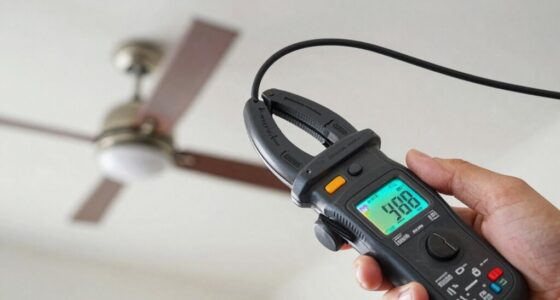
To turn off a breaker safely in the 30-second safety ritual, first make certain your hands are dry and stand on a dry surface. Locate the correct breaker, often using a panel diagram, and grip the handle firmly using your whole hand. Gently switch it to the “off” position without forcing. Afterward, test the circuit with a voltage tester to confirm it’s de-energized. Stick around to learn more about executing this essential safety step correctly.
Key Takeaways
- Ensure hands are dry and stand on a dry surface before handling the breaker.
- Confirm the environment is free of water, moisture, and hazards before turning off the breaker.
- Use a firm, whole-hand grip to switch the breaker to “off” gently, avoiding force.
- Verify the circuit is de-energized with a voltage tester before proceeding with repairs.
- Keep emergency procedures accessible and consult a professional if the breaker is stuck or damaged.

Have you ever wondered how to turn off a breaker safely? If so, you’re not alone. Many people overlook the importance of proper circuit safety and emergency procedures when dealing with electrical panels. Taking a few seconds to follow the correct steps can prevent accidents and injuries. First, make sure your hands are dry and you’re standing on a dry surface. Water and electricity are a dangerous mix, so it’s essential to create a safe environment before proceeding. Locate the main breaker or the specific circuit breaker you need to turn off. Familiarize yourself with the panel’s layout, and if you’re unsure, consult the panel diagram often found inside the door or nearby.
Always ensure hands are dry and surface is safe before turning off a breaker to prevent electrical accidents.
Before touching any switches, check for any signs of damage or corrosion on the breakers. If you notice anything unusual, it’s best to seek professional help rather than attempting to turn off the breaker yourself. Once you’re ready, ensure you understand the emergency procedures in case something goes wrong. For example, if you experience a spark, shock, or if the breaker doesn’t turn off as expected, immediately move away from the panel and call emergency services if necessary. Knowing how to react in these moments is crucial for circuit safety and personal protection.
When ready, switch off the breaker by firmly gripping the handle and flipping it to the “off” position. Use your whole hand rather than just a finger to avoid slipping. Don’t force a breaker if it’s stuck; forcing it can cause damage or sparks. Instead, try to gently wiggle it free or consult an electrician. Remember, turning off a breaker isn’t just about convenience; it’s an important safety step during electrical repairs, maintenance, or emergencies. It’s always better to err on the side of caution. Proper circuit handling is an essential aspect of electrical safety to prevent potential hazards.
After turning off the breaker, verify that the circuit is de-energized by testing the outlets or devices connected to that circuit with a voltage tester. This extra step confirms that you’ve successfully cut the power, further emphasizing circuit safety. Keep the panel accessible and well-lit, and always store emergency procedures nearby so you’re prepared for any unexpected situations. When in doubt, consulting a licensed electrician is the safest choice. Properly turning off a breaker isn’t just a quick task—it’s an essential part of ensuring your safety and preventing electrical hazards. Taking these precautions can save you from serious injury and help you handle electrical issues responsibly and confidently.
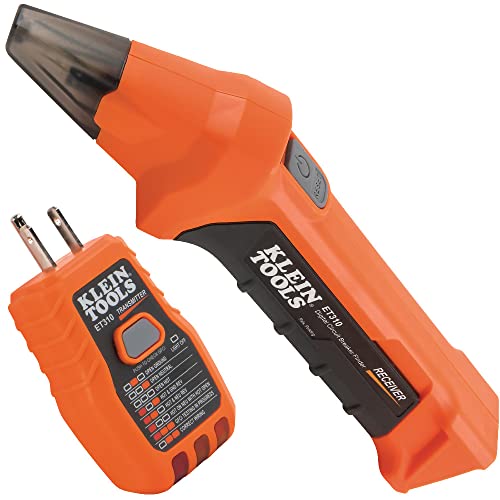
Klein Tools ET310 AC Circuit Breaker Finder, Electric and Voltage Tester with Integrated GFCI Outlet Tester
ACCURATE CIRCUIT BREAKER IDENTIFICATION: Quickly locate the correct breaker with precision using our circuit breaker finder, ensuring efficient…
As an affiliate, we earn on qualifying purchases.
As an affiliate, we earn on qualifying purchases.
Frequently Asked Questions
Can I Turn off the Breaker Without Shutting off Appliances First?
You can turn off the breaker without shutting off appliances first, but it’s not the safest choice. For appliance safety, always turn off appliances before switching off the breaker to prevent power surges. Also, check circuit labeling to verify you’re cutting power to the correct circuit. Following this practice reduces risks and keeps you safe, especially if you’re working on electrical systems or doing repairs.
How Do I Identify the Correct Breaker to Turn Off?
Did you know that 80% of electrical accidents happen because people can’t identify the correct breaker? To find the right one, look for circuit labels or breaker markings on your breaker panel. These labels indicate which areas or appliances each breaker controls. Carefully read the labels, and if unsure, test by turning off one breaker at a time and checking which circuit is affected. Always confirm before working on any electrical system.
Is It Necessary to Wear Protective Gear During This Safety Ritual?
Yes, wearing protective gear is essential during this safety ritual. It keeps you safe from potential electrical shocks or sparks. Always follow safety precautions, such as gloves and safety goggles, to protect your eyes and skin. By prioritizing protective gear, you reduce risks and ensure a safer experience when turning off the breaker. Remember, safety always comes first, and proper precautions help prevent accidents.
What Should I Do if the Breaker Doesn’t Switch Off?
Think of the breaker as a stubborn gate that refuses to close. If it doesn’t switch off, you need to act swiftly—shut down the main power source, then call emergency services and a qualified electrician. In emergency situations, don’t try to force it; prioritize your safety. Once professional help arrives, they’ll restore power safely. Always remember, patience and proper procedures protect you when the breaker won’t turn off.
How Often Should I Perform This Breaker Turn-Off Procedure?
You should perform this breaker turn-off procedure regularly, ideally during routine maintenance or safety checks, at least once every six months. Frequency maintenance helps guarantee safety reminders are fresh in your mind and the breaker functions properly. If you notice any issues or irregularities, don’t delay and repeat the procedure more often until the breaker consistently switches off smoothly. Staying consistent keeps you safe and prevents electrical hazards.

Master Lock Red Electrical Box Circuit Breaker Lockout, Tagout Breaker Box Lock for Standard Single and Double Toggles, 493B, 24 Amps
Lockout tagout circuit breaker lockout is best used on standard height and tie-bar toggles typically found on 120…
As an affiliate, we earn on qualifying purchases.
As an affiliate, we earn on qualifying purchases.
Conclusion
Remember, taking just 30 seconds to turn off the breaker correctly can prevent serious accidents. Always follow the proper safety steps to protect yourself and others. Did you know that electrical accidents cause over 1,000 fatalities annually in the U.S.? By making this quick ritual a habit, you considerably reduce your risk. Safety isn’t just a quick task; it’s an essential habit that keeps you safe every day. Stay cautious, stay safe.

BOVIISKY Lockout Tagout Kit Electrical Loto- Hasps, Clamp on and Universal Multipole Circuit Breaker Lockouts,4 Loto Safety Padlocks, Tags, Nylon Ties with Pocket Bag, Keyed Different, 7131R
Lockout Tagout Kit Contains:1 Lockout Tool Bag,4 Safety Padlocks,2 Locking Hasps(1 in,2 in),2 Nylon Buckle, 1*plug lock, secures…
As an affiliate, we earn on qualifying purchases.
As an affiliate, we earn on qualifying purchases.

Klein Tools NCVT1P Voltage Tester, Non-Contact Low Voltage Tester Pen, 50V to 1000V AC, Audible and Flashing LED Alarms, Pocket Clip
NON-CONTACT DETECTION of AC voltage in cables, cords, circuit breakers, lighting fixtures, switches, non-tamper-resistant outlets, and wires
As an affiliate, we earn on qualifying purchases.
As an affiliate, we earn on qualifying purchases.