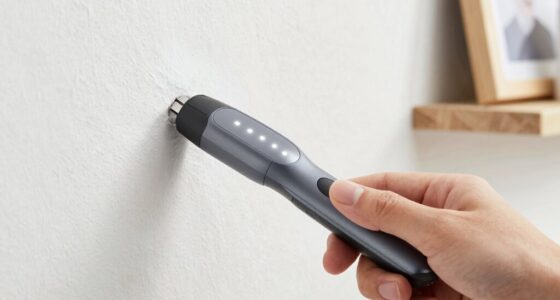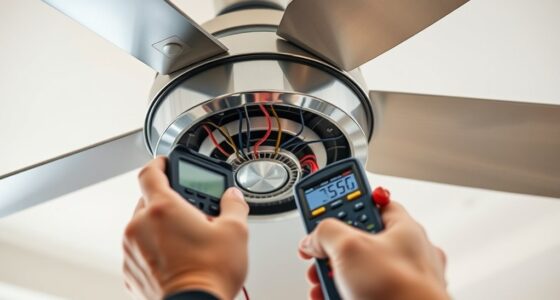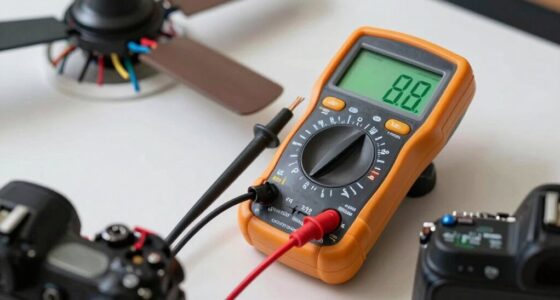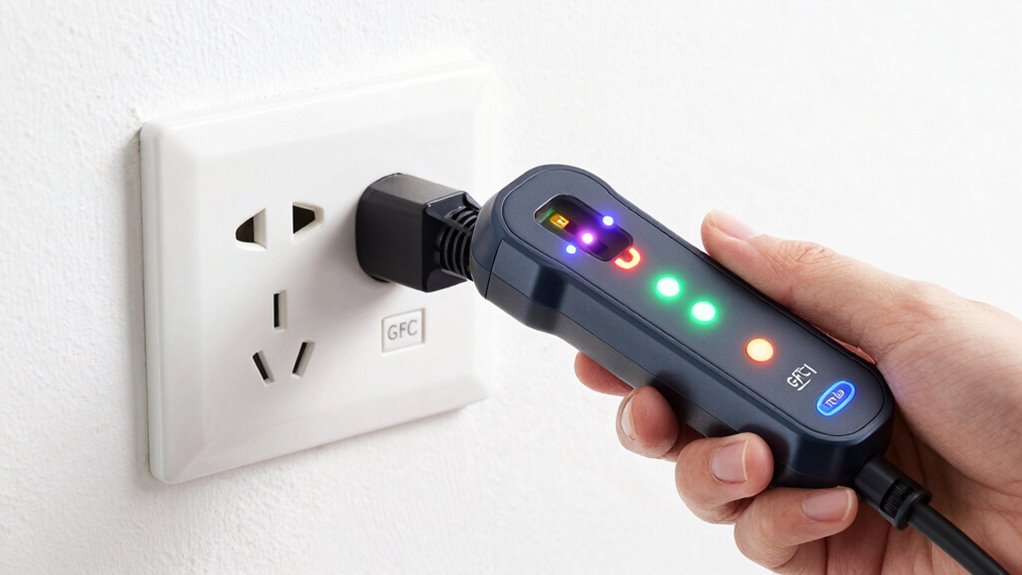
Before installing a ceiling fan, quickly test your outlets with an outlet tester and check GFCIs to guarantee safety. Plug in the outlet tester to verify correct wiring and look for indicator lights that signal any faults like open grounds or reversed wires. Then, press the test and reset buttons on your GFCI to confirm it trips and resets properly. Doing these simple checks helps prevent electrical hazards and ensures your wiring is sound—continue and discover more helpful tips.
Key Takeaways
- Use an outlet tester to quickly verify proper wiring and identify potential issues before installing a fan.
- Test GFCIs by pressing the “test” and “reset” buttons to confirm they trip and reset correctly.
- Regularly checking outlets and GFCIs ensures electrical safety and reduces shock or fire risks during installation.
- Troubleshoot wiring problems, such as open grounds or reversed polarity, to prevent hazards before starting work.
- Conducting these quick checks saves time, prevents damage, and guarantees a safer environment for new fan installation.
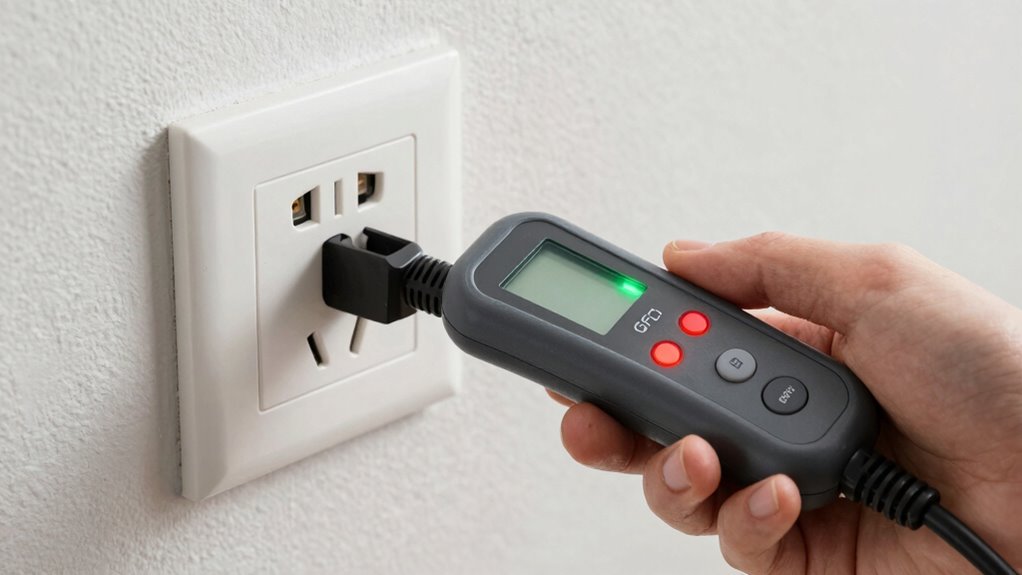
Ensuring your outlets and GFCIs are functioning properly is vital for home safety. Before you install any ceiling fan or perform other electrical work, it’s essential to verify that your power sources are safe to use. A quick outlet tester can help you confirm that outlets are wired correctly and that there are no issues with circuit safety. These simple devices are designed to indicate wiring problems like open grounds, open neutrals, or reversed polarity, which can pose serious risks if left unaddressed. Taking a few moments to perform this check can prevent electrical hazards and ensure your home is safe for new installations.
Verifying outlets and GFCIs before installing a ceiling fan is essential for home safety.
Using an outlet tester is straightforward. Plug it into the outlet and observe the indicator lights. Most testers have a simple chart showing what each light pattern means, making it easy to identify wiring faults at a glance. If the tester indicates an issue, you’ll need to troubleshoot further or call an electrician. Electrical troubleshooting involves identifying the root of the problem—whether it’s a loose wire, a faulty outlet, or a tripped breaker. By catching wiring errors early, you reduce the risk of electrical shock, fire, or damage to your new fan. Remember, even if the outlet appears to work normally, an incorrect wiring setup can still be dangerous, so don’t skip this step. Regularly testing outlets and GFCIs is key to maintaining home safety.
Checking GFCIs is equally important because these outlets are designed to cut power quickly if a ground fault is detected, which can prevent severe electrical shocks. To test a GFCI, press the “test” button; it should trip and cut off power. Then, press the “reset” button to restore power. If the GFCI doesn’t trip or reset properly, it might be faulty or not wired correctly, which diminishes its circuit safety function. You should replace or repair a malfunctioning GFCI before proceeding with any electrical work. Regular testing of GFCIs, especially in areas prone to moisture like kitchens and bathrooms, enhances safety and helps prevent accidental shocks during fan installation or other electrical projects.
Performing these quick checks before any fan installation guarantees that your electrical system is safe and reliable. It’s a simple, proactive step that saves time, money, and potential hazards down the line. When you verify your outlets and GFCIs are functioning correctly, you’re safeguarding your home and loved ones from electrical risks. Proper circuit safety isn’t just about avoiding code violations—it’s about creating a secure environment. Incorporate these checks into your routine, and you’ll have peace of mind knowing your home’s wiring is sound before you start your project.
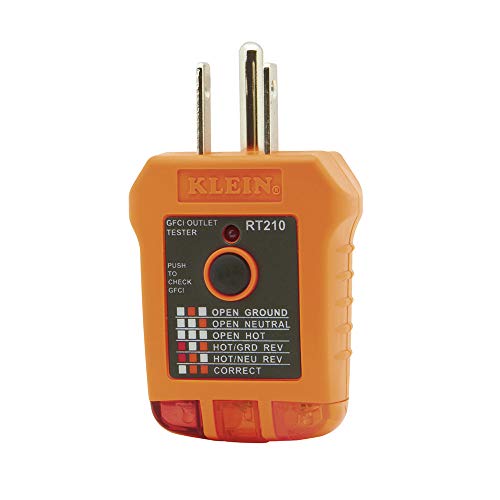
Klein Tools RT210 Outlet Tester, Receptacle Tester for GFCI / Standard North American AC Electrical Outlets, Detects Common Wiring Problems
EFFECTIVE GFCI WIRING PROBLEM DETECTION: GFCI Tester detects common wiring problems in standard and GFCI receptacles, ensuring electrical…
As an affiliate, we earn on qualifying purchases.
As an affiliate, we earn on qualifying purchases.
Frequently Asked Questions
How Often Should I Test My GFCI Outlets?
You should test your GFCI outlets at least once a month to make certain they provide proper ground fault and circuit protection. Regular testing helps catch any issues early, preventing electrical shocks or fires. When testing, press the “test” button and verify the “reset” button pops out. If it doesn’t, or if the GFCI doesn’t trip, replace it immediately. Staying vigilant keeps your home’s electrical safety in check.
Can I Use a Standard Multimeter for Testing?
Ever wonder if a standard multimeter can replace outlet testing tools? You can use a multimeter to check GFCI outlets, but keep in mind that their accuracy depends on your skill and the multimeter’s quality. While multimeters are versatile, specialized outlet testers are simpler and safer for quick tests. Using the right tool guarantees reliable results, so don’t just rely on a multimeter if precision and safety matter most.
What Do Different Outlet Tester Signals Mean?
When you see different signals on an outlet tester, it indicates wiring configurations or grounding issues. A correct reading means proper hot, neutral, and ground connections. If you see a warning or open circuit signal, it could point to grounding problems or miswired outlets, which can be dangerous. Always interpret these signals carefully, as they help guarantee your outlet’s wiring is safe before installing a fan or other devices.
Are Outlet Testers Safe to Use on Live Circuits?
Yes, outlet testers are generally safe to use on live circuits when you follow proper procedures. However, keep in mind outlet tester limitations; they might not detect all wiring issues or GFCI faults. To guarantee live circuit safety, turn off power before testing if possible, and use testers correctly. Always exercise caution, stay alert, and understand that outlet testers are helpful but not foolproof for all electrical problems.
What Should I Do if My Outlet Fails the Test?
A stitch in time saves nine, so if your outlet fails the test, don’t neglect it. You should turn off the power and avoid using that outlet. Check for circuit overloads or faulty outlet wiring, and consider hiring a qualified electrician to inspect and fix the issue. This prevents potential hazards like electrical shocks or fires and ensures your home’s safety before installing any fans or appliances.

Klein Tools RT250 GFCI Outlet Tester with LCD Display, Electric Voltage Tester for Standard 3-Wire 120V Electrical Receptacles
CLEAR LCD READOUT: GFCI Receptacle Tester features a large backlit LCD readout for easy voltage reading and clear…
As an affiliate, we earn on qualifying purchases.
As an affiliate, we earn on qualifying purchases.
Conclusion
Now, as you finish checking your outlet and GFCI, you realize it’s a small step that’s easily overlooked—yet so vital. Just last week, I almost skipped this simple test before installing a fan, and it reminded me how these tiny precautions can prevent big surprises. Coincidentally, that quick check saved me from potential shocks and wiring issues. So, take a moment now—you never know, it might just be the difference between a smooth install and a mishap.

Klein Tools ET310KIT AC Circuit Breaker Finder Kit, Electric Tester, GFCI Tester, Leads, Adapters and Case
ACCURATE CIRCUIT BREAKER IDENTIFICATION: Quickly locate the correct breaker with precision using the transmitter and receiver of the…
As an affiliate, we earn on qualifying purchases.
As an affiliate, we earn on qualifying purchases.
Klein Tools RT250 GFCI Outlet Tester with LCD Display, Electric Voltage Tester for Standard 3-Wire 120V Electrical Receptacles
CLEAR LCD READOUT: GFCI Receptacle Tester features a large backlit LCD readout for easy voltage reading and clear…
As an affiliate, we earn on qualifying purchases.
As an affiliate, we earn on qualifying purchases.