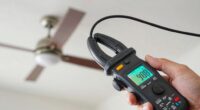
When installing or troubleshooting a ceiling fan, the key measurements you need from your multimeter are voltage, to make certain power is flowing correctly; continuity, to check that wires and switches are properly connected; and possibly resistance, to identify faulty components. Always turn off power before testing and double-check your setup for safety. If you want to learn exactly how to perform these checks efficiently, keep reading to get more detailed guidance.
Key Takeaways
- Always set your multimeter to AC voltage when checking fan power supply levels.
- Confirm the circuit is de-energized before testing continuity or resistance.
- Use voltage readings to verify proper wiring and that the circuit is live before installation.
- Perform continuity tests to ensure wires and connections are complete and intact.
- Double-check all readings for accuracy and safety before proceeding with fan installation.

When installing a ceiling fan, understanding how to use a multimeter can help you troubleshoot electrical issues safely and effectively. A multimeter is an essential tool that allows you to measure voltage, current, and resistance, giving you a clear picture of your electrical system. One of the most important aspects of using a multimeter is guaranteeing voltage safety—making sure you’re working within safe limits to prevent shocks or damage. Before you start testing, turn off the power at the circuit breaker to avoid accidental contact with live wires. When you’re ready to test, set your multimeter to the appropriate voltage range. For most household circuits, a setting of 200V AC is sufficient. Always double-check the multimeter’s leads and connections to affirm accurate readings and safety.
Wireless testing is an increasingly popular method for diagnosing electrical issues without direct contact with wires. Many modern multimeters come with wireless capabilities or Bluetooth connectivity, allowing you to monitor voltage levels remotely via your smartphone or tablet. This can be especially useful when working in tight spaces or high ceilings, where direct contact might be difficult or risky. Wireless testing enhances safety by reducing the need to handle live wires directly and provides quick, real-time feedback on voltage levels. When performing wireless testing, ensure your multimeter is properly paired and that the device’s app or interface is functioning correctly. This way, you can continuously monitor the circuit’s status without exposing yourself to unnecessary risks.
The only readings you really need to troubleshoot your ceiling fan installation are voltage and continuity tests. Voltage readings confirm whether the power supply is active and within expected levels, helping you identify issues like a tripped breaker or faulty wiring. Continuity tests, on the other hand, verify that connections are complete and that wires aren’t broken or damaged. To perform a voltage test, carefully touch the multimeter probes to the hot and neutral wires, keeping your fingers away from the metal parts. If the multimeter displays the expected voltage, your circuit is live and safe to work on. If not, investigate further before proceeding.
Always assure voltage safety when working with electrical systems. Use your multimeter to confirm power is off before touching any wires, and double-check your readings to avoid mistakes. Understanding safe electrical practices and correct multimeter use can significantly reduce risks during troubleshooting. With the right knowledge and tools, troubleshooting ceiling fan installations becomes safer and more straightforward. Wireless testing adds a layer of convenience and safety, giving you confidence that your electrical system is working correctly. Remember, when in doubt, consult a professional. But with these basics, you’ll be better equipped to handle most common electrical issues during your fan installation projects.
digital multimeter for electrical troubleshooting
As an affiliate, we earn on qualifying purchases.
As an affiliate, we earn on qualifying purchases.
Frequently Asked Questions
Can a Multimeter Test Fan Motor Lifespan?
A multimeter can’t directly test a fan motor’s lifespan, but it helps with fan motor diagnostics. You can measure resistance and check for continuity to spot issues like worn brushes or broken windings. However, multimeter limitations mean it won’t predict how long your motor will last. Use it to identify current problems, but rely on visual inspections and professional assessments for an accurate lifespan evaluation.
How Do I Identify the Correct Voltage Range?
To identify the correct voltage range, you need to investigate the fan’s specifications first. Start by checking the label on the fan or the wiring diagram. Then, adjust your multimeter to match that voltage range to make certain of accurate readings. Always select the proper voltage setting before testing, as using the wrong range can lead to incorrect results or damage to your multimeter. Confirm the range adjustment to match your fan’s voltage.
Is It Safe to Use a Multimeter on Live Wires?
Yes, it’s safe to use a multimeter on live wires if you follow proper wire safety and multimeter precautions. Always start by setting your multimeter to the correct voltage range, wear insulated gloves, and keep one hand away from the circuit. Make sure the probes are in good condition, and avoid touching metal parts while testing. If you’re unsure, consult a professional to prevent any risk of electric shock.
What Should I Do if Readings Are Inconsistent?
If your readings are inconsistent, first check for calibration issues by calibrating your multimeter according to the manufacturer’s instructions. Then, inspect the wiring for inconsistencies or loose connections that might cause fluctuating readings. Make sure your probes are properly connected and in good condition. If problems persist, consider testing the multimeter on a known voltage source to verify accuracy before proceeding with your fan installation.
Can Multimeters Detect Fan Speed or Just Electrical Data?
A multimeter primarily detects electrical data, like voltage, current, and resistance. It can’t directly measure fan speed. However, if you want to estimate fan speed, you can check the voltage supplied to the fan or use a dedicated tachometer. While multimeters are great for electrical readings, for precise fan speed measurements, a tachometer or similar tool is more accurate.
AC voltage multimeter for home wiring
As an affiliate, we earn on qualifying purchases.
As an affiliate, we earn on qualifying purchases.
Conclusion
Now that you’ve learned the essential multimeter readings for fan installs, you’re better equipped to handle the job confidently. It’s almost like the right tools and knowledge were meant to come together at the perfect moment, isn’t it? With your newfound skills, you can troubleshoot and guarantee safe, efficient fan setups. So, next time you pick up that multimeter, remember—you’re not just measuring electrical stuff; you’re making your home safer and more comfortable, effortlessly.
wireless Bluetooth multimeter
As an affiliate, we earn on qualifying purchases.
As an affiliate, we earn on qualifying purchases.
multimeter for ceiling fan installation
As an affiliate, we earn on qualifying purchases.
As an affiliate, we earn on qualifying purchases.