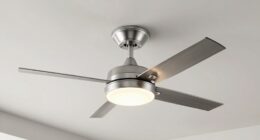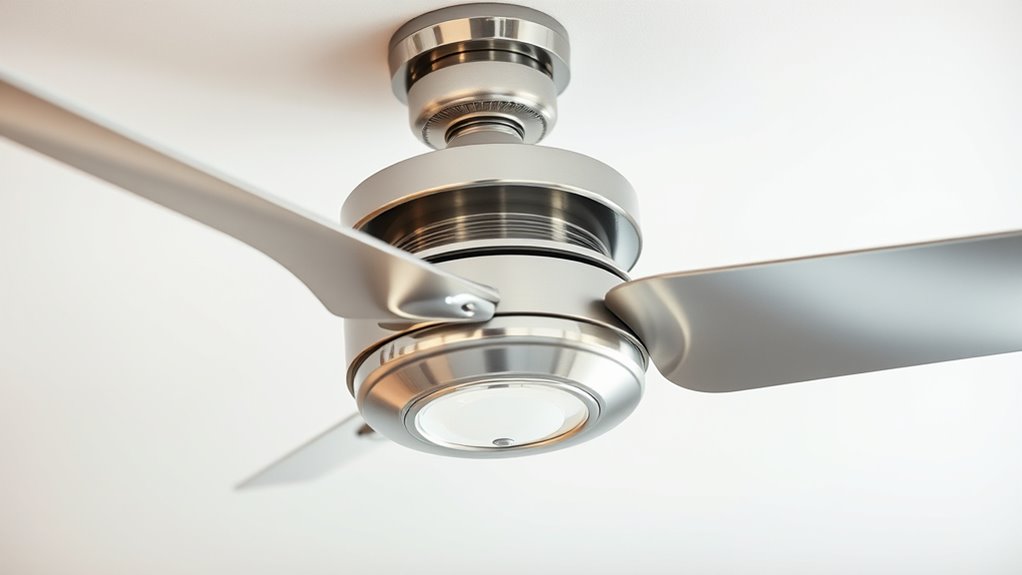

To install a dual-motor ceiling fan, first verify your electrical box can support this weight and support capacity. Turn off the power, then assemble and secure the mounting bracket to the ceiling joists. Connect the fan wiring according to color codes, securing wire nuts and insulating connections properly. Mount the fan assembly, adjust the blades for clearance, and tighten all hardware. Restoring power and testing the fan will confirm proper operation, with additional details making the process clearer.
Key Takeaways
- Verify electrical box support and turn off power before mounting the fan.
- Assemble and securely attach the mounting bracket to the electrical box.
- Connect wiring harnesses correctly, ensuring tight, insulated connections per color codes.
- Carefully mount and align the dual-motor fan assembly, checking for clearance and balance.
- Restore power, test fan operation, and confirm smooth, noise-free performance with all hardware secured.
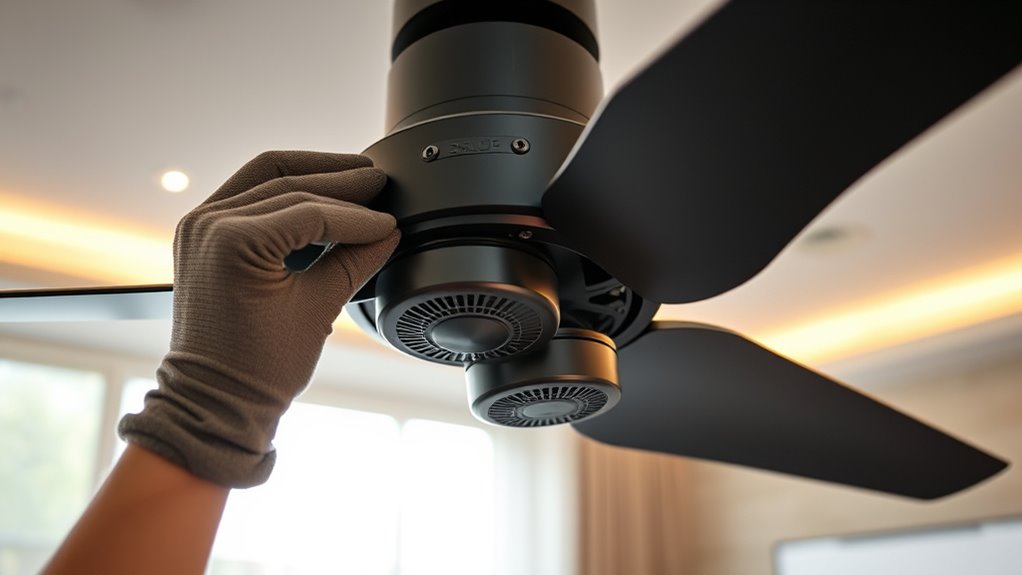
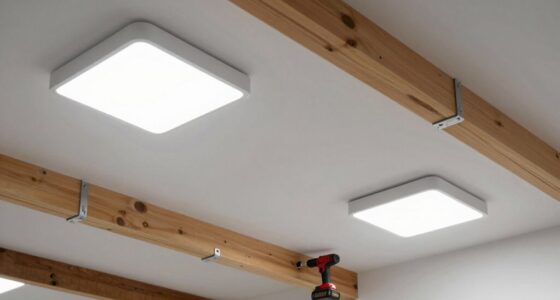
Are you ready to enhance your space with a dual-motor ceiling fan? Proper installation requires a systematic approach to ensure peak performance, safety, and longevity. Begin by verifying that the electrical box in your ceiling is rated for ceiling fan installation and capable of supporting the combined weight of the dual-motor unit. Use a stud finder to confirm the location of ceiling joists, as mounting directly to a joist provides better stability. Turn off the circuit breaker to the fan’s circuit to eliminate electrical hazards before proceeding. Remove any existing fixture, disconnect wiring, and inspect the mounting area for damage or obstructions.
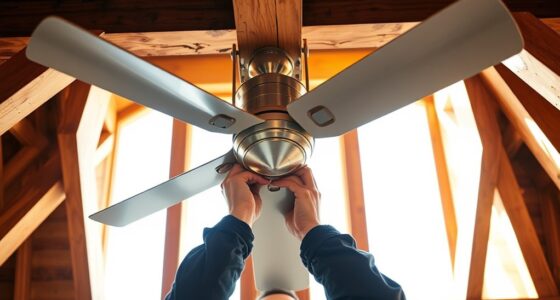
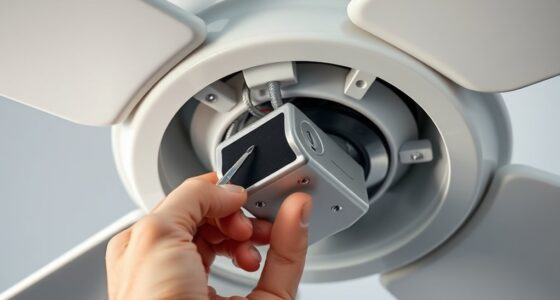
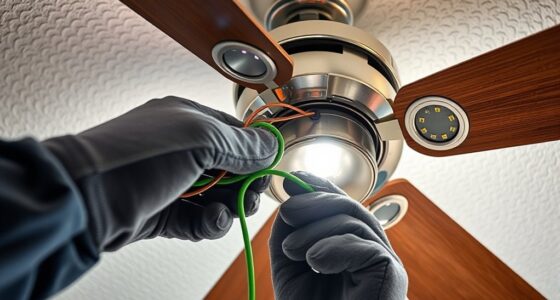
Next, assemble the mounting bracket according to the manufacturer’s specifications. Attach the bracket securely to the electrical box using the provided hardware, ensuring it is tightly fastened to prevent vibrations or wobbling during operation. Carefully lift the dual-motor fan assembly, aligning it with the mounting bracket. Connect the fan’s wiring harness to the house wiring, adhering strictly to color codes: typically, black or red for hot, white for neutral, and green or copper for ground. Use wire nuts to secure connections, and wrap them with electrical tape for added safety. It’s critical to verify that all connections are tight and insulated properly to prevent shorts or electrical failures.
Once the wiring is complete, secure the fan assembly to the mounting bracket, ensuring the motor housings are aligned correctly for balanced operation. Adjust the fan’s blades for proper clearance and balance; most dual-motor models include balancing clips or weights to fine-tune this. If the fan includes a downrod, confirm it is threaded correctly and tightened to prevent wobble. During installation, double-check that the fan’s blades are not contacting any part of the housing or ceiling structure, as this can cause noise or damage. Additionally, ensure the electrical connections are compliant with safety standards to prevent potential hazards.
Finally, restore power at the circuit breaker and test the fan’s operation at different speeds. Confirm that both motors run smoothly and independently if applicable, and that the remote or wall control functions properly. Listen for abnormal vibrations or noise, which may indicate misalignment or loose components. Adjust blade angles or tighten mounting hardware as needed. Properly installed, your dual-motor ceiling fan will deliver efficient air circulation and energy savings, but meticulous attention to electrical and mechanical connections is essential. Following precise installation protocols ensures durability, safety, and peak performance, making your investment worthwhile and your space more comfortable.
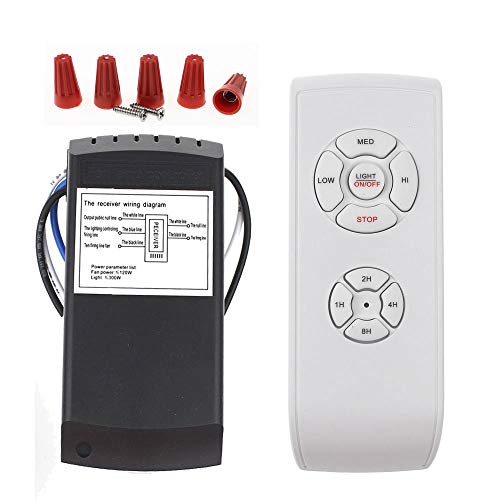
LPHUMEX Universal Ceiling Fan Remote Control Kit, 3-in-1 AC Motor Ceiling Fan Light Timing & Speed Remote, for Hunter/Harbor Breeze/Westinghouse/Honeywell/Other Ceiling Fan lamp
☞Easy Installation – Installation of the Universal Ceiling Fan Remote Controls Kit is a breeze and the looks…
As an affiliate, we earn on qualifying purchases.
As an affiliate, we earn on qualifying purchases.
Frequently Asked Questions
Can I Install a Dual-Motor Ceiling Fan Outdoors?
Yes, you can install a dual-motor ceiling fan outdoors if it’s rated for exterior use. Make certain the fan has an outdoor or damp/wet-rated UL listing to withstand weather conditions. Proper installation on a protected, covered porch or patio minimizes exposure to moisture and debris. Verify that all electrical components are sealed and grounded correctly. Regular maintenance and inspections will prolong the fan’s lifespan, ensuring safe and efficient operation outdoors.
What Tools Are Essential for Installing a Dual-Motor Fan?
Installing a dual-motor ceiling fan is like assembling precision machinery; you need the right tools. You’ll require a screwdriver (Phillips and flat-head), pliers, wire strippers, a voltage tester, and a ladder. A drill with bits helps secure mounting brackets. Make sure you have wire connectors and electrical tape for safety. These tools help you achieve a secure, safe installation, guaranteeing the best performance and longevity of your fan.
Is Special Wiring Needed for Dual-Motor Ceiling Fans?
Yes, dual-motor ceiling fans often require special wiring. You’ll need to connect separate wiring for each motor to control them independently, usually involving additional wiring terminals. Make certain your electrical box can handle the extra connections and that you follow the manufacturer’s wiring diagram precisely. Using a multimeter to verify connections and turning off the power before wiring are essential safety steps. Proper wiring guarantees safe operation and independent control of each motor.
How Do I Balance a Dual-Motor Ceiling Fan?
Balancing a dual-motor ceiling fan guarantees smooth operation and reduces noise. Start by turning off the fan and checking for any uneven blade angles or dirt buildup. Use a fan balancing kit, placing weights on the blades as needed, beginning with the heaviest side. Studies show balanced fans last 30% longer. Carefully adjust blade angles and secure all mounting hardware to uphold peak performance and prevent wobbling.
What Safety Precautions Should I Follow During Installation?
You should turn off the power supply at the circuit breaker before installation. Wear insulated gloves and safety goggles to protect yourself from electrical shocks and debris. Use a sturdy ladder positioned on a flat surface to prevent falls. Double-check all wiring connections against the manufacturer’s instructions, making sure they are secure and insulated. Avoid rushing; take your time to follow all safety protocols meticulously to prevent injury and ensure proper installation.

Ceiling Fan Mounting Bracket Mounting Kits Fan Components for Cathedral Canopy Living Room, 77059 Ceiling Fan Parts Black (Without Wire)
CONVENIENT KIT: In each package, you will receive 1 ceiling fan mounting bracket; each bracket comes with 2…
As an affiliate, we earn on qualifying purchases.
As an affiliate, we earn on qualifying purchases.
Conclusion
Installing a dual-motor ceiling fan enhances airflow efficiency, with studies showing they can reduce energy consumption by up to 30% compared to single-motor units. Proper installation guarantees ideal performance and safety. Always double-check wiring connections and mounting stability to prevent issues. With careful adherence to instructions, you’ll enjoy improved comfort and energy savings. Remember, precise installation is key to maximizing your fan’s lifespan and efficiency, making it a worthwhile upgrade for any space.

AITKEN Universal Cooling Fan Connector Pigtail Harness, Alternator Wiring Repair Harness Plug Connector Compatible with SPAL Electric Fans, Thicker Wire, 12AWG, 2-pin Jack, Wire Length 11.8 inches
Matching with the Terminal Block: Can quickly complete the wiring, safety and waterproof, and make the wiring harness…
As an affiliate, we earn on qualifying purchases.
As an affiliate, we earn on qualifying purchases.

KALIONE Ceiling Fan Blade Balancing Kit Including Fan Balancing Clips and 12pcs Metal Self-Adhesive 3G Weight Practical Fan Balance Kit for Ceiling Fan Weight Balancing 4pcs
Package Content: You will receive 4 sets of fan balancing kit, enough quantity meets all your needs.
As an affiliate, we earn on qualifying purchases.
As an affiliate, we earn on qualifying purchases.