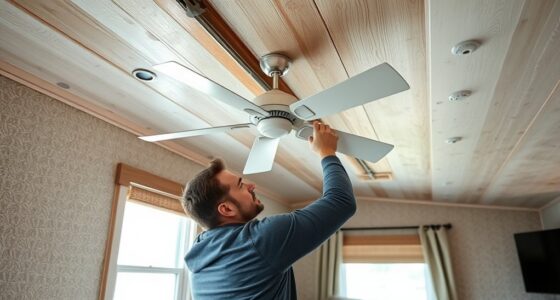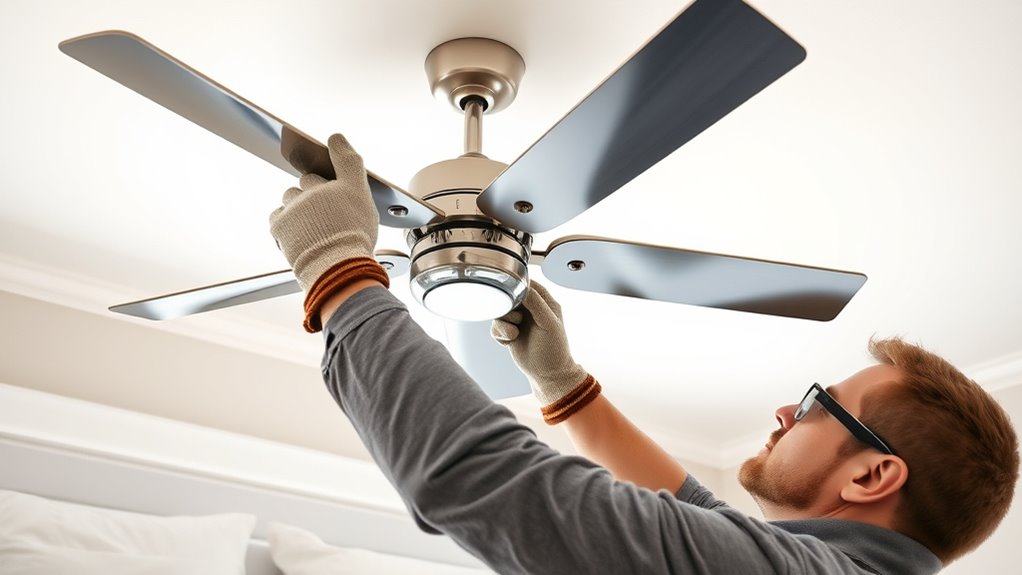

When installing a ceiling fan over a bed, guarantee the ceiling can support the fan’s weight and attach it securely to joists or reinforced support beams to prevent instability. Maintain at least 7-9 feet clearance from floor to blades, using downrods if necessary for high ceilings. Turn off power and follow manufacturer wiring instructions carefully, or consult a licensed electrician. Proper support, clearance, and electrical safety are essential; further details will help ensure a safe, durable installation.
Key Takeaways
- Ensure ceiling can support the fan’s weight by inspecting joists or support beams before installation.
- Maintain at least 7-8 feet clearance from fan blades to the floor for safety.
- Turn off electrical power and verify wiring connections before installing the fan.
- Use downrods or supports for high ceilings to achieve proper height and airflow.
- Regularly check mounting hardware and wiring for stability and wear to ensure long-term safety.
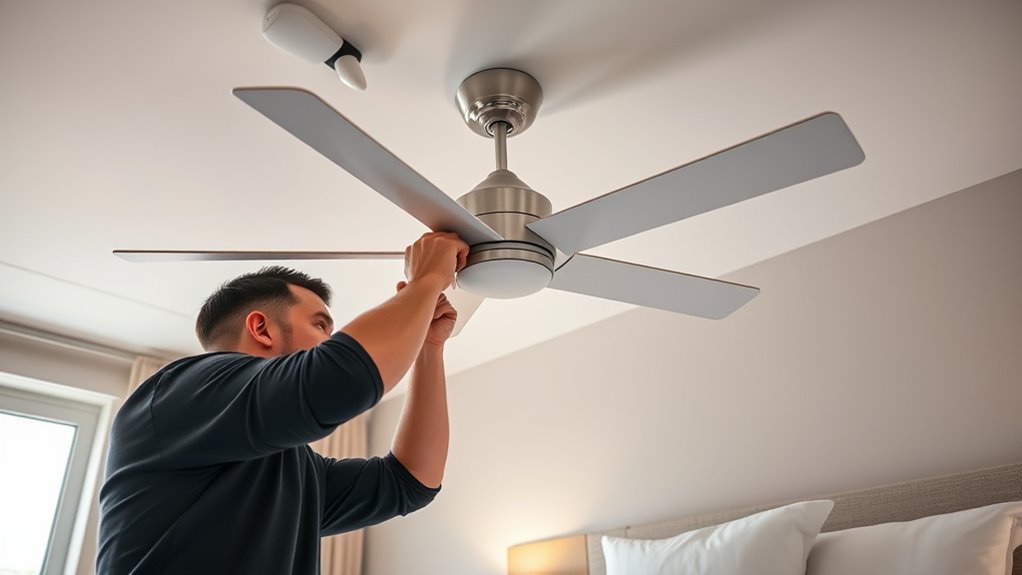
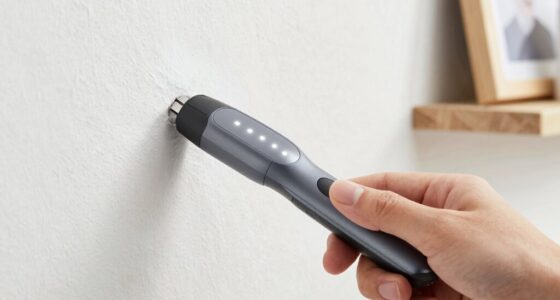
Installing a ceiling fan over a bed requires careful planning and precise execution to guarantee safety and ideal performance. Before beginning, you must evaluate the ceiling structure to confirm it can support the weight of the fan unit. Use a stud finder or a structural assessment to locate ceiling joists or support beams, ensuring the fan is mounted securely. Avoid attaching it directly to drywall without proper reinforcement, as this can lead to instability or collapse. Select a fan with an appropriate weight rating and verify that the mounting bracket is rated for the fan’s size and weight. Proper support is critical to prevent accidents or damage over time.
Electrical safety constitutes a vital aspect of installation. Turn off power at the circuit breaker before handling any wiring. Confirm the circuit is de-energized using a voltage tester. When wiring the fan, adhere strictly to the manufacturer’s wiring diagram, matching color-coded wires—typically black to black (hot), white to white (neutral), and green or copper to ground. Use wire connectors rated for the load and ensure all connections are secure and insulated. Improper wiring can lead to electrical shorts, overheating, or fire hazards. If you’re unfamiliar with electrical work, consulting a licensed electrician is highly recommended to avoid safety risks and ensure compliance with local electrical codes.
Turn off power and verify wiring connections to ensure safety during ceiling fan installation.
Height clearance is another critical safety consideration. The fan blades should hang at least 7 feet above the floor, and ideally, around 8 to 9 feet for optimal airflow and safety. Measure the distance from the ceiling to the bed to confirm there is sufficient clearance, especially if ceiling height exceeds standard dimensions. If the ceiling is high, consider using downrods to adjust the fan’s height appropriately. Ensure the fan’s blade span does not interfere with other fixtures or furniture. An improper height or clearance can result in accidental contact with the blades or obstructed airflow, both of which compromise safety and comfort.
Additionally, considering the support system of the ceiling is essential for long-term safety and durability. Regular maintenance checks, including tightening mounting hardware and inspecting wiring connections, are essential to sustain safe operation over time. By meticulously planning the installation process, adhering to electrical and structural safety standards, and maintaining proper clearances, you can ensure a safe, efficient, and durable ceiling fan installation over your bed.

RACO RETRO-BRACE 936 1.5-in. Deep Ceiling Fan Box for Old Work 2.5-in. Knockouts, Old Work Electrical Box, Adjustable Brace, and Mounting Bracket for Ceiling Light Fixtures & Chandelier Fans
DESIGNED FOR RESTORATIONS: Our Hubbell RACO RETRO-BRACE 1.5-in. Deep Ceiling Fan Box for Old Work is specially designed…
As an affiliate, we earn on qualifying purchases.
As an affiliate, we earn on qualifying purchases.
Frequently Asked Questions
Can I Install a Ceiling Fan Without Professional Help?
Yes, you can install a ceiling fan yourself if you have electrical experience and basic tools. Turn off power at the circuit breaker, carefully follow the manufacturer’s instructions, and confirm the ceiling box is rated for fan support. Use a sturdy ladder, verify electrical connections are secure, and double-check that the fan is balanced and functioning correctly. If unsure at any step, consult a professional to avoid potential hazards.
What Is the Ideal Height for Mounting a Fan Over a Bed?
You should mount the ceiling fan so the blades are 7 to 9 feet above the floor, with 8 feet being ideal for safety and maximum airflow. For beds with standard ceiling heights (8 feet), position the fan so blades hang 12-18 inches above the mattress. This ensures efficient cooling without risk of hitting your head or obstructing movement. Precise measurements prevent a fan from becoming a safety hazard or an aesthetic eyesore.
Are There Specific Safety Codes for Ceiling Fan Installation in Bedrooms?
Yes, there are specific safety codes for ceiling fan installation in bedrooms. You must follow the National Electrical Code (NEC), which mandates secure mounting, proper grounding, and appropriate wiring methods. Local building codes may also impose additional requirements, such as distance from the bed and ceiling height. Always verify the fan is installed by a qualified electrician to meet these standards and prevent electrical hazards or structural issues.
How Do I Prevent Wobbling or Noise After Installation?
To prevent wobbling or noise after installation, make sure the fan blades are properly balanced using a balancing kit. Tighten all mounting hardware securely, checking for any looseness. Verify that the blades are aligned and not warped. Use a level to confirm the fan’s hanging angle. Finally, clean the blades to remove dust, which can cause imbalance and noise. Regular maintenance helps maintain smooth, quiet operation.
Can I Install a Ceiling Fan in a Room With Sloped Ceilings?
Yes, you can install a ceiling fan in a room with sloped ceilings; in fact, about 30% of homes feature such ceilings. To do so, use a sloped ceiling fan mount or angled ceiling adapters that allow the fan to hang properly. Make certain the fan is installed at the correct angle—typically between 30° and 45°—and verify that all electrical connections meet safety standards for peak performance and safety.

DPXMYG 24 inch Ceiling Fan Downrod, 2 FT Black Downrod for Ceiling Fan, 1 inch Outside Diameter, Ceiling Fan Boom Suitable for a Wide Range of Fans (Black, Not Threaded)
Ceiling Fan Extension Downrod: The DPXMYG downrod fits most ceiling fans on Amazon (Note: Our downrods are not…
As an affiliate, we earn on qualifying purchases.
As an affiliate, we earn on qualifying purchases.
Conclusion
In summary, installing a ceiling fan over your bed demands strict adherence to safety guidelines to prevent accidents and ensure proper operation. Verify electrical connections, secure mounting, and appropriate clearance, just as a skilled engineer would. Remember, neglecting these precautions risks electrical fires or structural failure—akin to trusting the Tower of Babel’s construction. Prioritize safety, double-check your work, and consult a professional if unsure. Your peace of mind relies on meticulous installation, now and in the days of the great inventors.

Hunter 18-24 inch DC Accessory Extension Wire Kit for Ceiling Fans – 99696
The 18-24 inch wire kit makes adding a downrod simple with our easy-to-follow instructions
As an affiliate, we earn on qualifying purchases.
As an affiliate, we earn on qualifying purchases.

Westinghouse 0200011 Fan Master Support Box, 16-1/2-Cubic-Inch Wire Capacity
Fan Master Support Box can be installed on standard joists as well as wider joists where a saddle…
As an affiliate, we earn on qualifying purchases.
As an affiliate, we earn on qualifying purchases.