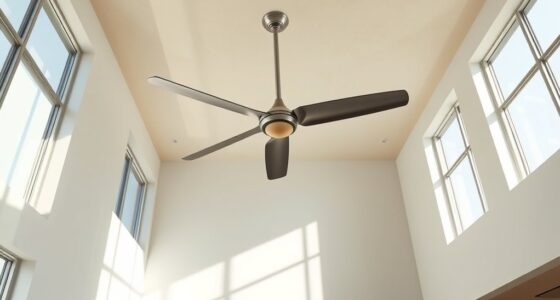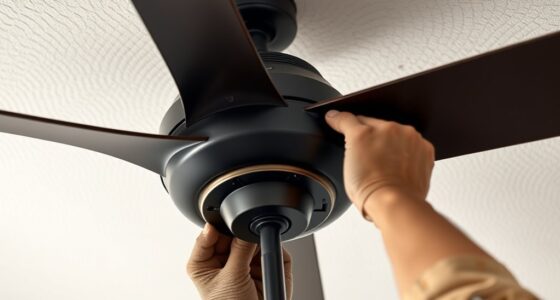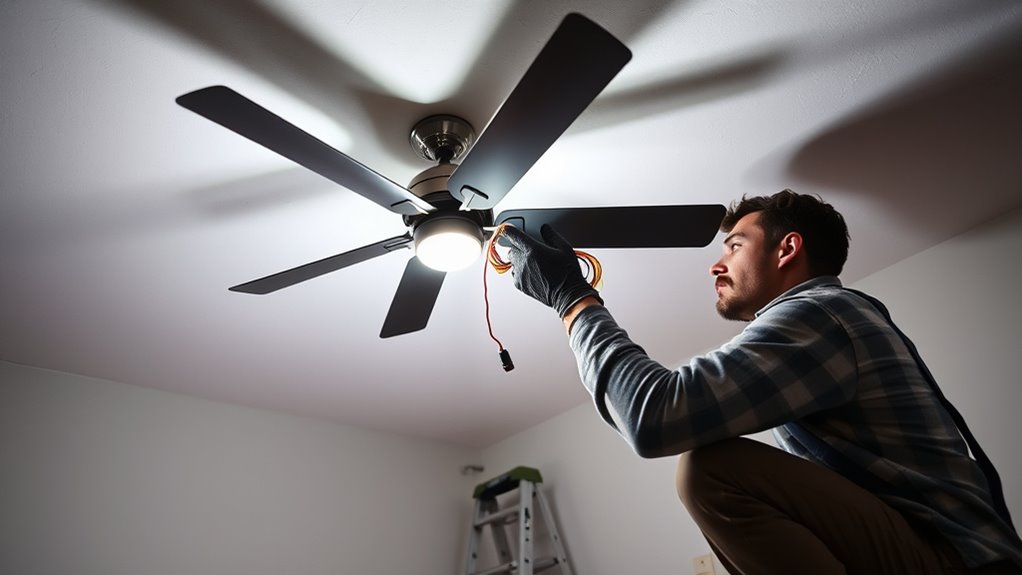

To install a ceiling fan without attic access, first verify your ceiling support box is rated for fan weight and securely anchored, replacing it if needed. Create access by installing a temporary drywall patch or small opening using a drywall saw, allowing direct wiring access. Confirm wiring complies with safety codes, upgrading as necessary, preferably with a licensed electrician. Mount the fan securely, then seal and finish the opening. Following these steps helps ensure a safe, effective installation—additional details guide proper execution.
Key Takeaways
- Create a new access point by cutting a small drywall hole near the electrical box for wiring inspection.
- Replace any non-rated electrical box with a fan-rated support box for safe installation.
- Ensure electrical wiring is up to code and capable of supporting the ceiling fan’s features, upgrading if necessary.
- Attach the mounting bracket securely to the electrical box, verifying it can support the fan’s weight without attic access.
- Seal the access opening with drywall patch, then finish and paint to restore ceiling appearance after installation.
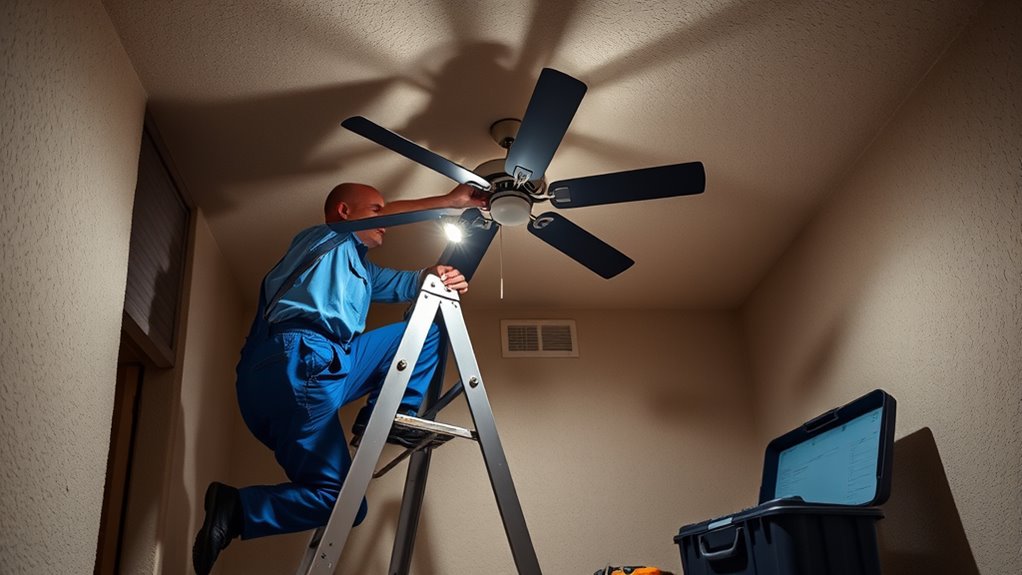
Installing a ceiling fan without attic access can be challenging, but it is achievable with proper planning and technique. The primary concern in such situations is safely accessing the electrical wiring and mounting points without the benefit of overhead space. To begin, assess the existing ceiling structure and locate the electrical box designated for the fan. If the current box isn’t rated for ceiling fan installation, you must replace it with a fan-rated box that provides the necessary support and safety standards. This process requires turning off the circuit breaker before removing the existing fixture, ensuring safety against electric shock. Once the old fixture is removed, verify that the electrical box can support the weight and motion of a ceiling fan, which often involves using a box specifically rated for fans.
Assess and replace the electrical box with a fan-rated support for safe ceiling fan installation.
Next, consider the access method. Since attic access isn’t available, you need to employ alternative techniques such as installing a temporary access panel or creating a small opening in the ceiling drywall. Cutting a clean, appropriately sized hole allows you to reach the electrical box and wiring more comfortably. Use a drywall saw to make the cut, and reinforce the opening with a suitable frame if necessary. After gaining access, inspect the wiring and confirm it conforms to electrical codes. If wiring is outdated or not properly grounded, hire a licensed electrician to upgrade it. This step is vital to guarantee safe operation and compliance with local electrical codes. Additionally, smart features in modern ceiling fans, such as remote control or integration with smart home systems, are increasingly popular but require proper wiring and setup.
When installing the fan mounting bracket, position it directly onto the electrical box, ensuring it is securely fastened with the appropriate screws and supports. Since you lack attic space for overhead reinforcement, verify that the electrical box is rated for fan support, as standard boxes may not suffice. Attach the fan blades and motor according to the manufacturer’s instructions. During this process, use a sturdy ladder or scaffold to reach the ceiling comfortably, avoiding strain or potential fall hazards. Once the fan is mounted and wired, restore power and test the fixture. Check for wobbling or noise, and make adjustments as needed—such as tightening blade screws or balancing the blades.
Finally, seal the access opening after confirming the fan operates correctly. Insert a new drywall patch or reinstall the original drywall piece, then finish with joint compound, sanding, and paint to match the ceiling. This approach maintains aesthetic integrity and guarantees the ceiling remains structurally sound. By following these precise steps, you can successfully install a ceiling fan without attic access, guaranteeing both safety and functionality.

RACO RETRO-BRACE 936 1.5-in. Deep Ceiling Fan Box for Old Work 2.5-in. Knockouts, Old Work Electrical Box, Adjustable Brace, and Mounting Bracket for Ceiling Light Fixtures & Chandelier Fans
DESIGNED FOR RESTORATIONS: Our Hubbell RACO RETRO-BRACE 1.5-in. Deep Ceiling Fan Box for Old Work is specially designed…
As an affiliate, we earn on qualifying purchases.
As an affiliate, we earn on qualifying purchases.
Frequently Asked Questions
Can I Install a Ceiling Fan Without Electrical Wiring?
No, you cannot install a ceiling fan without electrical wiring. The fan requires a power source connected through wiring to function properly. If wiring isn’t already in place, you’ll need an electrician to install it or run new wiring from your power source. Make certain you turn off power before working on electrical components, and follow local electrical codes for safety and compliance.
What Tools Are Essential for Installing a Fan Without Attic Access?
You’ll need a few vital tools to tame the ceiling fan installation. Grab a cordless drill to handle screws efficiently, a voltage tester to guarantee safety, and a sturdy ladder to reach your ceiling without breaking a sweat. A wrench or pliers are essential for tightening connections, while wire strippers help prepare electrical wires. Don’t forget a flashlight for illuminating tight spots, turning a complex task into a straightforward one.
How Long Does Installation Typically Take?
Installation typically takes two to four hours, depending on your experience level and the complexity of the ceiling fan. You’ll need to verify the electrical box is rated for fan support, secure the mounting bracket, connect wiring correctly, and attach the fan blades. Preparation, such as turning off power and gathering tools, can streamline the process. Expect some troubleshooting, especially if space constraints or wiring issues arise.
Is Professional Help Necessary for This Type of Installation?
You should consider professional help if you’re unfamiliar with electrical wiring or ceiling fan installation. While some experienced DIY enthusiasts can manage this task, the process involves working with electrical components and securing the fan safely. Incorrect installation risks electrical hazards or structural damage. If you lack confidence or proper tools, hiring a licensed electrician ensures compliance with safety standards and proper wiring, making the installation safer and more reliable.
Are There Specific Ceiling Fan Models Suitable for Tight Spaces?
Yes, there are ceiling fan models designed for tight spaces. Look for fans labeled as “low-profile” or “flush mount,” which have a smaller housing and are specifically built for limited clearance areas. These models typically feature a close-to-ceiling design, reducing the space needed for installation. make sure you verify the ceiling height and clearance specifications before purchasing to ensure proper fit and safe operation in your confined space.
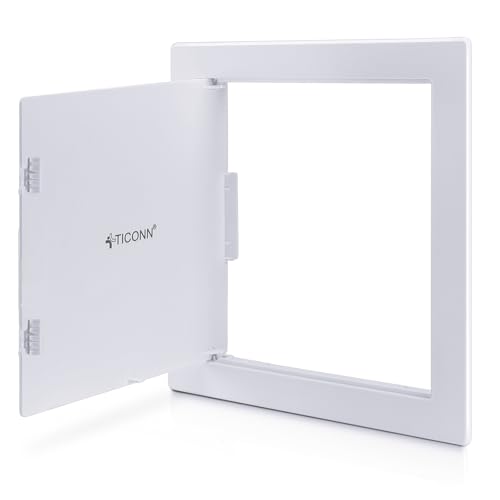
TICONN Access Panel for Drywall, 12 x 12 Inch ABS Plastic Wall Hole Cover Access Doors, Easy Install Drywall Access Panel, Ceiling, Wiring and Cables
[DURABLE CONSTRUCTION] The drywall access panel is crafted from high-quality ABS plastic, ensuring durability, impact resistance, and UV…
As an affiliate, we earn on qualifying purchases.
As an affiliate, we earn on qualifying purchases.
Conclusion
By following these steps, you can successfully install a ceiling fan even without attic access. While it might seem challenging, using the right tools and techniques guarantees a safe, secure connection. Don’t let the lack of attic space discourage you; careful planning and patience make the process manageable. Remember, consulting local electrical codes and, if needed, hiring a professional can further ensure safety and compliance, making your project both effective and compliant.
RACO RETRO-BRACE 936 1.5-in. Deep Ceiling Fan Box for Old Work 2.5-in. Knockouts, Old Work Electrical Box, Adjustable Brace, and Mounting Bracket for Ceiling Light Fixtures & Chandelier Fans
DESIGNED FOR RESTORATIONS: Our Hubbell RACO RETRO-BRACE 1.5-in. Deep Ceiling Fan Box for Old Work is specially designed…
As an affiliate, we earn on qualifying purchases.
As an affiliate, we earn on qualifying purchases.

Klein Tools 53710 Hole Saw, Adjustable Circle Hole Cutter with Dustbowl, Integrated Vacuum Port, for Drywall and Ceiling Tiles, 2 to 7-Inch
PRECISE HOLE CUTTING: The Adjustable Hole Saw with Auto-Set Arms effortlessly cuts holes from 2 to 7 inches…
As an affiliate, we earn on qualifying purchases.
As an affiliate, we earn on qualifying purchases.