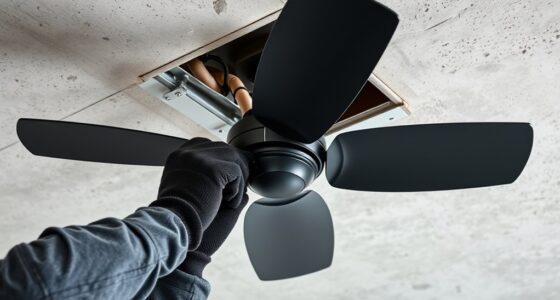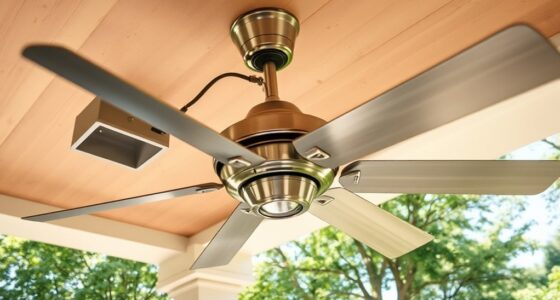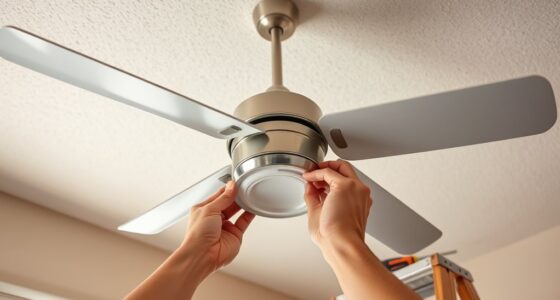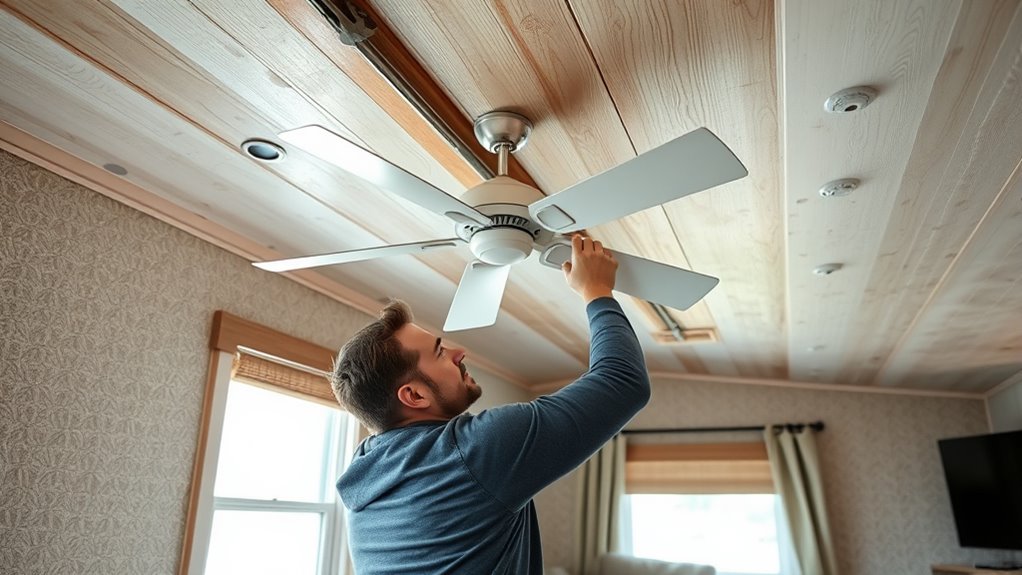

Before installing a ceiling fan in your mobile home, verify the ceiling’s structural support by locating joists or framing members using a stud finder, and confirm it can handle the fan’s weight and operation. Turn off power, inspect and upgrade wiring if needed, and select a fan compatible with your space and mounting system. Securely fasten the fan to reinforced support, ensure electrical connections meet safety standards, and test stability before usage. Details on each step help guarantee a safe, durable installation.
Key Takeaways
- Locate and verify ceiling joists or structural supports to securely mount the fan.
- Turn off power, then inspect and upgrade wiring for safety and compatibility.
- Select a fan suitable for mobile home use, ensuring proper weight, size, and mounting system.
- Securely attach the mounting bracket to structural support and follow manufacturer installation instructions.
- Double-check electrical connections and mounting stability, then test the fan for safe, smooth operation.

Installing a ceiling fan in a mobile home requires careful planning and adherence to safety standards due to the unique construction of mobile structures. Unlike traditional homes, mobile homes feature lightweight framing, often with metal or vinyl siding, and specific load-bearing limitations. Before beginning, you must thoroughly assess the ceiling structure to determine whether it can support the weight and operation of a ceiling fan. This involves locating ceiling joists or framing members that can securely anchor the fan mounting bracket. Using a stud finder or inspection, you should confirm the presence and position of these structural elements, ensuring they are capable of bearing the load without compromising the integrity of the ceiling.
Once the mounting location is identified, you need to verify that the electrical wiring is suitable for fan installation. Mobile homes typically have a dedicated electrical system, and wiring may be different from standard residences. Turn off the main power supply and test the existing circuit to confirm it supplies power and supports the additional load. You should also check for existing wiring in the ceiling cavity, ensuring it’s in good condition and capable of handling the fan’s electrical requirements. If wiring is outdated or insufficient, replacing or upgrading it becomes necessary before proceeding.
With structural and electrical considerations addressed, you must select an appropriate ceiling fan model designed for mobile home use. The fan’s weight, size, and mounting system should align with the ceiling’s load capacity and available space. It’s essential to use a fan with a compatible mounting bracket that can securely attach to a ceiling joist or a suitable reinforcement point. When installing, you must ensure the bracket is tightly fastened, avoiding any wobble or instability, which could lead to safety hazards or damage over time.
During installation, adhere strictly to manufacturer instructions, especially regarding wiring connections and mounting procedures. Use UL-listed components and appropriate connectors to ensure electrical safety and compliance with local building codes. After installing the fan, double-check all connections, tighten mounting hardware, and verify the fan’s stability before restoring power. Once operational, confirm the fan’s balance and noise levels, making adjustments if necessary. Proper installation minimizes vibration, noise, and potential electrical issues, ensuring long-term safety and performance.

Ceiling Fan Mounting Bracket Kits With Installation Accessories Compatible With Living Room, Light Fixtures And Cathedral Ceiling Fans, Replace 77059 Ceiling Fan Mounting Bracket Black (No wires)
Included in the package: 1 x Ceiling Fan Mounting Bracket, 2 x Three different sizes of screws, 2…
As an affiliate, we earn on qualifying purchases.
As an affiliate, we earn on qualifying purchases.
Frequently Asked Questions
What Tools Are Necessary for Installing a Ceiling Fan?
You’ll need a screwdriver, adjustable wrench, voltage tester, drill with bits, ladder, and possibly wire strippers. First, turn off power at the circuit breaker. Use the voltage tester to verify no current flows. Secure the mounting bracket with a screwdriver and drill. Connect wiring using wire strippers if needed, then attach the fan blades with the screwdriver. A sturdy ladder ensures safe access to ceiling wiring.
How Do I Ensure Proper Electrical Safety During Installation?
You guarantee electrical safety by turning off the circuit breaker before starting. Use a voltage tester to confirm power is off at the fixture. Wear insulated gloves and safety goggles throughout installation. Avoid working in wet conditions and keep tools dry. Follow manufacturer instructions precisely, and double-check all wiring connections for proper insulation and grounding. Never bypass safety features or work on live circuits to prevent electrical shock or fire hazards.
Can I Install a Ceiling Fan Myself or Should I Hire a Professional?
You can install a ceiling fan yourself if you’re comfortable working with electrical wiring and follow safety protocols. Picture yourself confidently connecting wires, securing the mounting bracket, and testing the fan’s operation. However, if you’re unsure about electrical systems, it’s best to hire a professional. Proper installation guarantees safety and functionality, preventing potential hazards like electrical shorts or fan instability. Prioritize safety and accuracy over DIY risks.
Are There Specific Ceiling Fan Models Suitable for Mobile Homes?
Yes, certain ceiling fan models are better suited for mobile homes. Look for fans specifically designed for low ceilings, lightweight construction, and compatible with mobile home electrical systems. Choose models with adjustable mounting options and damp or wet ratings if needed, guaranteeing they meet safety standards and manufacturer’s specifications for mobile home installation. Always verify the fan’s weight and size to prevent structural stress and ensure peak airflow.
How Do I Troubleshoot Common Installation Problems?
A stitch in time saves nine; start troubleshooting by turning off power at the circuit breaker. Check the wiring connections to make certain they match the fan’s wiring diagram, and verify the circuit is live with a voltage tester. Confirm the mounting bracket is secure and level. If the fan doesn’t operate, test the remote or wall switch. Address loose connections or faulty wiring promptly to prevent further issues.

SUKIMIH Socket Fan Light, Plug in Ceiling Fan, Gazebo Fan, Outdoor/Indoor, 16.4 Ft Cord with Hook UL Listed, Ceiling Light with Remote (White, 16.5")
*Multi-Accessories*: Sukimih 2 in 1 socket fan light offers dual functionality as both a ceiling fan and a…
As an affiliate, we earn on qualifying purchases.
As an affiliate, we earn on qualifying purchases.
Conclusion
Once you’ve securely installed your ceiling fan, you’ll notice how the cool breeze unexpectedly complements your already comfortable mobile home. Proper wiring and mounting guarantee safety, but it’s the quiet efficiency that truly completes the upgrade. Coincidentally, the same attention to detail you used today can help you troubleshoot future issues. With this installation, you’re not just adding a fan—you’re enhancing your home’s comfort and safety, making every summer day a little more bearable.
Ceiling Fan Mounting Bracket Kits With Installation Accessories Compatible With Living Room, Light Fixtures And Cathedral Ceiling Fans, Replace 77059 Ceiling Fan Mounting Bracket Black (No wires)
Included in the package: 1 x Ceiling Fan Mounting Bracket, 2 x Three different sizes of screws, 2…
As an affiliate, we earn on qualifying purchases.
As an affiliate, we earn on qualifying purchases.

Mobile Home Vent Fan w/light. Made by Ventline
50CFM
As an affiliate, we earn on qualifying purchases.
As an affiliate, we earn on qualifying purchases.