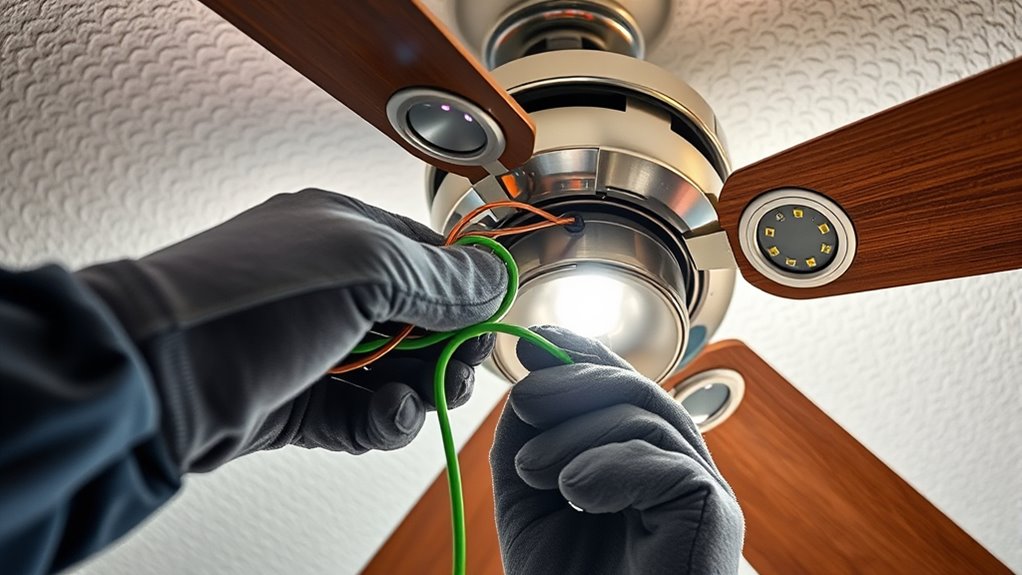

Grounding your ceiling fan is essential for electrical safety and device protection. You must connect the grounding wire from the fan to the grounded system via the grounding terminal, making certain all connections are secure and corrosion-free. Proper grounding creates a low-resistance path to earth, helping to prevent shocks, equipment damage, and fire hazards during faults. Following electrical codes like NEC is indispensable. To make sure you’re following best practices, it’s important to understand the detailed steps involved.
Key Takeaways
- Always connect the fan’s grounding wire securely to the grounding system for safety and compliance.
- Ensure all grounding connections are corrosion-free and tightly secured to maintain a low-resistance path.
- Begin grounding at the main panel’s grounding bus bar, linking it directly to the fan’s grounding terminal.
- Proper grounding prevents electrical shocks, protects fan components, and ensures circuit breaker trips during faults.
- Verify continuous, unbroken grounding connections to reduce electromagnetic interference and electrical noise.

Have you ever wondered why grounding a ceiling fan is vital for safety and proper operation? Grounding serves as a critical safety measure that directs stray electrical current away from the device and any nearby conductive surfaces. When a ceiling fan is properly grounded, it minimizes the risk of electrical shock, prevents damage to the fan’s components, and guarantees compliance with electrical codes. The grounding conductor provides a low-resistance path to earth ground, which allows fault currents to dissipate safely, thereby protecting users from potentially lethal shocks.
In the context of electrical safety, grounding is not merely a recommended practice but a mandatory requirement outlined in national electrical codes such as the NEC (National Electrical Code). When installing or servicing a ceiling fan, you must connect the grounding wire—typically a bare copper or green-insulated conductor—to the fan’s grounding terminal and to the grounded electrical system. This connection guarantees that in the event of a fault, such as a short circuit or insulation failure, the excess current flows directly to ground, causing the circuit breaker to trip. This rapid response prevents prolonged exposure to electrical faults that could otherwise result in electrocution or fire hazards.
The grounding process involves verifying that the electrical system has a proper grounding path, which begins with the main panel. The grounding wire should originate from the circuit breaker panel’s grounding bus bar, where it is bonded to the neutral bus in most systems. During installation, it’s vital to confirm that all connections are secure and corrosion-free. The grounding wire must be continuous from the panel to the fan’s mounting bracket and grounding terminal, ensuring an unbroken conductive path. Failure to establish a proper ground connection compromises safety and may lead to electrical shock hazards or damage to the fan’s motor and electronic components.
Additionally, understanding the importance of system grounding helps ensure that all safety standards are met and reduces the risk of electrical faults. It’s equally important to understand that grounding a ceiling fan also plays a role in electromagnetic interference mitigation. Proper grounding reduces electrical noise that could affect nearby sensitive electronic equipment. Moreover, grounding contributes to system stability by preventing voltage surges that might occur due to lightning strikes or utility fluctuations.

(Pack of 10) 12 AWG Solid Copper Ground Wire with Green Ground Screws – 6.5" Edge-Stripped Grounding Wire, 5/8" Strip, 10-32 x 3/8" Captive Green Screws for Electrical Boxes
PACK OF TEN: This listing is for a pack of 10 green ground screws and grounding pigtails. Packaged…
As an affiliate, we earn on qualifying purchases.
As an affiliate, we earn on qualifying purchases.
Frequently Asked Questions
Can I Ground a Ceiling Fan Without Turning off the Power?
No, you should never ground a ceiling fan without turning off the power. Doing so poses serious electrical shock risks and potential equipment damage. Always switch off the circuit breaker and verify power is off using a voltage tester before attempting any grounding procedure. Properly isolating the circuit guarantees safety and compliance with electrical codes, preventing accidents and ensuring a secure, effective grounding connection.
What Tools Are Needed for Grounding a Ceiling Fan Safely?
You need a wire stripper, a screwdriver, grounding wire, grounding screw or clamp, and possibly pliers. First, turn off power at the circuit breaker. Use the wire stripper to prepare the grounding wire. Attach the grounding wire securely to the grounding screw or clamp on the fan and the electrical box. Make certain all connections are tight and insulated properly. Always prioritize safety and verify power is off before starting.
Is Grounding Necessary if the Fan Is Installed Outdoors?
Yes, grounding your outdoor ceiling fan is essential, acting as an electrical safety net that prevents shocks during power surges or faults. Outdoor environments expose your fan to moisture, increasing the risk of electrical leaks. Proper grounding creates a safe pathway for stray currents, shielding you from potential harm. Always follow electrical codes and manufacturer’s instructions to guarantee your installation is secure and compliant.
How Often Should Ceiling Fan Grounding Connections Be Inspected?
You should inspect your ceiling fan’s grounding connections annually to guarantee safety and proper function. Regular inspections involve checking for corrosion, loose connections, or damage that could compromise grounding integrity. Turn off power before inspection and use a multimeter or continuity tester to verify a solid ground connection. Maintaining a consistent inspection schedule helps prevent electrical hazards, ensuring your fan operates safely and reliably over time.
What Are the Signs of a Faulty Grounding Connection?
A faulty grounding connection often signals danger, like a whisper of warning. You’ll notice frequent tripping of circuit breakers, sparks or sparks when touching the fan, or a tingling sensation on contact. Loose or disconnected grounding wires, corrosion, or burn marks are clear visual cues. If you observe any of these signs, shut off power immediately and have a qualified electrician inspect and repair the grounding system to guarantee safety.

RACO RETRO-BRACE 936 1.5-in. Deep Ceiling Fan Box for Old Work 2.5-in. Knockouts, Old Work Electrical Box, Adjustable Brace, and Mounting Bracket for Ceiling Light Fixtures & Chandelier Fans
DESIGNED FOR RESTORATIONS: Our Hubbell RACO RETRO-BRACE 1.5-in. Deep Ceiling Fan Box for Old Work is specially designed…
As an affiliate, we earn on qualifying purchases.
As an affiliate, we earn on qualifying purchases.
Conclusion
Properly grounding your ceiling fan ensures electrical safety and prevents potential hazards. Skipping this step might seem minor, but it leaves you vulnerable to shocks or electrical fires. By adhering to grounding protocols, you create a secure, code-compliant connection that protects both your home and loved ones. Don’t compromise safety for convenience—trust the process and follow grounding procedures meticulously. Your commitment to proper grounding guarantees a safe, reliable ceiling fan operation for years to come.

Professional Winged Ground Wire Connector Nuts with Hole by Dirvcp – 50-Pack of Spring Loaded Wire Nuts for Safe Electrical Connections
High current carrying capacity: The grounding connector boast outstanding current conductivity, enabling them to withstand high current loads…
As an affiliate, we earn on qualifying purchases.
As an affiliate, we earn on qualifying purchases.

Square D – PK7GTACP 7 Terminal Ground Bar Kit
Used in load centers, CSED devices and NQOD and NF panel boards
As an affiliate, we earn on qualifying purchases.
As an affiliate, we earn on qualifying purchases.