
TL;DR

Get home appliances delivered free — and shop member deals
- Fast, free delivery on millions of items
- Access to Prime Big Deal Days deals on October 6–7
- Prime Video, Amazon Music and more included
A dehumidifier size calculator helps you match the device’s capacity to your room’s size and conditions. Proper sizing prevents energy waste and keeps moisture levels just right. An undersized unit struggles, while an oversized one wastes power.
Imagine running a dehumidifier that hums constantly, yet your basement still feels damp, or one that turns off too soon and leaves moisture lingering. Picking the right size isn’t just about convenience — it’s about making your space healthier and more comfortable.
A dehumidifier size calculator takes the guesswork out of this process. It considers your room’s size, humidity level, and specific conditions to recommend the perfect capacity. This guide will show you how these calculators work, what factors matter most, and how to interpret their results so your dehumidifier works smarter, not harder.
Always measure your room’s square footage accurately before using a size calculator.
Match your dehumidifier’s capacity closely with the calculator’s recommendation to avoid energy waste or inadequate moisture control.
Consider extra moisture sources and local climate when interpreting size suggestions.
Using a calculator simplifies complex factors into a single, actionable number — making buying smarter.
Oversized units waste power and can harm indoor air quality, while undersized units struggle to control dampness.
How a dehumidifier size calculator works in simple terms
A dehumidifier size calculator uses your room’s square footage, ceiling height, and moisture sources to estimate how much moisture needs removing each day. Think of it as a smart friend who quickly measures your space and gives a capacity recommendation in pints per 24 hours.
For example, if your basement is 300 square feet with 8-foot ceilings and occasional dampness, the calculator might suggest a 50-pint unit. It’s based on industry standards that connect room size and humidity level with dehumidifier capacity.
This process simplifies a complex calculation into a quick, reliable number, helping you avoid common pitfalls like choosing a tiny unit that runs nonstop or an oversized one that wastes power.
Key factors the calculator considers for accurate sizing
- Room size: Larger rooms need higher capacity to keep moisture in check. Underestimating size can lead to insufficient drying, leaving your space damp and fostering mold growth, which can cause health issues over time. Properly sizing ensures the dehumidifier can handle the entire space effectively, preventing persistent dampness that can compromise your health and damage belongings.
- Ceiling height: Higher ceilings mean more air volume, requiring more dehumidification power to achieve the same humidity reduction. Ignoring ceiling height may result in selecting a unit that can’t handle the true volume of your space, leading to ongoing dampness, mold risk, and inefficient operation. Correctly accounting for ceiling height ensures the dehumidifier can circulate and dehumidify all the air effectively, maintaining a comfortable environment.
- Humidity level: The initial moisture content impacts capacity needs. A very damp space or one with frequent moisture influx (like from leaks or outdoor humidity) demands a larger unit. Failing to consider this can cause the dehumidifier to cycle constantly, increasing wear and reducing lifespan, while also failing to keep humidity at safe levels. Choosing capacity based on initial humidity ensures consistent performance and healthier indoor air quality.
- Moisture sources: Kitchens, bathrooms, laundry areas produce additional humidity. Recognizing these sources helps the calculator recommend a unit capable of handling peak moisture loads, preventing issues like mold, mildew, or musty odors. Properly sizing for these sources means your dehumidifier can respond effectively during high humidity periods, avoiding oversaturation and potential damage.
- Occupant activity: More people or frequent showers increase indoor moisture levels. Overlooking occupant activity can lead to a smaller unit struggling during peak humidity times, resulting in discomfort, mold risk, and increased energy use as it runs non-stop. Factoring in occupancy and activity levels ensures the device maintains stable humidity, preserving health and comfort while optimizing energy efficiency.
For instance, a 500-square-foot bathroom with daily showers generates more moisture than a typical room. The calculator considers this to recommend a capacity that prevents mold and dampness, highlighting the importance of understanding your space’s specific moisture dynamics.
Additionally, local climate plays a vital role. In humid southern states, even smaller rooms may require larger units to effectively control moisture, whereas in dry regions, smaller capacities suffice. This nuance ensures your dehumidifier is tailored to your environment, maximizing efficiency and effectiveness.
How to interpret the calculator’s recommendation
When your calculator suggests a 40-, 50-, or even 70-pint model, think of it as a tailored suit for your space. A 30-pint unit may seem enough for a small bedroom, but if your basement is damp, it might fall short, leading to persistent moisture and potential mold issues.
Always consider the environment: if your space is borderline between categories, opting for the higher capacity ensures the unit can handle unexpected moisture spikes or ongoing humidity sources. Choosing a slightly oversized unit can provide a buffer against fluctuating conditions, but avoid going too large—oversizing can cause over-drying and unnecessary energy use.
Pay close attention to the detailed inputs—room size, humidity level, and moisture sources. A higher number signals more moisture, so your choice should match that need. Misinterpreting these recommendations might lead to underperformance or wasted energy, so understanding what the number signifies helps ensure your space stays comfortably dry.
Comparison of common dehumidifier sizes and their ideal spaces
| Size (Pints/24h) | Best For | Room Size | Typical Use |
|---|---|---|---|
| 30 pints | Small bedrooms, closets | Up to 300 sq ft | Single occupant, dry climates |
| 40 pints | Medium rooms, damp areas | 300-500 sq ft | Guest rooms, small basements |
| 50 pints | Larger spaces & damp environments | 500-700 sq ft | Basements, laundry rooms |
This table simplifies your choice: match your room size and dampness level to a capacity. For instance, a damp 600 sq ft basement benefits from a 50-pint dehumidifier to prevent mold growth without wasting energy.
Tips for getting the most accurate size recommendation
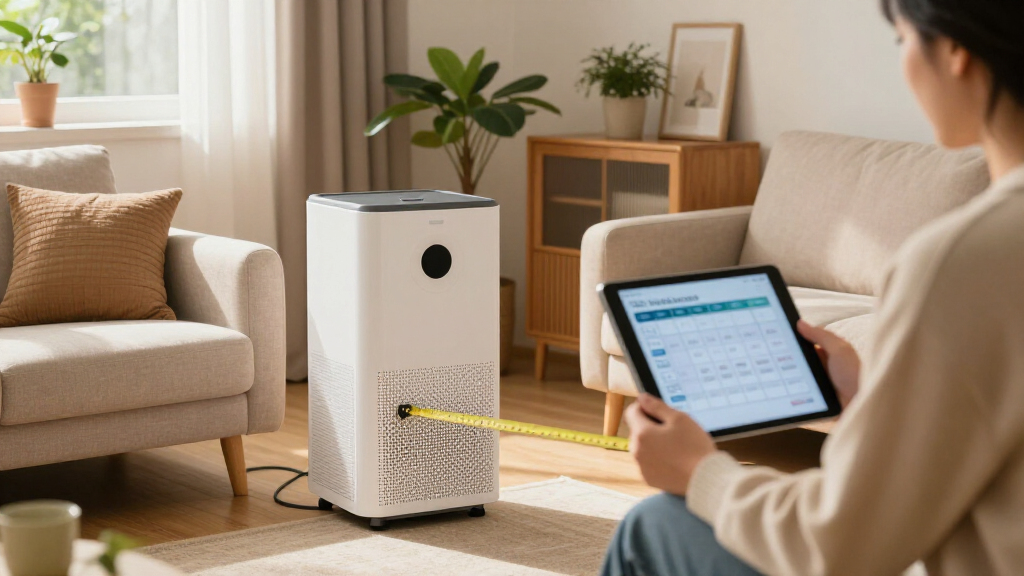
- Measure your space carefully: Use a tape measure for length and width, then multiply for square footage.
- Assess humidity levels: Feel the air—dampness feels heavier, smells musty, or causes condensation.
- Account for moisture sources: Add extra capacity if your space has ongoing sources of moisture like a bathroom or laundry.
- Use multiple inputs: Input your findings into the calculator for a tailored recommendation.
Imagine you have a 400 sq ft garage with a small leaky pipe. Inputting this info into a calculator will suggest a size that combats that extra moisture, saving you headaches later.
Why choosing the right size saves you money and trouble
An undersized dehumidifier runs constantly, wearing out faster and wasting energy. Over time, it may never drop humidity below 60%, risking mold and damage.
On the flip side, an oversized unit dries out the air so quickly it cycles on and off frequently, wasting power and possibly over-drying the space. This not only increases energy bills but can also lead to dry skin, static electricity, and respiratory discomfort. Additionally, over-drying can strip essential moisture from indoor air, affecting comfort and health, especially for vulnerable populations like children or those with respiratory issues.
Research shows that matching capacity to your space can cut energy bills by up to 30%. Proper sizing prolongs your unit’s lifespan, reduces maintenance costs, and keeps your environment comfortable and healthy. Investing a little time in correct sizing ensures long-term savings and peace of mind.
Frequently Asked Questions
How do I know if my room is too damp for a small dehumidifier?
If your room feels heavy, smells musty, or shows condensation on windows, a small dehumidifier probably isn’t enough. Use a calculator to find a capacity that matches your dampness level, or consider a larger unit for persistent moisture.Can I use a bigger dehumidifier than the calculator recommends?
While it’s tempting, bigger isn’t always better. An oversized dehumidifier can over-dry your space, cause unnecessary energy use, and shorten the device’s lifespan. Stick to the recommended size or go slightly larger if your environment demands it.How often will my dehumidifier run if I pick the right size?
A properly sized unit will cycle on and off smoothly, maintaining consistent humidity levels without constant operation. This balances comfort, energy efficiency, and device longevity.Does local climate affect the size I should choose?
Absolutely. Humid regions like Florida or Louisiana require larger capacities compared to dry areas like Arizona. The calculator factors in your climate for an accurate recommendation.Is it better to oversize just in case?
Not really. Oversizing wastes power and can cause over-drying, which affects indoor air quality. A size calculator helps you find the sweet spot for your environment.Conclusion
Choosing the right dehumidifier size isn’t about guesswork — it’s about making your space comfortable, healthy, and efficient. Use a dehumidifier size calculator as your trusted guide, and avoid wasting money on the wrong unit.
Think of it as finding the perfect fit for your home’s moisture needs — a small investment in accuracy that pays off in comfort and savings. When you select your size carefully, you breathe easier, your belongings stay dry, and energy bills stay in check.
Dehumidifier Size Calculator
Estimate daily pint capacity from room size and how damp the space feels.
Your room likely starts in the 20 to 30 pint range. Compare compact dehumidifiers for smaller spaces.
See compact dehumidifier matchesYour room points to a 35 to 40 pint unit. Compare mid-size dehumidifiers and check drainage options.
See mid-size dehumidifier matchesYour conditions call for a 50 pint or larger unit. Compare larger dehumidifiers and confirm room moisture sources.
See larger dehumidifier matchesEstimate only. Check product specs, local rates, and site conditions before buying or planning around these numbers.
NFL season / tailgating Picks
team gear
As an affiliate, we earn on qualifying purchases.