
TL;DR

Get home appliances delivered free with Prime
- Fast, free delivery on millions of items
- Prime Video, Amazon Music and more included
- Member-only deals all year
CNET’s hands-on report from Apple’s Welcome Home event describes HomeView as a smart-home screen managed through Apple Home, with device pairing, Face ID profiles and a 7-inch display. The report reflects a demonstration, not a full independent test; pricing, availability and compatibility details were not provided in the source material.
CNET’s hands-on report says Apple demonstrated its HomeView smart-home screen at a New York event, with device setup and control managed through the Apple Home app rather than separate manufacturer apps. The reporter saw demonstrations of Face ID profiles and a 7-inch display, but the account does not establish a release date, price or the full range of compatible smart-home devices.
The report describes HomeView as a central screen for controlling connected home devices. At the Welcome Home event, a representative paired and registered a smart-home device through Apple Home while speaking with the reporter. The reporter said the process appeared quick and compared it with setting up AirPods or a HomePod. Because the session was brief, the report says the setup could not be examined in depth.
Apple also demonstrated HomeView recognizing a device owner and showing a personalized profile with items such as a calendar and scheduled events. The report says the device can register up to six people by face. In a simulated home, an exterior screen showed a security-camera view, while guest access was described as restricted to selected functions, including temperature control and Safari.
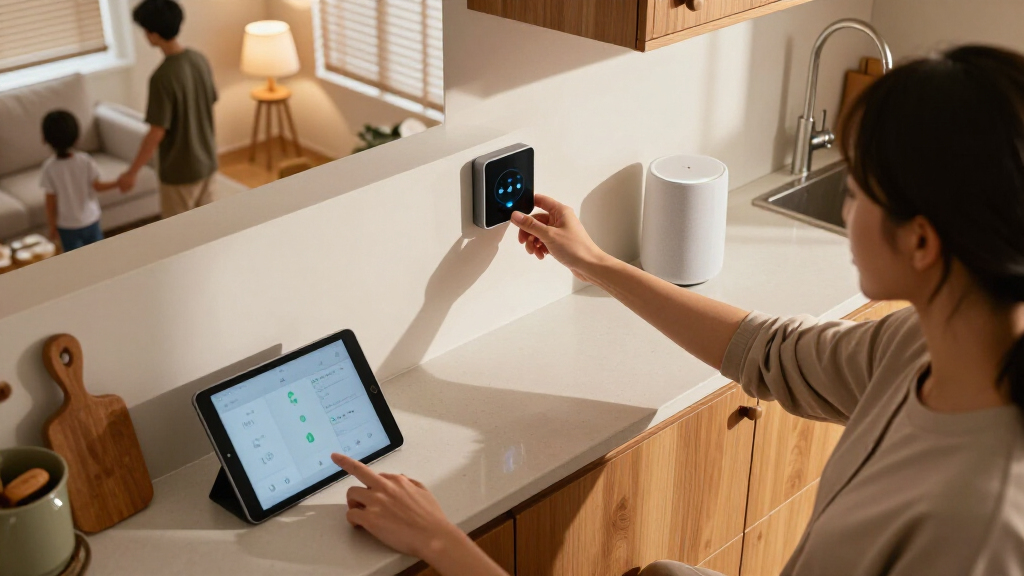
The device has a 7-inch square Liquid Retina display on an adjustable, tilting base. CNET saw it used in a kitchen demonstration, where recipes could be shared from an iPhone or accessed through Siri and Safari, with step-by-step screens and timers. These were demonstrations observed at the event; the source does not provide independent testing of reliability, privacy protections or everyday performance.
A Simpler Route Into Smart Homes
The potential appeal is reducing the setup burden that comes with a home assembled from devices made by different companies. The CNET reporter describes managing products from several brands through multiple apps and an Alexa layer, a setup that worked but remained difficult to maintain. If HomeView can reliably bring supported devices into one Apple Home interface, it could make connected-home controls easier to use, particularly for households that do not want to manage a separate account and app for every product.
Personalized profiles could also make a shared screen more useful than a device that shows the same information to everyone. The demonstration linked face recognition with a person’s calendar and preferences, and showed different access for guests. Those functions could matter in a home where residents, visitors and children should not all have identical access. The report, however, does not confirm which profile controls or parental settings will ship.
For readers weighing a smart-home purchase, the distinction between a polished demo and a product tested over time matters. Compatibility, connection stability and the handling of face data will affect whether HomeView offers a practical improvement. The report is an account of what Apple showed, not evidence that those benefits have been verified in ordinary use.
As an affiliate, we earn on qualifying purchases.
What the New York Demo Covered
The CNET report is based on more than an hour at Apple’s Welcome Home event in New York, where the reporter viewed and interacted with HomeView across several staged settings. The account draws on the reporter’s experience using a mix of smart bulbs, lamps, fans, plugs, cameras, pet devices and robot vacuums, alongside an Echo Show and Alexa. That experience provides a point of comparison, but it is not a controlled test of HomeView against competing products.
Apple’s representative demonstrated adding a device through Apple Home and showed HomeView in a bedroom, an exterior area and a kitchen. CNET says the device should work with Apple Home accessories, Matter products and a collection of devices from LG and Schneider Electric. The reporter expected that some Amazon- and Google-branded products might also work, but the report does not say Apple confirmed that compatibility. The source also does not supply a complete supported-device list.
The report focuses on setup, profiles and kitchen use rather than specifications or a full product review. It identifies the screen as square and 7 inches, and describes its base as adjustable and tiltable. It does not give processor details, battery or power information, camera specifications, software requirements or a comparison of the display with other smart screens.
““functional, which is the highest praise I can offer it.””
— CNET reporter
Price, Compatibility and Privacy
The source material does not specify HomeView’s price, release date, preorder status or final specifications. It also does not identify every compatible product or clarify whether devices from Amazon and Google will work; the reporter presents that possibility as an expectation, not a confirmed Apple statement.
The report does not establish how face recognition works technically, whether facial data stays on the device, how it is stored or how users can manage or delete it. It also leaves open how guest permissions and any child or family controls will function. The reporter speculates that family accounts and parental controls may be available, but says Apple did not confirm those details. Finally, a short event demonstration cannot confirm long-term reliability, setup performance across a wide range of devices or how HomeView handles connection failures.
Details Needed Before a Verdict
The next useful information would be Apple’s formal product specifications, pricing, availability and a detailed list of supported accessories and Matter devices. Apple would also need to explain its approach to face recognition, profile data and guest permissions for households assessing the screen’s privacy implications.
Once HomeView is available for testing, an independent review could check whether device pairing works across brands, whether profiles consistently recognize household members, and how the system responds when a device loses its connection. Until those details and tests are available, the event account supports a description of Apple’s demonstration, not a conclusion about how well HomeView will work in daily use.
Key Questions
What did Apple demonstrate about HomeView?
At its New York Welcome Home event, Apple demonstrated device setup through Apple Home, personalized profiles using Face ID and a kitchen interface with recipes and timers. CNET’s account is based on the event demonstration rather than extended use.
How large is the HomeView display?
The report describes a 7-inch square Liquid Retina display on an adjustable, tilting base. It does not include further display specifications.
Will HomeView work with Amazon and Google smart-home devices?
The report says Apple’s demonstration covered Apple Home accessories, Matter and devices from LG and Schneider Electric. Compatibility with Amazon- or Google-branded products was the reporter’s expectation, not a confirmed list from Apple.
How many people can have profiles?
CNET reports that HomeView can register up to six people by face. The report does not confirm details about parental controls or other family-account features.
When will HomeView go on sale, and what will it cost?
The supplied report does not state a price or release date. Those details remain unknown in the source material.
Source: rss
NFL season / tailgating Picks
team gear
As an affiliate, we earn on qualifying purchases.