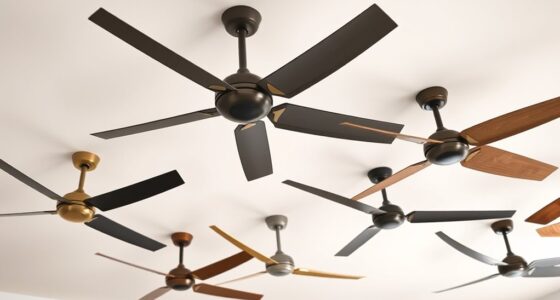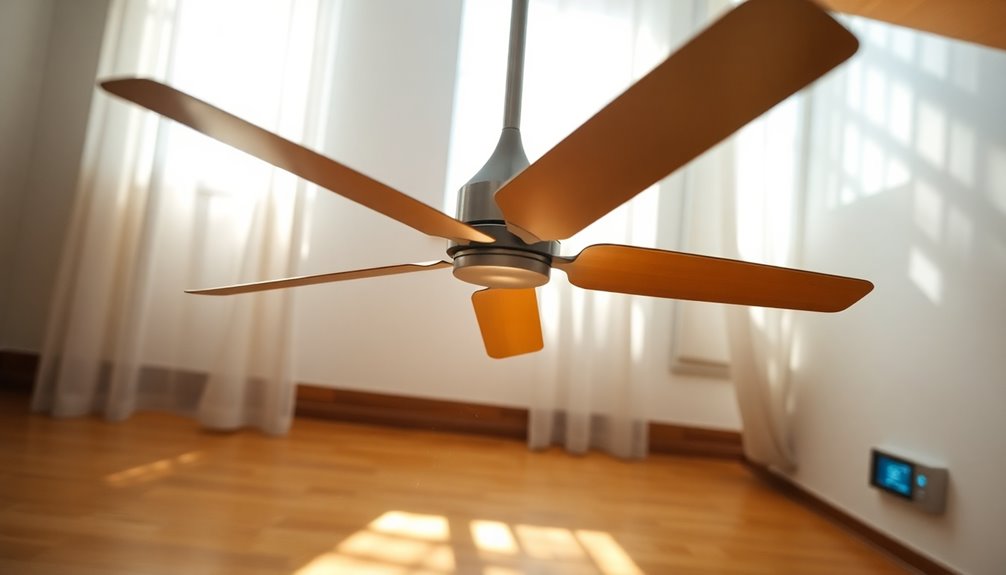

Choosing the best mounting type depends on your ceiling height, structural conditions, and safety needs. For standard heights (8-10 ft), flush or surface mounts work well, while higher ceilings (over 10 ft) typically require suspended or pendant systems. Consider load capacity, ceiling material, and potential vibration issues to guarantee stability. Properly evaluating these factors will lead to a secure, durable setup. Exploring detailed guidelines can help you optimize your mounting choice effectively.
Key Takeaways
- Assess your ceiling height to determine whether flush, surface, suspended, or adjustable mounts are appropriate.
- For ceilings over 10 ft, consider suspended or pendant mounts with reinforced supports for stability.
- Ensure mounting hardware is compatible with your ceiling material (concrete, steel, wood) and load requirements.
- Incorporate vibration dampers or stabilizers for high or long-span ceilings to prevent sway and ensure safety.
- Always follow structural guidelines and local building codes to select a mounting system that ensures safety and compliance.
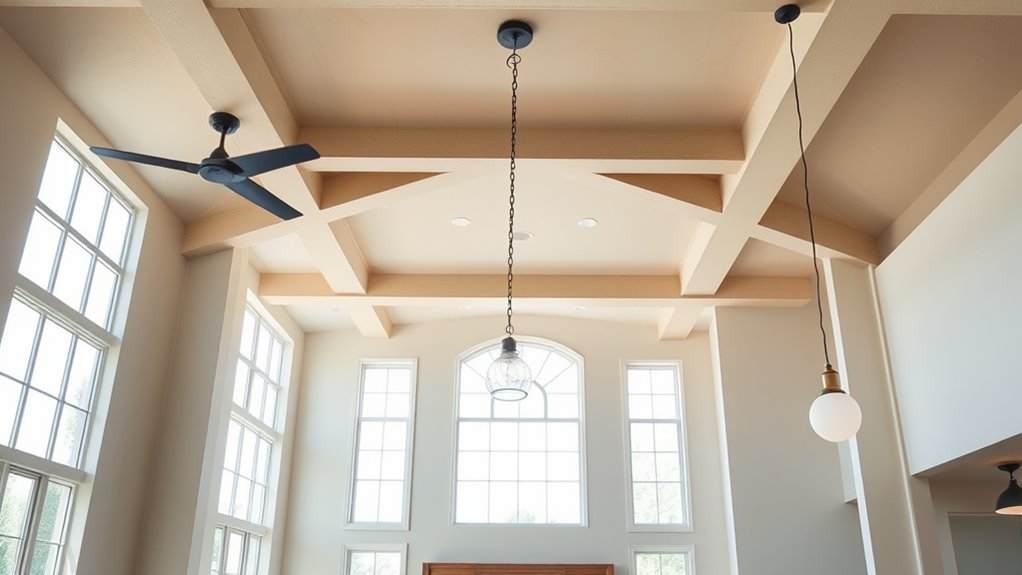
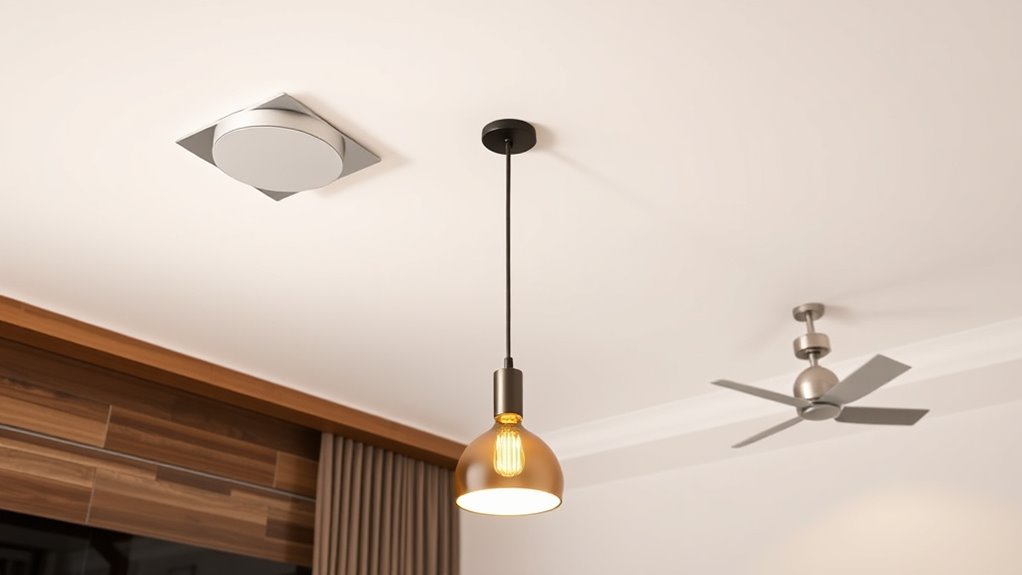
Choosing the appropriate mounting type is essential for ensuring ideal performance, stability, and safety of your equipment or installations. When selecting a mounting system based on ceiling height, you must consider the specific demands of your environment and the operational parameters of your equipment. Ceiling height directly influences the mounting configuration, affecting clearance, accessibility, and the overall structural integrity of the installation. Accurate assessment of your ceiling height helps determine whether a flush mount, suspended mount, or adjustable mounting system offers the best solution. Additionally, understanding the structural considerations of your ceiling helps prevent potential issues with load capacity and stability. For standard ceiling heights of approximately 8 to 10 feet, a flush mount or surface mount is typically sufficient. These mounts place equipment directly against or on the ceiling surface, minimizing extension and providing a clean, streamlined appearance. They are ideal for environments where space constraints or aesthetic considerations are priorities. However, as ceiling heights increase beyond 10 feet, a suspended or pendant mounting system becomes more appropriate. Suspended mounts extend equipment downward to achieve the desired operational clearance, ensuring ease of access and proper positioning without sacrificing stability. Adjustable mounts further enhance flexibility, allowing you to modify the height as needed, which is especially valuable in dynamic or multi-use spaces. When dealing with higher ceilings, such as those exceeding 15 feet, you must also consider the structural load capacity and the type of suspension hardware used. Heavy equipment requires reinforced mounting points and specialized brackets capable of supporting the load securely. The choice of materials—such as galvanized steel or high-strength aluminum—becomes critical to prevent deformation or failure over time. Additionally, the mounting hardware’s anchoring method must be compatible with the ceiling structure, whether it’s concrete, steel, or wood. For instance, concrete ceilings often require expansion anchors or epoxy bolts, while steel structures may need specialized clamps or threaded rod systems. Furthermore, the impact of ceiling height on vibration and stability cannot be overlooked. Longer suspension chains or cables can introduce oscillation or sway, which may compromise equipment performance or safety. Incorporating dampers or stabilizers into the mounting system can mitigate these effects, maintaining precise positioning and reducing wear. Always verify that your chosen mounting type aligns with local building codes and safety standards, especially when working with high ceilings or heavy loads.

addlon Ceiling Fans with Lights and Remote, 20'' Low Profile Ceiling Fans, 3000-6000K Dimmable Modern Flush Mount LED Fan Light, Fandelier Ceiling Fan for Bedroom, Kitchen, Living Room, Black
Customizable Light: Depending on your need for the space, the light output you need can vary. If you’re...
As an affiliate, we earn on qualifying purchases.
Frequently Asked Questions
How Do Ceiling Height Variations Affect Mounting Stability?
Ceiling height variations directly impact mounting stability by influencing support requirements and hardware choice. Higher ceilings demand longer mounting hardware and stronger anchors to counteract increased leverage and potential sway. Lower ceilings, however, require shorter, more discreet supports to prevent instability. You must assess ceiling height accurately and select appropriate mounting brackets, ensuring they can handle the load and resist lateral forces, thereby maintaining secure, stable installation regardless of height differences.
What Are the Safety Considerations for High-Ceiling Installations?
Imagine a tightrope walker balancing high above, trusting their rigging. For high-ceiling installations, you must guarantee secure anchoring, proper weight distribution, and use of rated hardware to prevent accidents. Always verify load capacities and employ professional assessments for complex setups. Neglecting safety measures risks structural failure or injury. Prioritize precise calculations, quality materials, and adherence to safety codes to maintain stability and protect everyone beneath.
Can Different Mounting Types Be Combined for Complex Ceilings?
Yes, you can combine different mounting types for complex ceilings to achieve ideal support and aesthetic appeal. You should evaluate the structural integrity of each section, guaranteeing compatibility between mounting methods. Use adjustable or modular components to seamlessly shift between mounting types. Proper planning and precise installation are vital to maintain safety, prevent stress points, and secure stability across varying ceiling features and materials.
How Does Ceiling Material Influence Mounting Choice?
You’re on the right track, as ceiling material fundamentally influences your mounting choice. For example, drywall requires anchors and screws designed for soft surfaces, while concrete demands specialized anchors like sleeves or expansion bolts. Metal ceilings may need clamps or hooks that won’t damage the surface. Essentially, understanding your ceiling’s composition guarantees a secure, long-lasting installation, saving you from a wild goose chase for incompatible hardware.
Are Specialized Tools Needed for Installing Mounts on High Ceilings?
Yes, specialized tools are often necessary when installing mounts on high ceilings. You’ll need extension poles, scaffolding, or lifts to reach elevated areas safely and accurately. Use a drill with appropriate bits, level, and measuring tape for precise placement. Safety harnesses are recommended for added security. These tools guarantee proper installation, minimize risks, and help you achieve a secure, professional mount on high ceilings.

ZMISHIBO Ceiling Fans with Lights and Remote, 19.7'' Low Profile Ceiling Fan, 3000-6000K Dimmable Modern Flush Mount LED Fan Light, 6 Wind Speeds, Black Fandelier Ceiling Fans for Bedroom
LED Light Source and Memory Function: The LED energy-saving light has 120 voltage output and brightness from 10%-100%...
As an affiliate, we earn on qualifying purchases.
Conclusion
Choosing the right mounting type based on your ceiling height guarantees ideal safety and functionality. While some believe that longer mounts always provide better support, research shows that proper weight distribution and material compatibility are far more critical. By analyzing your specific ceiling dimensions and load requirements, you can select a mounting solution that maximizes stability and longevity. Don’t rely solely on assumptions—trust data-driven decisions to achieve the best, most secure installation.

LEDIARY 20" Caged Ceiling Fan with Light and Remote, Low Profile Flush Mount Fandelier, Black Gold Bladeless Enclosed Small Fan Lights Ceiling Fixtures, Rustic Farmhouse Style for Bedroom, Outdoor
【Industrial Chic & True-Tone Colors】 This caged ceiling fan with light blends rustic farmhouse charm and modern industrial...
As an affiliate, we earn on qualifying purchases.

DAMINY 52 inch Black Ceiling Fans with Lights,5 Blades,6CCT, Low Profile,Remote Control,for Bedroom, Kitchen,Living Room,Indoor/Outdoor Use,Flush Mount
【Two Colors Plywood Blades】Daminy fan blades are double sided in different colors, one side is black and the...
As an affiliate, we earn on qualifying purchases.