
TL;DR

Get home appliances delivered free with Prime
- Fast, free delivery on millions of items
- Prime Video, Amazon Music and more included
- Member-only deals all year
A Livingetc report says inadequate bathroom extraction can allow moisture to contribute to condensation, mold and damage to paint, cabinetry and other finishes. Design and plumbing professionals interviewed for the report recommend planning mechanical ventilation early, including in bathrooms with windows; exact requirements depend on local building regulations.
A Livingetc report on bathroom ventilation says poor extraction can allow moisture to build up and contribute over time to condensation, mold and damage to paint, cabinetry and other finishes. Design and plumbing professionals interviewed for the report recommend treating ventilation as part of the bathroom plan from the outset, rather than leaving it until after finishes and fixtures are chosen.
The report describes bathrooms as spaces that generate substantial moisture through showers and baths. Without effective ventilation, steam may linger and moisture can settle on surfaces. The experts cited warn that prolonged damp conditions can be associated with mold and mildew, peeling paint, swollen cabinetry and deterioration of materials such as timber, natural stone and specialist wall finishes. The report does not quantify how often these problems occur or how quickly they develop.
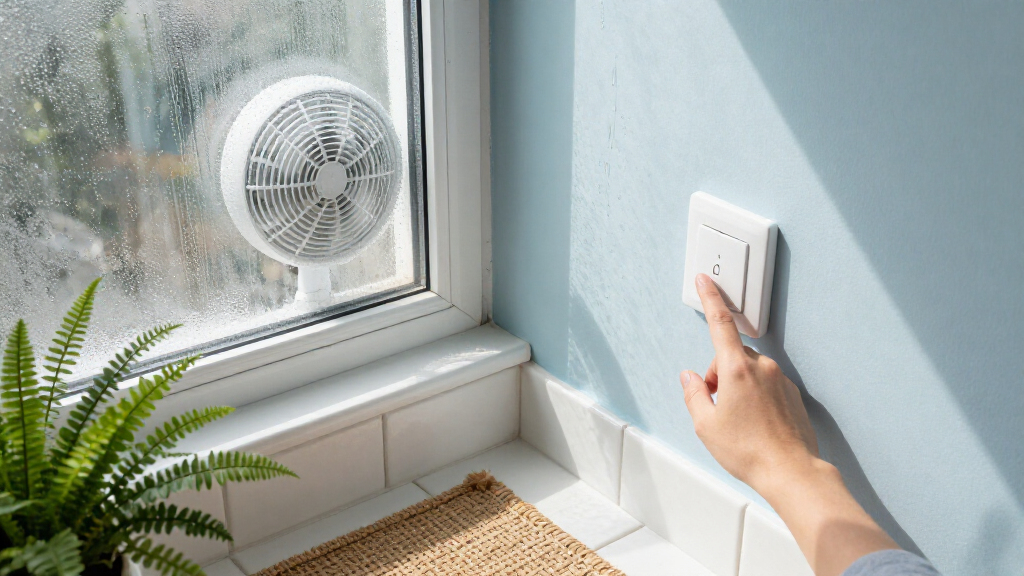
An opening window does not necessarily remove moisture quickly enough, particularly after a hot shower or in cold weather when occupants may be reluctant to leave it open. Anthony Calvert-Harrison, architectural design lead at Levan House Design, says a window may be an acceptable alternative for a separate toilet room, but recommends mechanical extraction for a bathroom with a bath or shower. The report says windowless bathrooms need an extractor fan.
Planning affects both performance and appearance. The report recommends deciding on the fan, its location and the route for ducting and wiring during the layout and design stages, before ceilings are closed and tiling begins. Retrofitting is possible, but Kunal Trehan of Touched Interiors says the work may be simpler beside an exterior wall than in an internal bathroom, where access can require opening a ceiling or adding boxed-in ducting.
How Moisture Affects Bathroom Materials
The practical concern is not limited to fogged mirrors. Persistent moisture may affect finishes and fittings that are costly to replace, including paint, timber cabinetry and natural stone. The report’s experts frame extraction as a way to manage the moisture load and protect the room’s materials, though they do not claim that ventilation alone prevents every case of mold or damp.
For homeowners planning a renovation, the timing matters: ventilation decisions made before construction can influence where a fan and ducting fit and how much disruption is needed. Leaving the system until late in the project may narrow design choices or make installation harder. This is why the advice is relevant even to people focused primarily on visible choices such as tile, lighting and cabinetry.
Products Worth Considering

Ring Alarm 14-Piece Wireless Security System Kit

Arlo Pro Wireless Security Camera, 2K HDR, 6th Generation, 4-Camera Kit

Ring Alarm 8-Piece Kit (2nd Gen) Home Security System
As an affiliate, we earn on qualifying purchases.
Planning Fans Before Finishes
The source is a home-design report, not a regulatory notice or a study measuring health or property outcomes. It gathers advice from designers, sales consultants and a plumbing and engineering business about planning bathroom extraction. Its central recommendation is to consider ventilation alongside lighting, joinery and other design details, and to install necessary wiring and ducting while access is available.
The report also says that building rules can apply to ventilation in new builds and full renovations, including where a bathroom has a window. Jo Sangster, a senior sales design consultant at Ripples London, says a fan is required under building regulations for new builds or complete renovations. Because the article does not specify a jurisdiction or cite the relevant regulation, readers should check the rules that apply to their own project rather than treat that statement as universal legal advice.
““Condensation leads to mold and damp, and fixing that once the bathroom is finished costs far more than planning it properly from the start.””
— Arezoo Pouya, design and sales consultant at West One Bathrooms
What the Report Does Not Establish
The report provides expert guidance but does not give measurements of humidity, fan performance, repair costs or the time needed for damage to appear. It also does not establish that inadequate extraction is the sole cause of any particular mold or finish problem. Outcomes can depend on the room, materials, use and ventilation system.
Exact legal requirements are also unresolved for readers in any specific location. The source names no jurisdiction for its building-regulation statement, and it does not provide a complete technical specification for choosing a fan, such as airflow rates or ducting limits. Homeowners should confirm the applicable code and project requirements with a qualified professional.
Checks Before a Bathroom Renovation
For a planned renovation, the report’s practical next step is to raise extraction during the design stage and coordinate fan placement, ducting and wiring before ceilings are closed or tile work begins. Ask the designer, plumber or electrician what system suits the room and how it will discharge air, then check local building requirements before work starts.
For an existing bathroom with lingering steam or visible damp, the report supports reviewing whether the current fan is retained, working and appropriate to the room. The source does not offer a diagnostic checklist or promise that installing a fan will resolve existing damage; persistent mold or damp may need a separate assessment.
Key Questions
Do bathrooms with windows still need extractor fans?
The report’s experts say an opening window may not clear moisture quickly enough from a bathroom with a bath or shower. They recommend effective mechanical extraction, while noting that exact requirements depend on local rules and the project.
What can poor bathroom ventilation affect?
The report says persistent moisture can contribute to condensation, mold and mildew, and may damage paint, cabinetry and other finishes. It does not quantify the risk or establish that ventilation is the only factor.
When should extraction be planned in a renovation?
Plan it during the layout and design stages, before ceilings are closed and tiling begins. This can make it easier to route ducting and wiring and incorporate the fan discreetly.
Does every renovation legally require a fan?
The report says building regulations require fans in new builds and complete renovations, but it gives no jurisdiction. Check the regulations that apply locally and consult a qualified professional before relying on that statement.
Source: livingetc.com