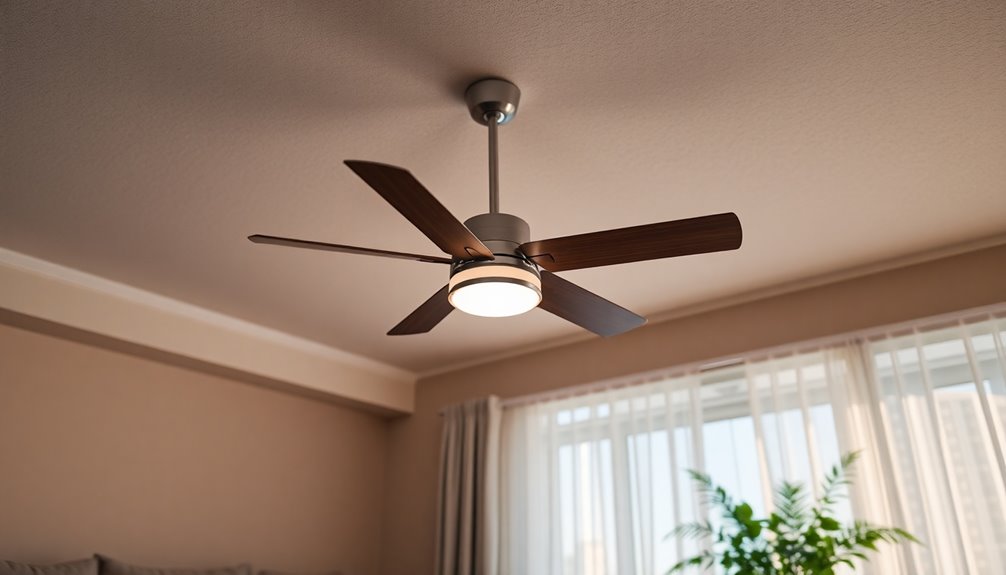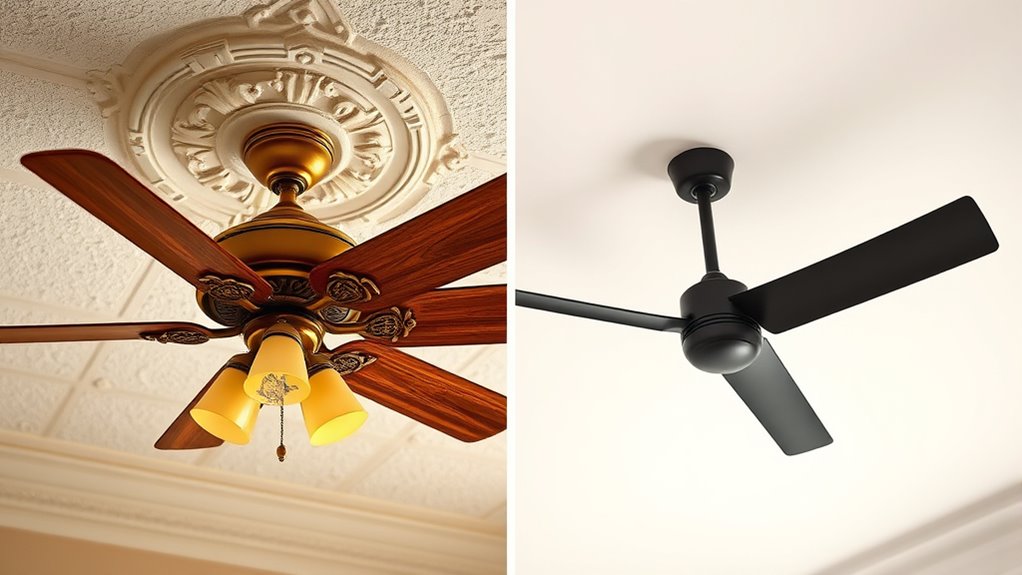

Ceiling fans originated in the late 19th century as basic, manual or belt-driven devices primarily used in industrial settings. As technology advanced, lightweight materials and better motors made them more efficient and stylish in the early 20th century, especially in homes. Mid-century innovations introduced compact, aesthetic fans with modern design features. Today, smart technology and energy-efficient materials dominate, transforming these devices into intelligent home systems. Exploring this evolution reveals how aesthetic and functionality have continually shaped ceiling fan development.
Key Takeaways
- Ceiling fans originated in the late 19th century as basic, hand-operated or belt-driven machines primarily for industrial use.
- Early 20th-century advancements introduced lightweight materials and quieter motors, making fans more suitable for residential spaces.
- Mid-20th-century innovations focused on compact, energy-efficient designs and the aesthetic shift towards modern, streamlined styles.
- Modern ceiling fans feature remote controls, Wi-Fi connectivity, and smart controls with eco-friendly materials and brushless motors.
- Future trends emphasize AI integration, energy efficiency, and the blending of advanced technology with diverse aesthetic styles.
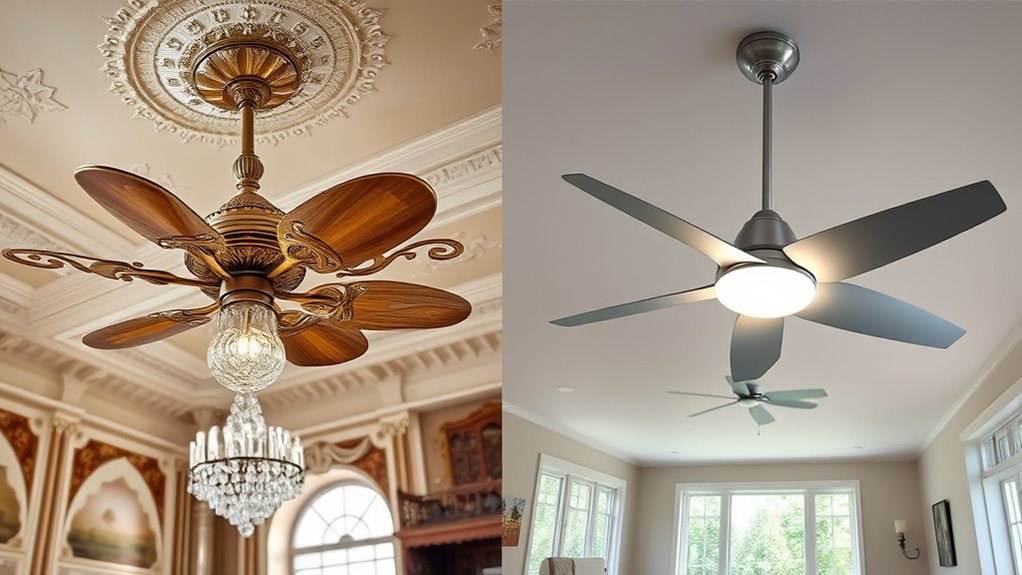
Have you ever wondered how ceiling fans have evolved from simple mechanical devices to sophisticated cooling systems? The journey begins in the late 19th century, when the first electrical fans appeared as basic, hand-operated or belt-driven machines. These early devices primarily relied on electricity to power a small motor that turned blades attached to a central hub. Their design was rudimentary, often large and cumbersome, with metal blades and minimal safety features. Initially, these fans served mainly in industrial settings or large homes, where effective cooling was a necessity but aesthetic considerations were secondary.
Ceiling fans started as basic, mechanical devices with metal blades and minimal safety features.
As technology advanced into the early 20th century, manufacturers began experimenting with different blade shapes and materials, aiming to improve airflow and efficiency. During the 1920s and 1930s, ceiling fans gained popularity in residential spaces, especially as household electricity became more widespread. The introduction of lighter materials like wood and plastics allowed for sleeker designs, making fans more visually appealing. Meanwhile, innovations in motor design led to quieter operation, enhancing their suitability for home use. By this time, basic controls, such as pull chains and wall switches, became standard, giving users more convenience.
The mid-20th century marked a period of significant technological transformation. In the post-World War II era, manufacturers began integrating more advanced features. The development of more compact, energy-efficient motors enabled fans to be mounted flush against ceilings, reducing their visual footprint. During this period, oscillating fans were introduced, offering more versatile airflow patterns. The aesthetic shifted towards modern styles, with streamlined shapes and decorative elements reflecting contemporary design trends. Despite these improvements, the core function remained simple: circulating air to create a cooling effect.
Entering the late 20th and early 21st centuries, the evolution of ceiling fans accelerated with the integration of smart technology. Modern fans now feature remote controls, timers, variable speed settings, and even Wi-Fi connectivity, allowing users to operate them via smartphones or voice commands. Materials improved further with the use of lightweight, durable plastics and eco-friendly options. Energy efficiency became a key focus, leading to the adoption of brushless DC motors that consume less power while maintaining high airflow. Additionally, design diversity expanded, ranging from minimalist to ornate styles, accommodating various interior aesthetics. Notably, the integration of AI-powered smart features is beginning to influence how modern ceiling fans adapt to user preferences and optimize energy use.
Throughout this timeline, the evolution of ceiling fans reflects a continuous interplay between technological innovation, aesthetic appeal, and user convenience. From primitive mechanical devices to intelligent, energy-conscious systems, ceiling fans have adapted to changing needs and tastes, embodying a blend of engineering ingenuity and design sophistication. This progression highlights how a device once solely focused on basic airflow has become an integrated element of modern home comfort and smart living.

Amico Ceiling Fans with Lights, 52 inch Smart Ceiling Fan with Remote/APP/Alexa Control, Reversible DC Motor, 5 Blades, 6 Speeds, 3CCT, Dimmable, Noiseless, Wifi Ceiling Fan for Farmhouse, Bedroom
Smart Wifi Ceiling Fan with Lights: decorate your home with Amico ceiling fan! Our 52 inch modern ceiling…
As an affiliate, we earn on qualifying purchases.
As an affiliate, we earn on qualifying purchases.
Frequently Asked Questions
How Do Ceiling Fans Improve Indoor Air Quality?
Ceiling fans improve indoor air quality by circulating air constantly, preventing stagnation and reducing humidity. As you turn them on, they create a breeze that helps evaporate moisture and disperses airborne pollutants like dust and allergens. Over time, this continuous airflow maintains fresher, cleaner air, making your environment healthier. Regular use can also reduce reliance on air conditioning, which minimizes pollutants from cooling systems, further enhancing indoor air quality.
What Are the Environmental Impacts of Manufacturing Ceiling Fans?
Imagine a ripple spreading across a pond—that’s how manufacturing ceiling fans impacts the environment. First, you extract raw materials like metals and plastics, which involves energy-intensive processes. Then, assembly consumes electricity and generates waste. Finally, transportation adds carbon emissions. Over time, these steps contribute to resource depletion, pollution, and greenhouse gases. By understanding this chain, you see how each phase leaves an environmental footprint, urging mindful production and consumption.
Can Ceiling Fans Be Used Outdoors Safely?
Yes, ceiling fans can be used outdoors safely if you choose models specifically designed for exterior use. These fans feature weather-resistant materials and sealed electrical components that protect against moisture, dust, and corrosion. You should install them in covered outdoor areas like porches or patios to prevent exposure to direct rain or harsh elements. Always check the manufacturer’s specifications to guarantee the fan’s outdoor suitability and safety.
How Do Smart Ceiling Fans Differ From Traditional Ones?
Smart ceiling fans are like tech-savvy dancers, moving to your command. They differ from traditional fans by offering Wi-Fi or Bluetooth connectivity, allowing you to control speed, direction, and lighting via smartphone apps or voice commands. They often include features like timers, sensors, and automation, making them more energy-efficient and customizable. Over time, smart fans have evolved to seamlessly integrate with smart home systems, enhancing convenience and efficiency.
What Maintenance Tips Extend the Lifespan of Ceiling Fans?
To extend your ceiling fan’s lifespan, start by regularly turning off the power before cleaning. Dust the blades weekly with a damp cloth to prevent buildup, which can strain the motor. Check and tighten any loose screws monthly, and lubricate the motor if applicable. Every six months, inspect the blades for warping or damage. Finally, replace worn-out parts promptly to keep your fan running efficiently and prevent costly repairs.

ZMISHIBO 52 Inch Ceiling Fan with Light, App&Remote Control, Flush Mount Low Profile, Dimmable 20W LED Light, Quiet Reversible Motor for Bedroom, Living Room, Apartment, Black
Perfect Size for Rooms: This 52-inch ceiling fan is ideal for cooling and illuminating spacious areas like living…
As an affiliate, we earn on qualifying purchases.
As an affiliate, we earn on qualifying purchases.
Conclusion
As you reflect on the history of ceiling fans, it’s clear they’ve evolved like a steady river, shaping comfort through innovation. From simple hand-operated devices to sophisticated electric models, each era built upon the last, blending functionality with style. Understanding this progression reveals how technological advances and design trends continue to propel ceiling fans forward. Just as a river carves its path, the journey of ceiling fans demonstrates a continuous pursuit of efficiency and elegance, shaping the cool comfort we enjoy today.

ZMISHIBO Ceiling Fans with Lights and Remote, 19.7'' Low Profile Ceiling Fan, 3000-6000K Dimmable Modern Flush Mount LED Fan Light, 6 Wind Speeds, Black Fandelier Ceiling Fans for Bedroom
LED Light Source and Memory Function: The LED energy-saving light has 120 voltage output and brightness from 10%-100%…
As an affiliate, we earn on qualifying purchases.
As an affiliate, we earn on qualifying purchases.

Flush Mount Ceiling Fan with Light, 52 Inch, Remote Control, 3CCT Dimmable LED, 6-Speed Silent Reversible DC Motor, Low Profile Hugger Ceiling Fan for Indoor/Outdoor 90-264V 50/60Hz Matte Black
High-Performance Airflow with Patented Sleep Mode – Our 5-blade aerodynamic design delivers powerful, smooth, and wide-reaching airflow. Choose…
As an affiliate, we earn on qualifying purchases.
As an affiliate, we earn on qualifying purchases.