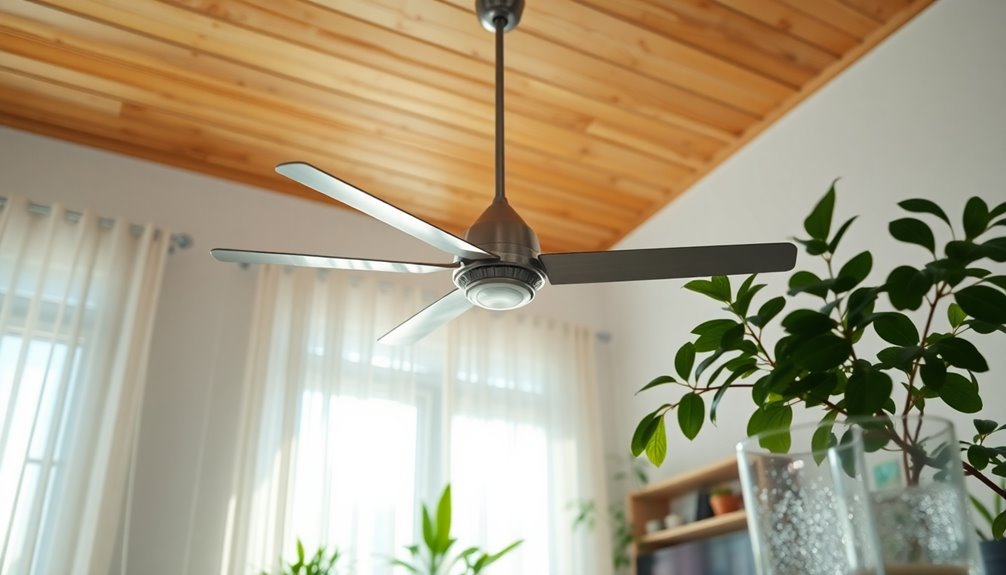
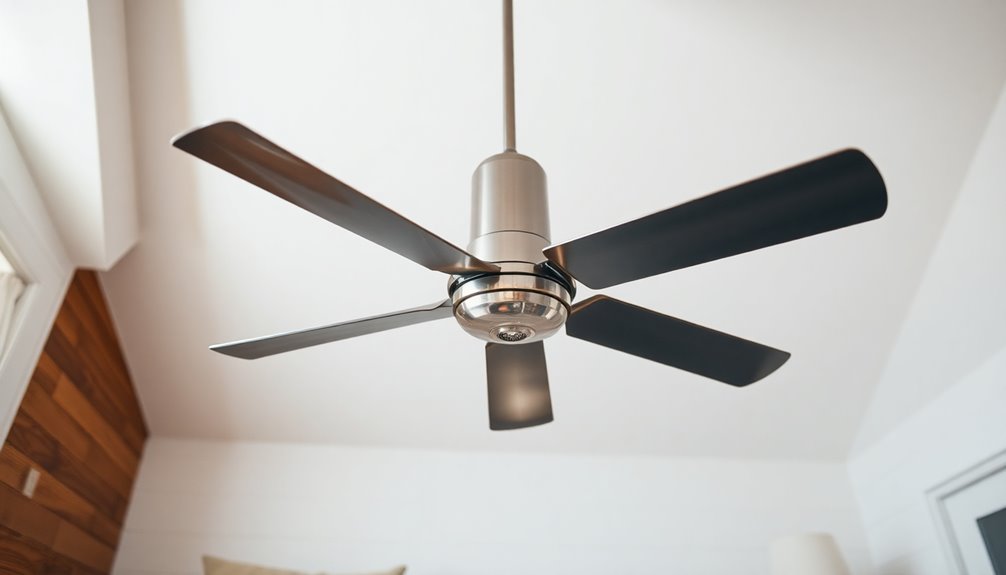
A ceiling fan doesn't remove humidity, but it can improve your comfort during humid days by enhancing air circulation. When you run a ceiling fan, it promotes airflow, which helps evaporate moisture from your skin and surfaces. This creates a wind-chill effect, making the air feel cooler than it actually is. Combining your fan with exhaust fans in kitchens and bathrooms also helps expel excess humidity. So, while ceiling fans don't actively lower humidity, they definitely make the space feel more pleasant. If you're curious about other ways to manage humidity, there's more to explore.
Key Takeaways
- Ceiling fans improve air circulation but do not actively remove humidity from the air.
- By creating a wind-chill effect, fans can make a room feel cooler in humid conditions.
- Running ceiling fans alongside exhaust fans helps expel excess humidity from kitchens and bathrooms.
- Fans can efficiently distribute drier air from dehumidifiers, enhancing overall comfort.
- Regular maintenance of ceiling fans ensures optimal airflow and prevents moisture trapping.
Understanding Humidity and Comfort

When it comes to comfort, understanding humidity is key. You mightn't realize it, but indoor humidity levels play a substantial role in how comfortable you feel in your space. Ideally, you want those levels to stay between 30% and 50%. High humidity can make the air feel heavy and oppressive, leading to discomfort. That's where air circulation comes into play.
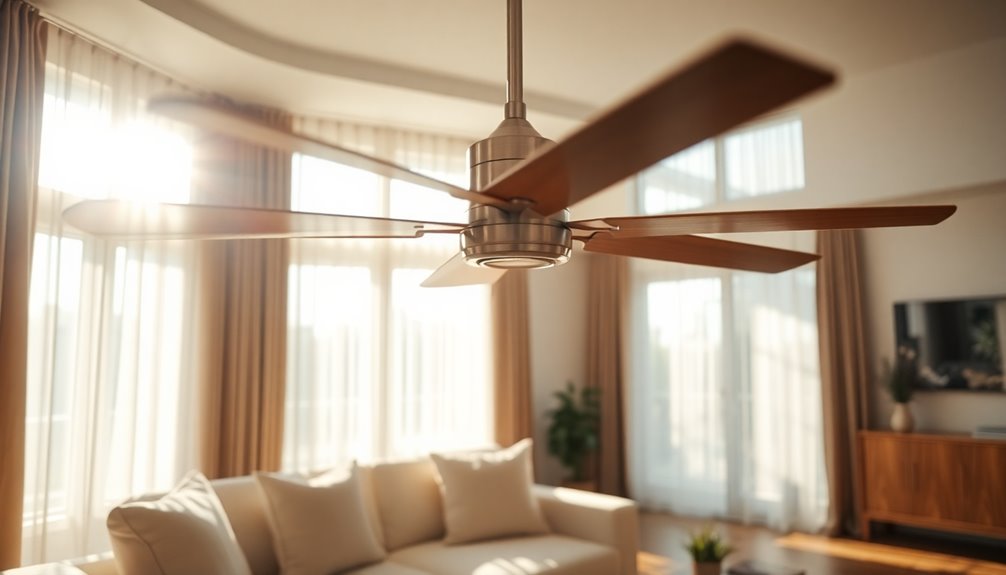
Using ceiling fans effectively can enhance air circulation and help create a more pleasant environment. While they don't directly reduce humidity, they promote airflow that makes it easier for moisture to evaporate from your skin and surfaces. This airflow creates a wind-chill effect, which can lower your perceived temperature and make the air feel less humid.
To maintain a balanced indoor climate, consider operating your ceiling fan in counterclockwise mode. This will maximize the cooling effect and help you feel more comfortable, even during humid days.
Regularly using ceiling fans, along with proper ventilation, can greatly improve your indoor comfort by minimizing the discomfort associated with excess moisture. Understanding these concepts is essential for creating a more enjoyable living space.
Role of Ceiling Fans

Ceiling fans play a crucial role in enhancing indoor comfort, especially in humid conditions. While they don't directly reduce humidity levels, they greatly improve air circulation, which can help evaporate moisture from your skin and surfaces. This evaporation creates a cooling effect, making the space feel more comfortable even when humidity levels are high.
When you set your ceiling fans to rotate counterclockwise, they push air downward, promoting better airflow throughout the room. This movement can help disperse humid air, preventing it from stagnating.
Additionally, running ceiling fans in conjunction with exhaust fans in kitchens and bathrooms is a smart way to remove excess humidity generated from cooking or showering. Using best air flow ceiling fans can significantly enhance the cooling effect in such environments.
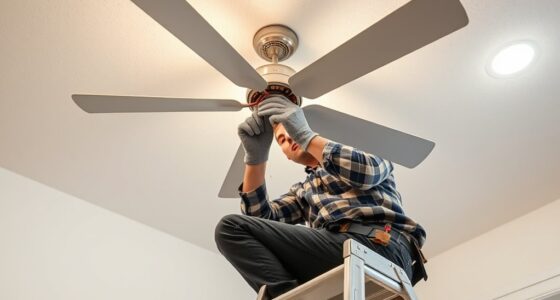
To maximize the effectiveness of your ceiling fans in managing comfort levels related to humidity, it's important to maintain them properly. Regular cleaning and ensuring the blades are balanced will help the fans operate efficiently.
Effectiveness of Air Circulation

When you turn on a ceiling fan, the airflow enhances your comfort by promoting the evaporation of moisture from your skin. This process helps reduce the perceived humidity in the room, making it feel cooler and more pleasant. Additionally, using energy-efficient models can further enhance comfort while reducing electricity bills by up to 40%.
Airflow Enhances Comfort
Airflow plays an essential role in enhancing comfort, especially in humid conditions. By utilizing ceiling fans, you can improve air circulation in your home, making it feel cooler without actually lowering the humidity. The breeze created by ceiling fans helps accelerate the evaporation of moisture from your skin, which is vital when the air is sticky and uncomfortable.
When you run your ceiling fan counterclockwise in warm weather, it increases airflow, creating a cooling effect that can make the temperature feel 4°F to 7°F cooler. This is particularly beneficial when battling high humidity, as it provides relief from the oppressive heat without relying solely on air conditioning.
Moreover, ceiling fans help distribute air evenly throughout the room, preventing humid air from pooling in corners and enhancing comfort levels.
For even better results, combine your ceiling fan with natural ventilation methods like opening windows to boost indoor air circulation. This combination can greatly improve your comfort in humid environments, allowing you to enjoy a more pleasant atmosphere while reducing energy costs.
Evaporation of Moisture
During hot and humid days, the evaporation of moisture becomes essential for your comfort. Ceiling fans play an important role in this process by enhancing air circulation, which boosts the evaporation rate of sweat from your skin.
When the fan blades rotate counterclockwise, they push air downwards, creating a breeze that helps evaporate moisture more effectively than stagnant air. This action doesn't lower the actual humidity level, but it can make you feel markedly cooler.
Effective air circulation from ceiling fans also prevents moisture from accumulating on surfaces and in the air, reducing perceived humidity levels.
Studies show that operating ceiling fans alongside natural ventilation techniques, like opening windows, can dramatically improve airflow and moisture dispersion throughout a room. This combination helps create a more comfortable environment, especially in humid conditions.
Comparison With Dehumidifiers

When you're looking at ceiling fans and dehumidifiers, it's essential to understand how they function differently.
While ceiling fans circulate air for comfort, dehumidifiers actively pull moisture from the air, making them more effective in high humidity.
Knowing when to use each can help you optimize energy efficiency and maintain a comfortable environment.
Functionality Differences Explained
Understanding the functionality differences between ceiling fans and dehumidifiers is vital for effective indoor climate control.
While ceiling fans circulate air to create a cooling effect and enhance comfort, they don't actually remove excess moisture from the air. This means that, although they can help evaporate surface moisture and lower the perception of humidity, they won't greatly decrease indoor humidity levels.
On the other hand, dehumidifiers actively extract excess moisture from the air, making them a more effective solution for humidity control. They work by collecting and disposing of moisture, which is essential for improving overall air quality in your home.
Unlike ceiling fans that merely redistribute air, dehumidifiers address the root issue of high humidity.
For ideal indoor comfort, consider combining these two devices. Using a ceiling fan alongside a dehumidifier can enhance air circulation while effectively managing humidity levels.
This pairing allows you to enjoy a cooler environment and considerably reduce excess moisture, contributing to a healthier living space.
Energy Efficiency Considerations
Ceiling fans are an energy-efficient option for improving indoor comfort, especially when compared to dehumidifiers. While dehumidifiers can consume between 300-800 watts, ceiling fans typically use just 50-75 watts. This significant difference in energy consumption means that you can enjoy a comfortable environment without breaking the bank.
Running a ceiling fan creates a wind chill effect, which can lower your perceived temperature. This allows you to set your AC system a few degrees higher, leading to additional energy savings.
However, it's essential to recognize that ceiling fans don't actively reduce humidity. They circulate air, enhancing comfort but leaving moisture levels unchanged.
On the other hand, dehumidifiers specifically target humidity, removing over 10-20 pints of moisture from the air daily.
For ideal energy efficiency, consider using both ceiling fans and dehumidifiers together. The fans can help distribute the conditioned air from the dehumidifier, reducing the workload on the unit and maximizing its efficiency.
Optimal Use Scenarios
Combining ceiling fans and dehumidifiers can enhance your indoor comfort and energy efficiency. While ceiling fans circulate air and promote evaporation, they don't actually remove humidity from the air. Instead, they create a cooling effect that makes a humid environment feel more comfortable.
However, if you're facing high humidity levels, you need dehumidifiers for effective humidity control. These devices actively extract moisture from the air, reducing indoor humidity levels to the ideal range of 30% to 50%.
In optimal use scenarios, pairing ceiling fans with dehumidifiers offers the best solution. The dehumidifiers will lower the humidity, while the fans help distribute the drier air throughout the room.
This combination not only enhances comfort but also improves energy efficiency as the cooler, less humid air circulates more effectively.
Maintaining Indoor Air Quality

Indoor air quality plays an important role in your overall comfort and health. Using ceiling fans can greatly improve this quality by promoting air circulation throughout your space.
When you run your ceiling fan, it helps distribute moisture evenly, preventing humid air from settling in enclosed areas. This is vital, especially during high humidity periods.
By creating a gentle breeze, ceiling fans facilitate the evaporation of excess moisture from surfaces, which reduces the chances of mold growth.
To maximize the benefits, pair your ceiling fan with proper ventilation techniques, like opening windows and using exhaust fans. This combination can greatly enhance your indoor air quality.
Regular maintenance is also key. Clean the fan blades to prevent dust accumulation, which can trap moisture and negatively impact air quality.
Additionally, utilizing ceiling fans effectively can help maintain indoor humidity levels within the ideal range of 30% to 50%. This balance not only promotes a healthier living environment but also enhances your overall comfort. Furthermore, maintaining indoor air quality is essential for reducing energy costs and improving the efficiency of heating and cooling systems.
Additional Humidity Control Methods

There are several effective methods to control humidity levels in your home beyond just using ceiling fans. One of the best options is a whole-home dehumidifier integrated with your HVAC system. This appliance can efficiently tackle persistent high humidity issues throughout your house, creating a more comfortable living environment. Additionally, having a well-functioning system can also help in managing credit card debt effectively by reducing unexpected costs related to discomfort and health issues associated with humidity. Regular maintenance of the HVAC system, including the refrigeration cycle, can enhance its moisture removal capabilities.
Additionally, utilizing exhaust fans in kitchens and bathrooms can help expel the hot, humid air generated during cooking and bathing. This simple step can greatly lower indoor humidity levels. Regular maintenance of your air conditioner also plays a vital role; it improves cooling efficiency and enhances the unit's ability to remove moisture from the air.
For a low-cost solution, consider using natural desiccants like salt or baking soda around your home to absorb excess moisture. Indoor plants, such as peace lilies and spider plants, can also be beneficial. They release moisture through transpiration, helping to regulate humidity while improving air quality. Additionally, using solar panels for camping can provide eco-friendly energy solutions for running dehumidifiers or other humidity control appliances efficiently.
Frequently Asked Questions
Does a Ceiling Fan Dry the Air?
A ceiling fan doesn't dry the air like a dehumidifier does. Instead, it circulates air, creating a breeze that can enhance evaporation from your skin and surfaces.
This can make the air feel less humid, but it doesn't actually remove moisture from the environment.
If you want to feel more comfortable during humid days, using a ceiling fan along with air conditioning can help you manage that sticky feeling more effectively.
Does a Ceiling Fan Help a Humidifier?
Using a ceiling fan with a humidifier can enhance your comfort.
It helps distribute the moisture more evenly, preventing any one area from becoming overly damp. By promoting air circulation, you reduce the risk of mold growth and make the humidified air feel less stagnant.
Just remember to set the fan to a low speed to allow the moist air to spread effectively, creating a more pleasant environment in your space.
How Do I Lower the Humidity in My Room?
Think of your room as a sponge, soaking up moisture. To lower humidity, start by running exhaust fans while cooking or bathing to whisk away steam.
You can keep windows slightly open for fresh air and natural breezes. Consider using a dehumidifier or placing bowls of salt or baking soda around to absorb excess moisture.
Finally, regularly check for leaks in plumbing or roofs; they can turn your sponge into a dripping mess.
Does a Fan Help a Humid Room?
Yes, a fan can definitely help in a humid room.
When you turn it on, it creates airflow that promotes evaporation from your skin and surfaces, making the space feel cooler and more comfortable.
While it doesn't lower humidity levels directly, the breeze helps to prevent stagnant, humid air from settling.
Conclusion
In the battle against humidity, a ceiling fan can be your trusty sidekick, stirring the air like a gentle breeze on a summer day. While it won't banish moisture like a dehumidifier, it creates a comfortable atmosphere, helping you feel cooler and more at ease. Pair it with other humidity control methods, and you'll craft an inviting sanctuary. So, let that fan whirl, and embrace the revitalizing dance of air that keeps discomfort at bay!