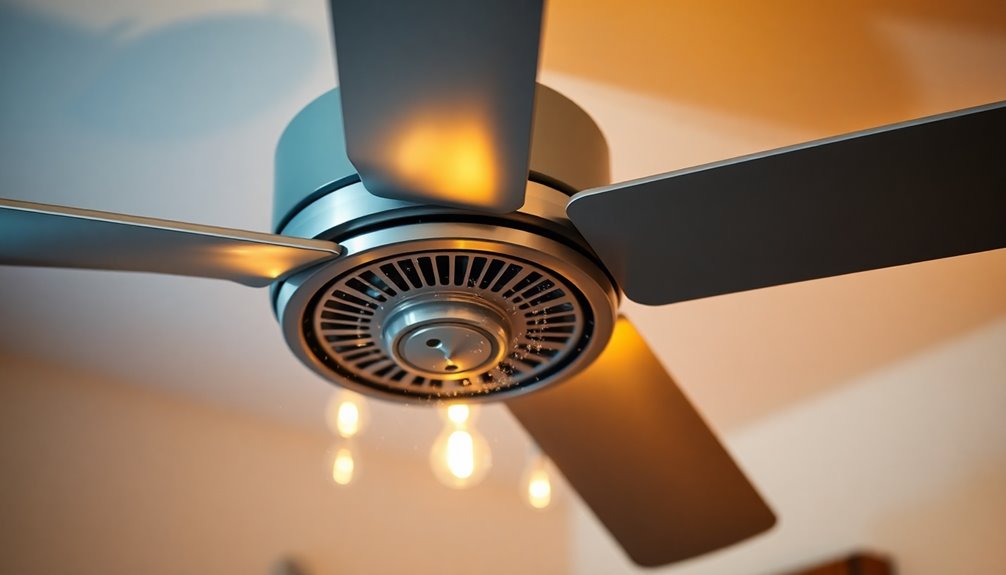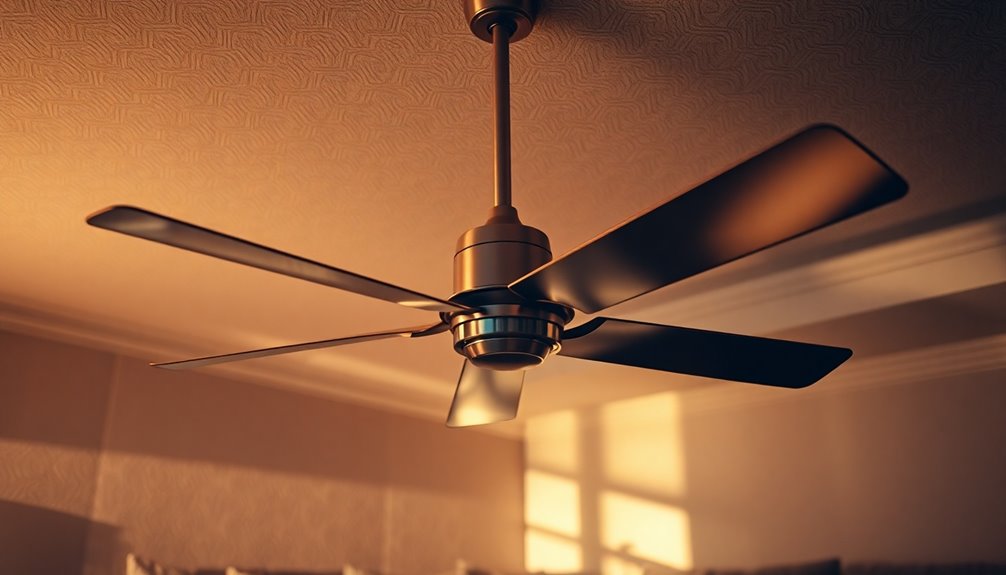
Ceiling fan terminology includes terms like CFM (airflow volume), RPM (blade rotation speed), motor wattage (power consumption), blade pitch (angle affecting airflow), and blade diameter (size for room suitability). Energy efficiency labels, such as Energy Star, indicate lower power use. Mounting types dictate installation style, while noise levels relate to blade design and motor quality. Understanding these terms guarantees you select the right fan for maximum comfort and performance, and more details await as you explore further.
Key Takeaways
- CFM measures airflow, indicating how much air a ceiling fan moves; higher CFM means better cooling.
- Blade pitch (angle) affects airflow and noise; steeper pitch moves more air but may increase sound levels.
- RPM (revolutions per minute) shows blade speed; adjustable RPM allows control over airflow and noise.
- Motor wattage reflects power and efficiency; higher wattage often means greater airflow capacity.
- Mounting types (flush, downrod) determine installation style and suitability for room height and layout.
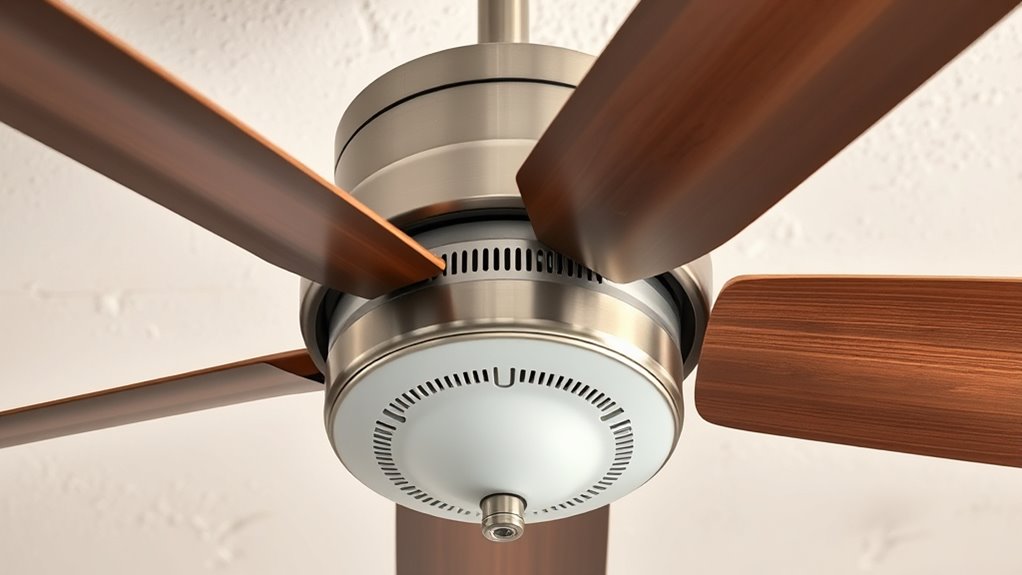
Have you ever wondered what all those terms on a ceiling fan label mean? Understanding these specifications is essential for selecting the right fan and guaranteeing ideal performance. When you examine a ceiling fan, you’ll notice several key terms that define its capabilities, features, and compatibility. One of the most fundamental is the airflow measurement, often expressed in cubic feet per minute (CFM). CFM indicates how much air the fan can move; a higher CFM signifies greater airflow, which is critical for cooling effectiveness in larger spaces. Conversely, a lower CFM may suffice for smaller rooms or where quieter operation is preferred.
Understanding ceiling fan labels helps you choose the right fan for optimal performance and comfort.
Another critical term is the fan’s motor power, usually measured in watts (W). The motor wattage reflects the energy consumption and, indirectly, the fan’s durability and performance. Higher wattage generally correlates with increased power and airflow capacity, but it also impacts energy efficiency. Alongside wattage, the motor’s speed is specified in revolutions per minute (RPM). RPM indicates how many times the fan blades rotate each minute, affecting airflow and noise levels. Fans with multiple speed settings allow you to adjust RPM depending on your cooling needs, balancing airflow with comfort and noise.
Blade pitch is a technical term that describes the angle of the blades relative to the fan housing, expressed in degrees. Blade pitch influences how effectively the fan moves air; steeper pitches typically generate more airflow at the expense of higher motor load and noise. Blade span or diameter, measured in inches, describes the overall size of the fan from blade tip to tip. Larger diameters are suitable for larger rooms, providing more uniform air distribution, while smaller fans are more appropriate for compact spaces.
The term “energy-efficient” often appears in labels, referencing fans with features designed to minimize power consumption, such as high-efficiency motors or optimized blade design. This term can also relate to the fan’s energy star certification, indicating it meets specific standards for energy performance. Additionally, the number of blades is noteworthy; while more blades can increase airflow, they may also generate more drag, affecting efficiency and noise. Conversely, fewer blades often mean quieter operation and less motor strain.
Proper understanding of these terms can also help you determine the appropriate mounting type, such as flush mount, downrod, or angled mount, which is crucial for ceiling height and room layout. Recognizing these key terms ensures you make informed decisions, optimizing comfort, efficiency, and longevity of your ceiling fan. Knowing these specifications can significantly enhance your selection process and ensure you choose a fan that best fits your needs.

72 inch Ceiling Fans with Lights,Large Ceiling Fan with Light and Remote Control, Dimmable, 3CCT, Quiet, Black Modern Ceiling fan For Living Room, Bedroom, Kitchen, Patio, Farmhouse, Indoor/Outdoor
Ceiling Fan with Light: Decorate your home with Amico ceiling fan! While bringing you coolness and comfort, it…
As an affiliate, we earn on qualifying purchases.
As an affiliate, we earn on qualifying purchases.
Frequently Asked Questions
How Do I Choose the Right Size Ceiling Fan for My Room?
To choose the right size ceiling fan, measure your room’s square footage accurately. For rooms up to 75 square feet, select a fan with a diameter of 29-36 inches. For spaces 76-144 square feet, opt for 36-42 inches. Larger rooms, over 144 square feet, require fans 52 inches or more. Ensuring proper size maximizes airflow efficiency and comfort, so always match fan size to your room’s dimensions for ideal performance.
What Materials Are Commonly Used in Ceiling Fan Blades?
You’ll find ceiling fan blades made from materials like wood, plastic, metal, and composite blends. Wooden blades, often crafted from plywood or hardwood, provide durability and aesthetic appeal. Plastic blades are lightweight and cost-effective, suitable for casual spaces. Metal blades, typically aluminum, offer strength and modern looks. Composites combine materials for enhanced durability and reduced weight, making them ideal for high-moisture environments. Choose based on your style, environment, and performance needs.
How Do I Install a Ceiling Fan Safely?
Installing a ceiling fan safely requires careful attention. Turn off the power at the circuit breaker, then verify no voltage is present using a tester. Secure the mounting bracket firmly to a ceiling joist or support beam. Connect wiring according to manufacturer instructions, ensuring all connections are tight and properly insulated. Attach the fan blades and test operation. Never rush this process—your safety depends on precision and adherence to electrical codes.
What Is the Difference Between a Ceiling Fan and an Exhaust Fan?
A ceiling fan circulates air within a room to improve comfort and ventilation, typically featuring rotating blades powered by an electric motor. An exhaust fan, however, expels air from a space to the outside, removing moisture, odors, or pollutants. While ceiling fans primarily enhance air circulation and temperature regulation, exhaust fans focus on ventilation and air quality control. Their designs and functions differ markedly, tailored to specific indoor environmental needs.
How Can I Improve Energy Efficiency With My Ceiling Fan?
You can boost your ceiling fan’s energy efficiency by switching to an energy-efficient model with a high airflow-to-watt ratio. Use the fan only when needed, setting it to a low or medium speed to minimize power consumption. Make certain the fan blades are clean and properly balanced to reduce strain on the motor. Additionally, utilize smart controls or timers to automate operation, preventing unnecessary running and saving electricity.

Monte Carlo 3MAVR60BK Maverick Energy Star 60'' Outdoor Ceiling Fan with Remote Control, 3 Balsa Wood Blades, Black
MAVERICK OUTDOOR CEILING FAN DIMENSIONS: Diameter: 60"; Height: 13.7" (From Ceiling to Bottom of Fan Housing, Includes 6"…
As an affiliate, we earn on qualifying purchases.
As an affiliate, we earn on qualifying purchases.
Conclusion
Mastering ceiling fan terminology transforms you into an instant expert, capable of deciphering even the most complex specs with ease. With this knowledge, you’ll avoid costly mistakes, optimize airflow, and guarantee perfect comfort in any space. Think of it as your secret weapon against confusion—turning what once seemed like an overwhelming jungle of jargon into a straightforward, precise language. Now, every installation or upgrade becomes a calculated, confident move, elevating your expertise to legendary status.
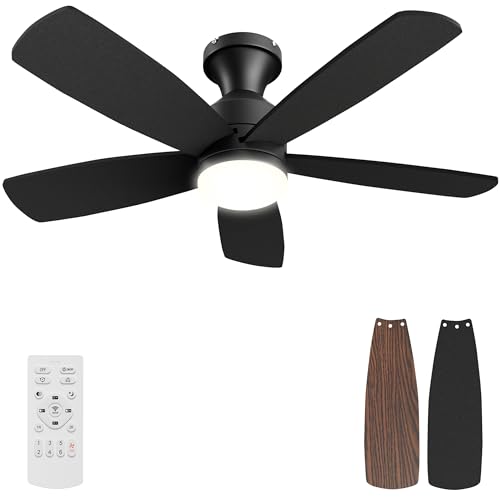
Ceiling Fan with Light, Wireless Remote, Flush Mount Design, Adjustable Dimmable Lighting, Quiet Operation -Ceiling Fan for Bedroom, Living Room
Powerful & Silent DC Motor with 360° Airflow: This ceiling fan delivers a strong, stable breeze with 5…
As an affiliate, we earn on qualifying purchases.
As an affiliate, we earn on qualifying purchases.

Hunter 52 inch Indoor Ceiling Fan No Light – Black Modern Ceiling Fan without Light, 3 Blades, Standard Mount, For Bedroom, Living Room, or Kitchen, Wall Control – Presto 50810, Matte Black
AIRFLOW YOU FEEL: The Presto ceiling fan features SureSpeed technology to deliver faster, more focused airflow while maintaining…
As an affiliate, we earn on qualifying purchases.
As an affiliate, we earn on qualifying purchases.