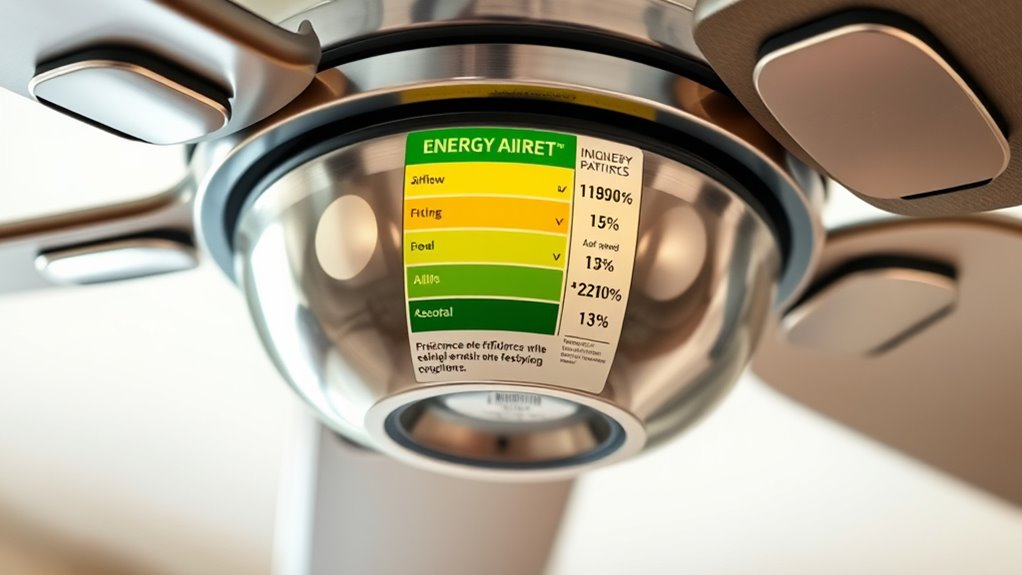

Ceiling fan energy labels provide standardized technical data, such as airflow efficiency measured in CFM/W, motor type, and energy class ratings, to help you compare models effectively. Higher CFM/W values indicate greater efficiency, while star ratings give a quick visual of energy performance. Considering these metrics allows you to select fans that optimize airflow and reduce energy costs over time. Exploring these details further will give you a clearer understanding of making energy-efficient choices.
Key Takeaways
- Energy labels provide standardized data, including airflow efficiency (CFM/W), to compare fan performance.
- Higher CFM/W indicates better airflow efficiency with less energy consumption.
- Labels show power consumption at different speeds and motor type, aiding energy cost assessment.
- Efficiency classes (A++ to D) summarize overall energy performance for long-term savings.
- Technical details help select fans suitable for room size, optimizing airflow and minimizing energy use.
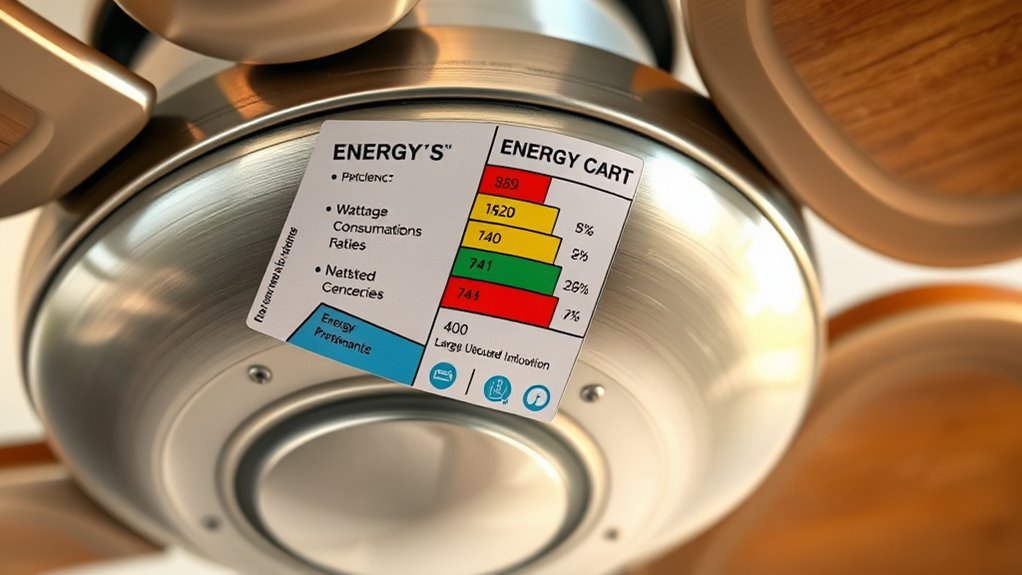
Have you ever wondered how to determine the energy efficiency of a ceiling fan before purchasing? Understanding energy labels and efficiency metrics is essential to making an informed decision. These labels provide standardized, technical data that facilitate comparison across models and brands, ensuring you select a unit that optimizes performance while minimizing energy consumption. The primary metric to consider is the fan’s airflow efficiency, typically expressed in cubic feet per minute per watt (CFM/W). This measurement indicates how much air the fan moves relative to its power draw, serving as a quantitative indicator of energy utilization. A higher CFM/W value signifies a more efficient fan, capable of producing greater airflow with less electrical input.
In addition to airflow efficiency, the total power consumption in watts (W) is crucial. It reflects the electrical energy required for operation at a given speed setting. When assessing a ceiling fan’s energy profile, focus on the rated wattage at different speed levels, such as low, medium, and high. This allows you to determine the most energy-efficient operating point that still meets your comfort needs. Modern energy labels often include a comparative scale or star rating, which visually summarizes the fan’s efficiency relative to other models. A higher star rating correlates with lower energy consumption for comparable airflow, simplifying the comparison process.
Another key component of the label is the airflow rate, expressed in cubic feet per minute (CFM). While it may seem straightforward, understanding the context of this value is vital. Larger rooms or spaces with high ceilings require fans with higher airflow ratings to maintain comfort efficiently. Conversely, smaller rooms benefit from lower airflow fans, which typically consume less energy. When evaluating these metrics, consider your space’s size and ventilation requirements to guarantee the chosen fan delivers optimal airflow with minimal energy expenditure. Additionally, understanding the efficiency class of the fan helps you compare long-term energy performance more accurately.
Furthermore, the energy label often includes information about the fan’s motor type and efficiency class, which influence long-term energy performance. Brushless DC motors, for example, tend to be more efficient and durable than traditional universal motors. The efficiency class, often categorized as A++ to D, provides a quick reference to the fan’s overall energy performance, with A++ being the most efficient. By analyzing these technical details, you can predict operational costs and energy savings over the fan’s lifespan.

Ohniyou Ceiling Fans with Lights, 52'' Low Profile Ceiling Fan with Light and Remote/APP Control, Modern Flush Mount Ceiling Fan for Indoor Bedroom Living Room, Dimmable, Qiuet DC Motor, Black
Smart Ceiling Fans with APP & Remote Control: This modern ceiling fan with lights has all functions controllable…
As an affiliate, we earn on qualifying purchases.
As an affiliate, we earn on qualifying purchases.
Frequently Asked Questions
How Often Are Ceiling Fan Energy Labels Updated?
Ceiling fan energy labels are typically updated every few years, aligning with regulatory changes and advancements in technology. Manufacturers usually revise labels when new standards emerge or when product efficiency improves markedly. You should check for the latest labels at the point of purchase or consult regulatory agencies’ websites periodically, as updates can vary by region. Staying informed ensures you select energy-efficient fans that meet current standards.
Do Energy Labels Affect Fan Warranty or Insurance Coverage?
Energy labels don’t directly influence your fan’s warranty or insurance coverage, but they can indirectly impact both. If a fan’s efficiency or safety features are questionable, it might void warranty claims or raise insurance premiums. Manufacturers may consider energy ratings when evaluating product reliability, so choosing an energy-efficient fan with proper certification ensures compliance. Always check your warranty and insurance policies to understand specific requirements related to safety and efficiency standards.
Are There Regional Variations in Energy Labeling Standards?
Yes, regional variations exist in energy labeling standards for ceiling fans. Different countries or regions, such as the US, EU, or Australia, establish unique criteria, testing procedures, and labeling formats to reflect local energy policies and climate conditions. These differences can influence how you interpret energy efficiency ratings and compare products across markets. Thus, always consider regional standards when evaluating ceiling fan energy labels to guarantee accurate comparisons and informed purchasing decisions.
Can Energy-Efficient Fans Be More Cost-Effective Long-Term?
Yes, energy-efficient fans can be more cost-effective long-term, acting like a well-oiled machine saving you money. They use less electricity, which lowers your utility bills over time. Although they might cost more upfront, their reduced energy consumption and longer lifespan mean you’ll see financial benefits in the long run. Investing in efficient fans guarantees peak performance, cutting costs and energy use while providing consistent comfort.
How Do Noise Levels Relate to Energy Efficiency Ratings?
Noise levels generally do not directly impact a ceiling fan’s energy efficiency rating, as these ratings focus on power consumption and airflow performance. However, quieter fans often incorporate advanced motor technology that can also improve efficiency. When selecting a fan, consider both noise levels and efficiency metrics separately, since a quieter operation may indicate better engineering, but it doesn’t necessarily mean lower energy consumption.

Amico Ceiling Fans with Lights, 42 inch Low Profile Ceiling Fan with Light and Remote Control, Flush Mount, Reversible, 3CCT, Dimmable, Noiseless, White Ceiling Fan for Bedroom, Indoor/Outdoor Use
Ceiling Fan with Light: Decorate your home with Amico ceiling fan! While bringing you coolness and comfort, it…
As an affiliate, we earn on qualifying purchases.
As an affiliate, we earn on qualifying purchases.
Conclusion
By understanding ceiling fan energy labels and efficiency metrics, you can make informed choices that save energy and reduce costs. Visualize your fan quietly circulating cool air through your space, its label guiding you to the most effective model. With precise knowledge of power consumption and performance metrics, you guarantee peak operation. Choose wisely, and your fan will deliver consistent comfort while minimizing environmental impact, all backed by clear, technical insights into its energy efficiency.
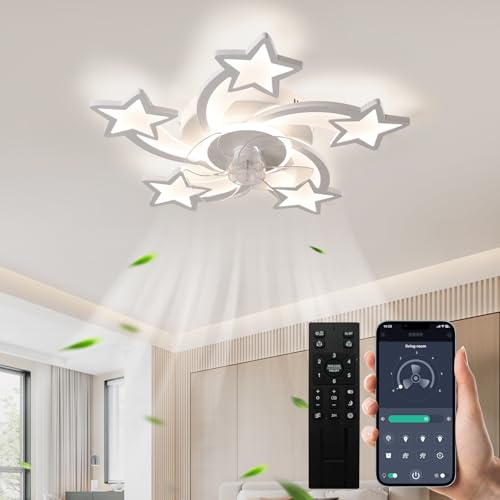
JAYMP 27.6 Inch Modern Stars Ceiling Light with Fan, 6 Speeds with 5 Blades, Remote Control Ceiling Fan White Dimmable LED Lighting Fixture for Dining Room Bedroom Small Living Room
Beautiful and Chic — Unique Star shape design, the soft light illuminates not only the night, but also…
As an affiliate, we earn on qualifying purchases.
As an affiliate, we earn on qualifying purchases.
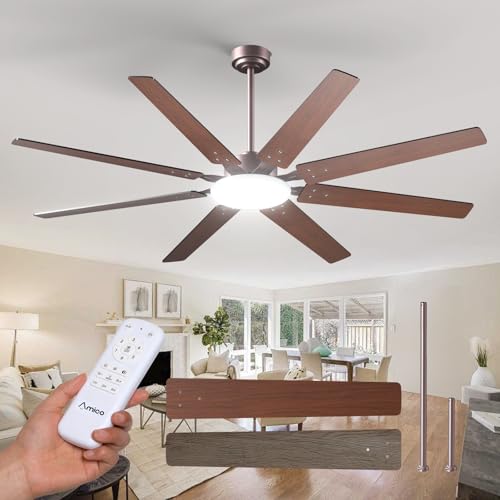
Amico 72 inch Farmhouse Bronze Ceiling Fan with Light, Large Energy Efficient Ceiling Fans with Remote, Reversible DC Motor, Dimmable 3CCT LED, Quiet Indoor/Outdoor for Living Room, Bedroom, Patio
Ceiling Fan with Light: Decorate your home with Amico ceiling fan! While bringing you coolness and comfort, it…
As an affiliate, we earn on qualifying purchases.
As an affiliate, we earn on qualifying purchases.