To understand ceiling fan efficiency, consider the CFM per watt ratio, which measures airflow volume relative to energy use. A higher CFM per watt indicates better performance and energy savings. Blade design, motor quality, and operating speed all influence this ratio. Analyzing how different settings impact airflow and power consumption helps optimize efficiency. Continuing to explore these factors will sharpen your understanding of selecting and maintaining energy-efficient fans.

Get home appliances delivered free with Prime
- Fast, free delivery on millions of items
- Prime Video, Amazon Music and more included
- Member-only deals all year
Key Takeaways
- CFM per watt measures a ceiling fan’s airflow efficiency relative to energy consumption.
- Higher CFM per watt indicates better performance and energy savings.
- Blade design, pitch, and motor quality significantly influence airflow and efficiency.
- Operating at optimal speeds maximizes airflow while minimizing power use.
- Comparing CFM per watt across models helps select the most energy-efficient ceiling fan.
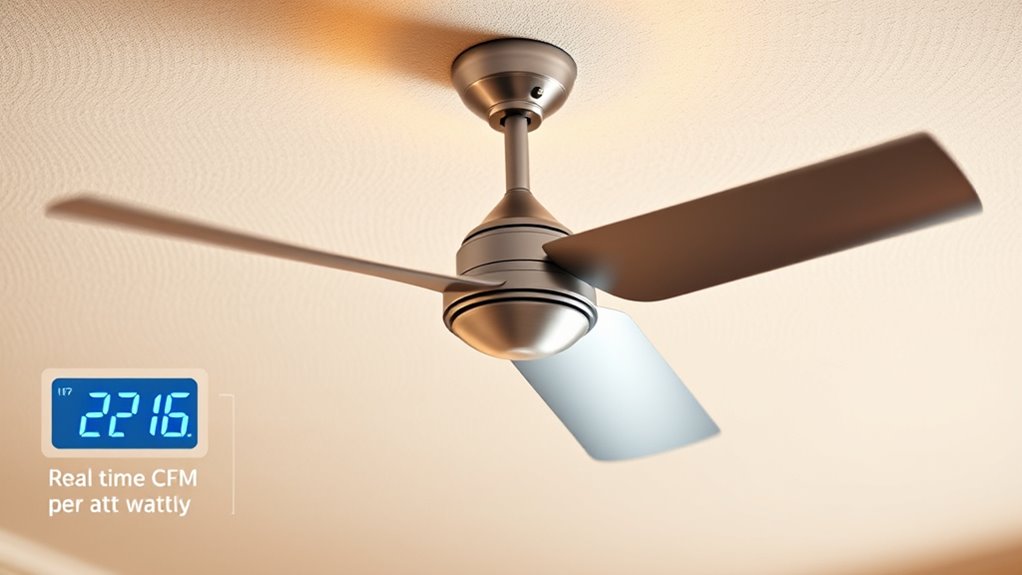
Understanding the efficiency of ceiling fans requires a clear grasp of their airflow performance relative to power consumption. This relationship, often expressed as CFM per watt, serves as a key metric in evaluating how effectively a fan converts electrical energy into airflow. When analyzing this ratio, you must consider both the airflow volume generated by the fan—measured in cubic feet per minute (CFM)—and the electrical power it consumes, typically expressed in watts. A higher CFM per watt indicates a more efficient fan, delivering greater airflow for less energy expenditure, which is vital for optimizing comfort and reducing operational costs.
Higher CFM per watt means a more efficient ceiling fan delivering better airflow with less energy.
To accurately evaluate a ceiling fan’s efficiency, you need to look beyond manufacturer specifications and explore into real-world performance data. The fan’s blade design, pitch, and number greatly influence airflow. For example, larger blades with ideal pitch can move more air at lower speeds, thereby increasing the CFM while maintaining or reducing power consumption. Conversely, poorly designed blades or excessive blade angles can lead to turbulence and increased drag, causing the fan to work harder and decreasing its efficiency. The motor’s quality and design also impact energy use; a high-efficiency motor minimizes power draw while maintaining a high airflow, improving the CFM per watt ratio.
It’s equally important to take into account the fan’s operational speed settings. Many fans offer multiple speeds, and the efficiency varies across these settings. Running a fan at a low speed might produce a modest airflow but could be more energy-efficient compared to higher speeds that generate more airflow but at disproportionately higher power consumption. Therefore, analyzing the CFM per watt at each setting helps you identify the most energy-efficient operating point. Additionally, the environment in which the fan operates influences its efficiency—factors like air density, room size, and obstructions can impact airflow performance, meaning that laboratory or manufacturer data might not precisely reflect real-world conditions.
Furthermore, understanding the energy efficiency of ceiling fans involves recognizing the importance of continuous operation. Even small improvements in CFM per watt can lead to substantial energy savings over time. When selecting a fan, you should compare models based on their rated CFM per watt, but also consider their durability, noise levels, and compatibility with your system. By analyzing these variables and understanding the technical nuances behind airflow and power consumption, you can make an informed decision that balances performance with energy efficiency. Using accurate performance data can help you better predict how a fan will perform in your specific environment, ensuring optimal energy use. By analyzing these variables and understanding the technical nuances behind airflow and power consumption, you can make an informed decision that balances performance with energy efficiency. Ultimately, a fan with a high CFM per watt rating ensures you get the maximum airflow with the least energy input, enhancing comfort and minimizing operational costs over its lifespan.
As an affiliate, we earn on qualifying purchases.
Frequently Asked Questions
How Does Room Size Affect Ceiling Fan Efficiency?
Room size critically influences ceiling fan efficiency, as larger spaces require higher airflow (CFM) to circulate air effectively. If you choose a fan with insufficient CFM for your room, you’ll need to run it at higher speeds, decreasing energy efficiency. Conversely, selecting a fan with an appropriate CFM rating for your room size guarantees ideal airflow at lower power consumption, maximizing efficiency and comfort.
Are Energy-Efficient Fans More Expensive Upfront?
Yes, energy-efficient fans often have a higher upfront cost due to advanced motor technology and better materials. However, they typically consume less power and deliver greater airflow per watt, leading to lower energy bills over time. Investing in these models can be cost-effective in the long run, especially if you use your fan frequently. The initial expense is offset by the savings on electricity and improved performance.
Can Ceiling Fan CFM per Watt Vary With Different Speeds?
Yes, ceiling fan CFM per watt varies with different speeds. As you increase the fan speed, the fan moves more air, but it also consumes more power, which can affect efficiency. Typically, fans operate at ideal CFM per watt at medium speeds, balancing airflow and energy use. Higher speeds may deliver more airflow but often at a diminished efficiency, while lower speeds use less power but produce less airflow.
What Is the Average Lifespan of an Energy-Efficient Ceiling Fan?
An energy-efficient ceiling fan typically lasts 10 to 15 years with proper maintenance. You should regularly clean blades and check electrical connections to extend its lifespan. Using quality components and operating within its rated speed range minimizes wear. Environmental factors like humidity and dust can affect longevity, so controlling these conditions helps guarantee ideal performance over time. Proper care maximizes your fan’s efficiency and lifespan.
Do Ceiling Fan Efficiencies Decline Over Time?
Yes, ceiling fan efficiencies decline over time due to wear and tear on components like motors and bearings. As these parts degrade, motor performance diminishes, leading to reduced airflow and higher energy consumption for the same output. Regular maintenance, such as cleaning and lubrication, can mitigate efficiency loss. However, without proper upkeep, you’ll notice a gradual decline in performance, underscoring the importance of timely inspections and replacements.
Conclusion
By grasping how CFM per watt impacts ceiling fan efficiency, you open the secret to maximizing airflow while minimizing energy consumption. Remember, a high CFM per watt rating isn’t just a number—it’s your pathway to a breeze that could power a small hurricane, efficiently and sustainably. Analyzing these metrics helps you make informed decisions, ensuring your fan delivers maximum performance without draining your wallet or the planet’s resources. Efficiency truly becomes your most powerful tool.
Fall Picks
fall essentials
As an affiliate, we earn on qualifying purchases.