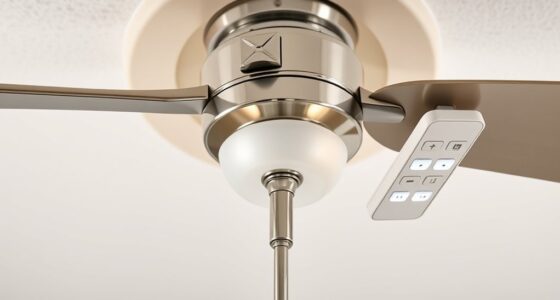
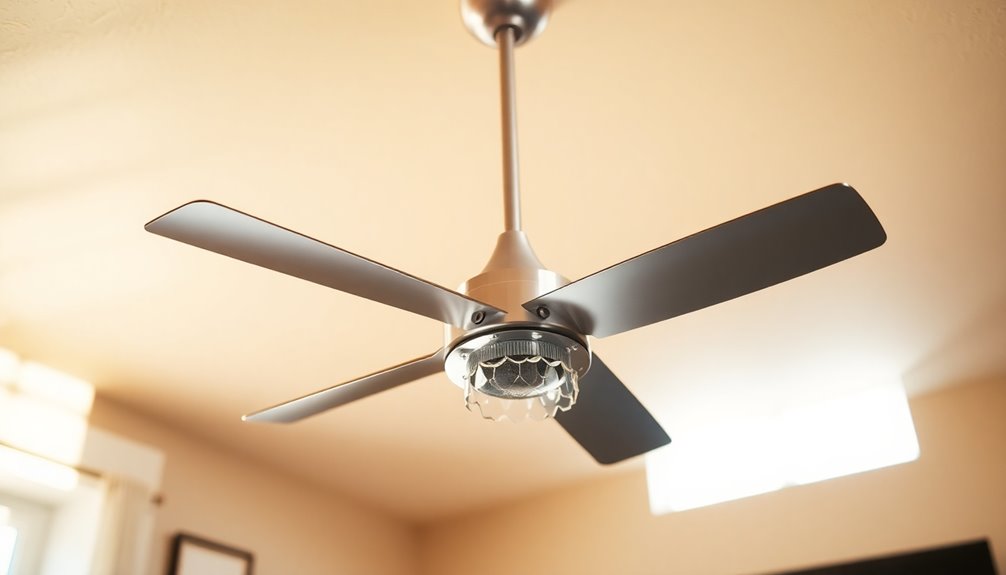
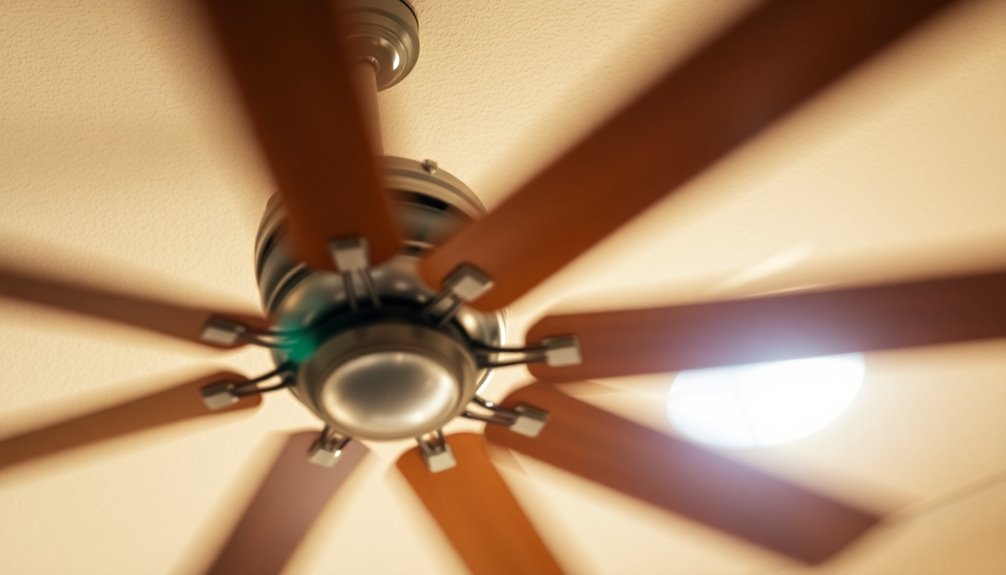
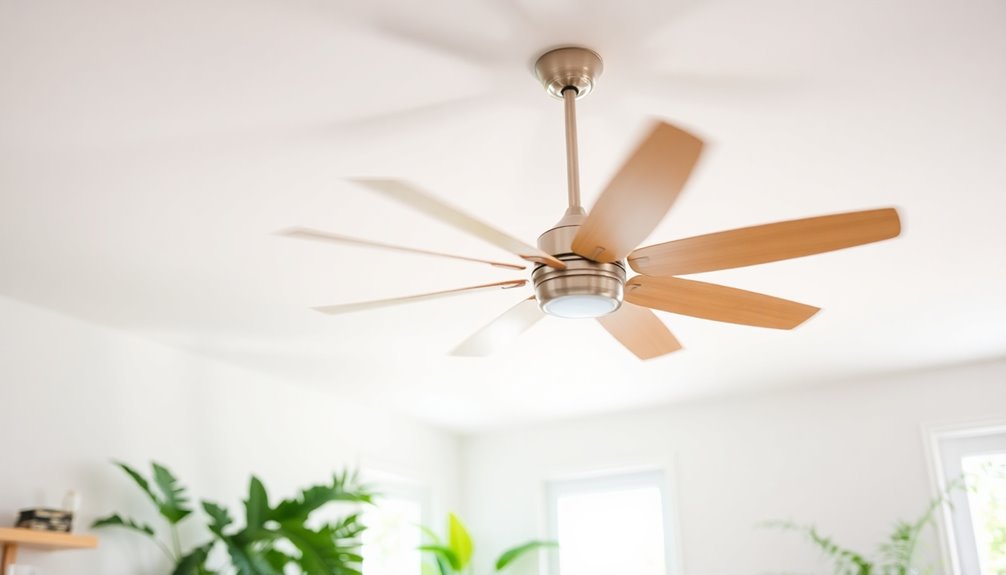
Choosing between 3, 4, or 5-blade ceiling fans impacts performance, airflow, and efficiency. A 3-blade fan operates at higher speeds with less drag, providing a strong breeze but potentially less uniform airflow. More blades, like 4 or 5, improve air distribution at lower speeds, offering a gentler, widespread breeze but may consume more energy due to increased aerodynamic drag. Understanding these differences helps you select the most suitable fan for your needs; further details reveal how blade count influences overall comfort and efficiency.

Get home appliances delivered free with Prime
- Fast, free delivery on millions of items
- Prime Video, Amazon Music and more included
- Member-only deals all year
Key Takeaways
- Three-blade fans operate at higher speeds for a noticeable breeze and greater efficiency but may have less uniform airflow.
- Fans with more blades (4 or 5) produce a gentler, widespread airflow suitable for comfort and better air distribution.
- Increasing blade count increases aerodynamic drag, potentially consuming more energy and requiring robust motors.
- Blade pitch combined with blade count influences airflow volume, with steeper pitches increasing airflow at lower speeds.
- Choosing the right blade count depends on desired airflow, energy efficiency, and room size for optimal comfort.
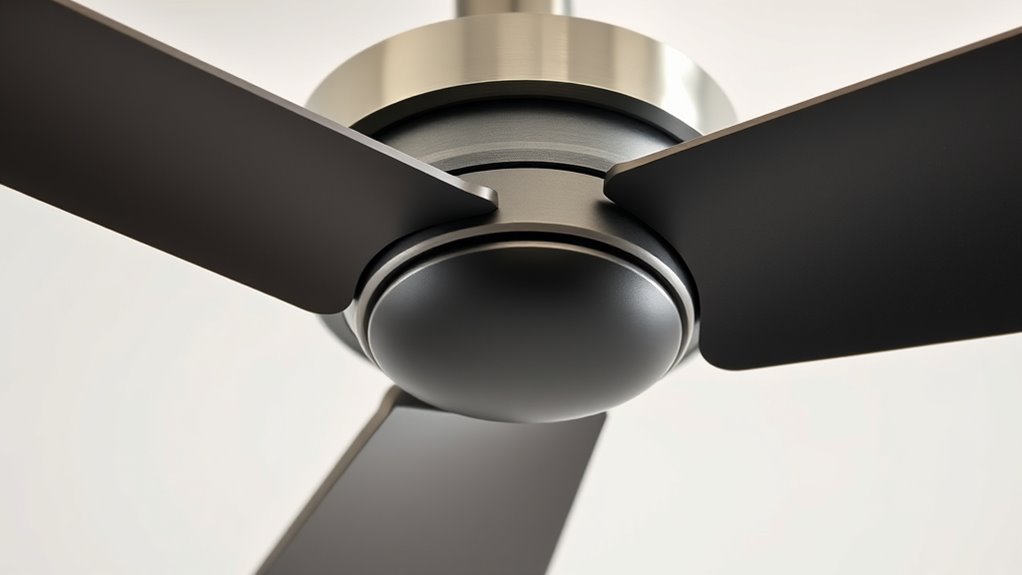
Choosing the right ceiling fan involves understanding how blade count influences performance, efficiency, and airflow. Blade count directly impacts the aerodynamic properties of a fan, affecting how air is moved through a space and how much energy is required to do so. Fans with fewer blades—typically three—are designed for higher rotational speeds, generating a more noticeable breeze but often with less overall airflow volume. These fans tend to operate more efficiently at higher speeds because each blade exerts less drag, allowing for quicker rotation with less power consumption. The trade-off is that the airflow tends to be more localized and less consistent across the room, which can be advantageous in settings where targeted airflow is preferred.
Conversely, fans with more blades—such as four, five, or even six—are optimized for greater airflow capacity at lower speeds. The increased number of blades results in a larger surface area that pushes air more evenly throughout the space. This setup typically produces a gentler, more uniform breeze, which can improve comfort without creating the noise or draftiness associated with higher speeds. However, more blades also mean increased aerodynamic drag, requiring more energy to maintain the same rotational speed as a three-blade fan. As a result, these fans may consume slightly more power when operating at similar speeds, though they often compensate with lower noise levels and enhanced airflow distribution.
Blade pitch further complicates this relationship. A steeper blade pitch enhances airflow by increasing the angle at which blades interact with the air, but it also raises aerodynamic drag. When combined with blade count, the pitch determines both the volume of air moved and the energy efficiency of the fan. Higher blade counts with steep pitches can produce significant airflow at lower speeds, but they may also demand more robust motors and increased energy input. Lower blade counts with flatter pitches tend to favor high-speed operation with less power, making them suitable for spaces where rapid airflow is prioritized over gentle, widespread circulation.
Additionally, the design considerations of blade shape and material also play a role in the overall efficiency and airflow characteristics of a ceiling fan. Ultimately, selecting a fan based on blade count requires a careful assessment of your specific needs. If you seek high-speed airflow with minimal energy use, a three-blade design may be appropriate. If you prefer steady, widespread airflow at lower speeds, a fan with more blades and a moderate pitch will likely serve you better. Understanding these technical nuances ensures that you choose a ceiling fan that balances performance, efficiency, and airflow to match your space’s requirements.
As an affiliate, we earn on qualifying purchases.
Frequently Asked Questions
Do More Blades Mean Better Airflow Efficiency?
More blades don’t necessarily mean better airflow efficiency. In fact, increasing blade count can create more drag, reducing the fan’s speed and airflow. Fewer blades often allow for higher RPMs, resulting in more effective cooling. Blade shape, pitch, and motor power play vital roles in airflow performance. Consequently, optimizing blade design and motor capacity is more important than simply adding blades to improve efficiency.
How Does Blade Shape Affect Fan Performance?
Blade shape acts like a sculptor’s chisel, shaping airflow for ideal performance. Aerodynamically designed blades with curved or tapered edges reduce turbulence and enhance efficiency, pushing air more smoothly and quietly. Conversely, flat or blunt blades may generate more drag, decreasing airflow and increasing noise. Choosing blades with precise curvature and angles directly influences how effectively your fan circulates air, making blade shape a critical factor in overall fan performance.
Can Blade Count Influence Noise Levels?
Yes, blade count can influence noise levels. Generally, fans with more blades operate more smoothly because the additional blades distribute airflow evenly, reducing turbulence and sound. Conversely, fans with fewer blades may produce more noise due to increased blade speed and turbulence. The blade design, pitch, and motor quality also play significant roles, but increasing blade count typically results in quieter operation by minimizing vibrations and airflow disruptions.
Are There Maintenance Differences Based on Blade Count?
Yes, blade count affects maintenance; fans with more blades typically require more frequent cleaning due to increased dust accumulation. You’ll need to inspect and clean all blades regularly to prevent imbalance and guarantee efficient operation. Additionally, higher blade counts can exert additional stress on motor components, necessitating periodic lubrication and checks for wear. Proper maintenance tailored to your fan’s blade count ensures peak performance and longevity.
What Blade Count Is Best for Large Rooms?
For large rooms, choose a ceiling fan with five or more blades. This configuration provides increased surface area, enhancing airflow efficiency and circulation across expansive spaces. While more blades may slightly reduce speed or increase motor load, they improve air distribution and aesthetic balance. Make certain the fan’s size and blade pitch complement your room dimensions for ideal performance, regardless of blade count.
Conclusion
Ultimately, selecting the right blade count isn’t just a matter of style—it’s about optimizing airflow efficiency and noise levels within your space. While three, four, or five blades each offer distinct advantages, understanding their subtle impacts helps you make an informed decision. By considering your room size, ceiling height, and personal comfort preferences, you can fine-tune your choice for a seamless balance of performance and tranquility. The perfect fan awaits, quietly elevating your environment.
Halloween Picks
halloween
As an affiliate, we earn on qualifying purchases.