
Your bedroom’s air quality is essential since it directly impacts your sleep, health, and overall well-being. Even if your entire house has good airflow, your bedroom can still trap allergens, dust, pet dander, and VOCs that cause issues like allergies or disrupted sleep. Focusing on your bedroom alone may help you breathe better at night and enjoy a more restful sleep. Keep exploring to discover how you can effectively improve your bedroom’s air quality.

Get home appliances delivered free with Prime
- Fast, free delivery on millions of items
- Prime Video, Amazon Music and more included
- Member-only deals all year
Key Takeaways
- Bedrooms often contain specific allergens and pollutants that can directly affect sleep quality and health.
- Localized air quality issues in bedrooms require targeted solutions like air purifiers and proper ventilation.
- Whole-house systems may not sufficiently address bedroom-specific pollutants or allergen buildup.
- Maintaining clean bedding and controlling humidity in bedrooms reduces airborne contaminants and mold growth.
- Using bedroom-specific air quality monitors helps identify and manage localized pollutant levels effectively.
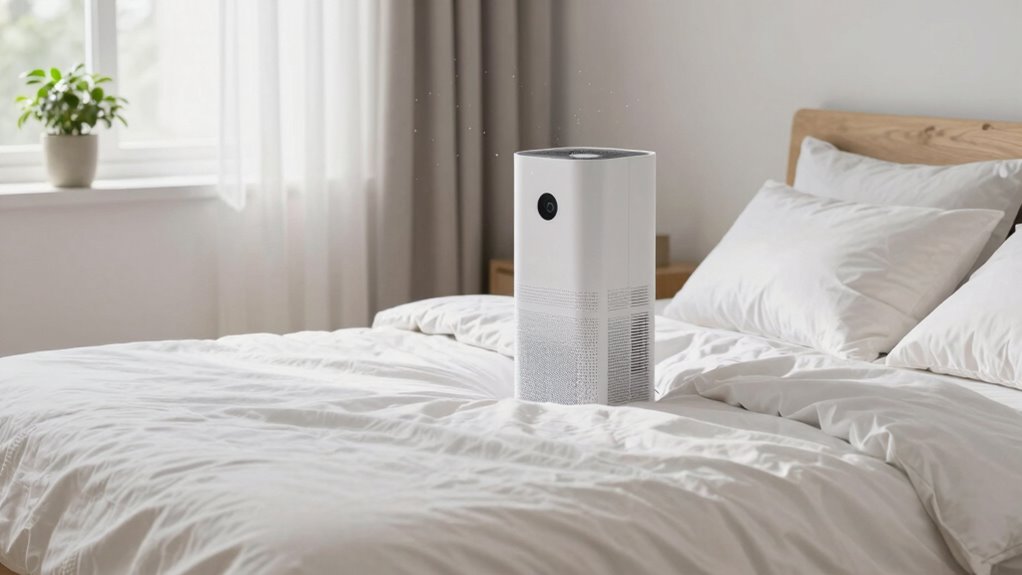
Your bedroom’s indoor air quality directly impacts your sleep, health, and overall well-being. Many people overlook this, assuming that if the air outside is clean and their home’s HVAC system is functioning, their bedroom air is automatically safe. But that’s not always the case. The air in your bedroom can contain allergens, dust mites, pet dander, mold spores, and volatile organic compounds (VOCs) from paints, cleaning products, or furniture. These contaminants can accumulate, especially since bedrooms are typically enclosed spaces where fresh air exchange isn’t frequent. Poor air quality can lead to disrupted sleep, allergies, asthma symptoms, and even long-term health issues. That’s why paying attention to your sleep environment is essential.
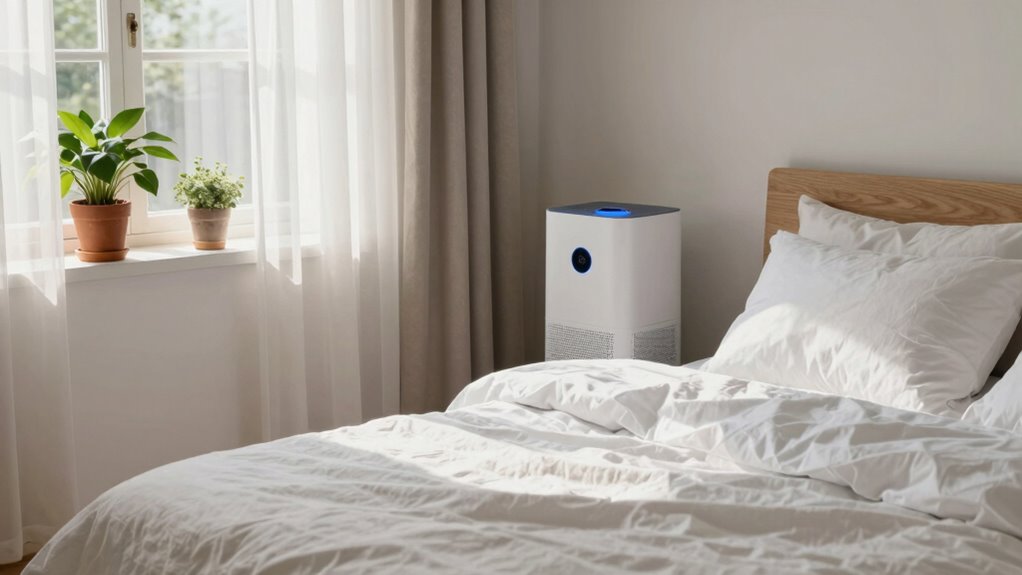
One effective way to improve indoor air quality in your bedroom is by using air purifiers. These devices are designed to filter out airborne particles, reducing the concentration of pollutants that can harm your respiratory system. With an air purifier, you create a cleaner, healthier environment that directly influences how well you sleep. When your air is free of irritants, you’re less likely to wake up coughing, sneezing, or feeling congested. This results in more restful sleep and a better overall quality of life.
Using air purifiers helps create a cleaner, healthier sleep environment by reducing airborne irritants and allergens.
It’s important to choose an air purifier suited for your bedroom size and specific needs. Look for models with HEPA filters, which are highly effective at capturing tiny particles like allergens and dust mites. Some purifiers also include activated carbon filters that absorb odors and VOCs, further enhancing your sleep environment. Position the device in a central spot, away from walls, to maximize airflow and filtration efficiency. Keep the purifier maintained by changing filters as recommended, ensuring it continues to operate at peak performance. Additionally, selecting an air quality monitor can help you track pollutant levels and determine when to take further action.
Creating a healthier sleep environment goes beyond just air purifiers. Keep your bedroom clean by regularly dusting surfaces and washing bedding to remove accumulated allergens. Use hypoallergenic bedding and avoid clutter that can trap dust. Control humidity levels, ideally between 30-50%, to prevent mold growth and dust mite proliferation. Proper ventilation is also crucial, as it helps exchange stale indoor air with fresh outdoor air, reducing the buildup of indoor pollutants. Ensure proper ventilation when possible, opening windows to exchange stale indoor air with fresh outdoor air, especially on days when outdoor air quality is good. Additionally, understanding that indoor air quality can be compromised even with a functioning HVAC system highlights the importance of targeted solutions like air purifiers. Regularly checking and maintaining your HVAC system can also help prevent the circulation of pollutants and improve overall indoor air quality. Incorporating air quality monitors can further help you keep track of pollutant levels and make adjustments accordingly.
In the end, your bedroom’s air quality isn’t just an afterthought; it’s an indispensable component of your sleep environment. By incorporating air purifiers and maintaining a clean, ventilated space, you take control of your health and sleep quality. Your efforts will pay off with better rest, improved respiratory health, and a more invigorated you each morning.
Products Worth Considering

LEVOIT Vital 200S-P Smart Air Purifier for Large Rooms

Dyson Cyclone V10 Origin Cordless Vacuum
Google Nest Cam Indoor Security Camera, 3-Pack
As an affiliate, we earn on qualifying purchases.
Frequently Asked Questions
How Can I Test My Bedroom’s Air Quality Effectively?
To test your bedroom’s air quality effectively, start with a DIY air quality monitor or hire a professional for thorough testing. Make sure your HVAC maintenance is up to date to reduce pollutants and prevent mold growth. Keep an eye out for musty odors or visible mold, which indicate mold prevention issues. Regular testing helps identify allergens, VOCs, and pollutants, creating a healthier sleeping environment and guaranteeing your HVAC system functions at its best.
Are Air Purifiers Necessary for Improving Bedroom Air Quality?
Yes, air purifiers can markedly improve your bedroom air quality. To guarantee they’re effective, you need to contemplate air purifier maintenance regularly, like replacing filters as recommended. Conduct a cost-effectiveness analysis to determine if the benefits outweigh expenses. If your room has high pollution or allergens, investing in a good air purifier is worthwhile, especially when combined with other ventilation and cleaning strategies for healthier air.
What Are Common Indoor Pollutants Found Specifically in Bedrooms?
Think of your bedroom as a battleground for tiny invaders. Common indoor pollutants here include dust mites and pet dander, which can trigger allergies and asthma. You might also find mold spores and volatile organic compounds (VOCs) from cleaning products or furniture. Regular cleaning and good ventilation help, but air purifiers can make a big difference in reducing these irritants, helping you breathe easier and sleep better.
How Often Should I Replace Bedroom Air Filters?
You should replace your bedroom air filters every 1 to 3 months, depending on usage and filter type. Regular filter maintenance is essential for maintaining good air quality. Use air quality monitoring devices to track pollutants and decide if more frequent changes are needed. Keeping filters fresh helps reduce allergens, dust, and pollutants, ensuring a healthier sleeping environment. Remember, cleaner filters mean better air quality and improved sleep.
Can Indoor Plants Improve Bedroom Air Quality?
Yes, indoor plants can improve your bedroom air quality. For example, a study showed that snake plants and pothos effectively remove toxins through natural filtration. These plant varieties absorb pollutants like formaldehyde and benzene, making your space healthier. By adding a few of these, you naturally enhance air quality, reduce airborne toxins, and create a more invigorating environment for better sleep.
Conclusion
Now that you understand how vital indoor air quality is in your bedroom, aren’t you ready to take steps to improve it? Remember, your bedroom isn’t just for sleep — it’s where your health begins. Regularly ventilate, keep it clean, and be mindful of pollutants. Why settle for good enough when a healthier, more restful environment is within your reach? Take action today and breathe easier tonight.