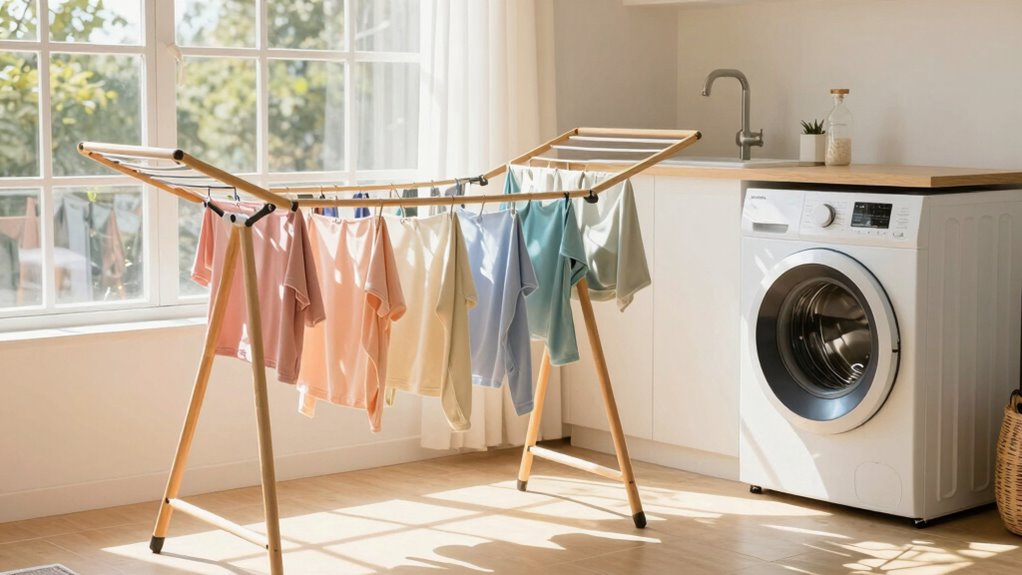

Air drying clothes matters in efficient homes because it helps you cut energy use and lower your bills. It prevents heat and emissions from dryers from entering your indoor air, keeping your environment healthier, especially if you have allergies or asthma. Proper ventilation while air drying reduces humidity and prevents mold. Outdoor drying even disinfects clothes naturally and saves energy. Keep exploring to see how small changes can make your home even more sustainable.

Get home appliances delivered free with Prime
- Fast, free delivery on millions of items
- Prime Video, Amazon Music and more included
- Member-only deals all year
Key Takeaways
- Air drying reduces energy consumption by eliminating the need for electric dryers, lowering bills and environmental impact.
- It improves indoor air quality by preventing pollutants from dryer vents and lint circulation.
- Proper ventilation during indoor drying prevents excess humidity and mold growth, maintaining a healthy home environment.
- Outdoor air drying utilizes sunlight to disinfect clothes naturally, reducing reliance on energy-intensive appliances.
- Embracing natural drying promotes sustainable living and energy-efficient habits in eco-conscious households.
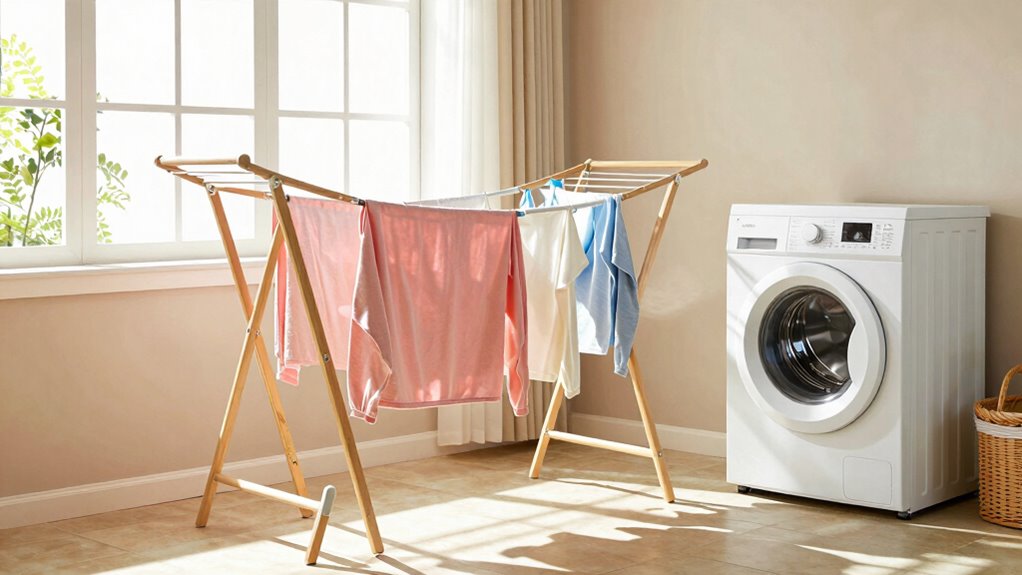
In an era focused on energy efficiency, air drying clothes remains a simple yet effective way to reduce electricity use and lower your carbon footprint. When you choose to hang your laundry indoors or outdoors instead of using a dryer, you directly cut down on energy consumption. Dryers are among the most energy-intensive appliances in a home, and by skipping their use, you not only save on electricity bills but also contribute to a more sustainable lifestyle. This practice aligns well with the goals of efficient homes, where every effort is made to minimize environmental impact and optimize resource use.
However, drying clothes indoors does more than just save energy; it can also impact indoor air quality. When you air dry, you avoid releasing the heat and emissions associated with dryer operation into your living space. This reduces the potential for indoor air pollutants that may come from dryer vents or lint particles, which can sometimes linger in the air if not properly vented. Proper indoor air quality is crucial for your health, especially if you have allergies, asthma, or other respiratory conditions. By air drying clothes, you help maintain a healthier indoor environment, free from the dust, chemicals, or odors that might otherwise be circulated by a dryer.
It’s important to weigh where and how you air dry your clothes to maximize benefits. If you’re drying indoors, ensure good ventilation to prevent excess humidity from building up, which can lead to mold growth and compromise indoor air quality. Using exhaust fans or opening windows can help circulate fresh air and remove moisture. Outdoors, you get the added benefit of sunlight, which naturally helps disinfect and freshen your laundry while reducing indoor humidity. Plus, outdoor air drying is generally more energy-efficient and environmentally friendly, making it an ideal choice for sustainable homes. Incorporating proper ventilation can further enhance the benefits of air drying and support overall home efficiency. Additionally, selecting appropriate drying locations can help optimize energy conservation and ensure your laundry dries quickly and effectively. Proper placement combined with good airflow can also help prevent the buildup of moisture indoors, further protecting your home environment.
Furthermore, understanding the benefits of natural drying can motivate more households to adopt this eco-friendly practice and contribute to a greener lifestyle.
As an affiliate, we earn on qualifying purchases.
Frequently Asked Questions
How Much Energy Can Air Drying Save Annually?
You can save around 2,000 to 4,000 kWh annually by air drying your clothes, depending on your laundry habits. This results in significant energy savings, reducing your utility bills and environmental impact. Plus, air drying conserves water because it reduces the need for energy-intensive water heating. By choosing air drying, you actively contribute to water conservation efforts and make your home more energy-efficient, benefiting both your wallet and the planet.
Does Air Drying Cause More Wear and Tear on Clothes?
Air drying doesn’t cause more wear and tear; it actually preserves your clothes better than machine drying. You avoid the harsh tumbling that can strip away fabric softness and accelerate color fading. While some worry about delicate fabrics stretching or wrinkling, gentle air drying can keep your clothes looking newer longer. So, instead of damaging your wardrobe, it helps maintain their vibrant color and soft feel over time.
Can Air Drying Effectively Remove All Types of Stains?
Air drying isn’t effective for removing all types of stains, especially stubborn or oily ones. While it helps with fabric preservation by reducing wear and tear, you’ll need to pre-treat stains before drying. For best stain removal, wash clothes thoroughly first, then air dry. This approach guarantees your fabrics stay in good condition and stains are properly addressed, maintaining your clothes’ appearance and longevity.
What Are the Best Weather Conditions for Air Drying Clothes?
Like a kite soaring in the breeze, your clothes dry best in sunny, breezy weather. Sunshine benefits your laundry by naturally bleaching and deodorizing, speeding up drying time. Moderate wind speed helps air circulate around your clothes, making them dry quicker without tangling. Ideal conditions include warm temperatures, low humidity, plenty of sunshine, and a steady breeze—think of them as nature’s perfect drying recipe.
How Does Air Drying Impact Indoor Humidity Levels?
Air drying clothes increases indoor moisture, which raises humidity levels in your home. As you hang clothes indoors, the moisture from the fabric evaporates into the air, impacting humidity control. If you don’t manage this moisture properly, it can lead to issues like mold or musty odors. To maintain a healthy indoor environment, monitor your humidity levels and make certain proper ventilation when air drying clothes indoors.
Conclusion
So, don’t overlook air drying as a simple yet powerful way to boost your home’s efficiency. It’s a small change that can save energy, cut costs, and extend the life of your clothes. Remember, sometimes the old ways are the best ways—there’s no need to reinvent the wheel. Keep it natural, keep it smart, and you’ll find that air drying keeps your home running smoothly without breaking the bank.
Halloween Picks
halloween
As an affiliate, we earn on qualifying purchases.