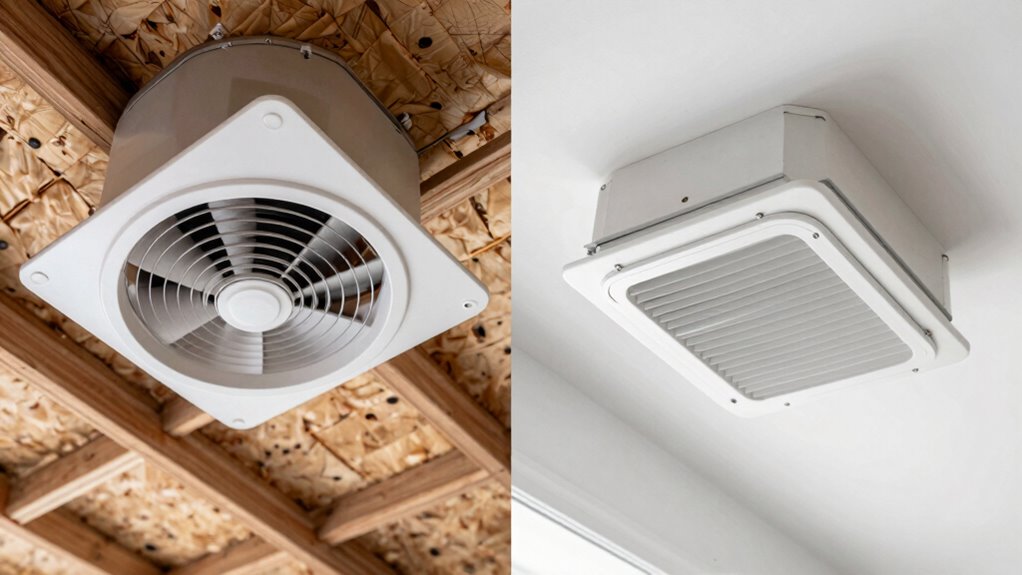

A whole house fan cools your entire home by pulling in outdoor air and exhausting it through ceiling vents, mainly relying on open windows for natural airflow. An attic fan, on the other hand, specifically ventilates your attic to reduce heat buildup, which helps support overall home comfort. Confusing the two can lead to ineffective cooling or ventilation. To make the right choice, it’s important to understand their unique roles—more details will help clarify their differences.
Key Takeaways
- Whole house fans cool entire home by pulling outside air through open windows; attic fans mainly vent hot attic air.
- Whole house fans are more energy-efficient and reduce cooling costs for the entire home, unlike attic fans focused on attic temperature.
- Whole house fans require complex installation with ductwork and wiring; attic fans are easier and cheaper to install.
- Whole house fans improve overall home comfort by enhancing ventilation; attic fans primarily prevent attic heat buildup.
- Proper attic ventilation is crucial for attic fans’ effectiveness; whole house fans are best for comprehensive home cooling.
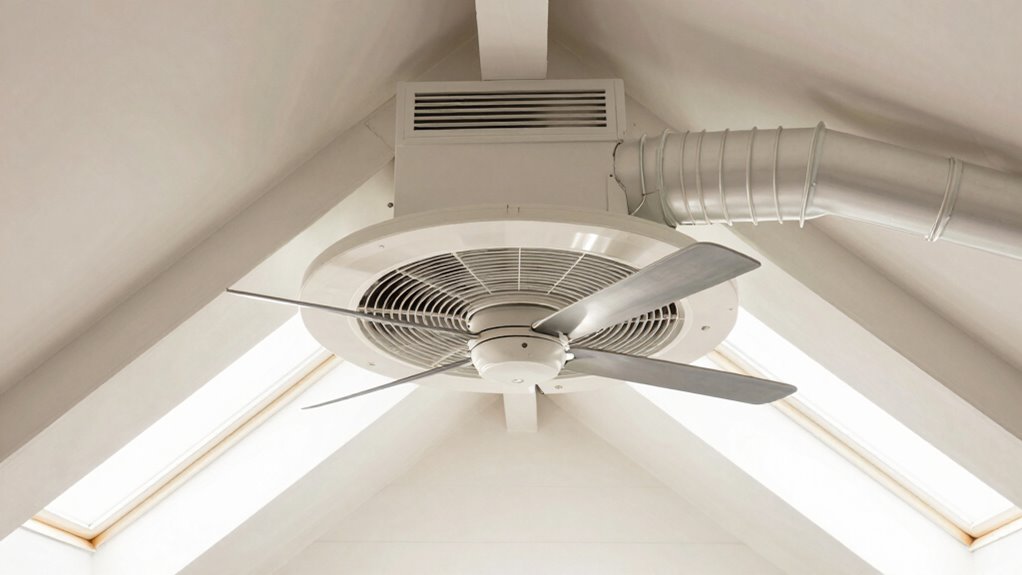
Are you trying to decide between a whole house fan and an attic fan to improve your home’s ventilation? If so, it’s essential to understand how each option impacts your home’s energy efficiency and installation costs. Whole house fans are designed to cool your entire home by pulling in fresh outdoor air through open windows and exhausting hot indoor air through ceiling vents. This method can be highly energy-efficient because it relies on natural airflow rather than electricity-hungry air conditioning units. Since they generally consume less power, they can help you reduce your energy bills over time, making them an attractive choice for eco-conscious homeowners.
On the other hand, attic fans primarily target your attic space, venting out hot air that rises from your living areas. This helps lower the temperature in your attic, which can reduce the workload on your air conditioner and improve overall home comfort. While attic fans tend to have lower upfront costs for installation, their energy efficiency depends on proper sizing and usage. If installed correctly, they can cut down on cooling costs during hot months, but they might not be as effective in providing whole-house ventilation.
When considering installation costs, whole house fans typically require more extensive setup. They often need ductwork, electrical wiring, and sometimes structural modifications, which can lead to higher initial expenses. However, since they help cool your entire home efficiently, those upfront costs might pay off in lower cooling bills. Attic fans are usually simpler to install—often just mounting a fan unit in the attic and connecting it to your power supply—making them a more budget-friendly option initially. Yet, their effectiveness depends on proper attic ventilation and your home’s overall design.
Both options have their merits, but your choice hinges on what you prioritize. If your goal is to maximize energy efficiency and reduce long-term cooling costs, a whole house fan might be the better investment despite higher installation costs. It can cool your entire home effectively using less power, especially if you’re comfortable with the installation process. Conversely, if you’re looking for a quick, cost-effective solution to lower attic temperatures and support your air conditioning system, an attic fan could be suitable. Just remember, the effectiveness of an attic fan depends heavily on your home’s insulation and ventilation setup.
Additionally, understanding ventilation systems and how they impact your home’s energy efficiency can help guide your decision.

Quietcool QC CL-7000 RF Classic Advanced Whole House Fan with Wireless Control – Up to 6924 CFM – Two Speed – Covers up to 3,462 SQFT – 10 Year Warranty – Removable Grille
QuietCool advanced whole house fans use and improve upon the principle of ventilation cooling with savings off traditional…
As an affiliate, we earn on qualifying purchases.
As an affiliate, we earn on qualifying purchases.
Frequently Asked Questions
Can Both Fans Operate Simultaneously in a Home?
Yes, you can operate both fans simultaneously for dual operation, but it’s usually unnecessary and may reduce energy savings. Using them together can improve ventilation, but it might also increase energy consumption. To maximize energy savings, it’s best to operate each fan separately based on your home’s cooling needs. If you choose to run both, do so strategically to balance comfort and efficiency.
Which Fan Type Is More Energy-Efficient Overall?
They say, “You get what you pay for,” and regarding energy efficiency, an attic fan often wins. Attic fans typically consume less energy, leading to better energy savings and a lower cost comparison over time. Whole house fans, while effective at cooling, usually use more power. If your goal is to cut costs and save energy, an attic fan’s the smarter choice overall.
Are There Specific Climate Conditions for Each Fan?
Yes, climate considerations and temperature thresholds influence your choice. Whole house fans work best in cooler, dry climates where nighttime temperatures drop enough to cool your home efficiently. Attic fans are ideal in hot, humid conditions to vent moisture and heat from the attic. If temperatures stay high or humidity is a concern, choose accordingly, ensuring your fan operates within ideal climate conditions to maximize efficiency and longevity.
How Long Does Installation Typically Take?
Getting a fan installed is usually a walk in the park, but the installation timeline depends on your home and the fan type. You’ll typically need a day or two, with steps including evaluating your space, wiring, mounting, and testing. Keep in mind, rushing the process isn’t wise—proper installation ensures efficiency and safety. So, plan ahead and follow the installation steps carefully for a smooth setup.
Do Both Fans Require Regular Maintenance?
Yes, both fans require regular maintenance to guarantee peak performance. You should check and clean the fan blades and filters regularly, which helps extend their lifespan. Maintenance costs are generally moderate but can vary depending on usage and age. Neglecting maintenance may lead to increased energy consumption or early replacement. By keeping up with routine upkeep, you can maximize your fans’ efficiency and prolong their lifespan, saving you money in the long run.

VEVOR 14 inch Exhaust Fan, Wall Mounted Attic Fan with Variable Speed, Temperature & Humidity Controller, 2000 CFM, Automatic Shutter
Rapid Venting: This shutter exhaust fan delivers 2000 CFM to quickly expel stale air, floating dirt, heat, and…
As an affiliate, we earn on qualifying purchases.
As an affiliate, we earn on qualifying purchases.
Conclusion
Now that you know the huge difference between a whole house fan and an attic fan, don’t let them keep confusing you! Imagine trying to cool your entire mansion with just a tiny fan—completely pointless, right? By choosing the right fan, you could turn your home into a invigorating oasis faster than you can say “air conditioning.” So, get it right, and watch your home become the coolest, most comfortable place on the planet!
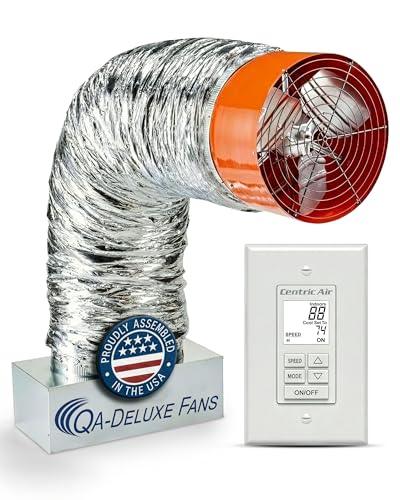
QA-Deluxe 4800 ECM Energy Efficient Whole House Fan | Low Voltage Plug & Play, 3-Speed Wall Switch with Temp & Timer | Removable Grill –10-Year Warranty –Up to 2800 sq ft (2-Story)&1900 sqft 1-Story
ENERGY EFFICIENT COOLING: The QA-Deluxe 4800 ECM cools your home with low power consumption, offering an energy-efficient solution…
As an affiliate, we earn on qualifying purchases.
As an affiliate, we earn on qualifying purchases.

iLIVING 12" Wall Mounted Shutter Exhaust Fan, Automatic Shutter, with Thermostat and Variable Speed controller, 0.6A, 960 CFM, 1400 SQF Coverage Area Silver (ILG8SF12V-ST)
POWERFUL AIR VENTILATOR – 960 CFM, 115V, 0.6A, 1/20 Horse Power, 1650 RPM, Coverage up to 1400 square…
As an affiliate, we earn on qualifying purchases.
As an affiliate, we earn on qualifying purchases.