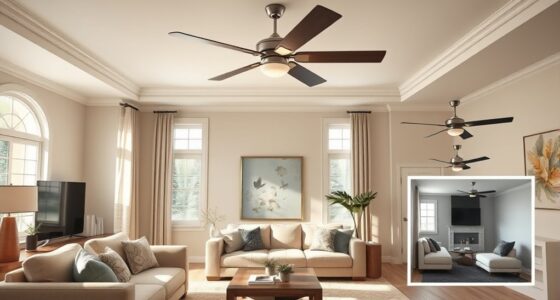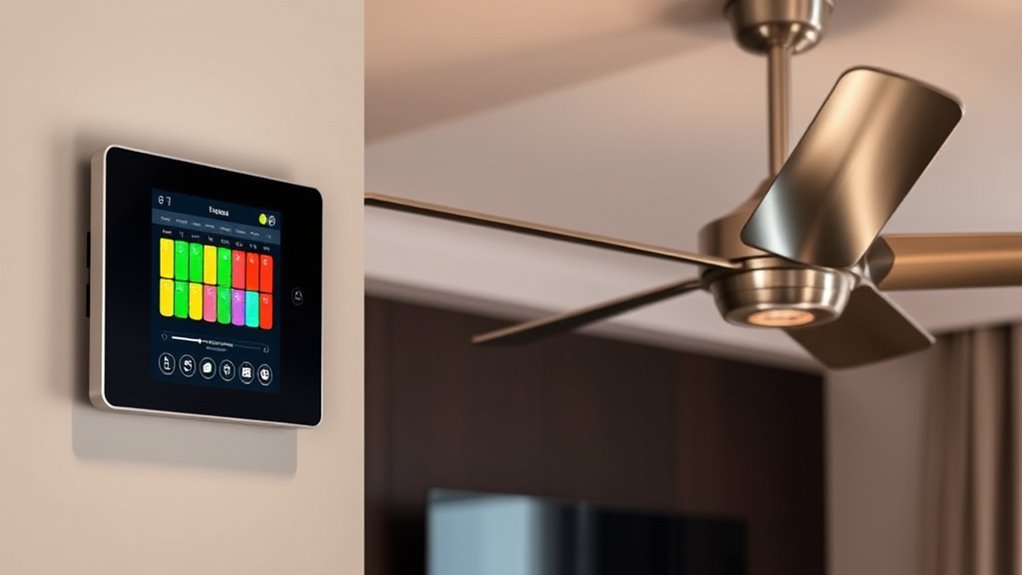

Implementing smart controls and scheduling allows you to optimize fan operation by leveraging real-time environmental data and automation. You can precisely regulate fan speed and activity, reducing energy consumption during low-occupancy periods and improving overall efficiency. Integrating sensors and building management systems enables dynamic adjustments based on temperature, humidity, or occupancy, minimizing wear and maintenance costs. Continuously refining these strategies results in significant operational savings and extended equipment lifespan, revealing more about how this technology can transform your system efficiency.
Key Takeaways
- Integrate sensors and real-time data to automatically adjust fan operation based on occupancy and environmental conditions.
- Implement scheduling aligned with building usage patterns to reduce unnecessary fan runtime during low-occupancy periods.
- Use advanced controls like variable frequency drives (VFDs) for precise speed regulation and energy efficiency.
- Centralize management via Building Management Systems (BMS) or IoT platforms for seamless control and monitoring.
- Leverage machine learning to optimize fan scheduling and performance over time, enhancing energy savings and system longevity.
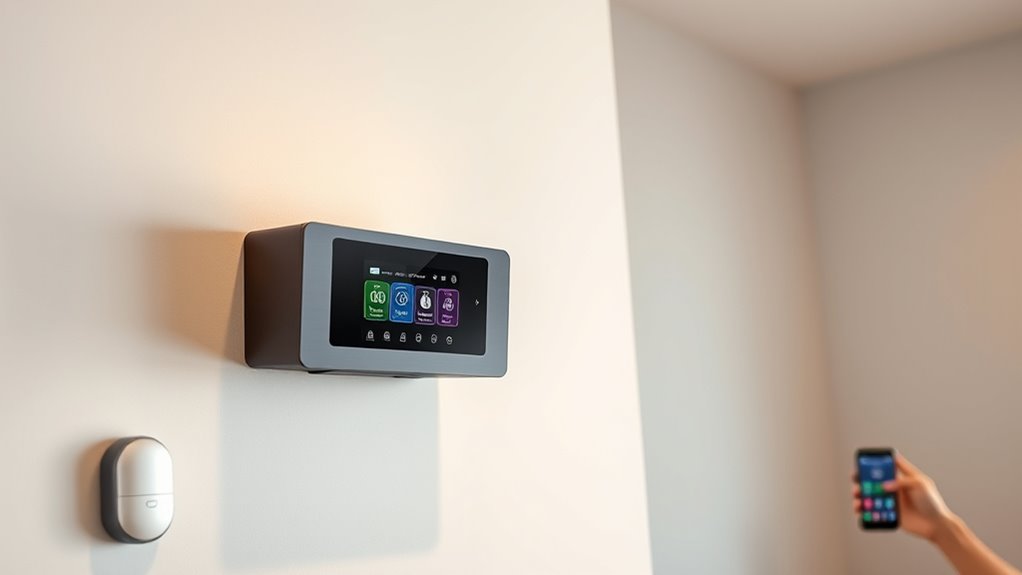
Implementing smart controls and scheduling for energy-saving fans can considerably maximize their performance and reduce operational costs. By integrating automated systems, you can precisely regulate fan operation based on real-time data, environmental conditions, and occupancy patterns. This approach minimizes unnecessary energy consumption, guaranteeing fans run only when needed and at ideal speeds. Smart controls employ sensors such as motion detectors, temperature sensors, and humidity monitors, which feed data into centralized management platforms. These platforms utilize algorithms that analyze incoming data, allowing for dynamic adjustment of fan activity. For example, if a room becomes unoccupied, the system can automatically shut off or reduce fan speed, preventing wastage. Conversely, during peak occupancy or temperature fluctuations, fans ramp up efficiently, maintaining comfort while conserving energy. Additionally, integrating store hours information from local businesses can help align fan operation schedules with actual occupancy patterns, further enhancing efficiency. Scheduling further enhances this efficiency by establishing predefined operation times that align with usage patterns. You can program fans to operate during specific hours, avoiding unnecessary runtime when spaces are unoccupied or during low-usage periods. Advanced scheduling systems incorporate time-based rules with environmental inputs, creating a hybrid control strategy that adapts to both predictable and unpredictable factors. This guarantees fans are not only operating at appropriate times but also adjusting their speeds in response to real-time data, therefore balancing comfort and energy savings. Additionally, these systems can be integrated with building management systems (BMS) or IoT platforms, enabling centralized control and monitoring. This integration facilitates data-driven decision-making, allowing you to identify patterns, optimize schedules, and implement predictive maintenance, which further reduces operational costs.
From a technical perspective, implementing smart controls involves selecting compatible hardware—such as variable frequency drives (VFDs), controllers, and communication protocols—that support real-time data exchange and remote management. Proper calibration of sensors and algorithm tuning are critical to guarantee responsiveness without causing oscillations or inefficiencies. Moreover, integrating machine learning algorithms can enhance system adaptability over time, learning occupancy trends and environmental variations to refine control strategies continuously. The deployment process should include rigorous testing phases to validate system responsiveness and reliability, minimizing potential downtime or malfunctions. By adopting these technologies, you not only improve energy efficiency but also extend the lifespan of fans through optimized operation, reducing maintenance costs. Ultimately, smart controls and scheduling represent a data-driven, adaptable approach that aligns energy consumption with actual needs, delivering significant operational savings and enhanced environmental sustainability.

53T Smart Wi-Fi Ceiling Fan Remote Control Kit, 3 Fan Speed & Light Dimmer,Compatible with Alexa & Google Home Smart Life APP
【Smart Wi-Fi Version】: Remote / Smart Life APP / Voice – 3 ways to control your ceiling fan…
As an affiliate, we earn on qualifying purchases.
As an affiliate, we earn on qualifying purchases.
Frequently Asked Questions
Can Smart Controls Be Integrated With Existing Fan Systems?
Yes, smart controls can be integrated with existing fan systems, provided the fans have compatible interfaces or can be retrofitted with IoT-enabled modules. You’ll need to evaluate the fan’s control protocols and confirm the smart system supports those standards. Integration often involves installing control adapters or controllers that communicate via Wi-Fi or wired connections, allowing you to automate operation, optimize energy use, and remotely manage fan functions efficiently.
What Is the Typical Cost of Installing Smart Scheduling Features?
Installing smart scheduling features typically costs between $100 and $300, depending on the system’s complexity and compatibility. You should consider expenses for hardware, such as controllers or hubs, and potential professional installation fees. The overall investment can be justified by energy savings and improved operational efficiency. Make certain of compatibility with your existing fan system to prevent additional costs, and evaluate the long-term benefits against upfront expenses for maximum value.
How Secure Are Smart Control Systems From Hacking?
An ounce of prevention is worth a pound of cure. Smart control systems employ encryption, secure protocols, and regular updates, making hacking attempts difficult. However, no system is invulnerable; vulnerabilities can exist through weak passwords or outdated firmware. To maximize security, you should use strong, unique passwords, enable multi-factor authentication, and keep software current. While they’re reasonably secure, vigilance is essential to prevent breaches and safeguard your data.
Do Smart Controls Require Professional Installation or Can I Do It Myself?
You can install smart controls yourself if you’re comfortable with basic wiring and follow the manufacturer’s instructions carefully. Many systems come with detailed guides and user-friendly interfaces, making DIY installation feasible. However, if the system involves complex wiring or integration with existing home automation, professional installation ensures safety and maximum performance. Assess your technical skills and the system’s complexity before proceeding to avoid potential issues.
Are There Compatibility Issues With Different Fan Brands and Models?
Compatibility varies among fan brands and models, so you should check each device’s specifications. Many smart controls use standard protocols like Wi-Fi, Zigbee, or Z-Wave, which broadens compatibility. However, some older or proprietary fans may require adapters or may not support integration at all. To avoid issues, verify the control system’s supported devices and consult manufacturer documentation before purchasing or attempting installation.

Quietcool QC ES-5400 RF Energy Saver Advanced Whole House Fan with Wireless Control – Up to 5003 CFM – As low as 89 watts – Two Speed – Covers up to 2,502 SQFT – 10 Year Warranty
Includes RF
As an affiliate, we earn on qualifying purchases.
As an affiliate, we earn on qualifying purchases.
Conclusion
Implementing smart controls and scheduling can reduce fan energy consumption by up to 30%, considerably lowering operational costs. By optimizing usage patterns based on occupancy and environmental data, you enhance efficiency without sacrificing comfort. This data-driven approach not only conserves energy but also extends equipment lifespan. Embracing these technologies means smarter, more sustainable energy management—an essential step in reducing your overall carbon footprint while maintaining ideal performance.

Dwyer DFS2-DA20 Low-Limit Freeze-Protection Switch. Cuts Off Fan and Alerts Building Management System When Cooling-Coil Freeze-Up is Detected. Automatic Reset. 20 ft Capillary.
Dwyer DFS2-DA20 Low-Limit Freeze-Protection Switch. Cuts Off Fan and Alerts Building Management System When Cooling-Coil Freeze-Up is Detected.
As an affiliate, we earn on qualifying purchases.
As an affiliate, we earn on qualifying purchases.

Universal Smart WiFi Ceiling Fan Remote Control Kit, 3 Speed Control with Dimmer, Compatible with Alexa, Google Assistant and Smart Life App, 2-8h Timming
【WIFI Voice Control & APP Support】Compatible for Amazon Alexa, Google Assistant, can voice control ceiling fan light; APP…
As an affiliate, we earn on qualifying purchases.
As an affiliate, we earn on qualifying purchases.