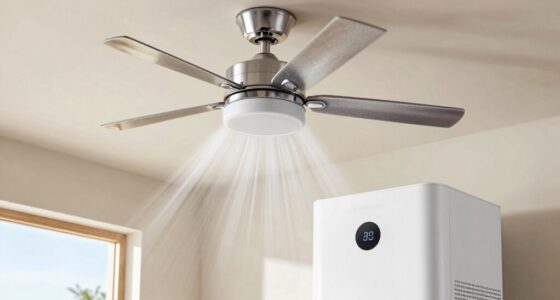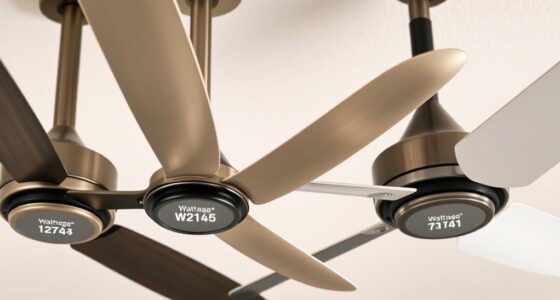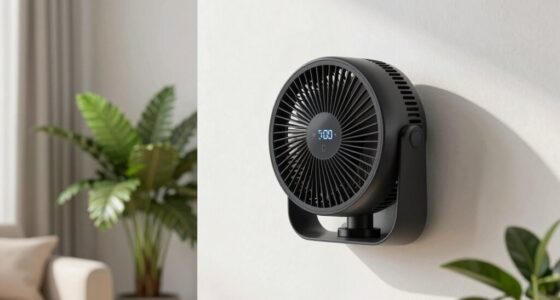
To improve your ceiling fan efficiency through retrofits, upgrade to high-efficiency direct-drive motors with variable frequency drives for precise control. Replace existing blades with aerodynamically optimized, lightweight materials to boost airflow and reduce mechanical wear. Integrate smart control systems like variable speed controls, timers, and sensors to optimize operation based on environmental needs. Proper installation, wiring, and safety practices guarantee reliability. Continue exploring these upgrades to open maximum performance and energy savings.
Key Takeaways
- Upgrade to high-efficiency, direct-drive motors with variable frequency drives for precise and dynamic airflow control.
- Replace existing blades with aerodynamically optimized, lightweight materials to enhance airflow and reduce mechanical wear.
- Install advanced control systems like smart controllers and sensors for fine-tuned speed regulation and energy savings.
- Ensure proper electrical connections, grounding, and compatibility with existing wiring for safe and seamless retrofit installation.
- Maintain ongoing monitoring, calibration, and cybersecurity measures to sustain efficiency and protect the upgraded system.
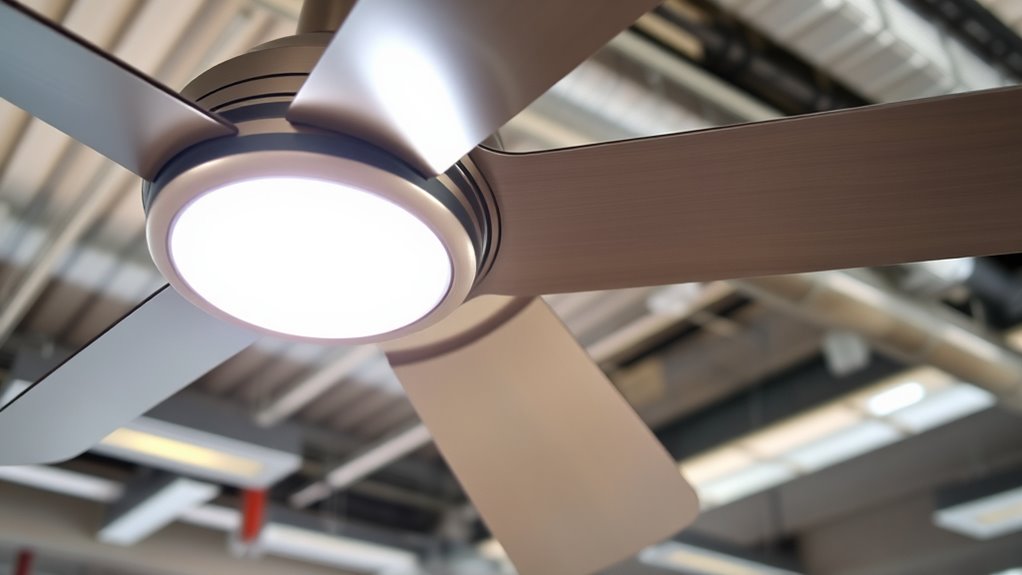
Upgrading ceiling fans with retrofit components can markedly enhance their energy efficiency and performance. This process involves systematically replacing or supplementing existing parts with advanced, energy-saving alternatives designed to optimize airflow, reduce power consumption, and prolong operational lifespan. The core objective is to achieve a more efficient and reliable system without the need for full replacement, making retrofit upgrades a cost-effective approach for both residential and commercial applications.
The most impactful retrofit component is often the motor. Upgrading to a high-efficiency, direct-drive motor reduces electrical losses and minimizes heat generation, leading to lower energy consumption. Modern motors utilize electronically commutated technology or variable frequency drives, which allow precise control over speed and torque. These motors respond dynamically to load changes, ensuring consistent airflow while consuming less power. When selecting a retrofit motor, it’s critical to match the specifications of the existing fan assembly for peak performance and compatibility. Proper installation ensures minimal vibration and noise, which further enhances operational efficiency.
Another key retrofit component involves the blades. Replacing outdated blades with aerodynamically optimized designs can greatly improve airflow efficiency. These blades are crafted from lightweight, durable materials, such as reinforced plastics or composite composites, which reduce inertia and allow for faster acceleration and deceleration. The blade pitch and shape are engineered to maximize lift-to-drag ratios, ensuring effective circulation with less energy input. When installing new blades, precise balancing is essential to prevent wobbling, reduce mechanical stress, and avoid excessive wear on the motor and mounting hardware.
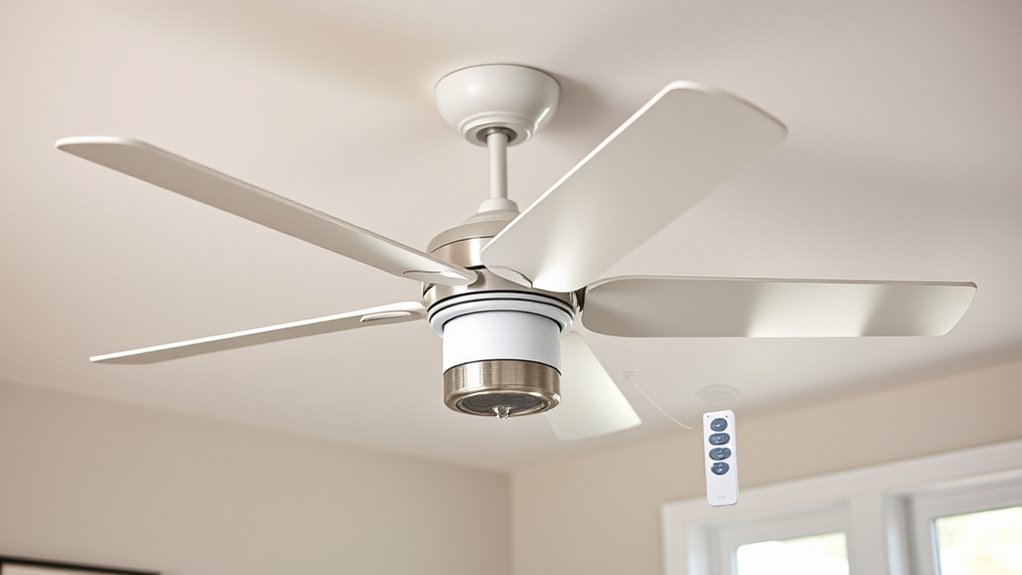
The control system also plays a pivotal role in retrofit upgrades. Incorporating advanced variable speed controllers or smart fan modules enables fine-tuned operation, adjusting fan speed based on environmental demand. These controllers often feature programmable timers, humidity sensors, or integration with building automation systems, facilitating energy savings during periods of low demand. By replacing standard on/off switches with these intelligent controls, you gain granular command over fan operation, reducing unnecessary energy consumption and extending component lifespan.
Finally, integrating retrofit components with existing electrical wiring and mounting hardware requires meticulous attention to detail. Proper grounding, secure connections, and adherence to electrical codes are critical to ensure safety and reliability. Utilizing modular retrofit kits simplifies installation, reduces downtime, and guarantees compatibility across different fan models. Regular maintenance and calibration post-upgrade are necessary to sustain peak performance and energy efficiency gains over the system’s operational life. Additionally, staying informed about advancements in AI security can help in safeguarding these upgraded systems from potential cyber threats.

Phylluz 72'' Large Ceiling Fans with Lights, Modern Black Ceiling Fan Remote/APP Control, Dimmable, Quiet DC Motor Big Ceiling Fan for Indoor/Covered Outdoor
3-WAY CONTROL OPTION: Experience ultimate convenience with this 72 inch ceiling fan with light. Operate it via the…
As an affiliate, we earn on qualifying purchases.
As an affiliate, we earn on qualifying purchases.
Frequently Asked Questions
What Are the Costs Associated With Different Retrofit Options?
The costs vary based on retrofit options. Replacing motor controllers or adding smart controls typically costs $50 to $200 per unit, including installation. Upgrading blades or adding high-efficiency fans can range from $100 to $300, depending on size and materials. Advanced sensors or automation systems may cost $200 to $500. Labor costs are additional, usually 20-50% of material expenses. Evaluate these options based on energy savings and installation complexity for best ROI.
How Long Do Retrofit Upgrades Typically Last?
Retrofit upgrades typically last between 10 to 15 years, depending on usage and environmental conditions. Think of it as a well-tuned engine; with proper maintenance, its performance endures longer. High-quality components, such as energy-efficient motors and durable blades, extend lifespan, while regular inspections prevent premature failure. Ultimately, choosing reliable parts and adhering to recommended maintenance schedules guarantees your upgraded ceiling fan remains efficient and functional for years to come.
Can Retrofit Upgrades Be Performed on All Ceiling Fan Models?
Retrofit upgrades can often be performed on most ceiling fan models, but compatibility depends on the specific design and components. You should verify that the upgrade kit matches your fan’s motor type, mounting, and control systems. Consult the manufacturer’s specifications or a professional installer to guarantee proper fit and function. Not all models may support upgrades, so a compatibility check is essential before proceeding with retrofit modifications.
Are There Any Safety Concerns During Retrofit Installation?
Yes, safety concerns during retrofit installation include electrical shock, short circuits, and mechanical injury. You should always turn off power at the circuit breaker before starting, use insulated tools, and wear protective gear. Verify compatibility of retrofit components with your fan model, and follow manufacturer instructions precisely. If unsure, consult a qualified electrician to guarantee safe and proper installation, minimizing risks associated with electrical and mechanical hazards.
How Do Retrofit Upgrades Impact Energy Savings Over Time?
You’ll notice significant energy savings over time with retrofit upgrades, as they optimize fan performance and reduce electricity consumption. Upgrading components like motors and blades enhances airflow efficiency, which directly lowers energy costs. These improvements also minimize wear on your system, extending its lifespan. Over months and years, these cumulative savings can offset initial installation costs, making retrofit upgrades a cost-effective, sustainable choice for maintaining efficient ceiling fan operation.

Westinghouse Lighting 20.5-Inch Replacement Fan Blades for 52-Inch Ceiling Fans
Compatible with 52" Fans: Designed to fit most standard 52-inch ceiling fans, ensuring a seamless replacement
As an affiliate, we earn on qualifying purchases.
As an affiliate, we earn on qualifying purchases.
Conclusion
By upgrading your ceiling fan with the latest retrofit options, you balance technological precision with everyday comfort. While these upgrades may seem subtle, they considerably reduce energy consumption and enhance performance. Just as a finely tuned engine maximizes efficiency, a professionally retrofitted fan optimizes airflow and minimizes waste. Embrace these technical enhancements to achieve a seamless blend of innovation and practicality, ensuring your space remains comfortable and energy-efficient with minimal effort.

53T Smart Wi-Fi Ceiling Fan Remote Control Kit, 3 Fan Speed & Light Dimmer,Compatible with Alexa & Google Home Smart Life APP
【Smart Wi-Fi Version】: Remote / Smart Life APP / Voice – 3 ways to control your ceiling fan…
As an affiliate, we earn on qualifying purchases.
As an affiliate, we earn on qualifying purchases.

Ledytech 4 inch LED Retrofit Light Kit for Ceiling Fan Light Replacement Panel PCB 18W 6000K 2200LM 120V CRI90 Dimmable ETL (White 6000K)
1. Compatibility: This LED light replacement kit is compatible with AC120V ceiling fans or ceiling lights. It connects…
As an affiliate, we earn on qualifying purchases.
As an affiliate, we earn on qualifying purchases.