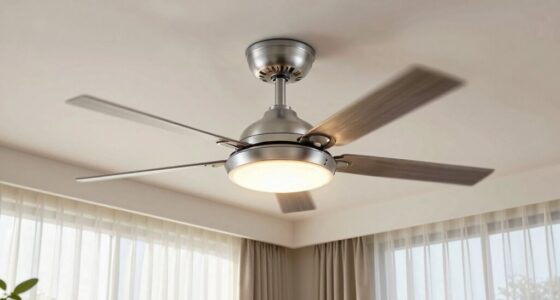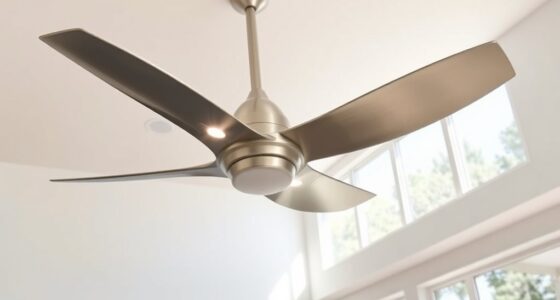

Using ceiling fans effectively can lower your heating and cooling costs by improving air circulation and temperature distribution. In summer, run fans counterclockwise to create a cooling breeze that allows you to set your thermostat higher while maintaining comfort. In winter, switch to clockwise rotation at low speed to circulate warm air near the ceiling and reduce heating demands. Proper placement and operation maximize energy savings, and combining fans with your HVAC system enhances overall efficiency. If you want to uncover more tips, keep exploring these strategies.
Key Takeaways
- Use ceiling fans to improve air circulation, allowing higher thermostat settings and reducing HVAC energy consumption.
- Operate fans counterclockwise in summer for cooling, and clockwise in winter to distribute warm air effectively.
- Ensure proper fan placement and balanced blades to maximize coverage and minimize energy waste.
- Combine fan use with HVAC systems for enhanced efficiency and reduced heating and cooling costs.
- Choose energy-efficient fans with reversible switches and maintain them regularly for optimal performance.

Ceiling fans can substantially reduce heating and cooling costs by improving indoor air circulation and optimizing temperature distribution. When properly utilized, they serve as an energy-efficient supplement to your HVAC system, guaranteeing consistent comfort while minimizing energy consumption. The key to maximizing their effectiveness lies in understanding their operational principles and implementing correct usage strategies based on seasonal conditions.
During warmer months, ceiling fans should rotate counterclockwise, creating a downward airflow that produces a cooling effect. This airflow enhances the evaporation of sweat from your skin, making you feel cooler without physically lowering the room’s temperature. By feeling cooler, you can comfortably set your air conditioning system to a higher temperature, reducing its workload and energy consumption. Conversely, in colder months, fans should rotate clockwise at a low speed to generate an updraft. This action pulls warm air near the ceiling downward, promoting a more even temperature distribution throughout the room. Such circulation prevents stratification, where warm air rises and cooler air remains at ground level, therefore reducing the need for frequent or prolonged heating cycles.
In summer, set fans to rotate counterclockwise for cooling; in winter, switch to clockwise for warmth circulation.
Optimal placement and operation of ceiling fans are critical for energy savings. Position fans to cover the maximum area without creating drafts that directly blow on occupants. Guarantee blades are balanced to reduce noise and vibration, which can lead to unnecessary energy expenditure or discomfort. Using a ceiling fan with a reverse switch allows quick seasonal adjustment, facilitating seamless shift between summer and winter modes. When operating, keep the fan at the lowest effective speed to maintain air circulation without causing discomfort or unnecessary energy use. Higher speeds are seldom necessary for energy efficiency; instead, lower speeds produce sufficient airflow for comfort.
The integration of ceiling fans with your existing HVAC system requires careful consideration. In winter, running ceiling fans in reverse mode at low speed helps redistribute warm air trapped near the ceiling, reducing the load on your heater. In summer, the same fans can be used to increase the perceived cooling effect without additional energy expenditure from the air conditioning unit. This synergy enables you to maintain comfortable indoor conditions with less reliance on high thermostat settings, thereby reducing overall energy costs. Additionally, selecting energy-efficient ceiling fans can further enhance savings and environmental benefits.
energy-efficient ceiling fans with reversible switch
As an affiliate, we earn on qualifying purchases.
As an affiliate, we earn on qualifying purchases.
Frequently Asked Questions
Can Ceiling Fans Be Used Effectively in Winter?
Yes, ceiling fans can be used effectively in winter. You should set the fan to rotate clockwise at a low speed, which creates an updraft that pushes warm air near the ceiling down into the living space. This circulation helps maintain a consistent temperature, reducing the need for additional heating. Properly adjusting your fan’s direction and speed guarantees energy efficiency and enhanced comfort during colder months.
How Do Ceiling Fans Impact Humidity Levels?
Ceiling fans influence humidity levels by circulating air, which accelerates moisture evaporation from surfaces and your skin. In humid environments, running fans helps decrease perceived humidity, making spaces feel cooler and more comfortable. Conversely, in dry conditions, fans can slightly increase perceived dryness. Proper fan orientation and speed control enhance humidity management, ensuring consistent indoor comfort. Always adjust settings based on your indoor moisture levels for ideal results.
Are There Specific Ceiling Fan Features That Enhance Energy Savings?
Yes, selecting ceiling fans with reversible motors enhances energy savings by allowing you to switch fan direction seasonally. During winter, set the fan to clockwise to circulate warm air, reducing heater use. Choose models with energy-efficient motors, such as ENERGY STAR-rated fans, to minimize power consumption. Features like adjustable speed settings and smart controls enable precise airflow management, further lowering energy costs. Proper sizing and placement optimize efficiency, ensuring maximum savings.
Do Ceiling Fans Increase Noise Levels Significantly?
Ceiling fans can cause some noise, but modern models typically operate quietly, minimizing disturbance. The noise level depends on the fan’s design, motor quality, and blade structure. High-quality fans often feature whisper-quiet motors and sound-dampening components, reducing noise to near inaudible levels. To guarantee minimal noise, select fans with specifications indicating low decibel ratings, and properly install them to avoid vibrations that could amplify sound during operation.
Can Ceiling Fans Replace Traditional Heating and Cooling Systems?
Ceiling fans cannot replace traditional heating and cooling systems entirely. They assist in maintaining temperature consistency by circulating air, which enhances comfort and reduces energy use. However, fans do not generate heat or cool air themselves. During extreme weather, you still need HVAC systems to regulate indoor temperatures effectively. Fans complement, but do not substitute, the primary heating or cooling units for all-encompassing climate control.
best ceiling fans for seasonal use
As an affiliate, we earn on qualifying purchases.
As an affiliate, we earn on qualifying purchases.
Conclusion
By effectively utilizing ceiling fans, you can turn your home into a well-balanced system, much like a finely tuned engine. When used correctly, they optimize temperature distribution, reducing reliance on HVAC systems and lowering energy costs. Remember, fans don’t create heat or cold but facilitate energy efficiency. Incorporate them thoughtfully, and you’ll find your home operating smoother and more cost-effectively, making your energy dollars work harder for you.
ceiling fan with remote control and adjustable speed
As an affiliate, we earn on qualifying purchases.
As an affiliate, we earn on qualifying purchases.
high airflow ceiling fan for large rooms
As an affiliate, we earn on qualifying purchases.
As an affiliate, we earn on qualifying purchases.