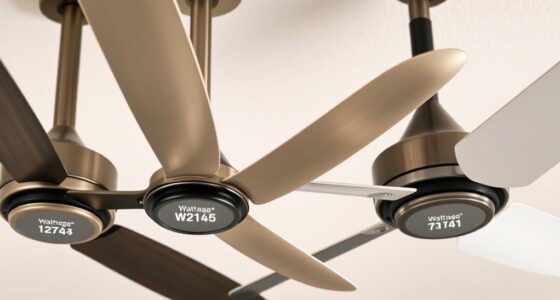
A high power factor in ceiling fans indicates efficient electrical operation by minimizing reactive power and reducing energy losses. It ensures less current is drawn for the same amount of useful work, lowering operational costs and strain on electrical infrastructure. Fans with better power factors comply with standards and enhance efficiency, making them more cost-effective and sustainable. Understanding how power factor affects performance helps you choose fans that optimize energy use—keep exploring to learn more.
Key Takeaways
- A high power factor in ceiling fans indicates efficient power use, reducing energy wastage and operational costs.
- Fans with better power factor minimize reactive power, lessening stress on electrical infrastructure.
- Modern ceiling fans often include power factor correction features to meet efficiency standards.
- Poor power factor can lead to higher utility charges and potential penalties for non-compliance.
- Choosing fans with high power factor ratings supports energy efficiency and adherence to electrical regulations.
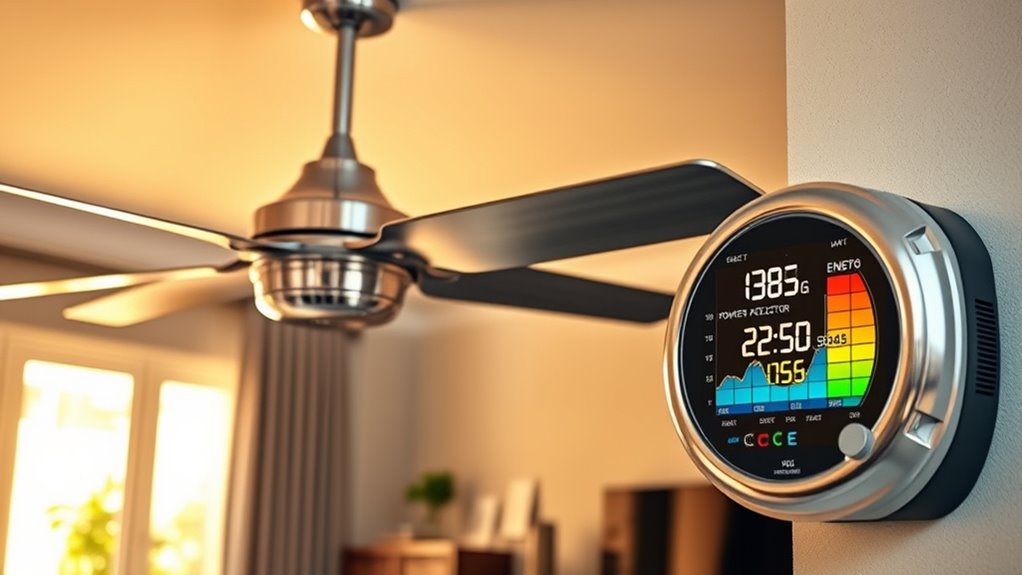
Understanding the relationship between power factor and ceiling fan efficiency is essential for optimizing energy consumption and reducing electrical costs. Power factor, defined as the ratio of real power (measured in watts) to apparent power (measured in volt-amperes), indicates how effectively electrical power is converted into useful work output. When a ceiling fan operates with a low power factor, it draws more current from the supply than necessary, leading to increased energy losses in wiring and transformers. This inefficiency not only elevates operational costs but can also strain electrical infrastructure, potentially causing premature equipment failure or the need for costly upgrades.
Ceiling fans with higher power factors operate more efficiently because they utilize electrical power more effectively. A power factor close to unity (1.0) signifies minimal reactive power, meaning the fan’s motor converts nearly all the supplied electrical energy into mechanical motion. Conversely, a low power factor introduces reactive power, which circulates between the source and the fan’s motor without performing any useful work. This reactive component increases the total current drawn, resulting in higher demand charges from utility providers and greater energy losses in distribution systems. As a result, fans with poor power factors not only consume more electricity but also contribute to inefficiencies in the broader electrical network.
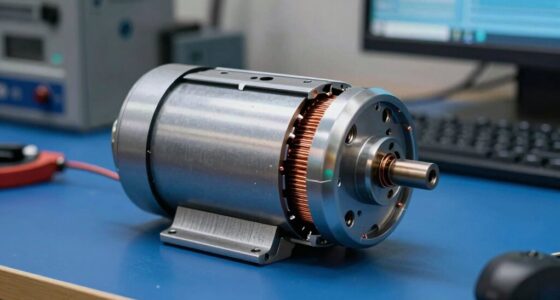
The design and construction of ceiling fan motors play a crucial role in their power factor performance. Fans equipped with capacitor-start or capacitor-run motors often exhibit better power factors due to their ability to mitigate reactive power. Modern fans may incorporate power factor correction devices, such as power factor correction capacitors, which adjust the phase angle between voltage and current, bringing the power factor closer to unity. Properly selecting and maintaining these components ensures optimal operation, reduces energy wastage, and minimizes electrical costs.
Furthermore, the electrical code and standards in many regions set minimum acceptable power factor levels for appliances, including ceiling fans. Failing to meet these standards can result in penalties or additional charges from utility companies. Therefore, when purchasing or maintaining ceiling fans, it’s vital to consider their power factor ratings. Using fans with high power factors not only enhances energy efficiency but also supports sustainable electrical infrastructure by reducing unnecessary load and associated losses. Additionally, staying informed about current electrical standards helps consumers make better choices and ensures compliance with regional regulations.

Fanbulous 65 Inch Ceiling Fans with Lights and Remote, Black Indoor/Outdoor Ceiling Fan with Quiet Reversible DC Motor, 6 Speeds, 3CCT, 8 Blades Large Ceiling Fan for Living Room Bedroom Patio
65 Inch Large Ceiling Fan: The living room ceiling fan has 2 colors on each blade – a…
As an affiliate, we earn on qualifying purchases.
As an affiliate, we earn on qualifying purchases.
Frequently Asked Questions
How Does Power Factor Influence Energy Bills for Ceiling Fan Users?
A poor power factor increases your energy bills because utility companies often charge extra for reactive power. When your ceiling fan’s power factor drops below ideal levels, it causes inefficiencies, leading to higher apparent power consumption. This inefficiency results in increased demand charges on your bill. Improving the power factor with capacitors or selecting fans with better power factor ratings can reduce these costs and enhance overall energy efficiency.
Can Upgrading a Ceiling Fan Improve Its Power Factor?
Yes, upgrading a ceiling fan can improve its power factor if you select models with better-designed motors and electronic components. Modern fans often feature power factor correction circuits, reducing reactive power and increasing efficiency. By choosing an energy-efficient fan with a high power factor rating, you’ll minimize energy losses and potentially lower your electricity bills. Always check the product specifications for power factor ratings before making an upgrade to guarantee ideal performance.
Are High Power Factor Fans More Environmentally Friendly?
Yes, high power factor fans are more environmentally friendly because they use electrical energy more efficiently, reducing waste and minimizing power losses. By improving energy utilization, these fans lower overall electricity consumption, which decreases greenhouse gas emissions from power plants. This sustainability benefit aligns with eco-conscious practices, making high power factor fans a practical choice for reducing environmental impact while maintaining ideal performance.
What Is the Typical Power Factor Range for Energy-Efficient Ceiling Fans?
Imagine a well-tuned orchestra, where each instrument plays in harmony. Similarly, energy-efficient ceiling fans typically have a power factor ranging from 0.85 to 0.95, indicating efficient use of electrical power. This range minimizes energy waste and reduces strain on the power grid. Maintaining a high power factor guarantees your fan operates smoothly, conserving energy and supporting environmental sustainability, much like a symphony’s harmony benefits the overall performance.
How Does Fan Size Affect Its Power Factor and Efficiency?
You’ll find that larger ceiling fans generally have a lower power factor, as their increased motor capacity draws more reactive power. However, efficiency depends on design, motor quality, and blade aerodynamics, not just size. A bigger fan may move more air but could consume more energy if not optimized. To maximize efficiency, choose a fan with a high-quality motor and a design tailored for your room size, regardless of size alone.

POCHFAN 52 Inch White Ceiling Fans with Lights and Remote, Flush Mount Low Profile Ceiling Fan for Bedroom, Living Room, Patio, Dimmable 6 Speeds Noiseless Reversible, ETL Listed
Ceiling Fan Design: With its stylish design, this low profile ceiling fan is sure to complement any decor….
As an affiliate, we earn on qualifying purchases.
As an affiliate, we earn on qualifying purchases.
Conclusion
Understanding power factor and ceiling fan efficiency helps you make informed choices that save energy and reduce costs. By selecting fans with high power factors, you guarantee ideal performance and less electrical waste. Isn’t it worth investing in equipment that maximizes efficiency and minimizes environmental impact? Paying attention to these technical details allows you to operate your fan system more effectively, ultimately enhancing durability and energy savings. Isn’t efficiency the key to a smarter, greener home?

Ohniyou Ceiling Fans with Lights, 52'' Low Profile Ceiling Fan with Light and Remote/APP Control, Modern Flush Mount Ceiling Fan for Indoor Bedroom Living Room, Dimmable, Qiuet DC Motor, Black
Smart Ceiling Fans with APP & Remote Control: This modern ceiling fan with lights has all functions controllable…
As an affiliate, we earn on qualifying purchases.
As an affiliate, we earn on qualifying purchases.

New CEILING FAN CAPACITOR CBB61 4.5uf + 6uf + 5uf 5 WIRE 250V
This is a CBB61 4.5uf+6uf+5uf 5 WIRE capacitor Tolerance 5%, 250V AC and 50/60Hz rating.
As an affiliate, we earn on qualifying purchases.
As an affiliate, we earn on qualifying purchases.