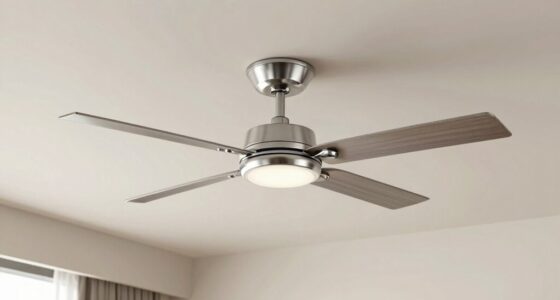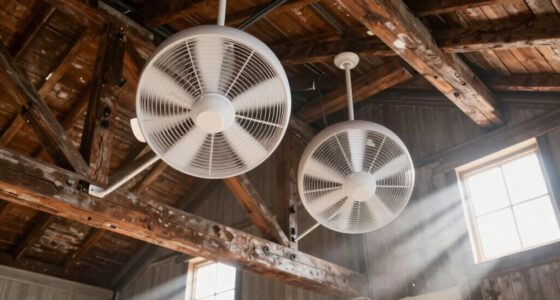
Using ceiling fans in passive house design enhances cooling by promoting effective air circulation and maintaining stable indoor temperatures. Proper placement, such as central positioning and alignment with natural airflow pathways, maximizes airflow efficiency with minimal energy use. Variable speed controls and smart operation optimize performance during warm periods, preventing stagnation and thermal gradients. When integrated with passive strategies like shading and night flushing, ceiling fans profoundly improve occupant comfort and reduce reliance on active cooling systems. Exploring further reveals how to optimize this integration effectively.
Key Takeaways
- Proper placement and size of ceiling fans promote effective air circulation, supporting passive cooling strategies.
- Using variable speed controls optimizes airflow and energy efficiency based on indoor and outdoor conditions.
- Ceiling fans create wind-chill effects, increasing occupant comfort without lowering indoor temperatures.
- Integrating fans with passive design features like cross-ventilation enhances overall thermal comfort.
- Strategically operating fans during warm periods helps distribute heat evenly and reduces reliance on active cooling systems.

Have you considered how ceiling fans can optimize passive house cooling strategies? Integrating ceiling fans into a passive house’s design enhances thermal comfort and reduces reliance on active cooling systems. Unlike traditional air conditioning, ceiling fans facilitate air circulation without substantially altering indoor temperatures, therefore supporting the passive house principle of maintaining stable, comfortable environments through strategic design. Properly positioned ceiling fans create a wind-chill effect that increases occupant comfort at higher ambient temperatures, effectively lowering the perceived temperature without changing the actual thermal conditions.
Ceiling fans boost comfort and efficiency in passive houses by enhancing air circulation and reducing reliance on active cooling.
From a technical perspective, the efficiency of ceiling fans in passive houses depends on their placement, blade design, and operational settings. Ceiling fans should be installed centrally within the space, ideally aligned with natural airflow pathways created by passive strategies such as cross-ventilation and stack effect ventilation. Blade pitch and diameter directly influence airflow volume; larger blades with a steeper pitch move more air with less energy, making them suitable for maintaining comfort in larger or more thermally stabilized spaces. The fan’s motor efficiency also plays a vital role, with energy-efficient models reducing power consumption and aligning with passive house energy standards.
Operational controls further refine the effectiveness of ceiling fans. Variable speed settings allow precise adjustment to match outdoor conditions and indoor thermal loads, preventing unnecessary energy use. In a passive house, you should operate fans primarily during warm periods or when internal heat gains exceed passive cooling capacity. The use of timers and thermostats can automate fan operation, ensuring they run only when needed, which conserves energy and maintains comfort. It’s essential to synchronize ceiling fan operation with passive cooling strategies, such as night flushing and shading, to maximize overall system performance.
Additionally, ceiling fans can influence the thermal gradient within the building envelope. By promoting even air distribution, they mitigate stratification and localized hot spots, thereby improving occupant comfort and reducing the load on passive cooling elements. The interaction between ceiling fans and the building’s thermal mass is vital; fans should be used to circulate air across thermal mass surfaces to facilitate heat redistribution and prevent stagnation zones. Properly managed, ceiling fans become an active complement to passive design features, extending their effectiveness during periods of peak thermal stress. Recognizing the passive house principle of maintaining stable indoor environments, ceiling fans serve as a crucial tool to enhance overall thermal comfort efficiently.

Phylluz 72'' Large Ceiling Fans with Lights, Modern Black Ceiling Fan Remote/APP Control, Dimmable, Quiet DC Motor Big Ceiling Fan for Indoor/Covered Outdoor
3-WAY CONTROL OPTION: Experience ultimate convenience with this 72 inch ceiling fan with light. Operate it via the…
As an affiliate, we earn on qualifying purchases.
As an affiliate, we earn on qualifying purchases.
Frequently Asked Questions
Can Ceiling Fans Reduce Overall Energy Consumption in Passive Houses?
Yes, ceiling fans can reduce your overall energy consumption in passive houses by improving thermal comfort without relying heavily on active cooling systems. They circulate air efficiently, creating a wind-chill effect that allows you to set thermostats higher. This lowers the demand for air conditioning or mechanical cooling, ultimately decreasing your energy use. Properly designed and operated ceiling fans optimize passive cooling strategies, leading to sustainable, energy-efficient indoor environments.
Are Certain Ceiling Fan Designs Better Suited for Passive House Cooling?
Yes, certain ceiling fan designs are better suited for passive house cooling. Energy-efficient fans with aerodynamic blades reduce airflow resistance, maximizing cooling with minimal power. Fans featuring reversible motors allow you to switch between summer and winter modes, optimizing airflow direction. Low-profile designs minimize visual impact while maintaining performance. By selecting fans with high airflow efficiency, quiet operation, and appropriate blade pitch, you enhance comfort without compromising passive house principles.
How Do Ceiling Fans Impact Humidity Levels in Passive House Environments?
Ceiling fans do not substantially impact humidity levels in passive house environments. They primarily circulate air, creating a cooling sensation through increased evaporation from your skin. While they can improve comfort, they don’t dehumidify or add moisture to the space. If humidity control is necessary, you should incorporate dedicated dehumidification systems alongside ceiling fans to maintain ideal indoor moisture levels efficiently.
What Maintenance Is Required for Ceiling Fans in Passive Houses?
You should clean your ceiling fans monthly to prevent dust buildup, which can reduce efficiency and air quality. Inspect blades for warping or damage quarterly, and tighten any loose mounting hardware. Lubricate the motor bearings annually if accessible, and replace any worn or damaged parts promptly. Confirm the fan’s controls are functioning correctly, and verify that airflow direction settings are appropriate for seasonal use, optimizing energy efficiency and indoor comfort.
Can Ceiling Fans Replace Traditional Air Conditioning in Passive House Design?
Ceiling fans cannot replace traditional air conditioning in passive house design, but they markedly augment cooling efficiency. They improve occupant comfort by enhancing air circulation and promoting evaporative cooling, which reduces the need for active cooling systems. However, during extreme heat, passive houses still require supplemental cooling methods. Consequently, ceiling fans serve as an effective supplementary tool, but not a complete substitute for conventional air conditioning in maintaining ideal indoor temperatures.

72 inch Ceiling Fans with Lights,Large Ceiling Fan with Light and Remote Control, Dimmable, 3CCT, Quiet, Black Modern Ceiling fan For Living Room, Bedroom, Kitchen, Patio, Farmhouse, Indoor/Outdoor
Ceiling Fan with Light: Decorate your home with Amico ceiling fan! While bringing you coolness and comfort, it…
As an affiliate, we earn on qualifying purchases.
As an affiliate, we earn on qualifying purchases.
Conclusion
By integrating ceiling fans with passive house design, you amplify natural cooling efficiencies, turning a passive strategy into an active one. Ceiling fans create a wind-chill effect that enhances comfort without sacrificing energy savings, much like a gentle breeze whispering through an open window. This synergy optimizes indoor climate control, ensuring your home remains cool and sustainable. When these systems work together, they form a harmonious balance—proving that the whole truly exceeds the sum of its parts.

AC Infinity CLOUDWAY Whole House EC Fan T10, 1200 CFM with Temperature Humidity Controller, WiFi Integrated App Control – Ceiling Mount House Attic Vent Fan, Exhaust Home Ventilation System
A whole house attic fan designed to cool and ventilate entire homes by exhausting hot air from indoor…
As an affiliate, we earn on qualifying purchases.
As an affiliate, we earn on qualifying purchases.

ZMISHIBO 52 Inch Ceiling Fan with Light, App&Remote Control, Flush Mount Low Profile, Dimmable 20W LED Light, Quiet Reversible Motor for Bedroom, Living Room, Apartment, Black
Perfect Size for Rooms: This 52-inch ceiling fan is ideal for cooling and illuminating spacious areas like living…
As an affiliate, we earn on qualifying purchases.
As an affiliate, we earn on qualifying purchases.