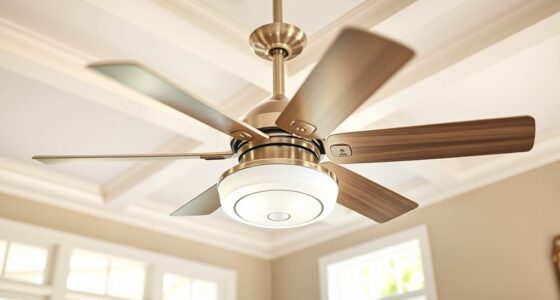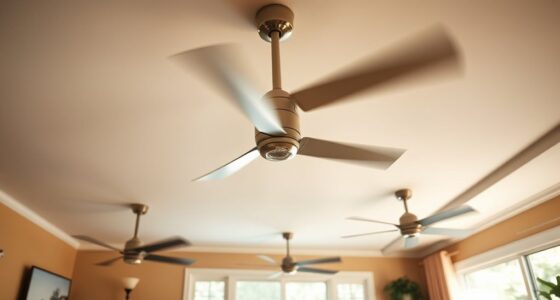

In warm climates, set ceiling fans to rotate counterclockwise during summer to create a cooling breeze, reducing your air conditioning needs. In colder zones, reverse to clockwise at low speed in winter to circulate warm air and lower thermostat settings. Properly sizing and maintaining fans enhances efficiency across all zones. You can optimize comfort and cut energy costs further by adjusting fan operation seasonally, ensuring maximum savings in any climate. Exploring these strategies reveals additional ways to improve your energy efficiency.
Key Takeaways
- In temperate zones, operate ceiling fans counterclockwise in summer for cooling and clockwise in winter to circulate warm air.
- In subtropical/tropical climates, use fans counterclockwise during hot seasons to maximize airflow and reduce air conditioning energy.
- Proper fan sizing and speed adjustment prevent discomfort and optimize energy savings across all climate zones.
- Regular maintenance and correct operation enhance fan efficiency and prolong lifespan, supporting consistent energy savings.
- Combining ceiling fans with natural ventilation strategies effectively lowers reliance on mechanical cooling and heating systems.
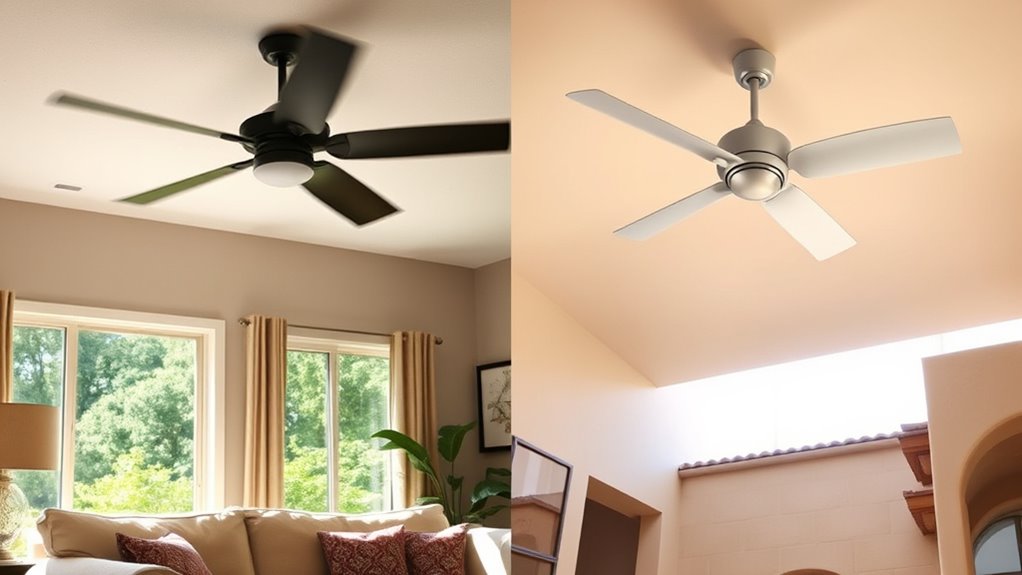
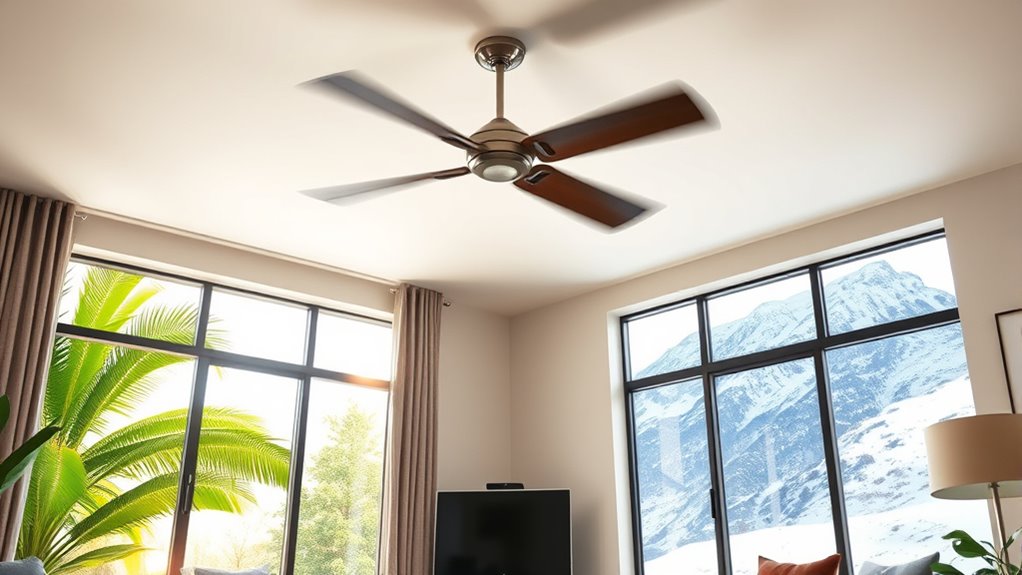
Ceiling fans can substantially decrease energy costs when used appropriately across various climate zones. Their effectiveness hinges on proper operation tailored to local temperature patterns and seasonal variations. In temperate climates, where seasonal fluctuations are moderate, ceiling fans serve primarily as supplementary cooling or heating devices. During summer months, setting the fan to rotate counterclockwise creates a breeze that enhances evaporation from your skin, effectively lowering perceived temperature without markedly impacting the room’s actual temperature. This allows you to raise the thermostat by a few degrees, reducing the workload on air conditioning units and decreasing energy consumption. Conversely, in cooler seasons, reversing the fan’s direction to clockwise at a low speed promotes air circulation that redistributes warm air trapped near ceilings, minimizing heat loss and reducing reliance on heating systems. This bidirectional functionality supports year-round energy efficiency when properly implemented. Additionally, regular maintenance such as cleaning blades and lubricating motors can improve efficiency and prolong the lifespan of ceiling fans.
In warmer, subtropical, and tropical zones, ceiling fans can markedly diminish cooling energy demands. During hot seasons, setting the fan to operate counterclockwise maximizes airflow, promoting evaporative cooling and creating a wind-chill effect that makes occupants perceive lower temperatures. This perception enables you to set thermostats higher or forego air conditioning altogether, leading to substantial savings. It’s critical, however, to guarantee fans are appropriately sized for the space; oversized fans may create excess airflow, leading to discomfort and unnecessary energy use. Additionally, optimizing fan speed settings based on occupancy and external conditions prevents wasteful operation. In these zones, ceiling fans are particularly effective when combined with natural ventilation strategies, such as opening windows during cooler evenings and mornings, further reducing reliance on mechanical cooling. Proper fan sizing ensures maximum comfort and efficiency.
In colder climate zones, ceiling fans are less directly linked to heating but still contribute to energy savings through strategic use. During winter, reversing the fan to rotate clockwise at low speed encourages warm air, which rises and accumulates near ceilings, to circulate more evenly throughout the room. This process reduces stratification and helps maintain a consistent temperature, allowing you to lower your heating system’s thermostat without sacrificing comfort. Proper use of ceiling fans in these environments can prevent drafts and hot spots, leading to more efficient heat distribution. It’s essential to turn off fans when rooms are unoccupied or when heating is not required, as unnecessary operation provides no benefit and wastes energy.
Across all climate zones, understanding the relationship between fan direction, speed, and external conditions is crucial to maximizing energy savings. Correctly timed operation ensures that ceiling fans complement existing HVAC systems rather than replace them, resulting in optimized energy use and cost reductions. Maintenance practices, such as cleaning blades and checking motor efficiency, further enhance performance and longevity, ensuring consistent savings over time. By tailoring ceiling fan operation to specific climate characteristics, you can achieve notable reductions in energy expenditures while maintaining comfort throughout the year.

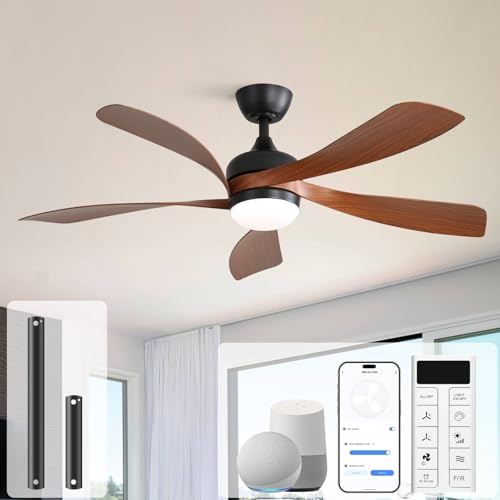
ZMISHIBO 52 Inch Ceiling Fan with Light, App&Remote Control, Flush Mount Low Profile, Dimmable 20W LED Light, Quiet Reversible Motor for Bedroom, Living Room, Apartment, Black
Perfect Size for Rooms: This 52-inch ceiling fan is ideal for cooling and illuminating spacious areas like living...
As an affiliate, we earn on qualifying purchases.
Frequently Asked Questions
How Do Ceiling Fans Affect Humidity Levels in Various Climates?
Ceiling fans do not directly alter humidity levels but influence perceived comfort through air circulation. In humid climates, fans facilitate evaporation of sweat, making you feel cooler and reducing the need for air conditioning. Conversely, in dry environments, increased air movement can accelerate moisture loss from your skin. While fans don’t change humidity, their effectiveness depends on climate, and using them appropriately can optimize comfort and energy efficiency.
Can Ceiling Fans Be Used to Reduce Heating Costs in Winter?
Yes, ceiling fans can help reduce heating costs in winter. When set to rotate clockwise, they create an updraft that redistributes warm air trapped near the ceiling, effectively circulating heat throughout the room. For example, in my own home, flipping my fan saved me about 10% on heating bills by minimizing heat stratification. Properly used, ceiling fans are a simple, efficient way to improve warmth distribution and lower energy expenses.
Are There Specific Fan Features Ideal for Different Climate Zones?
Yes, specific fan features optimize energy savings across climate zones. In warmer regions, select fans with high airflow capacity and adjustable speed for effective cooling. In colder zones, choose fans with reversible blades to assist in heat circulation. Look for models with energy-efficient motors and timers to minimize power consumption. Properly configuring these features guarantees maximum efficiency tailored to your climate, reducing overall heating and cooling costs.
How Does Fan Placement Influence Energy Savings in Diverse Environments?
Proper fan placement optimizes airflow, enhances comfort, and reduces energy consumption. Position your fan to face the center of the room, making certain it circulates air evenly, rather than just near walls or corners. In warm climates, ceiling fans should be installed high and directly over living areas to maximize cooling. In cooler environments, place fans to push warm air downward or to improve cross-ventilation. Strategic placement ensures efficient energy use across diverse settings.
What Maintenance Routines Optimize Ceiling Fan Efficiency Across Climates?
You should regularly clean fan blades and motor components to prevent dust buildup, which can reduce efficiency. Check and tighten mounting hardware to minimize wobbling, and lubricate moving parts as recommended by the manufacturer. In humid climates, use corrosion-resistant materials and inspect for rust. During off-seasons, turn off fans and clean blades thoroughly. These routines guarantee ideal airflow, reduce energy consumption, and extend your fan’s lifespan across various climate conditions.
Sofucor 52" Smart Ceiling Fan, Indoor/Outdoor Ceiling Fans with Lights and Remote, Compatible with Alexa/Google/App, 3-Color Light 6-Speed Timing Reversible DC Motor for Bedroom Living Room Patio
Voice & App & Remote Control: Sofucor alexa ceiling fan with light can be controlled in 3 ways....
As an affiliate, we earn on qualifying purchases.
Conclusion
By understanding how ceiling fans perform across various climate zones, you can optimize energy savings and reduce costs effectively. However, the true potential of these systems remains partially accessible without proper adjustments tailored to your environment. Are you leveraging your ceiling fans to their full efficiency? Implementing zone-specific settings could be the game-changer you need—stay tuned for insights that could transform your energy strategy and maximize savings in ways you haven’t yet imagined.

52in Smart Low Profile Ceiling Fans with Lights Remote,Quiet DC Motor,Outdoor Indoor Flush Mount Ceiling Fan,Control with WIFI Alexa App,Dimmable,6-speed,3 White Wood blades,for Modern Bedroom Patio
【Voice &APP &Remote Control】52 inch Ceiling fan with lights and remote (handheld and wall mounted), still in control...
As an affiliate, we earn on qualifying purchases.

72 inch Ceiling Fans with Lights,Large Ceiling Fan with Light and Remote Control, Dimmable, 3CCT, Quiet, Black Modern Ceiling fan For Living Room, Bedroom, Kitchen, Patio, Farmhouse, Indoor/Outdoor
Ceiling Fan with Light: Decorate your home with Amico ceiling fan! While bringing you coolness and comfort, it...
As an affiliate, we earn on qualifying purchases.