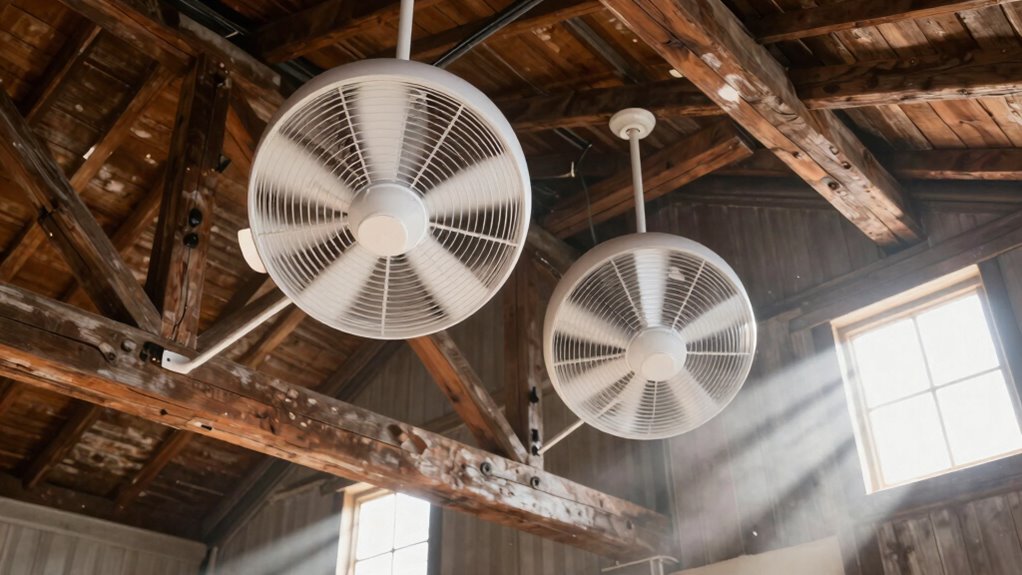
When your attic overheats, it forces your air conditioner to work harder, pushing up your energy bills. Installing an attic fan helps expel hot air and draws in cooler outside air, keeping your attic and home cooler naturally. This reduces the strain on your AC, saving you money and preventing damage like mold or roof issues. Want to discover how the right attic fan can make a difference? Keep exploring to learn more.
Key Takeaways
- Attic overheating traps heat, increasing indoor temperatures and causing AC to work harder, raising energy bills.
- Proper attic ventilation with fans expels hot air, reducing attic temperatures and easing AC load.
- Installing a suitable attic fan improves airflow, preventing heat buildup that spikes cooling costs.
- Solar-powered attic fans offer energy-efficient solutions to mitigate overheating without raising electricity bills.
- Regular maintenance ensures attic fans operate optimally, maintaining cooler temperatures and lowering AC expenses.
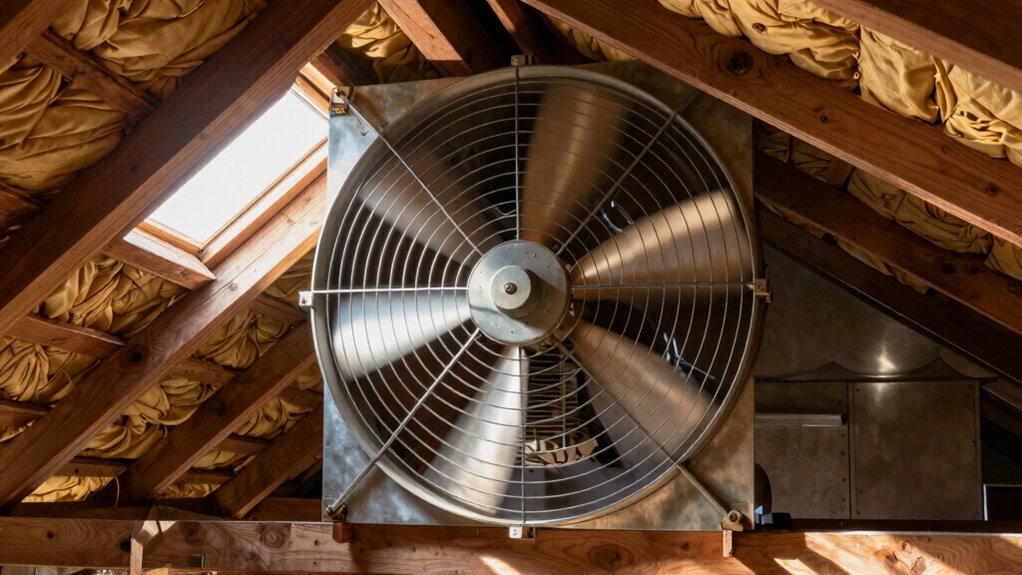
Are you looking for an effective way to reduce your home’s energy costs and improve ventilation? Installing an attic fan could be just what you need. These fans are designed to boost ventilation efficiency in your attic, helping to expel hot air that accumulates during the warmer months. When your attic isn’t properly ventilated, heat builds up, increasing the temperature in your living space and making your air conditioner work overtime. By installing an attic fan, you can considerably lower indoor temperatures, which directly contributes to energy savings. This means your AC won’t have to run as often or as hard, reducing your overall utility bills.
Attic fans work by creating a natural airflow that pulls hot air out of your attic and draws cooler outside air in through vents. This continuous exchange of air keeps the attic cooler and helps prevent heat from radiating into your home. Proper ventilation efficiency is key because it maximizes the fan’s ability to reduce attic temperatures effectively. When ventilation is efficient, the hot air doesn’t linger, and your home’s interior remains more comfortable. Plus, attic fans help prevent issues like mold, moisture buildup, and roof damage, which are often caused by excess heat and humidity. Additionally, selecting the right attic ventilation system is crucial for optimal performance and energy savings.
Proper attic ventilation maximizes fan efficiency, keeps your home cooler, and prevents mold and roof damage.
Energy savings become noticeable when you use an attic fan correctly. Since these fans are relatively inexpensive to operate, they offer a cost-effective way to improve your home’s temperature regulation. Many models are equipped with thermostats or timers, allowing you to run them only when needed. This targeted operation optimizes energy use, ensuring you’re not wasting electricity on unnecessary fan operation. With better ventilation efficiency, you can rely less on your air conditioning system for cooling, which means fewer energy expenses and a smaller carbon footprint. Over time, this can add up to notable savings, especially during peak summer months when AC costs tend to spike.
It’s also worth noting that attic fans are easy to install and maintain. They can be powered by electricity or solar energy, offering flexibility depending on your home’s setup and your energy preferences. Solar-powered models are especially appealing because they operate independently of your home’s electrical system, further enhancing your energy savings. To get the most out of your attic fan, ensure your attic is properly vented and that the fan size matches your attic’s square footage. Proper installation and maintenance ensure maximum ventilation efficiency, which translates into lower energy bills and a more comfortable home environment.

iLIVING 12" Wall Mounted Shutter Exhaust Fan, Automatic Shutter, with Thermostat and Variable Speed controller, 0.6A, 960 CFM, 1400 SQF Coverage Area Silver (ILG8SF12V-ST)
POWERFUL AIR VENTILATOR – 960 CFM, 115V, 0.6A, 1/20 Horse Power, 1650 RPM, Coverage up to 1400 square…
As an affiliate, we earn on qualifying purchases.
As an affiliate, we earn on qualifying purchases.
Frequently Asked Questions
How Do Attic Fans Affect Indoor Air Quality?
Attic fans improve your indoor air quality by enhancing air circulation and helping to remove pollutants. When you run an attic fan, it pulls stale air and excess heat out of your attic, preventing it from affecting your living space. This process reduces indoor pollutants, like dust and mold spores, leading to cleaner, healthier air. Proper attic ventilation with an attic fan keeps your home fresher and more comfortable year-round.
Can Attic Fans Prevent Ice Dams in Winter?
Ironically, attic fans can help prevent ice dams by promoting better winter insulation strategies. By venting warm, moist air from your attic, they reduce snow melt on your roof, preventing ice dam formation. Proper attic ventilation keeps your roof cold enough to avoid ice buildup, especially when combined with insulation. So, while they’re known for summer cooling, attic fans actually serve as a smart winter defense against ice dams.
Are Attic Fans Environmentally Friendly Options?
Yes, attic fans can be environmentally friendly options if you choose models powered by solar panels. Solar-powered attic fans boost energy efficiency by reducing reliance on grid electricity, lowering your carbon footprint. They effectively vent hot air from your attic, decreasing cooling costs and energy consumption. Installing such fans helps promote sustainable living, saving you money while contributing to a healthier environment.
What’s the Typical Lifespan of an Attic Fan?
You might think attic fans last forever, but they typically have a lifespan of 10 to 15 years. Proper maintenance boosts their ventilation efficiency and extends fan motor durability, helping you get the most out of your investment. Regularly cleaning the blades and checking the motor can prevent premature failure. Keep an eye on performance, and you’ll enjoy *ideal* attic ventilation for years to come.
Do Attic Fans Require Professional Installation?
You can install attic fans yourself if you’re comfortable with DIY projects, but professional installation is recommended for safety and peak performance. DIY installation might save you on installation costs, but it can be tricky and time-consuming. Hiring a professional ensures proper wiring, mounting, and ventilation, potentially reducing future issues. Consider your experience and the installation cost to decide whether to tackle it yourself or hire an expert.

iLIVING HYBRID Ready Smart Thermostat Solar Roof Attic Exhaust Fan, 14", 40-Watt, 1150 CFM, Cools up to 2900 Sq.Ft. Coverage Area, Black
Comes with Smart Thermostat control 50°F-122°F with Enable/Disable feature
As an affiliate, we earn on qualifying purchases.
As an affiliate, we earn on qualifying purchases.
Conclusion
Installing an attic fan can help reduce your home’s temperature and improve energy efficiency. Did you know that attic fans can lower attic temperatures by up to 30°F? This not only keeps your home cooler but also cuts down on AC usage and costs. By venting hot air effectively, you’re preventing overheating and saving money on energy bills. Consider adding an attic fan to stay comfortable and keep your cooling costs in check this summer.
iLIVING 12" Wall Mounted Shutter Exhaust Fan, Automatic Shutter, with Thermostat and Variable Speed controller, 0.6A, 960 CFM, 1400 SQF Coverage Area Silver (ILG8SF12V-ST)
POWERFUL AIR VENTILATOR – 960 CFM, 115V, 0.6A, 1/20 Horse Power, 1650 RPM, Coverage up to 1400 square…
As an affiliate, we earn on qualifying purchases.
As an affiliate, we earn on qualifying purchases.

Amico 10" Shutter Exhaust Fan with Remote, 9-Speed Energy Efficient & Quiet 13W DC Motor 1000 CFM Wall Mount Ventilation Fan for Garage,Greenhouse,Attic & Chicken Coop,Plug & Play,8-Hour Timer,FCC&ETL
【Pays for Itself via 13W DC Motor】 Cut your utility bills by 76% compared to outdated AC models….
As an affiliate, we earn on qualifying purchases.
As an affiliate, we earn on qualifying purchases.