
An essential circuit keeps your critical systems powered during an outage, protecting safety and crucial operations. It’s designated and wired to supply energy to important equipment like emergency lighting, communication systems, and life-support devices. These circuits are connected directly to backup power sources, ensuring seamless operation when the grid fails. Properly maintained and clearly marked, essential circuits are key to community safety and resilience. Exploring further will reveal how this design safeguards lives and property in emergencies.
Key Takeaways
- Essential circuits supply power to critical infrastructure during outages, ensuring vital systems remain operational.
- They are connected directly to backup power sources like generators or UPS for seamless operation.
- Proper labeling and dedicated protection measures prevent accidental disconnections during emergencies.
- They power essential services such as hospitals, emergency response centers, and communication systems.
- Their design ensures quick activation and reliable power delivery during grid failures.
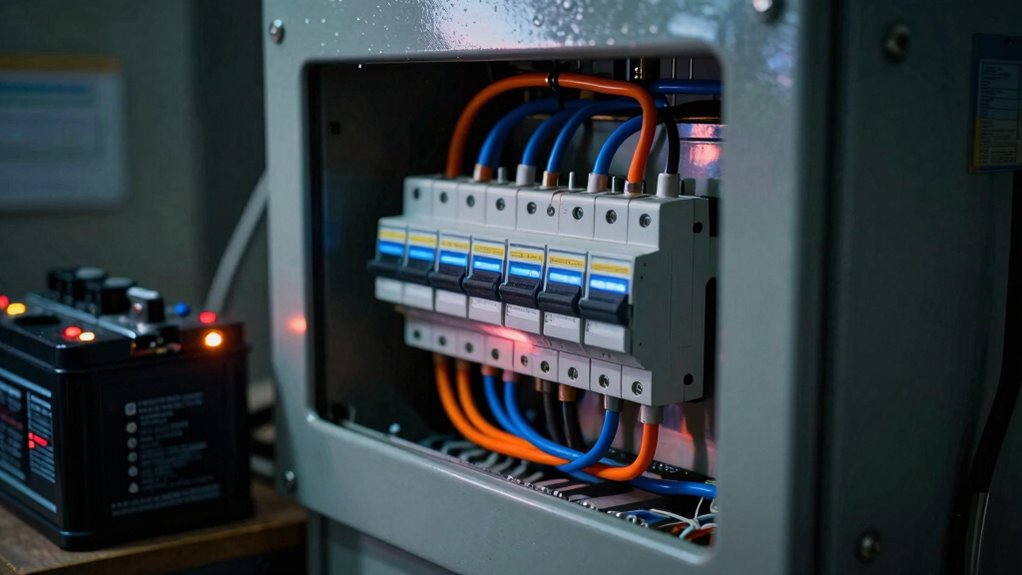
Have you ever wondered what makes a circuit “fundamental” during a power outage? It’s a question that often comes up when planning for emergencies or designing backup power systems. An essential circuit is one that supplies power to critical infrastructure—those systems and devices that need to remain operational to guarantee safety, health, and safety. These circuits are prioritized because, without them, indispensable services could fail, risking lives or causing significant disruptions. During an outage, utility companies may cut power to non-essential areas to prevent overloads, but essential circuits are deliberately kept energized to maintain critical functions.
The key behind identifying an essential circuit lies in understanding what infrastructure is indispensable during emergencies. Think about hospitals, emergency response centers, and communication hubs. These are the backbone of community safety and rely heavily on backup power sources like generators or uninterruptible power supplies (UPS). Without backup power, systems such as life-support machines, emergency lighting, and communication equipment would shut down, creating chaos or endangering lives. That’s why these circuits are wired to connect directly to backup power sources—so they stay live regardless of the larger power grid’s status. Additionally, proper circuit designation ensures that these critical loads are clearly identified and protected. Moreover, clear labeling and proper power distribution planning help prevent accidental disconnections during maintenance or emergencies.
Another aspect that makes a circuit “essential” is its role in protecting public safety and maintaining critical infrastructure. For example, circuits powering fire alarm systems, security systems, and traffic control devices are prioritized because their failure could cause accidents or security breaches. Electric utilities, in collaboration with facility managers, identify these essential loads and designate circuits accordingly, often installing dedicated breakers and transfer switches that allow quick switching to backup power. This guarantees that, even during extended outages, essential services continue uninterrupted.
Understanding what makes a circuit essential also involves recognizing the importance of reliable power sources. Backup power systems are indispensable here—they act as a safeguard to keep critical infrastructure operational. When an outage occurs, these systems automatically activate, providing power to essential circuits without delay. This seamless transition is crucial for hospitals, data centers, and emergency operations, where even a momentary loss of power can have serious consequences.
In essence, what makes a circuit “essential” is its direct connection to the infrastructure that must stay active to protect lives, property, and public services. Additionally, the concept of power reliability plays a vital role in ensuring these circuits function correctly during emergencies. By properly designating and maintaining these circuits, you help guarantee that critical infrastructure remains resilient, even when the power grid fails. This planning is not just about convenience; it’s about safeguarding the community and maintaining stability during challenging times.
uninterruptible power supply UPS for critical circuits
As an affiliate, we earn on qualifying purchases.
As an affiliate, we earn on qualifying purchases.
Frequently Asked Questions
How Is an Essential Circuit Identified by Utility Companies?
Utility companies identify crucial circuits through circuit labeling and utility prioritization. They label circuits that supply critical services, like hospitals, emergency services, and water treatment plants, guaranteeing these are restored first during outages. By prioritizing these essential circuits, utility companies guarantee vital infrastructure remains operational, minimizing disruptions and safeguarding public safety. This process helps them efficiently allocate resources and expedite recovery efforts during power outages.
Can Homeowners Designate Their Own Essential Circuits?
You can’t typically designate your own vital circuits without utility approval. For example, a homeowner might label circuits for critical appliances, but utility companies determine and mark essential circuits during outages. Your responsibilities include guaranteeing proper circuit labeling and informing the utility of any changes. It’s important to follow their guidelines to avoid safety issues and confirm your critical circuits, like those powering medical equipment, stay operational during outages.
What Safety Precautions Are Required When Working on Essential Circuits?
When working on essential circuits, you must follow safety precautions like grounding procedures to prevent shocks and guarantee safe handling. Always wear personal protective equipment, including insulated gloves and safety goggles, to protect yourself from electrical hazards. Before starting, turn off power, verify circuit de-energization with a tester, and double-check grounding points. These steps help you work safely and reduce the risk of injury or electrical accidents.
How Does Switching to Backup Power Affect Essential Circuits?
Switching to backup power affects essential circuits by guaranteeing they stay operational during outages. You need to follow generator safety protocols to prevent accidents, such as proper grounding and ventilation. Accurate circuit labeling becomes vital, so you know which circuits are connected to the generator. This prevents accidental overloads and makes sure that only essential circuits receive power, maintaining safety and system stability during the shift.
Are Essential Circuits Prioritized During Power Restoration?
During an outage, essential circuits are absolutely prioritized, almost as if they’re the VIPs of power restoration! Power crews use outage communication to identify and restore these critical circuits first, ensuring crucial services like hospitals and emergency systems come back online immediately. Circuit prioritization becomes the superhero move, making sure life-saving operations stay powered while non-essential circuits wait patiently for their turn.
Conclusion
Knowing what makes a circuit “essential” helps you prioritize your power needs during an outage. By understanding these critical circuits, you can keep the lights on, your fridge running, and stay connected when it matters most. Remember, it’s better to be safe than sorry—sometimes, a little preparation goes a long way. When you focus on what truly matters, you’re in the driver’s seat, steering through the storm with confidence.